

National Cheng Kung University (NCKU) enforces the NCKU Dietary Committee Regulations to institutionalize campus sustainable dining policies, ensuring that food sourced from aquatic ecosystems meets sustainable harvesting standards. NCKU incorporates sustainable procurement clauses into vendor contracts, mandating that campus foodservice operators utilize eco-friendly, locally produced, and sustainable ingredients. To monitor compliance, NCKU utilizes the Ministry of Education’s Campus Food Supply Platform to track supply chains and conducts regular Dietary Committee meetings to review food sourcing records, maintaining a transparent and audited sustainable aquatic food management system on campus.
Food from aquatic ecosystems (policies)
14.3.2
SDG14
NCKU’s Food from Aquatic Ecosystems (policies)
- NCKU Campus Dining Services
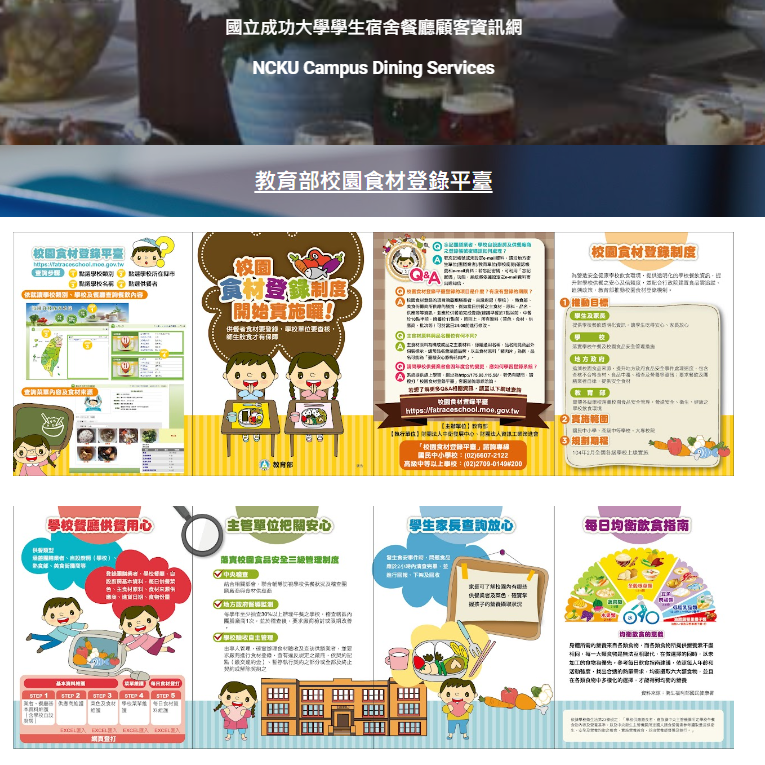 NCKU uses the campus food login system established by the Ministry of Education to track and record the source of campus food and related information. This includes foods sourced from aquatic ecosystems to ensure they comply with sustainably harvested principles.
- NCKU Dietary Committee Regulations
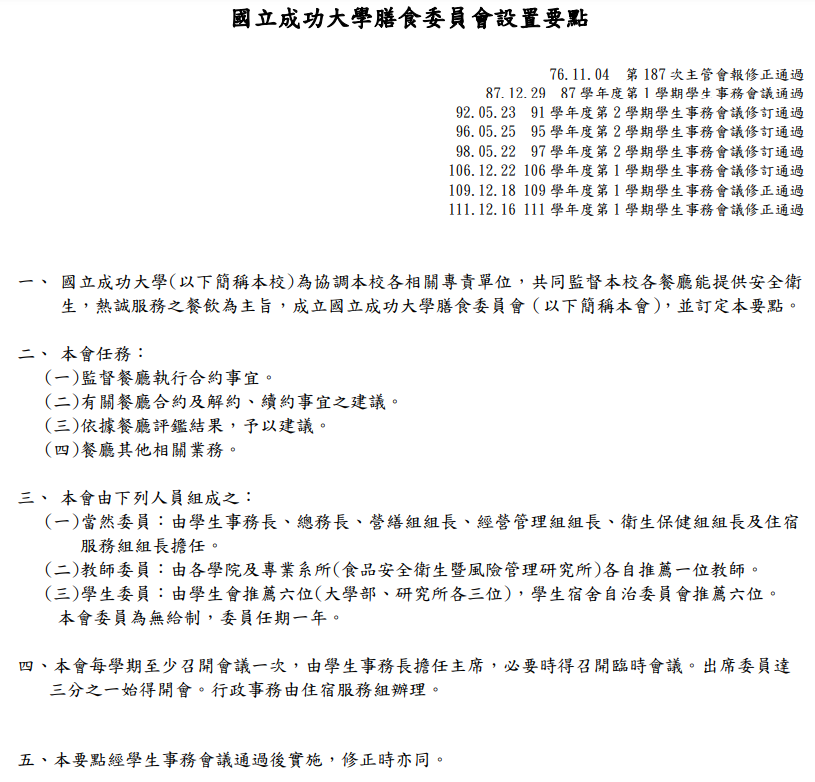 NCKU has established a committee specifically responsible for catering-related matters, called the "NCKU Catering Committee". One of the committee's responsibilities is to ensure that campus food is sustainably harvested from aquatic ecosystems.
https://www.cc.ncku.edu.tw/rule/files/23070000/housing_law_011_1111216.pdf
- Minutes of the NCKU Dietary Committee Meetings
 The above-mentioned dietary committee meets regularly to discuss food sources, harvesting methods and other related topics. The records of these meetings are used to track and review the sources and relevant information of campus food ingredients.
https://mybox.ncku.edu.tw/navigate/s/F2360DE8F1C04D4DAB5775016117C985GSY
- NCKU Sustainable Ingredient Selection
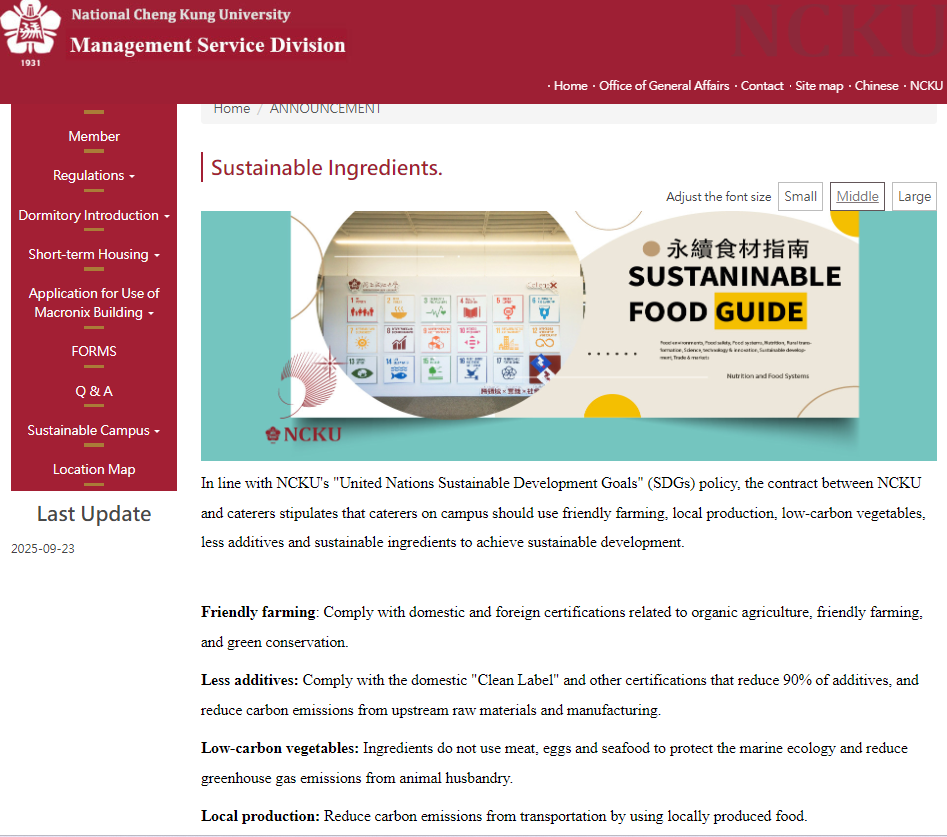 For foodservice businesses operating on NCKU campus, the procurement contracts stipulate the use of eco-friendly farming practices, locally sourced products, low-carbon plant-based options, minimal additives, and sustainable ingredients to achieve the goal of sustainable development.
https://manage-oga.ncku.edu.tw/p/406-1189-247831,r11.php?Lang=zh-tw