

National Cheng Kung University (NCKU) institutionalized its university Climate Action Plan through the official "NCKU Carbon Neutrality Declaration," pledging to achieve net-zero carbon emissions by 2041 with measurable mitigation roadmaps, actively sharing these initiatives with municipal authorities and grassroots communities. In collaboration with local governments, NCKU serves as the regional hub for the Ministry of Environment’s "Net-Zero Green Collar Talent Cultivation Program," partnering with the Tainan City Environmental Protection Bureau to transfer carbon accounting methodologies; launched the "Low-Carbon Digital Construction Alliance" to share engineering carbon data and low-carbon construction frameworks with public works departments across Taipei, New Taipei, Taichung, and Kaohsiung; concurrently, NCKU convenes the annual National Spatial Planning Forum to deliver evidence-based spatial decarbonization recommendations to municipal leadership. Engaging local communities, NCKU spearheads the "Satoyama Scepter Initiative" aligned with UN frameworks, working directly with rural agricultural settlements to deploy biochar carbon sinks and nature-based adaptation strategies, driving participatory climate resilience across sectors.
Climate Action Plan, shared
13.3.2
SDG13
NCKU’s Climate Action Plan
- NCKU Carbon Neutrality Declaration and Climate Action Plan: Advancing the 2041 Net-Zero Target and Multi-Sectoral Transition
 NCKU institutionalized its university Climate Action Plan through the official "NCKU Carbon Neutrality Declaration," committing to achieve complete carbon neutrality by 2041. The plan defines measurable mitigation milestones: reducing greenhouse gas emissions to 2010 levels by 2024, to 2000 levels by 2029, and halving the campus carbon footprint by 2031. NCKU actively shares its climate roadmap with regional stakeholders by launching Taiwan’s first "Carbon Neutral Next-Gen Incubation Hub." Integrating resources across four regional universities and featuring five hands-on training facilities, NCKU partners with industries and local enterprises to advance carbon capture technologies, energy efficiency, and ESG capacity-building, driving collaborative multi-sectoral progress toward net-zero emissions.
https://en.sdg.ncku.edu.tw/hightlight-215.html
- NCKU Co-Establishes Low-Carbon Digital Construction Alliance to Share Decarbonization Frameworks with Municipal Governments
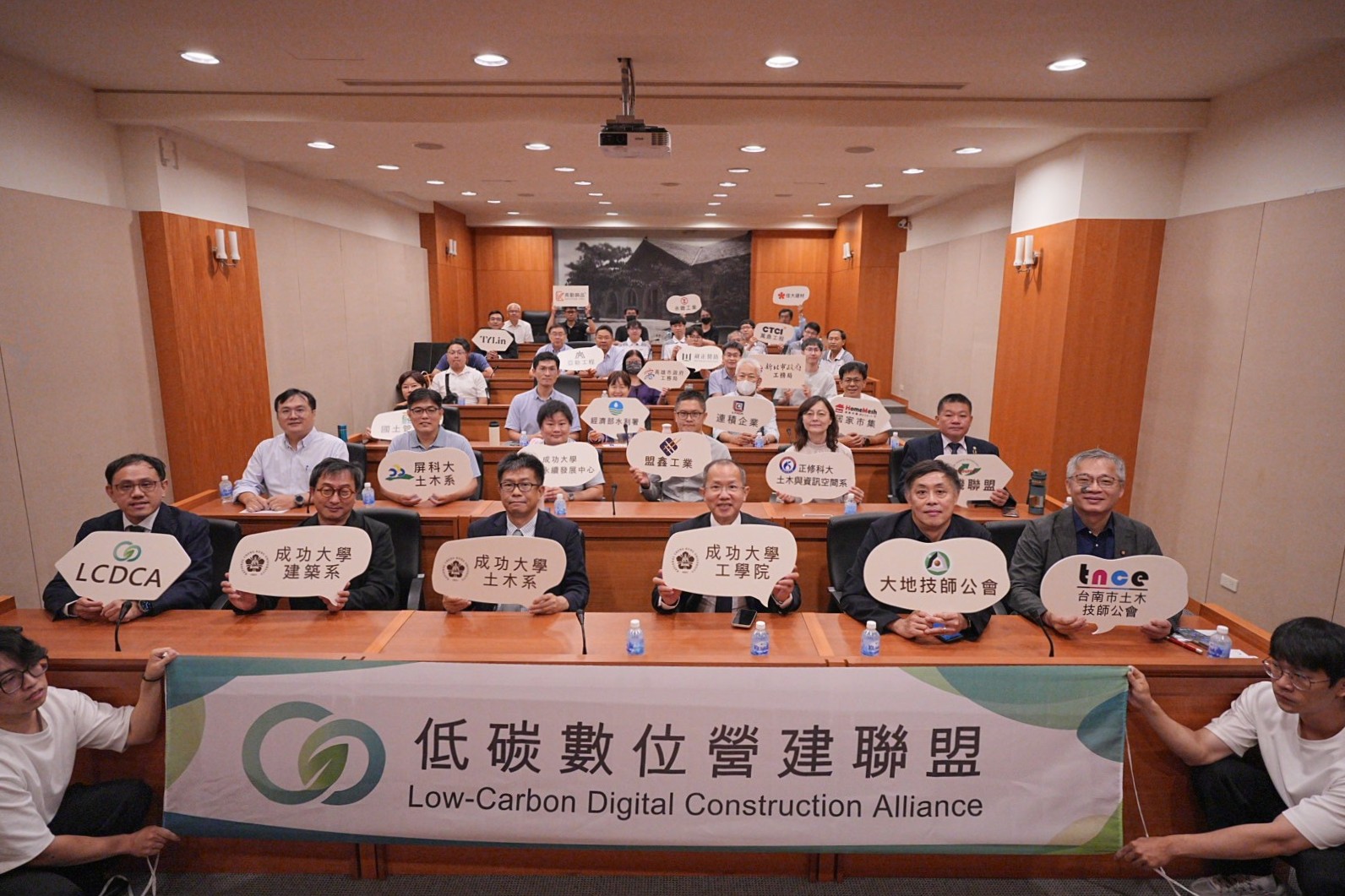
NCKU’s College of Engineering, Department of Civil Engineering, and Department of Architecture launched the Low-Carbon Digital Construction Alliance (LCDCA) in October 2025, establishing an institutional decarbonization knowledge-sharing platform. NCKU transfers its expertise in lifecycle assessment, sustainable building standards, and Green-BIM modeling directly to central ministries and municipal public works departments across Taipei, New Taipei, Taichung, and Kaohsiung. Formalizing MOUs with professional engineering associations, NCKU co-develops an engineering material carbon coefficient database, low-carbon construction certifications, and professional training, empowering local governments to advance infrastructural climate action and urban net-zero mandates.
https://news-secr.ncku.edu.tw/p/406-1037-288688,r81.php
- NCKU Net-Zero Green Collar Talent Initiative: Sharing Carbon Accounting and Climate Action Frameworks with Local Government
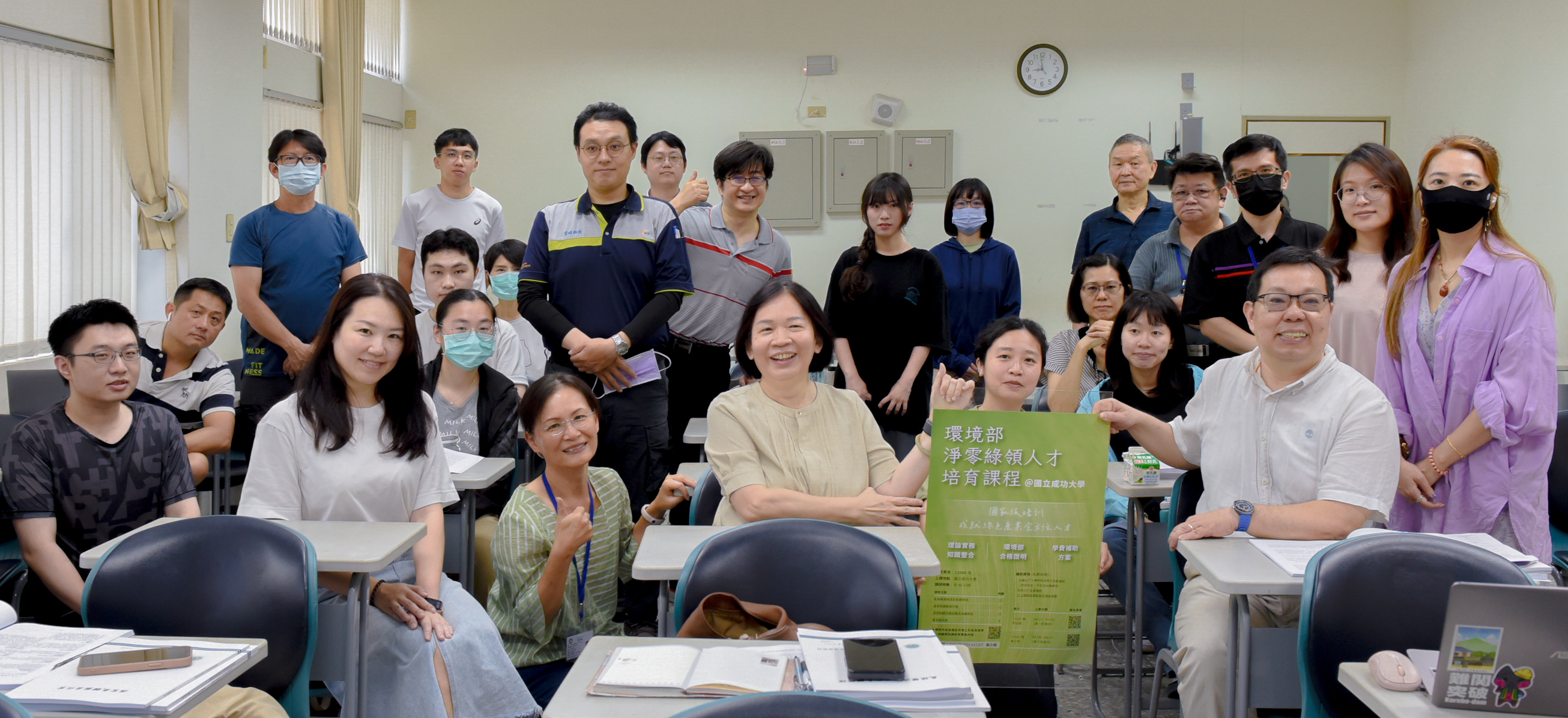
NCKU actively shares its climate action and carbon accounting frameworks with regional authorities. In 2025, NCKU served as the southern regional hub executing the Ministry of Environment’s "Net-Zero Green Collar Talent Cultivation Program." Collaborating closely with municipal experts from the Tainan City Environmental Protection Bureau, NCKU transferred campus-tested carbon inventory methodology and decarbonization planning to regional public and private sectors. The open-access program provided standardized training and certification, institutionalizing knowledge-sharing with local government bodies to strengthen municipal administrative and technical capacity toward the 2050 net-zero emissions mandate.
https://news-secr.ncku.edu.tw/p/406-1037-284253,r81.php
- The 29th National Spatial Planning Forum: Supporting Government Policy on Resilient Urban-Rural Governance and Net-Zero Transition
 NCKU’s Department of Urban Planning and the NCKU Research and Development Foundation institutionalize policy support for government agencies through the annual National Spatial Planning Forum, convening its 29th edition in 2025. Serving as a continuous advisory platform, the forum convenes leadership from the National Science and Technology Council, municipal government executives, and urban resilience experts. Discussions and academic paper presentations focus on deploying smart technologies, achieving net-zero transitions, and integrating climate-resilient spatial governance. Through this institutional mechanism, NCKU delivers evidence-based policy recommendations to central and local authorities, supporting government strategic planning to address territorial environmental risks and enhance systemic climate resilience.
https://www.up.ncku.edu.tw/114-04-22-01/
- NCKU Launches the "Satoyama Scepter Initiative" Project, Fostering Harmony Between Humanity and Nature for Global Sustainability
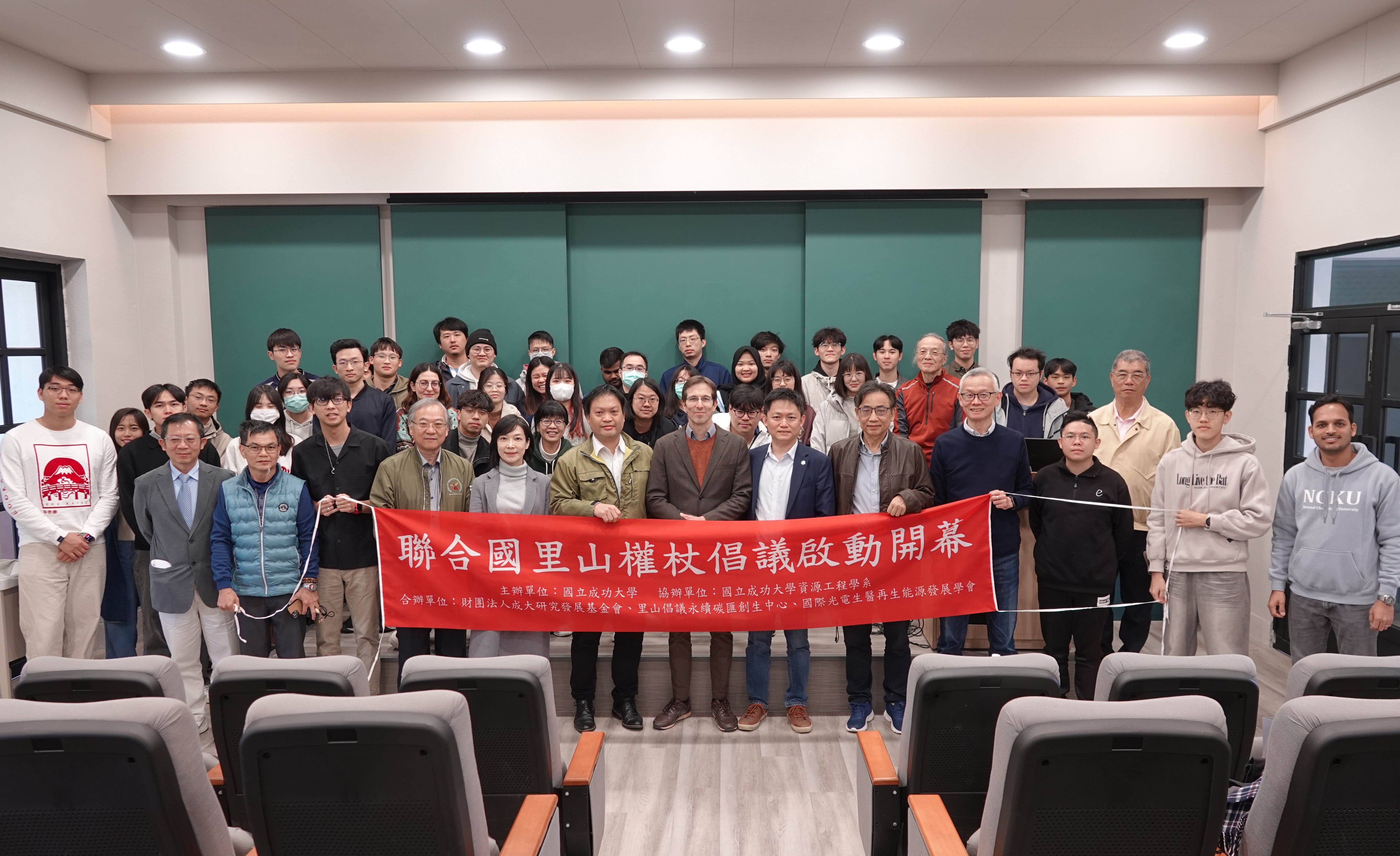 On February 5, NCKU launched the six-year "Satoyama Scepter Initiative" project, reinforcing environmental education and climate adaptation practices. Led by Professor Yan-Hsun Su’s team from the Department of Materials Science and Engineering, the initiative convened Andre Mader from the United Nations University along with public and private sector leaders. The project links the Satoyama Initiative with the global biodiversity framework to foster public awareness of landscape resilience through field studies and cross-disciplinary learning. By integrating biochar applications with sustainable natural resource management, it advances actionable climate adaptation strategies, targeting a cumulative increase of 60 million metric tons of carbon sinks by 2030 to achieve long-term harmony between humanity and nature.
https://news-secr.ncku.edu.tw/p/406-1037-278118,r81.php