

National Cheng Kung University (NCKU) integrates academic coursework with community outreach to promote marine resource sustainability and ecosystem conservation. Within its curriculum, the Institute of Ocean Technology and Marine Affairs offers the course Climate Change and Marine Environment Protection, covering the impacts on fishery resources and global conservation strategies. For community engagement, NCKU’s Marine Biology and Cetacean Research Center partnered with the Ocean Conservation Administration to establish the Southern Ocean Conservation Education Center, certified as Tainan’s 23rd Environmental Education Facility. The center provides public educational programs and interactive exhibits on cetacean rescue and marine conservation, raising awareness of marine ecosystem protection and sustainable resource management among local communities.
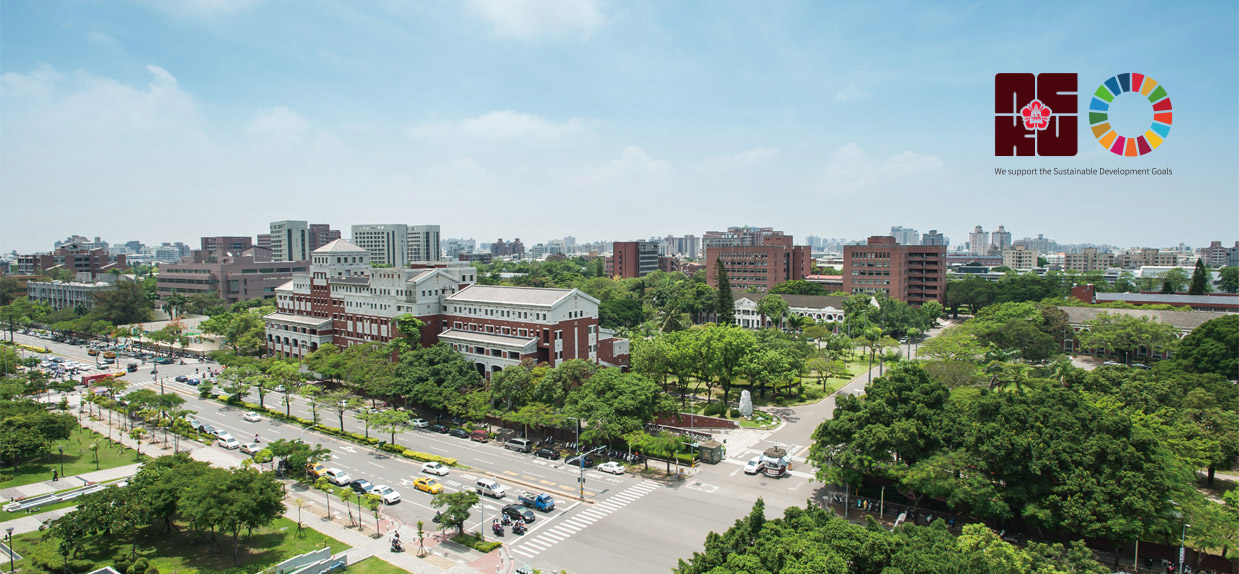
Overfishing (community outreach)
14.2.3
SDG14
NCKU's community outreach about overfishing
- Public Education on Climate-Resilient and Sustainable Shrimp Aquaculture
 In July 2025, Professor Han-Ching Wang of National Cheng Kung University's Department of Biotechnology and Bioindustry Sciences was invited to speak at the CASE Science History Salon 2025 on environmental change. Her lecture, "The Multiverse of Shrimp: Aquaculture Strategies under Climate Change," introduced scientific approaches to sustainable shrimp farming, including selective breeding, pathogen monitoring, indoor recirculating aquaculture systems, and artificial intelligence for water quality monitoring and shrimp health assessment. The lecture highlighted strategies to improve aquaculture resilience and reduce risks associated with climate change, promoting public understanding of sustainable aquaculture practices.
- Promoting Sustainable Fisheries through Clam Farming Education


In 2025, National Cheng Kung University (NCKU) organised the "What the Clams? Qigu Clam Farming and Fishery Education Experience" in Qigu, Tainan. The activity introduced participants to local aquaculture, ecological balance, and environmentally friendly clam farming. Through educational sessions, guided tours of Qigu Lagoon and surrounding aquaculture landscapes, and hands-on clam farming experiences, participants learned how local fish farmers integrate ecological considerations into aquaculture practices. The programme promoted awareness of sustainable aquaculture and the relationship between fishery production and marine ecosystem conservation.
- CLIMATE CHANGE AND MARINE ENVIRONMENT PROTECTION, in Institute of Ocean Technology and Marine Affairs (IOTMA), NCKU
 Underwater environment and fishing industries-related courses are held at NCKU. The “CLIMATE CHANGE AND MARINE ENVIRONMENT PROTECTION'' at the Institute of Ocean Technology and Marine Affairs (IOTMA), which is lectured by prof. Shih. Through domestic and international scientific case studies, this program explores the impacts of global climate change on marine environments and ecosystems. It emphasizes how climate-induced changes in the physical and chemical properties of seawater affect marine populations, habitats, and fishery resources, while also examining the conservation and management strategies adopted by different countries to address the challenges of climate change in relation to marine environments and resources.
- Marine Biology and Cetacean Research Center of NCKU

Additionally, the Marine Biology and Cetacean Research Center located in NCKU An-nan Campus is responsible for stranded whales in Southern Taiwan. The center collaborated with the Ocean Conservation Administration to establish the Southern Ocean Conservation Education Center. The center promotes the protection of the ocean through the complete areas for whale conservation demonstration and conducts research with cetacean samples and water quality monitor statistics.
- The Cetacean Research Center of NCKU Has Been Certified as the 23rd Environmental Education Facility in Tainan

The Cetacean Research Center at NCKU, certified as Tainan’s 23rd Environmental Education Facility, is Taiwan’s first center dedicated to cetacean rescue education and a key site for handling stranded cetaceans in southern Taiwan. Through well-designed courses, the public learns about cetacean ecology, rescue procedures, and conservation practices. Featuring Taiwan’s largest sperm whale specimen and interactive teaching, the center fosters immersive learning, strengthens environmental responsibility, and promotes concrete actions for sustainable marine resource use.