



Decentralized Flood Mitigation and Eco-Ponds
In response to the ecological shortcomings of conventional urban rapid drainage systems, a research report by the Architecture and Building Research Institute, Ministry of the Interior, advocates for decentralized "eco-ponds" and on-site water retention technologies. This approach aims to achieve "soft flood mitigation" by managing floodwaters at their source, with the ultimate goal of establishing localized design standards to support formal legislation.
Campus Implementation of Sustainable Water Management
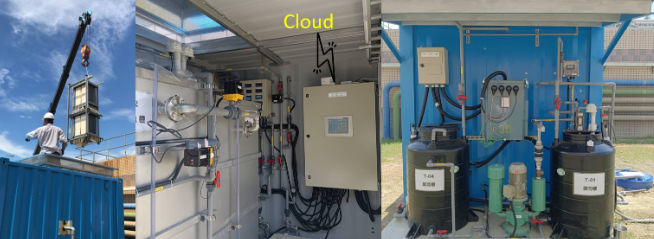
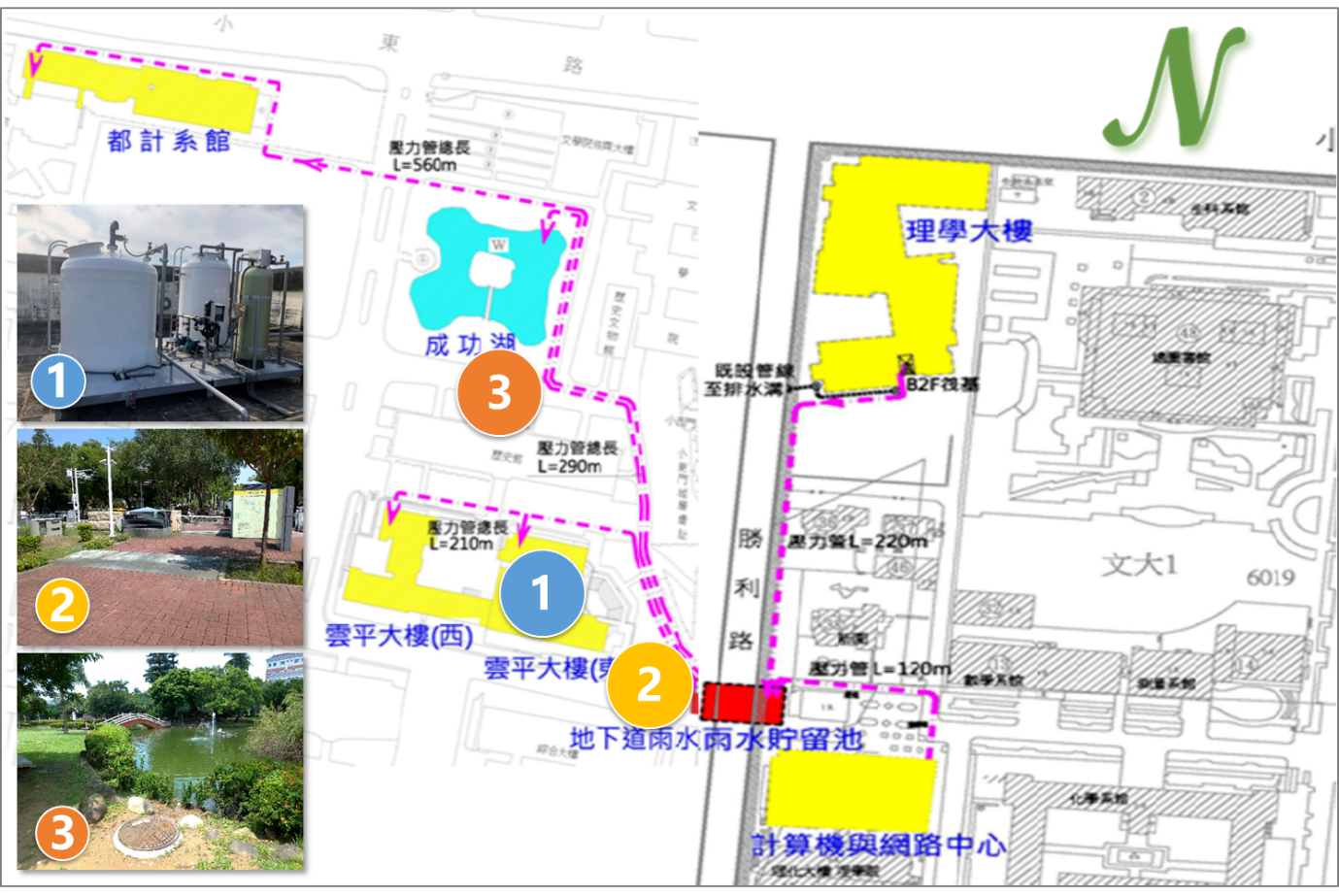
Our university actively implements this sustainable water management philosophy. We have established a comprehensive water reuse measurement system, featuring a "Rainwater Harvesting System" with integrated monitoring. This system systematically collects water from rooftops, swimming pool overflows, and other sources. After treatment, this reclaimed water is consistently used to replenish campus eco-ponds (such as Cheng-Kung Lake), irrigate landscapes, and flush toilets, significantly reducing our reliance on municipal tap water.
Performance Monitoring and Public Transparency
In response to the ecological shortcomings of conventional urban rapid drainage systems, a research report by the Architecture and Building Research Institute, Ministry of the Interior, advocates for decentralized "eco-ponds" and on-site water retention technologies. This approach aims to achieve "soft flood mitigation" by managing floodwaters at their source, with the ultimate goal of establishing localized design standards to support formal legislation.
Campus Implementation of Sustainable Water Management
Our university actively implements this sustainable water management philosophy. We have established a comprehensive water reuse measurement system, featuring a "Rainwater Harvesting System" with integrated monitoring. This system systematically collects water from rooftops, swimming pool overflows, and other sources. After treatment, this reclaimed water is consistently used to replenish campus eco-ponds (such as Cheng-Kung Lake), irrigate landscapes, and flush toilets, significantly reducing our reliance on municipal tap water.
Performance Monitoring and Public Transparency
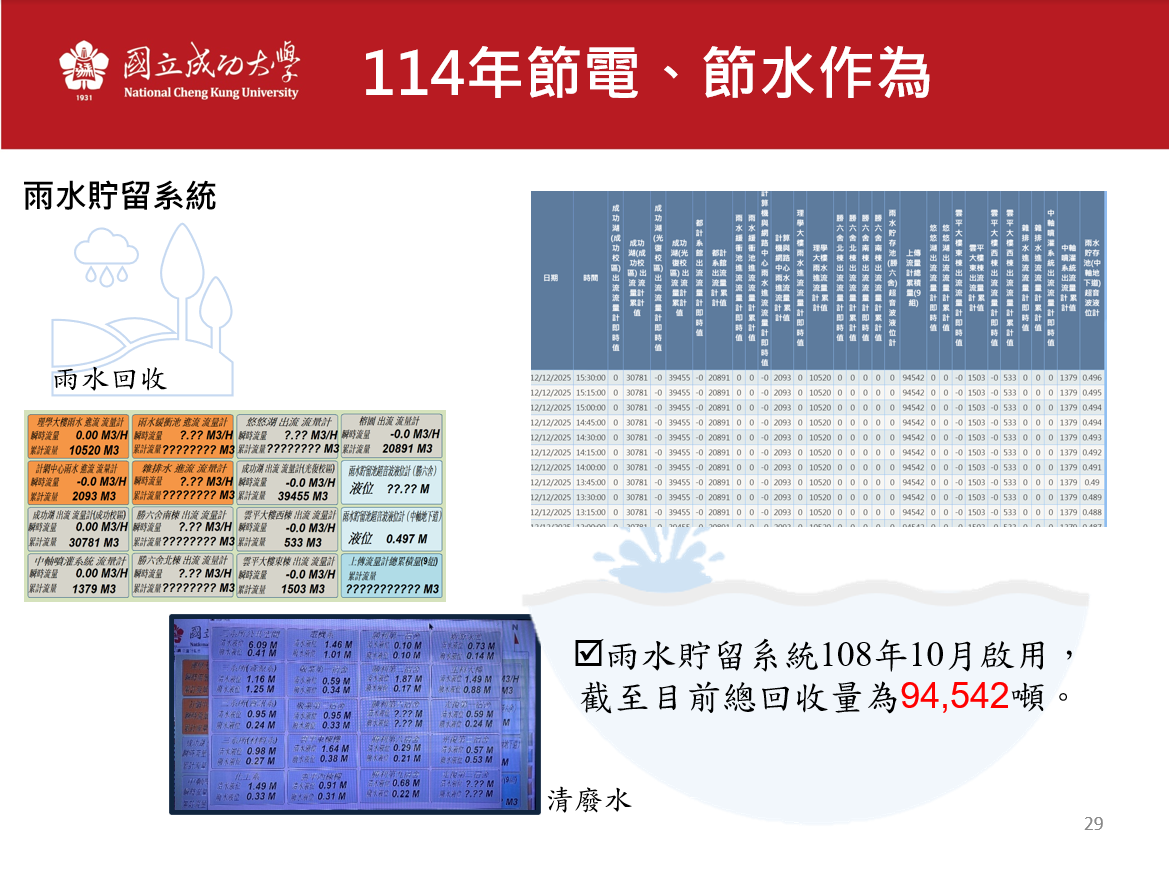
To ensure effectiveness and transparency, we regularly compile and publish performance data. From 2019 to 2025, the system total reclaimed and reused 94542 tons of water, with all related data publicly available on our official website. Our initiative not only demonstrates efficient campus water management but also serves as a successful case study of implementing national-level soft flood mitigation research.
 Rainwater Storage and Reuse