




Since 2009, National Cheng Kung University (NCKU) has actively promoted water reuse policies and developed technologies to maximize the efficient use of every drop of water. The Campus Energy Conservation Committee, composed of cross-disciplinary members, advocates for energy and resource conservation and updates guidelines annually. Rainwater retention systems across multiple campuses store and transport rainwater for irrigation and toilet flushing, with a cumulative reclaimed water volume of 94,542 tonnes as of 2025. Additionally, wastewater from building raft foundations is repurposed for campus landscaping, further minimizing water resource waste.
Water reuse policy
6.4.1
SDG6
NCKU's water reuse policy
- NCKU’s Rainwater Retention System Data, published by Office of General Affairs
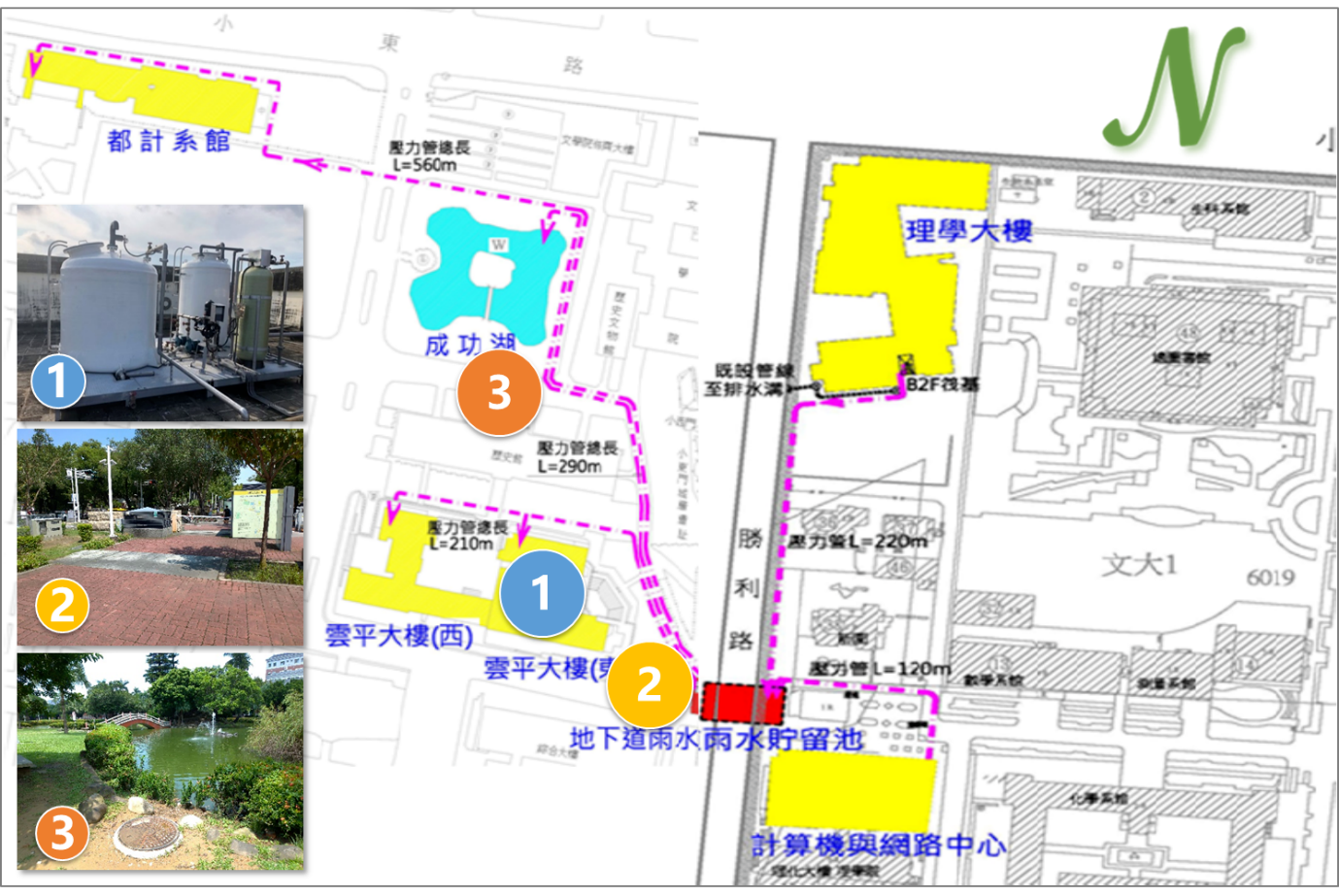 NCKU has transformed abandoned underground passages into a rainwater storage system, collecting rainwater from campus buildings and swimming pool overflow. After treatment, the water is used for lake irrigation and toilet flushing, with usage monitored via a control system.
 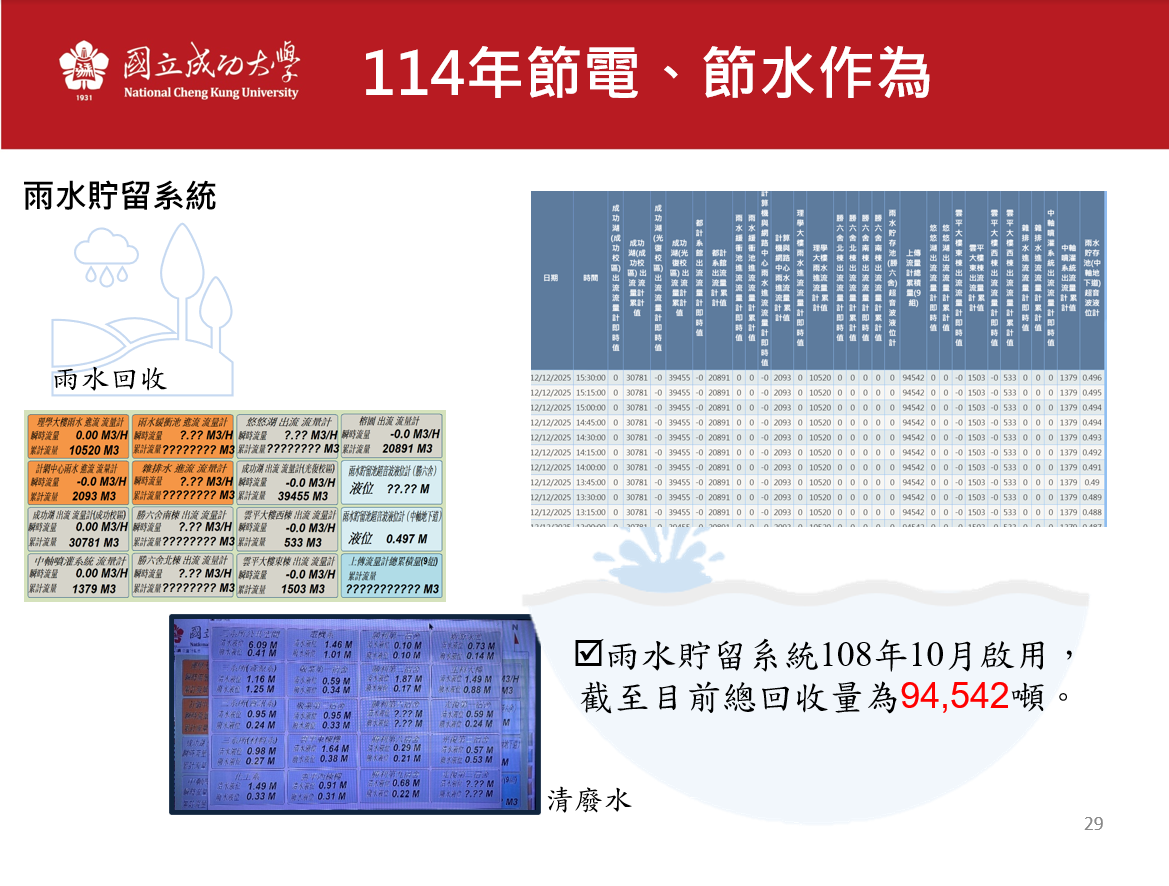 Since its launch in 2019, the system has reclaimed more than 94,542 tonnes of water, demonstrating NCKU’s innovative strategies and practical achievements in water reuse and sustainable management.
- NCKU reuses the waste water from building raft foundation (the red points are the facilities)
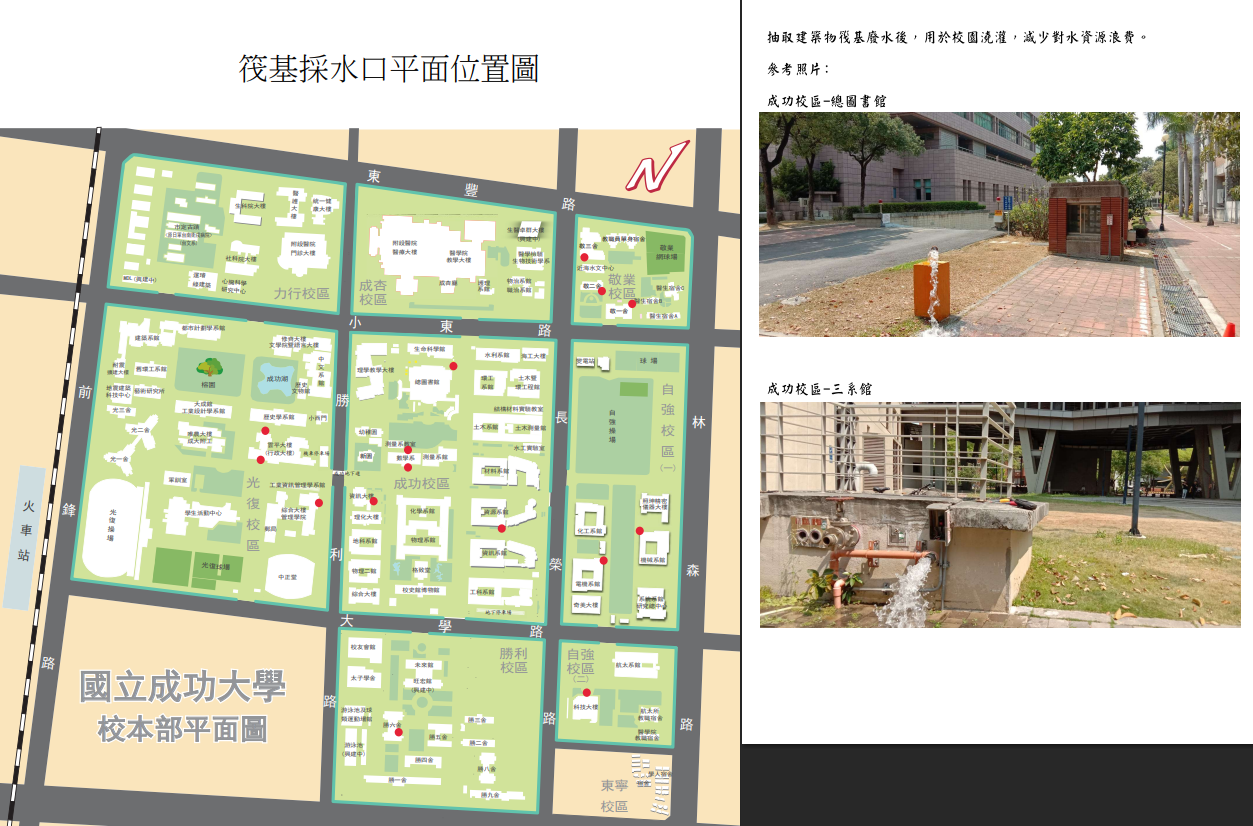 The raft foundation water intake at NCKU collects wastewater from building raft foundations and repurposes it for campus irrigation and environmental maintenance. This system leverages the campus topography and building drainage characteristics to minimize water waste. Through monitoring and regular maintenance, water quality and supply stability are ensured. Since its implementation, the raft foundation water intake has become a key strategy for NCKU’s water reuse, demonstrating innovative and practical achievements in sustainable campus management.
- The regular meeting records of Campus Energy Conservation Promotion Committee, NCKU
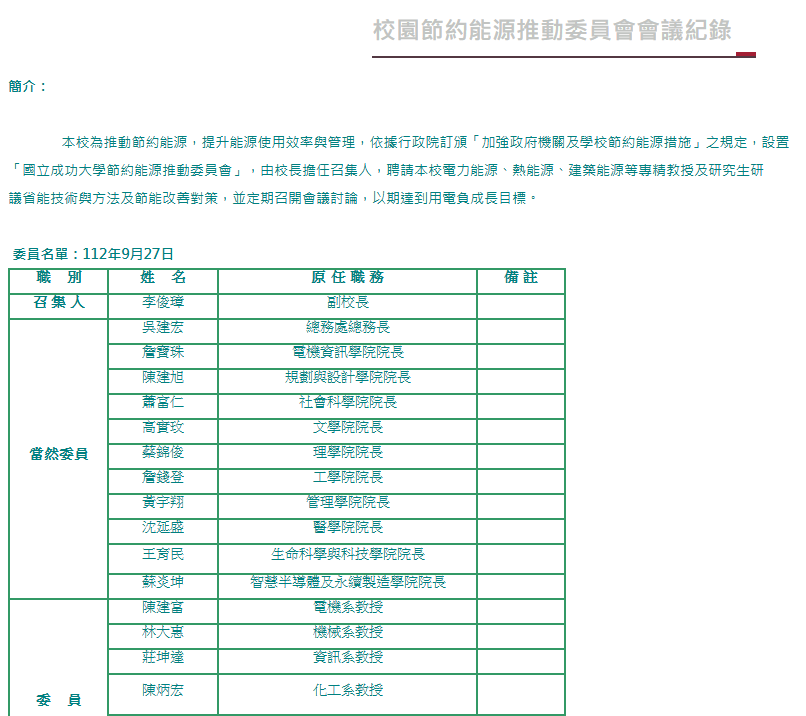 NCKU has established the “Energy Conservation Promotion Committee,” composed of the university president, deans of each college, and experts, overseeing working groups for electricity, thermal energy, building, and water resource conservation. The committee is responsible for setting energy-saving targets, promoting technological improvements, conducting education and training, and regularly reviewing and supervising the implementation of campus energy-saving initiatives, aiming to achieve a sustainable campus vision.
- Sustainable Development Plan for Reclaimed Water Treatment
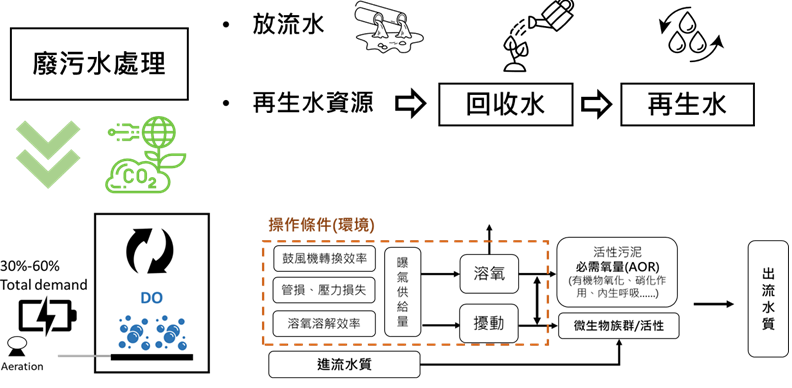 NCKU combines expertise in hydraulic, environmental, mechanical, and information engineering to advance sustainable reclaimed water treatment. The team developed PIV flow measurements, bubble characterization, and CFD simulations for aeration tanks, alongside an IoT platform to monitor diffuser oxygen transfer efficiency, optimizing energy use and microbial performance. This research promotes wastewater resource recovery and energy-carbon reduction, showcasing NCKU’s innovative approach to sustainable water management.