




Zero-Emission Water Cycle and Sustainable Campus Design
National Cheng Kung University (NCKU) integrates sustainable water management into its green buildings, exemplified by the “Magic School of Green Technologies.” The building features a zero-emission ecological water cycle, reusing treated tap water, greywater, and rainwater for irrigation and toilet flushing. Tap water and toilet wastewater are first treated in septic tanks and artificial wetlands, filtered, stored underground, and reused, while rooftop rainwater is captured in vertical rain containers and gravity-fed to non-potable uses.
Water-Conscious Landscaping
The rooftop terraced garden employs lightweight ceramsite troughs, increasing water retention by over 30%, and only drought-tolerant plants are selected, reducing watering frequency.
Non-Potable Water Utilization Across Campus
NCKU extensively plants native species and uses non-potable water for irrigation and campus cleaning. Basement bilge water and other reclaimed sources are distributed via water trucks with defined daily quotas, minimizing potable water use. New buildings, such as the Biological Technology Building, include 24-ton greywater tanks supplying treated water to toilets and other non-potable points, further reducing freshwater consumption.
Through these strategies, NCKU not only maximizes water reuse and conservation but also transforms the campus into a “Living Laboratory,” integrating ecological education, innovative technologies, and sustainable operations to demonstrate the synergy between environmental stewardship and practical learning.
National Cheng Kung University (NCKU) integrates sustainable water management into its green buildings, exemplified by the “Magic School of Green Technologies.” The building features a zero-emission ecological water cycle, reusing treated tap water, greywater, and rainwater for irrigation and toilet flushing. Tap water and toilet wastewater are first treated in septic tanks and artificial wetlands, filtered, stored underground, and reused, while rooftop rainwater is captured in vertical rain containers and gravity-fed to non-potable uses.
Water-Conscious Landscaping
The rooftop terraced garden employs lightweight ceramsite troughs, increasing water retention by over 30%, and only drought-tolerant plants are selected, reducing watering frequency.
Non-Potable Water Utilization Across Campus
NCKU extensively plants native species and uses non-potable water for irrigation and campus cleaning. Basement bilge water and other reclaimed sources are distributed via water trucks with defined daily quotas, minimizing potable water use. New buildings, such as the Biological Technology Building, include 24-ton greywater tanks supplying treated water to toilets and other non-potable points, further reducing freshwater consumption.
Through these strategies, NCKU not only maximizes water reuse and conservation but also transforms the campus into a “Living Laboratory,” integrating ecological education, innovative technologies, and sustainable operations to demonstrate the synergy between environmental stewardship and practical learning.
- Guide to Plant Ecology of Campus
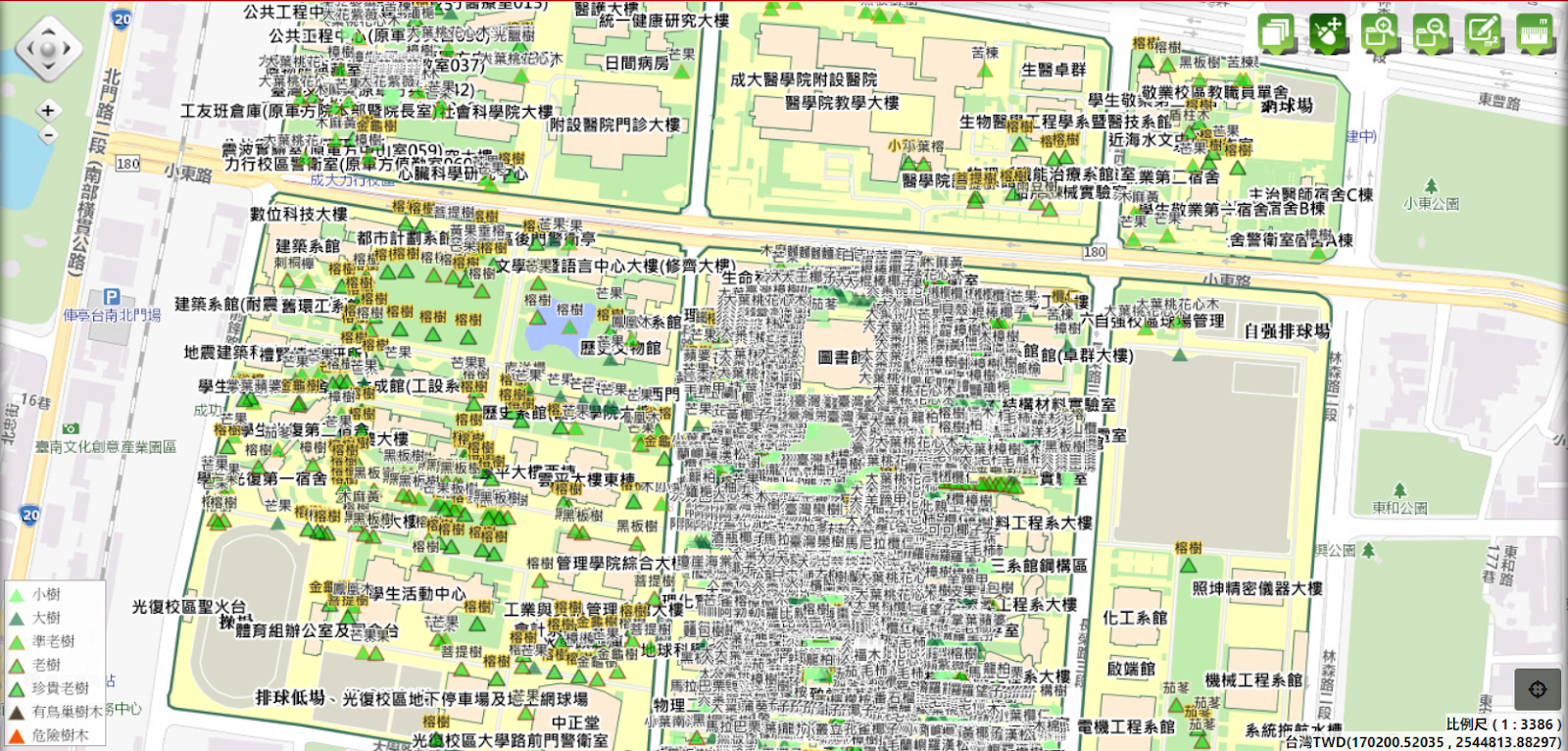 NCKU’s campus features hundreds of native and common plants, including trees and shrubs, showcasing its commitment to ecological conservation. Plant health is managed through a “Campus Plant Information Platform” and a dedicated maintenance team. Signature buildings, such as the “Magic School of Green Technologies,” use a zero-emission ecological water cycle, supplying treated reclaimed water for irrigation. This approach enhances campus greenery while demonstrating innovative water recycling and sustainable management.
- “The Magic School of Green Technologies”-water recycling technology for watering the plants eco-friendly and energy-efficiently
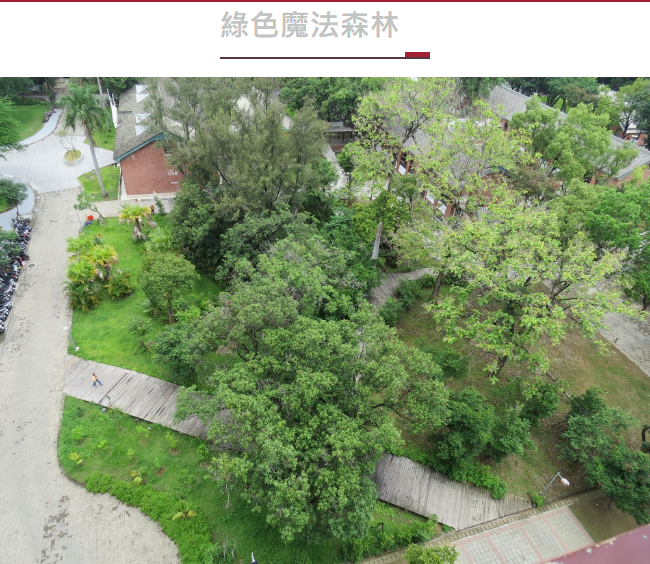 The "Magic School of Green Technologies" exemplifies a zero-emission ecological water cycle design, ensuring maximum water efficiency. Greywater (sink and toilet wastewater) is purified using artificial wetlands and carbon filters, then piped for direct garden irrigation. Simultaneously, rainwater collected from the roof and ground is stored in vertical rain barrels and underground tanks, using gravity for toilet flushing and irrigation supply. This comprehensive system significantly reduces reliance on municipal water, achieving the sustainable use of water resources through eco-friendly design.
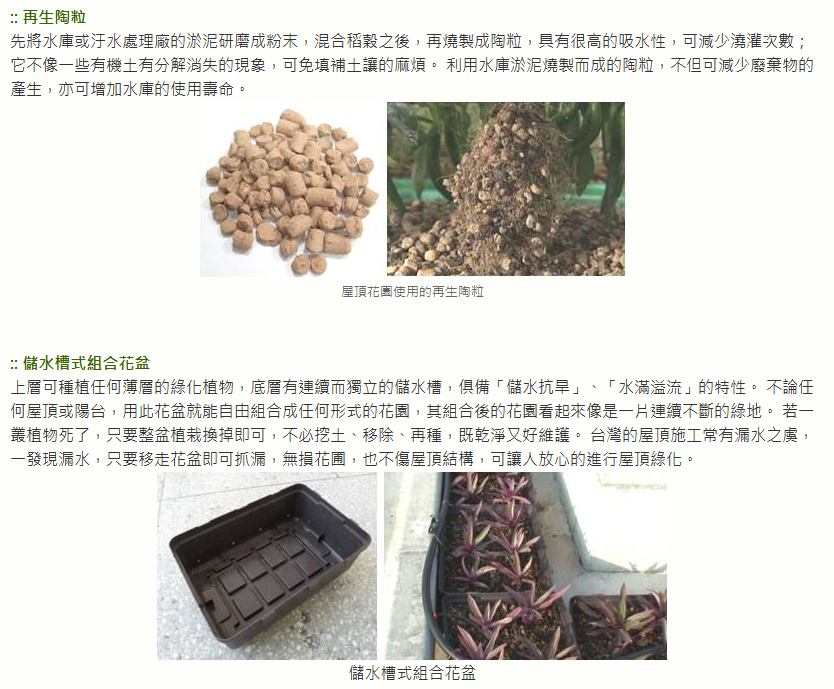 The rooftop terraced gardens of NCKU’s Green Magic School use lightweight, movable planting troughs for easy replacement. The troughs are filled with ceramic pellets made from reservoir sludge instead of regular soil, reducing material use while doubling water retention—achieving over 30% efficiency. Drought- and poor-soil-tolerant plants are selected to minimize the frequency of irrigation.
- Campus plant irrigation from raft-based reclaimed water systems buildings
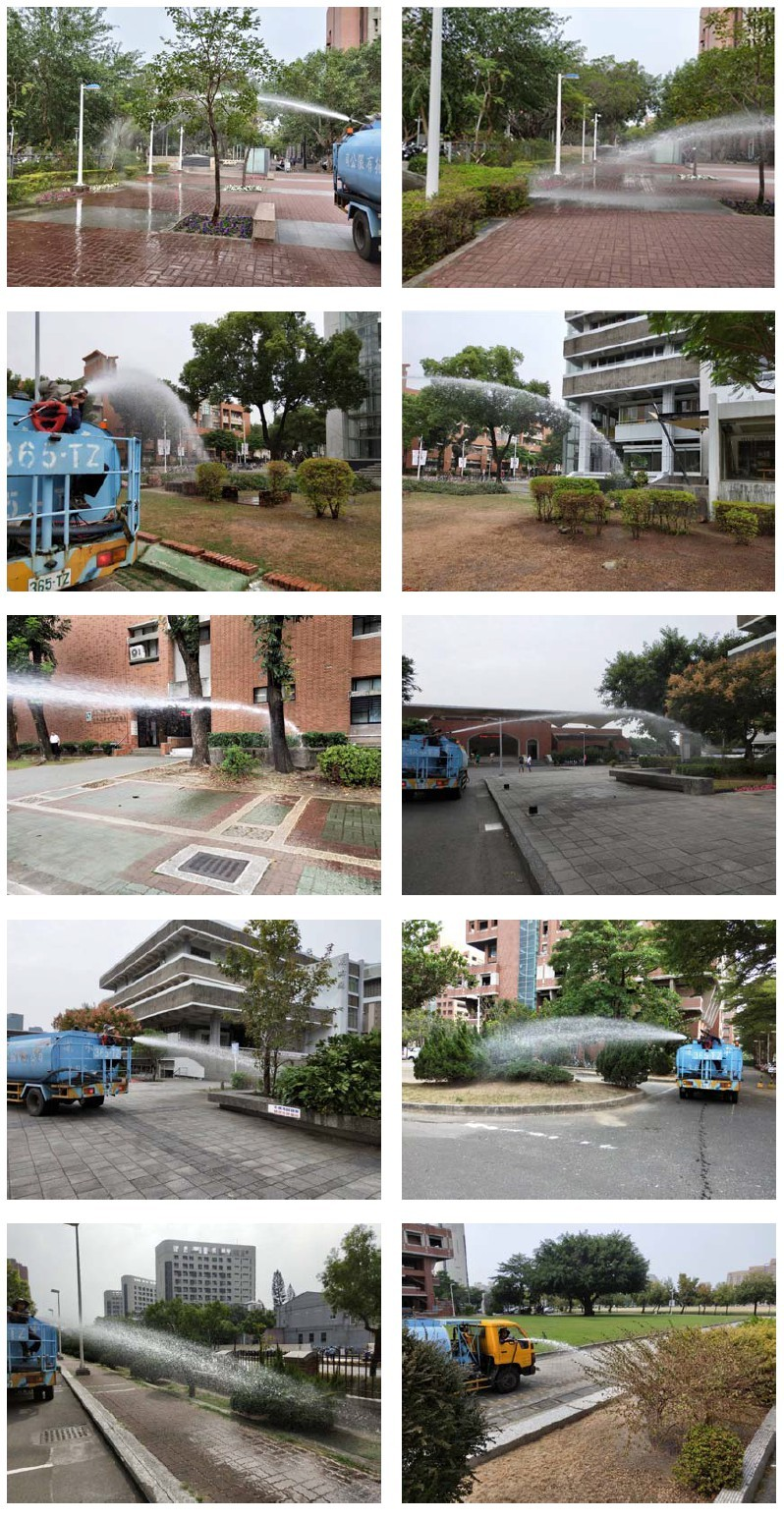 NCKU actively promotes water cycling by utilizing non-potable sources for landscape maintenance. The university recycles basement bilge water and other reclaimed sources, using water trucks for campus cleaning and plant irrigation. Internal documents detail daily watering routes and water quotas (ranging from 0.5 to 2 tons per day) for various campuses (Guangfu, Chenggong, Ziqiang, Lixing). This ensures green areas are maintained without consuming municipal water, effectively minimizing landscape water usage and preserving environmental cleanliness.