| 1 |
Marine Biology & Cetacean Research Center |
Promote and implement two major objectives: marine biology and cetacean conservation research, and the achievement of sustainable management. |
Link |
| 2 |
Disaster Prevention Research Center |
Integrate domestic and international expert resources to develop and introduce advanced disaster prevention and rescue technologies, assisting the government in enhancing professional capacity to reduce losses from natural disasters. |
Link |
| 3 |
Research Center for Energy Technology and Strategy |
Collaborate with internal and external experts to focus on R&D in wind, solar, and fuel cell energy; establish specialized laboratories and develop frontier technologies such as offshore wind power, oxy-fuel combustion, and smart grids to promote green sustainable development through international cooperation and industry-academia alliances. |
Link |
| 4 |
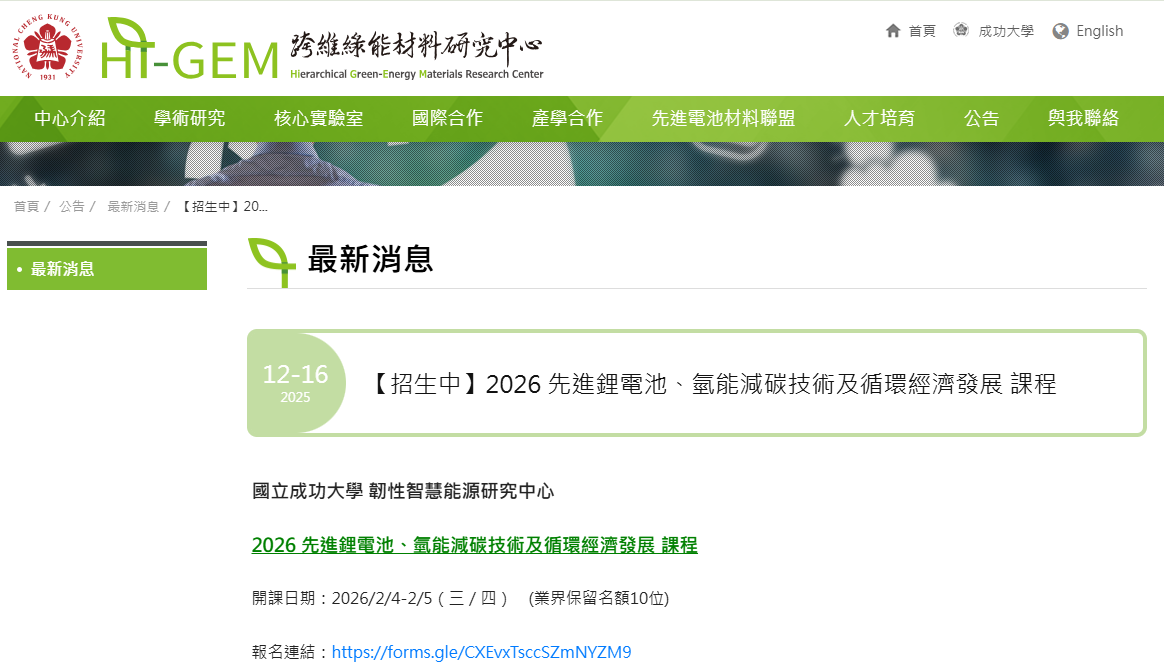
Center for Resilience and Intelligence on Sustainable Energy Research |
Focus on innovative green energy materials research, including materials genome design, high-safety ion transport, and high-efficiency electrode and energy storage technologies, integrating industry-academia resources to advance energy autonomy and sustainable development. |
Link |
| 5 |
Sustainable Environment Research Laboratories |
Integrate multi-unit resources with a vision of "zero environmental hazards and zero resource waste," combining environmental science, engineering, and social sciences to provide sustainable environmental technologies and services, focusing on healthy environments, green resources, and environmental restoration. |
Link |
| 6 |
Tainan Hydraulics Laboratory |
Focus on offshore engineering and water resource conservation surveys, project reviews, and the establishment of databases and GIS systems, while supporting research and promoting the internationalization of industry-government-academia collaboration. |
Link |
| 7 |
Coastal Ocean Monitoring Center |
Conduct R&D in marine environmental monitoring technologies, mastering key instrumentation to establish locally-rooted marine observation capabilities and cultivating talent to build national operational marine monitoring capacity. |
Link |
| 8 |
Research Center of Environmental Trace Toxic Substances |
Focus on advancing analytical techniques and health risk assessment for environmental trace toxicants (e.g., dioxins, PCBs, heavy metals), integrating clinical and toxicological resources for sampling, analysis, and exposure assessment across environmental media, food, and biological samples. |
Link |
| 9 |
Research Center of Geothermal, CO2 Storage and Petroleum Strategy |
Integrate expert resources to focus on geothermal surveys, CO₂ sequestration technologies, and petroleum engineering and economic strategies, while providing training and consulting to promote energy security and regional cooperation. |
Link |
| 10 |
Research Center for Water Science and Technology |
Specialize in groundwater investigation, monitoring, simulation, and management, providing quality assessment and pollution control technologies to address water resource challenges through cross-sector collaboration. |
Link |
| 11 |
Geo-Resources Research Center |
Focus on soil and water resource development, national land conservation, and resource recovery; utilize spatial information and numerical simulation to assess resources (oil, gas, geothermal) and sequestration site selection, providing environmental restoration services. |
Link |
| 12 |
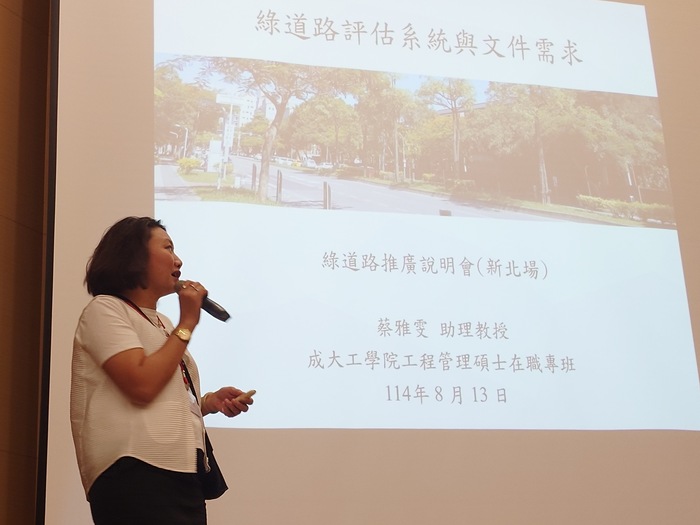
Green Roadways and Infrastructure Center |
Focus on urban greenway planning and design, integrating ecological, recreational, and transportation research to promote urban greening and sustainable development. |
Link |
| 13 |
Waste Treatment Plant, Environment Resource Management Research Center |
Focus on resource recycling, pollution prevention, and environmental monitoring, promoting innovative technologies and industry-government-academia collaboration. |
Link |
| 14 |
Center for Security, Health and Sustainable Development |
Focus on digital health, environmental sustainability, and institutional behavior, utilizing big data and neuroscience to explore healthcare and social security strategies for disadvantaged groups and healthy city initiatives. |
Link |
| 15 |
Ecological and Water Conservation Research Center |
Dedicate efforts to preventing soil erosion and land degradation, developing slope stabilization and vegetation restoration technologies through field experiments and numerical simulations. |
Link |
| 16 |
Sustainable Energy and Environment Center |
Founded in November 2024, integrating multidisciplinary technologies to focus on offshore wind, CO₂ sequestration, geothermal energy, and geological hazard modeling, while facilitating international industry-academia partnerships. |
Link |
| 17 |
Climate Change and Environmental Quality Research Center |
Conduct research on climate change and environmental quality-related issues. |
|
| 18 |
Intelligent and Energy-Saving Marine Vehicle Center |
Integrate resources to innovate in marine vehicle energy efficiency, intelligent control, and real-time monitoring, establishing Taiwan as an international hub for marine vehicle R&D and manufacturing. |
Link |
| 19 |
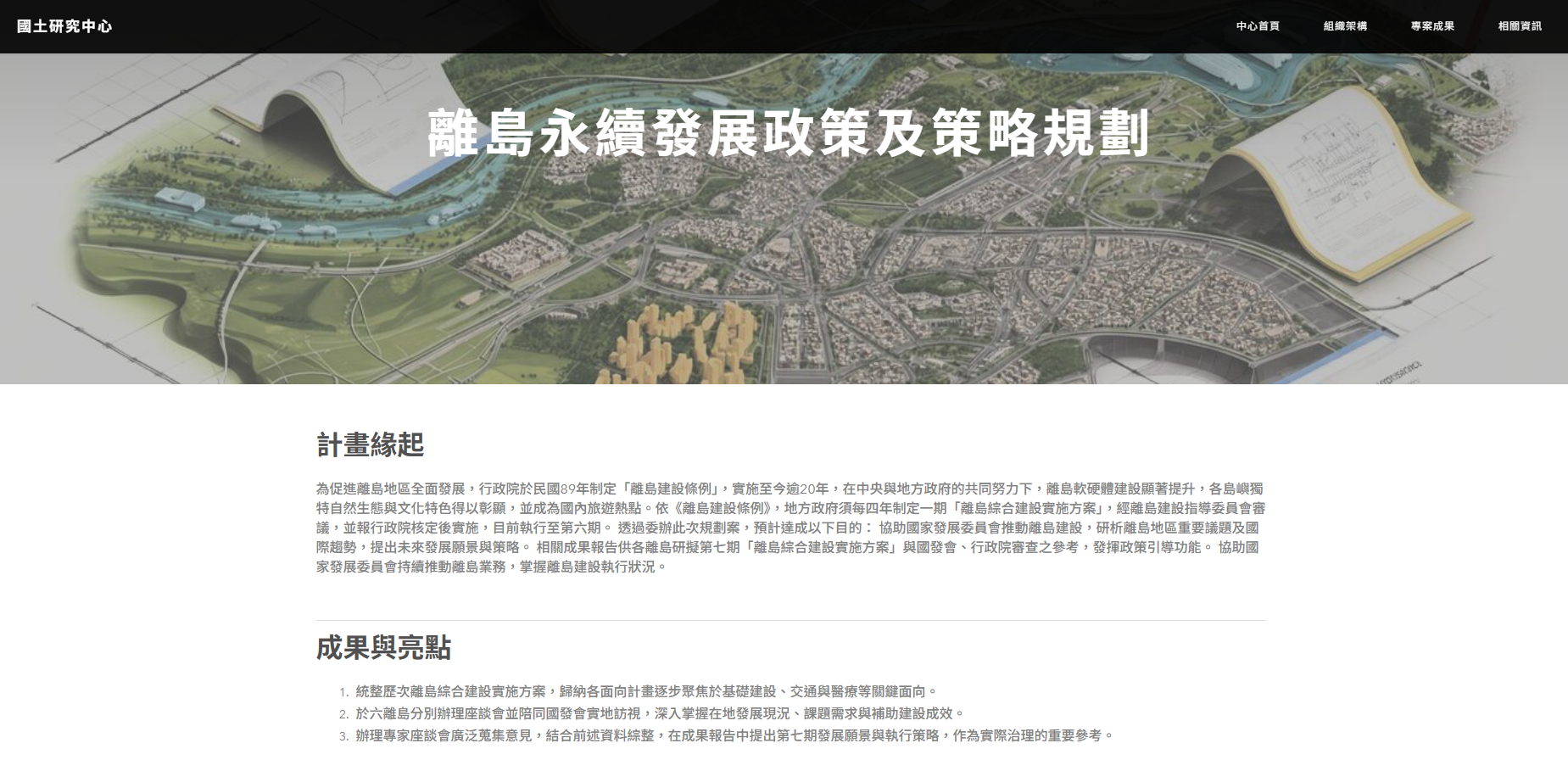
Center for National Land Development Research |
Commit to formulating sustainable national land development strategies and integrating spatial resources to build resilient towns, establishing a professional think tank for ecological urbanism and climate resilience. |
Link |
| 20 |
Global Earth Observation and Data Analysis Center |
Utilize satellite remote sensing to strengthen global environmental monitoring and disaster response, transforming climate crises into opportunities for sustainable development. |
Link |
| 21 |
Resources Cycling and Geological Solutions for Carbon Reduction Research Center |
Assist the government and industrial sectors in achieving carbon neutrality, a green circular economy, and net-zero emissions. |
|
| 22 |
Yu Sheng Environment Control Research Center |
Integrate architectural design with climate research, focusing on human habitats and sustainable development, and pursuing industry-academia collaboration with public and private sectors. |
Link |