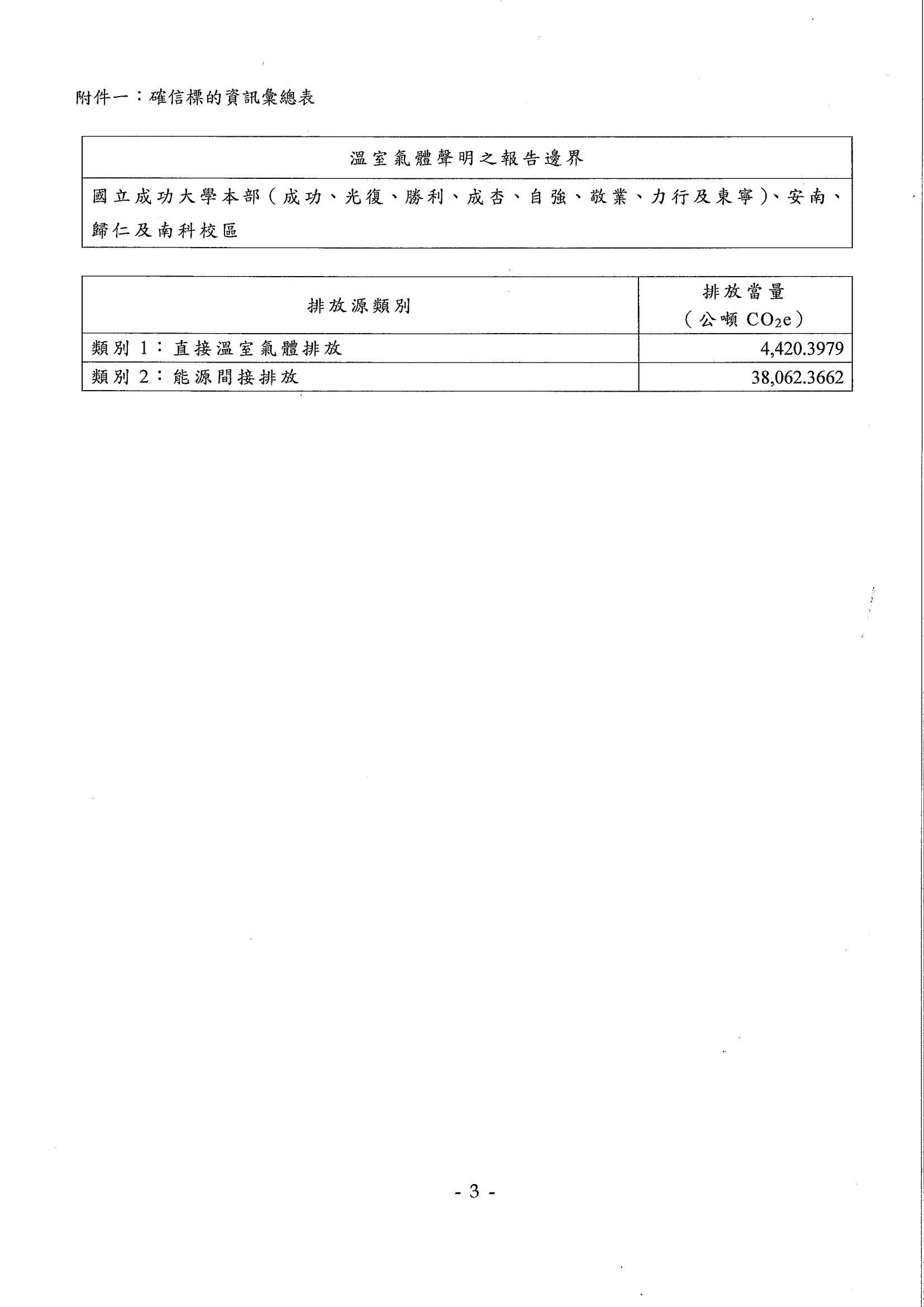






Considering the completeness of greenhouse gas (GHG) inventory data, the adjustment and establishment of quantification methodologies, and the updated GWP values from the IPCC AR6 WGI, NCKU has implemented GHG inventory procedures in accordance with ISO 14064-1:2018 and CNS 14064-1:2021 standards. This involves systematic statistical analysis of various emission sources (Scopes 1 through 4), with 2023 designated as the base year. Through the collaborative collection of internal data across all units, a comprehensive and credible emissions database has been established to accurately monitor the overall GHG emissions status of the campus. Through the cooperation of various departments, relevant campus data are compiled to establish a comprehensive and reliable emissions database, enabling a clearer understanding of the university’s overall greenhouse gas emissions.
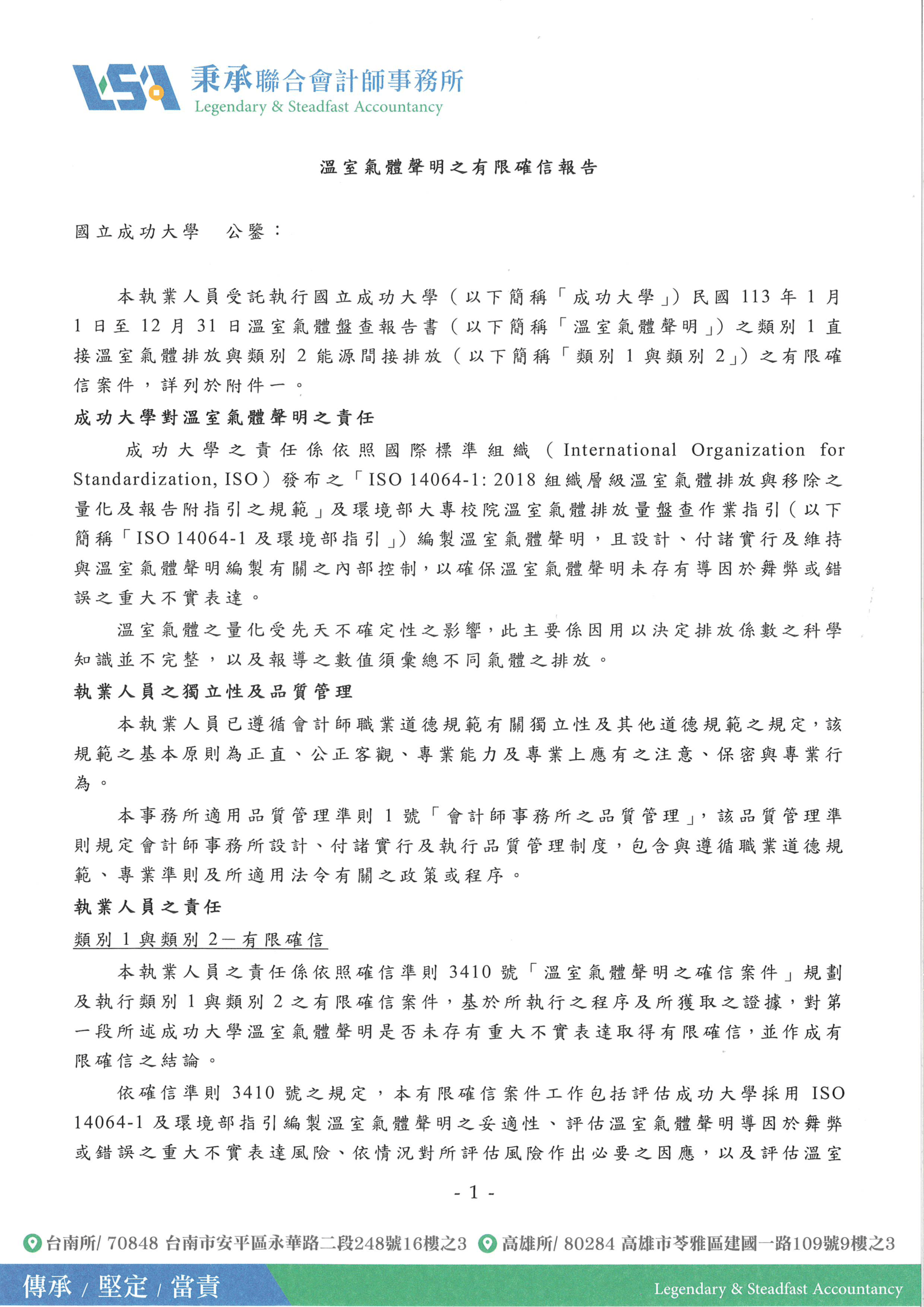
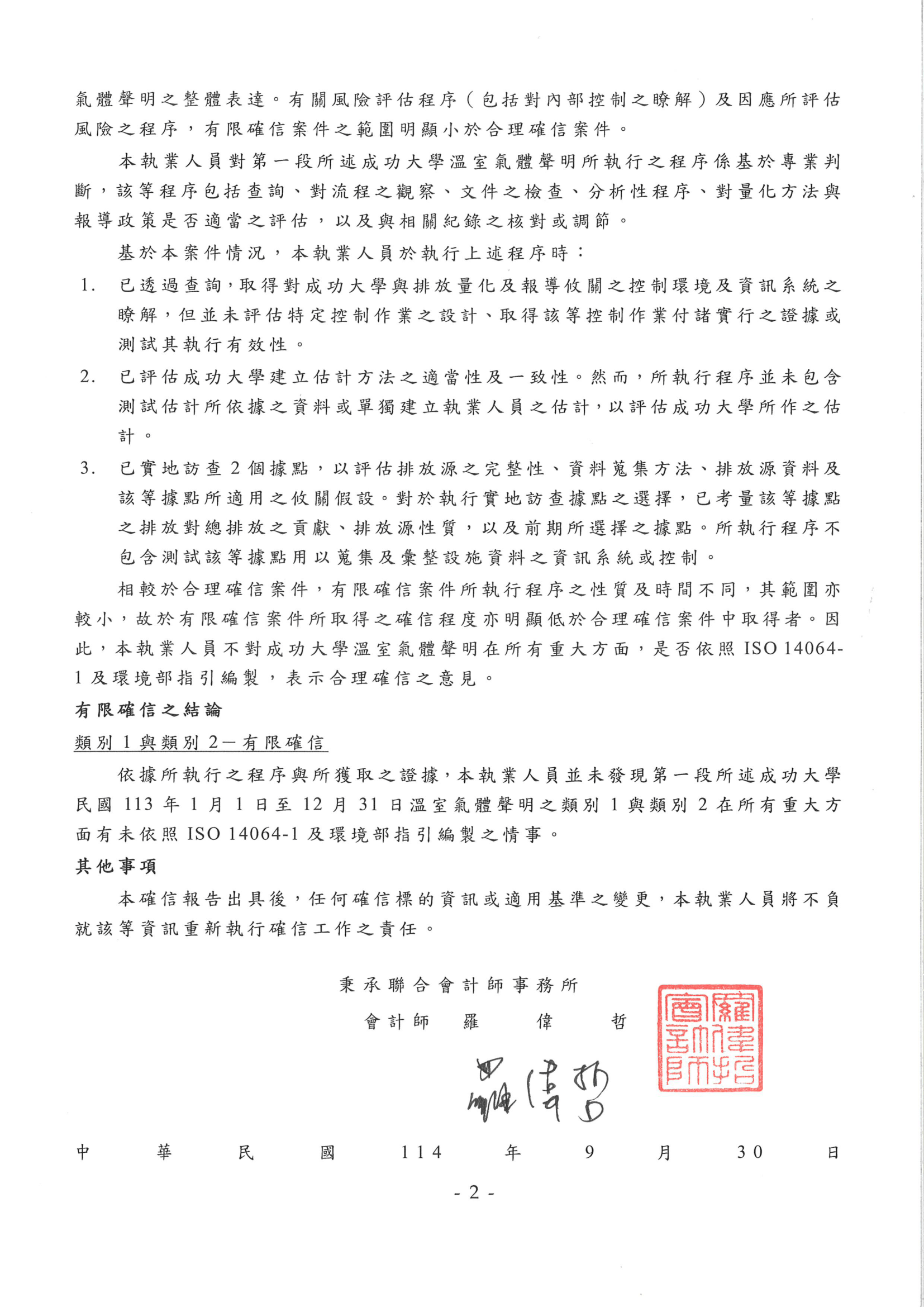
The results of the 2024 greenhouse gas inventory have been verified by an independent third-party verification body to ensure the accuracy and completeness of the reported data. In the future, the university will continue conducting annual inventories and strengthen its internal management and information disclosure mechanisms. Based on these efforts, the university will further develop carbon reduction strategies and work toward building a low-carbon and sustainable campus.
The results of the 2024 greenhouse gas inventory have been verified by an independent third-party verification body to ensure the accuracy and completeness of the reported data. In the future, the university will continue conducting annual inventories and strengthen its internal management and information disclosure mechanisms. Based on these efforts, the university will further develop carbon reduction strategies and work toward building a low-carbon and sustainable campus.