



NCKU implements “Green Procurement” by selecting environmentally friendly materials and recyclable products, while also prioritizing “Local Procurement” by choosing local suppliers and recycled building materials. This approach reduces carbon emissions and resource waste, ensuring the sustainable development of the supply chain. At the same time, NCKU promotes “Ethical Procurement”, ensuring corporate social responsibility (CSR) and establishing a compliant and eco-friendly procurement model to achieve sustainable operations and fulfill social responsibilities.
Green Procurement
Green Procurement
- NCKU has formulated its green procurement policy based on the Environmental Protection Administration’s “Government Green Procurement Program.” To promote green procurement, NCKU has established a dedicated “Green Procurement” section on the Office of General Affairs website, providing policy and regulatory information to encourage all university departments to implement sustainable purchasing practices.
- In 2025, the compliance rate for designated green procurement items reached 99.30%, with a total expenditure of NT$91,811.158. The majority of purchases were IT products, supporting the university's teaching and research needs.
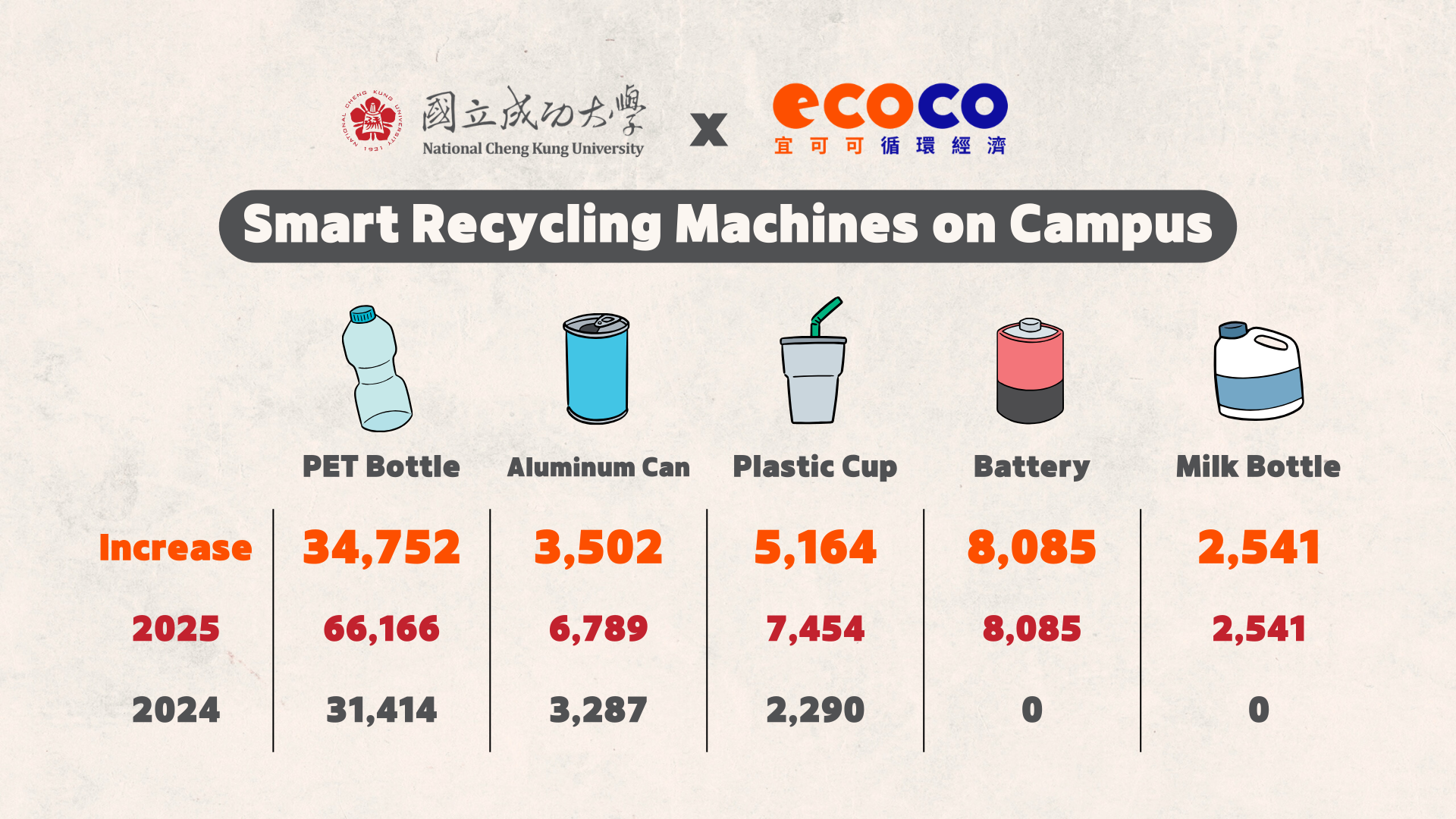
- Additionally, in 2024, NCKU collaborated with Mercuries F&B Co., Ltd. to install ECOCO smart recycling machines on campus, further advancing green sustainability efforts. ECOCO utilizes data analytics to track recycling performance, and within 3 months, the system has reduced over 1,000 kg of carbon emissions, equivalent to the annual carbon absorption of 45 trees. The recycling volume in 2025 has doubled, with new categories such as used batteries and milk bottles added to the existing collection of PET bottles, aluminum cans, and plastic cups. This expansion represents a more comprehensive implementation of smart recycling and the green campus initiative.
Local Procurement
- NCKU's procurement is categorized into goods and services, with a priority given to local suppliers and domestic labor, following a strict, fair, and transparent vendor selection process. By sourcing locally, the university shortens supply chains, reduces carbon emissions, and lessens environmental impact, while also fostering domestic talent competitiveness and economic development.
- In 2025, local procurement accounted for 78.69% of the total annual procurement budget, with both procurement amount and proportion exceeding the previous year.
Ethical Procurement
- NCKU adheres to the "Guidelines on the Priority Procurement of the Products and Services Provided by Disability Welfare Institutions or Groups," actively promoting ethical procurement on campus.
- To support this initiative, the Procurement Division of the Office of General Affairs has established a "Priority Procurement for Institutions or Organizations for Persons with Disabilities" section on its website, in response to government policies aimed at protecting the rights and interests of persons with disabilities.
- In 2025, the ethical procurement ratio reached 20.01%, exceeding the previous year's amount. Additionally, over the past 3 years, the ratio has consistently surpassed the 5% statutory target, demonstrating the university’s commitment to social responsibility and inclusive procurement practices.