




National Cheng Kung University (NCKU) has established an institutional commitment to achieve complete carbon neutrality by 2041, formally ratified through the "NCKU's Commitment to Carbon Neutrality" signed by the President. Aligned with the Greenhouse Gas (GHG) Protocol, NCKU outlines rigorous decarbonization milestones for Scope 1 direct emissions and Scope 2 purchased electricity: reducing emissions to 2010 levels by 2024, to 2000 levels by 2029, and halving the institutional carbon footprint by 2031. To ensure the target's operational feasibility, NCKU operates the Carbon Neutral Next-Gen Incubation Hub with five practical demonstration facilities, leveraging systematic carbon accounting and low-carbon technology verification to drive institutional progress toward its 2041 net-zero mandate.
Achieve by
13.4.2
SDG13
Achieve by date
- NCKU's Commitment to Carbon Neutrality and Target Roadmap
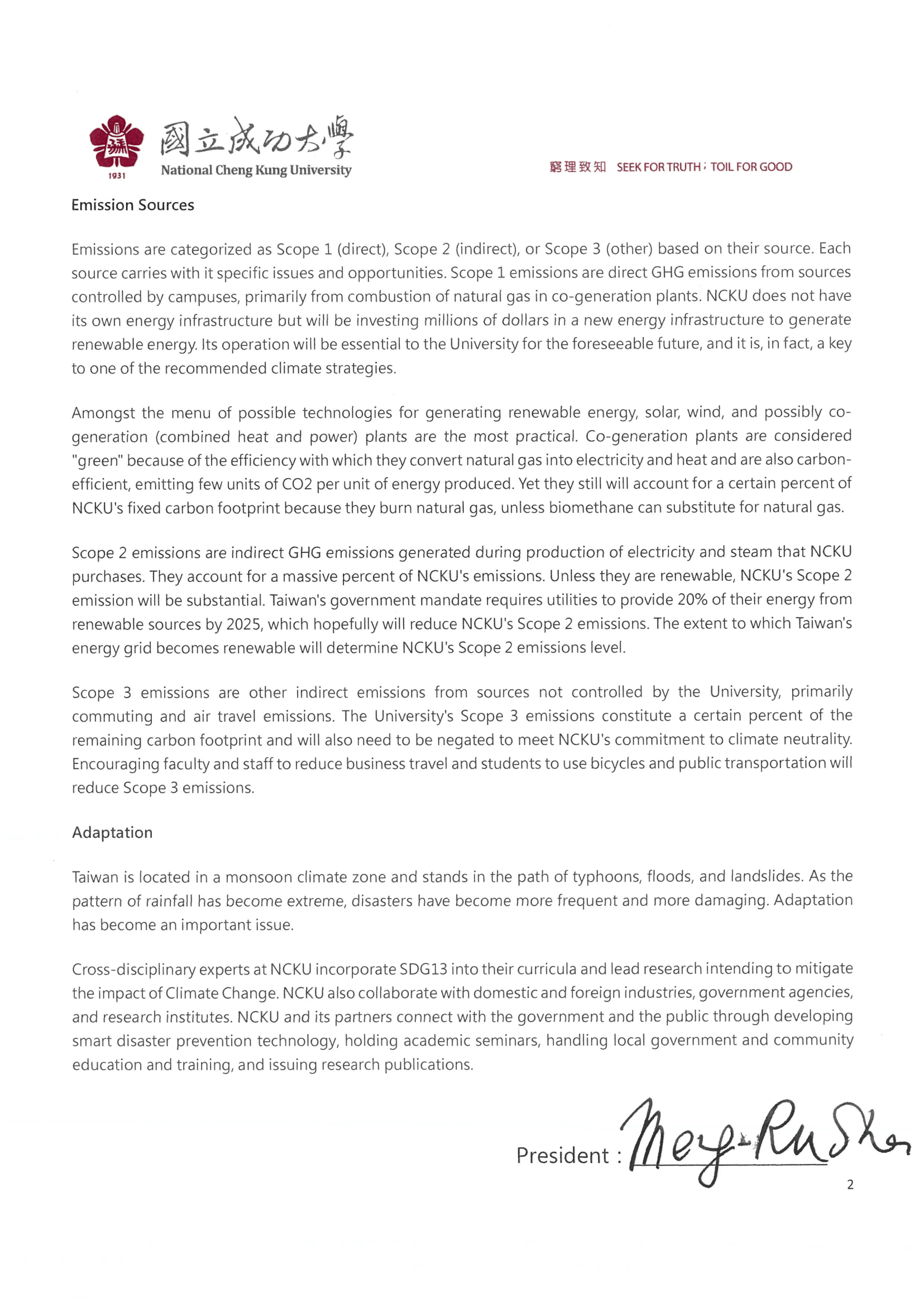 NCKU has institutionalized its commitment to achieve comprehensive campus carbon neutrality by 2041, formalized through the official "NCKU's Commitment to Carbon Neutrality" signed by the President. Aligned with the Greenhouse Gas (GHG) Protocol, NCKU defines aggressive mitigation pathways covering Scope 1 (direct emissions) and Scope 2 (purchased electricity), establishing milestones to reduce emissions to 2010 levels by 2024, to 2000 levels by 2029, and halving the campus carbon footprint by 2031 to realize full carbon neutrality by 2041.
https://en.sdg.ncku.edu.tw/hightlight-141.html
- NCKU Carbon Neutral Next-Gen Incubation Hub: Technical Verification and Implementation Framework
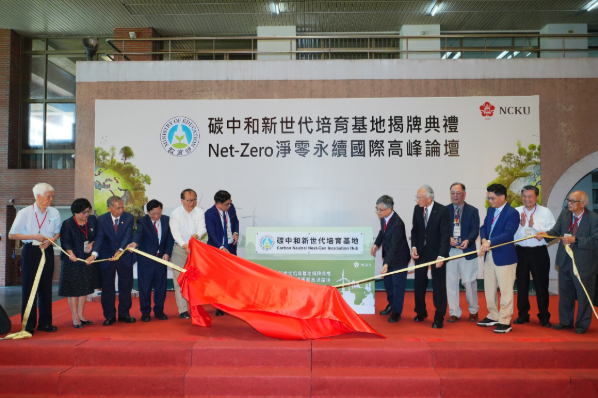 To operationalize its 2041 carbon neutrality roadmap, NCKU launched Taiwan’s first "Carbon Neutral Next-Gen Incubation Hub." Integrating regional higher education resources, the hub advances energy management, energy efficiency, and carbon capture and utilization technologies. Featuring five hands-on training facilities, the hub establishes robust carbon accounting and verification mechanisms while cultivating net-zero professionals, providing the technological infrastructure and institutional capacity necessary to realize NCKU's 2041 target.ge, and energy efficiency.
https://web.ncku.edu.tw/p/16-1000-267157.php?Lang=zh-tw