



- NCKU launches Carbon Neutrality Hub, fostering academia–industry collaboration toward net-zero 2050.
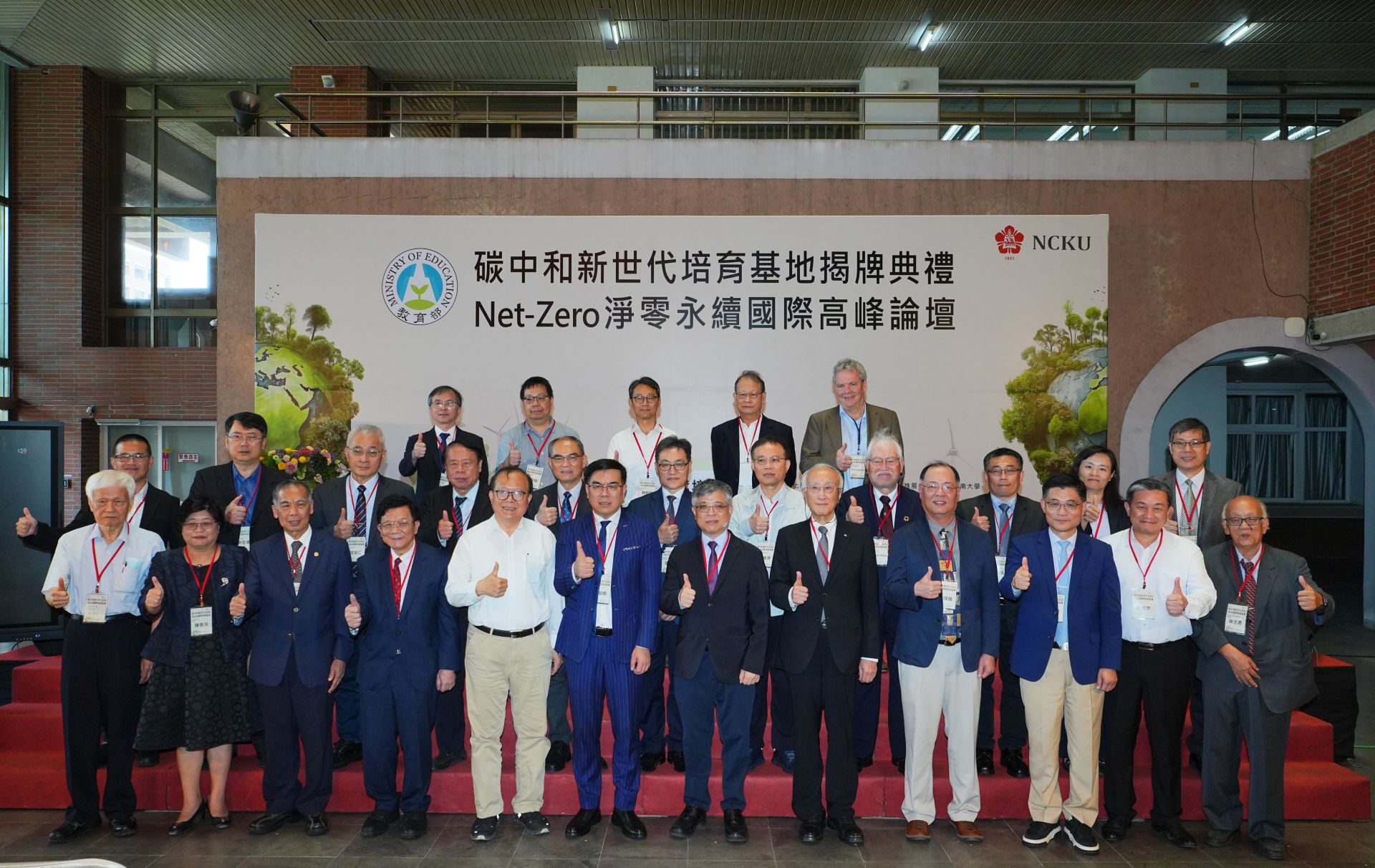
On April 20, 2024, NCKU inaugurated Taiwan’s first university-based Net-Zero Generation Education Base and hosted the Net-Zero Sustainability International Summit, establishing a cross-sector dialogue platform to advance Taiwan’s net-zero transition and sustainability policies. The base integrates resources from University of Tainan, Southern Taiwan University of Science and Technology, Kun Shan University, and Chia Nan University of Pharmacy and Science, focusing on energy management, carbon capture and utilization, and low-carbon technologies. It offers specialized courses and hands-on training fields to cultivate professional talents and seed teachers supporting industry transformation.The summit gathered representatives from the Ministry of Education, Ministry of Environment, Industrial Technology Research Institute (ITRI), CPC Corporation, and international experts including Nobuo Tanaka, former Executive Director of the International Energy Agency, along with over 50 corporate and institutional partners to discuss strategies for carbon reduction under the challenges of climate change.President Shen Meng-Ru emphasized that NCKU is committed to serving as a national driver of net-zero policy through education, research, and innovation. By fostering interdisciplinary collaboration among academia, government, and industry, NCKU aims to cultivate future leaders and contribute to sustainable development in Taiwan and beyond.
- 2024 HIGEM International Conference unites global scholars to advance green economy and sustainable development.
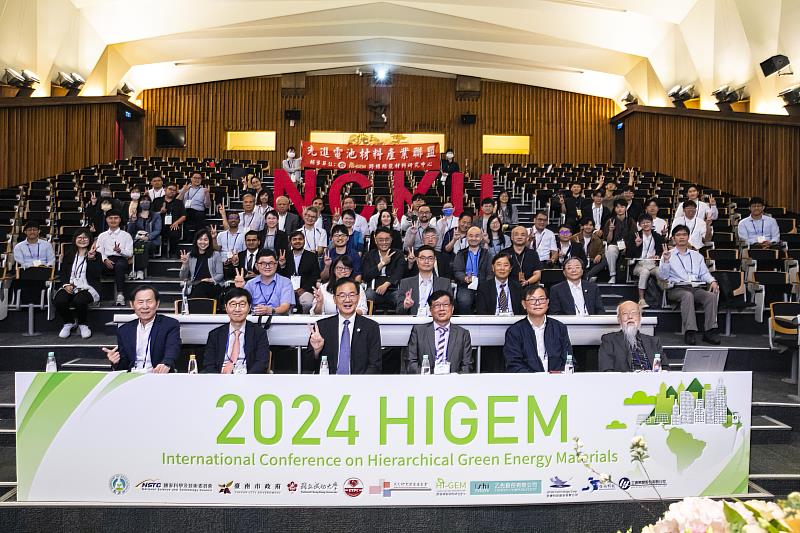
The Hierarchical Green-Energy Materials Research Center (Hi-GEM) at NCKU hosted the 2024 HIGEM International Conference on June 27–28, themed “Global Green Circular Economy and Sustainable Energy.” The event brought together global scholars, experts, and industry leaders to discuss innovations in green technology, renewable energy, and the circular economy.In his opening remarks, NCKU Vice President Hong-Jen Chen emphasized that climate change presents a major global challenge and that sustainable development can only be achieved through cross-sector collaboration among government, industry, and academia.The conference opened with a keynote speech by Prof. Nam-Gyu Park, a fellow of the Korea Advanced Institute of Science and Technology (KAIST), who shared breakthroughs in high-efficiency perovskite solar cells and their commercialization. The two-day event featured keynote lectures, parallel sessions, exhibitions, and networking activities, providing a collaborative platform for in-depth academic and industrial exchange.NCKU noted that since its launch in 2021, the Hi-GEM International Conference has become a key platform for advancing Taiwan’s green transition. By fostering interdisciplinary dialogue and global research collaboration, NCKU continues to drive sustainable policy innovation and lead Taiwan toward a net-zero future through science, technology, and education.
- NCKU and EFEO co-host the 2024 Pan-Pacific Indigenous Archaeology International Conference.
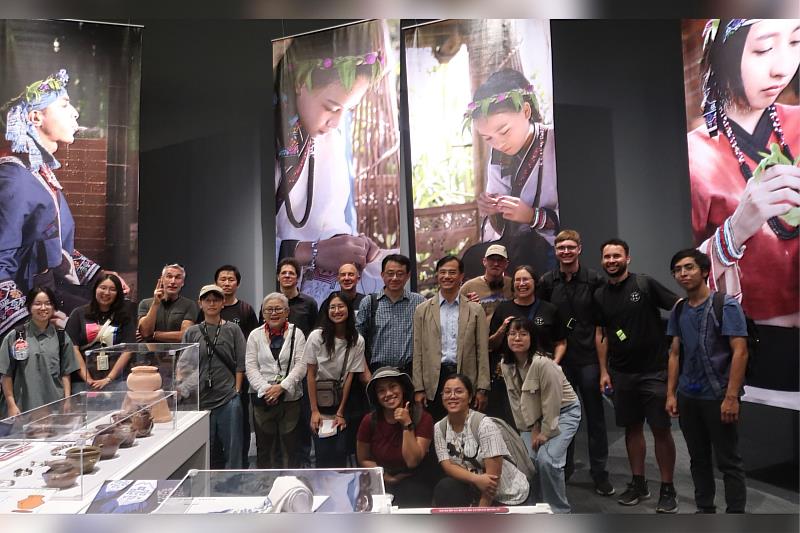
The Graduate Institute of Archaeology at NCKU, in collaboration with the École française d’Extrême-Orient (EFEO), co-hosted the 2024 Pan-Pacific Indigenous Archaeology International Symposium on November 15–16, 2024, at NCKU’s Kuang-Fu Campus. The symposium brought together scholars and Indigenous representatives from Taiwan, North America, Asia, and the Pacific region to discuss issues such as Indigenous cultural heritage preservation, archaeological practice, and community collaboration, demonstrating NCKU’s commitment to promoting cross-cultural dialogue and decolonial academic practice.In her opening remarks, Vice President Chen Yu-Nu emphasized that NCKU has long been devoted to the humanities and social engagement, continuously advancing cultural diversity and academic responsibility. Faculty and students from the Institute of Archaeology have also been deeply engaged in Indigenous archaeological research and cultural transmission over the years.The symposium featured a keynote lecture by internationally renowned scholar Joe Watkins, who reviewed the development and challenges of Indigenous archaeology. Participants also visited NCKU Library’s special exhibition “Maritime Exchange – The Formation of Taiwan”, and joined field visits to Jibeisha (Siraya) Village and the Southern Taiwan Science Park Archaeological Museum, engaging in cultural exploration and exchange.Through this symposium, NCKU further strengthened its connections with international academic institutions and local communities, promoted the sustainable development of Indigenous cultural heritage, and established a long-term cooperative platform linking Taiwan with the broader Pan-Pacific region.
- 2024 Chengcai Forum
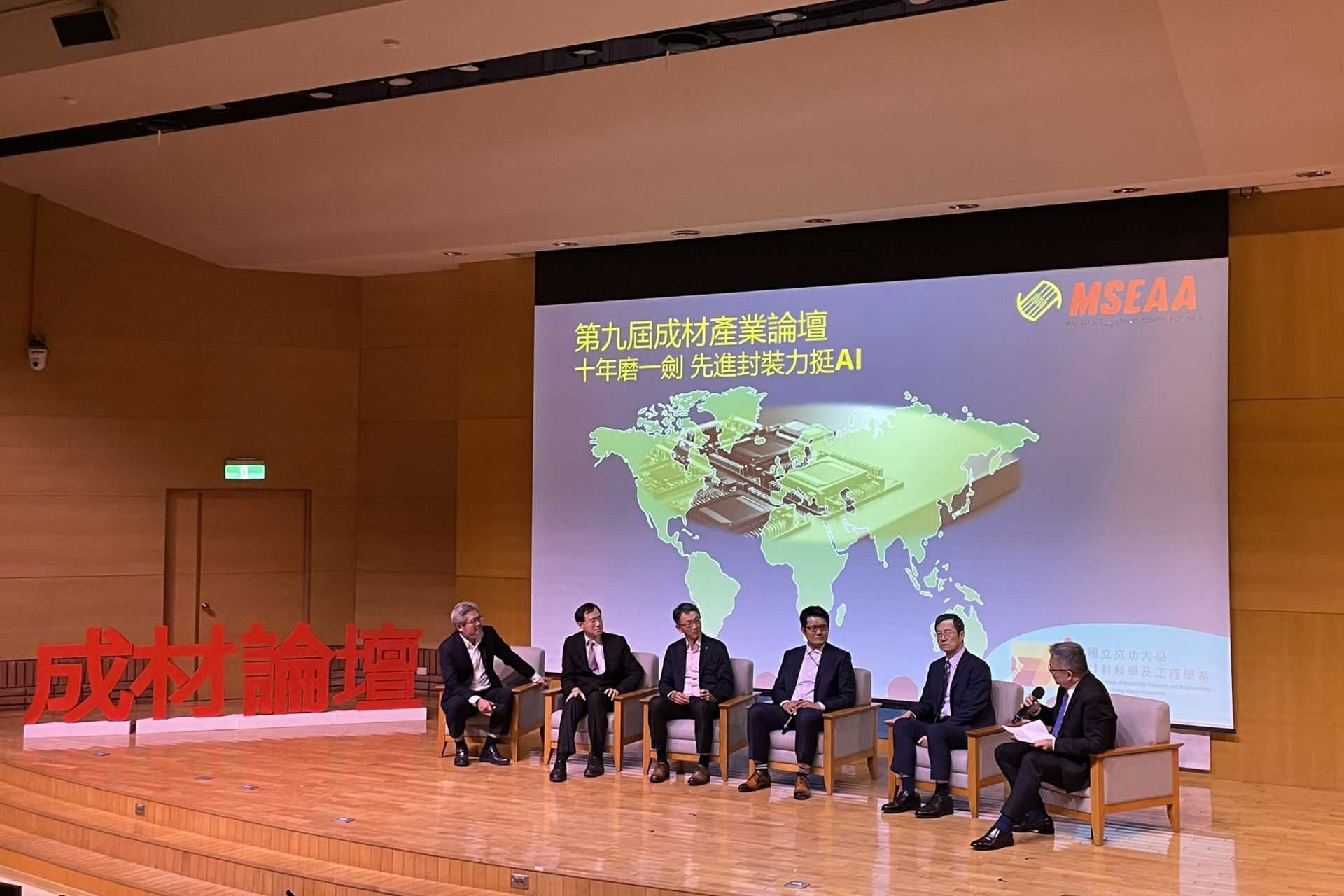
The Department of Materials Science and Engineering at NCKU, together with its Alumni Association, hosted the 9th NCKU Materials Industry Forum on November 8, 2024. With the theme “A Decade of Refinement: Advanced Packaging Empowering AI,” the forum focused on innovation and sustainability in advanced semiconductor packaging technologies driven by artificial intelligence. Industry leaders from TSMC, Winstek, Gudeng Precision, Gudeng Technology, InnoTech, and Applied Materials joined to discuss technological innovation and sustainable strategies, highlighting NCKU’s role as a bridge between academia and industry.Vice President Chen Yu-Nu and Vice President for Research and Development Liu Chuan-Pu emphasized NCKU’s commitment to building cross-sector dialogue platforms that connect academic research with industrial practice to advance sustainable policy and technological progress. The forum not only fostered collaboration between academia and industry but also helped students gain insight into future trends in materials science, nurturing globally minded and practice-oriented talent.Since its establishment in 2015, the NCKU Materials Industry Forum has become one of Taiwan’s most influential annual events in the materials field, continually leading discussions on innovation, sustainability, and social responsibility across academic and industrial communities.