



- NCKU’s Prof. Yi-Ching Chen and international team publish in Nature, identifying 17 global mountain climate risk hotspots.
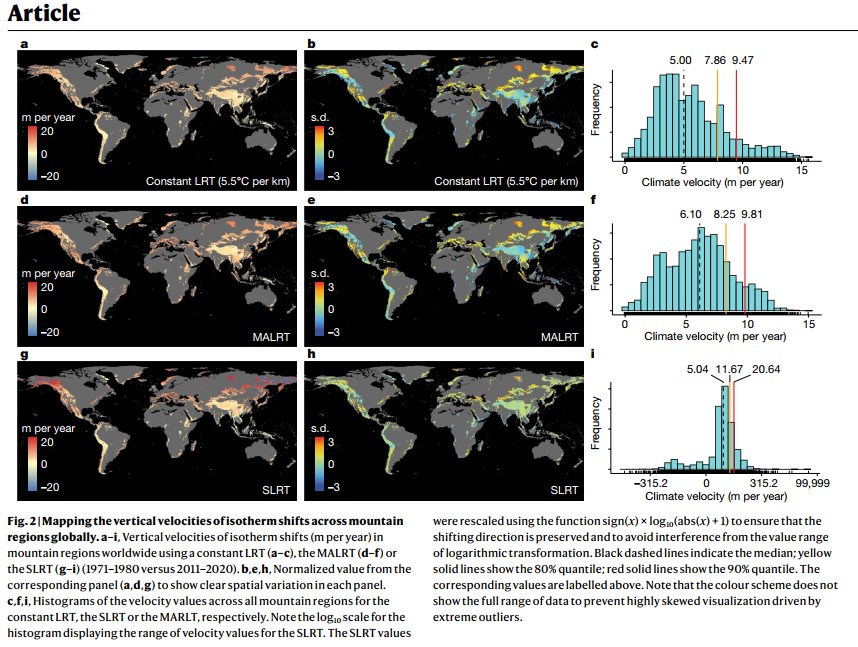
Associate Professor Yi-Jing Chen from NCKU’s Department of Life Sciences and Sheng-Feng Shen from Academia Sinica co-led an international research team with collaborators from Harvard University, Université de Picardie Jules Verne (France), National Taiwan University, and Academia Sinica. Their groundbreaking paper, “Climate velocities and species tracking in global mountain regions,” was published in Nature. Using satellite data and a thermodynamics-based moist-adiabatic lapse rate, the team produced the first global estimates of mountain climate velocity, revealing critical threats to biodiversity in mountainous regions. Over the past 50 years, about 32% of global mountain areas have experienced high climate velocities, indicating significant risks for species, particularly in humid regions such as Sumatra, Taiwan, Japan, and South Africa. While species in areas with slower climate velocities may still keep pace with changing temperatures, those in faster zones urgently need conservation and adaptation strategies. The study highlights the importance of establishing comprehensive mountain climate monitoring networks—including temperature, humidity, and precipitation—mitigating global warming, and enhancing habitat connectivity. This research marks a milestone in global mountain ecology and sustainability studies, exemplifying NCKU’s leadership in international collaboration on sustainability-related scientific research.
- NCKU signs MOU with Australia’s CO₂CRC to advance Taiwan–Australia collaboration on carbon capture, utilization, and storage (CCUS) technologies.
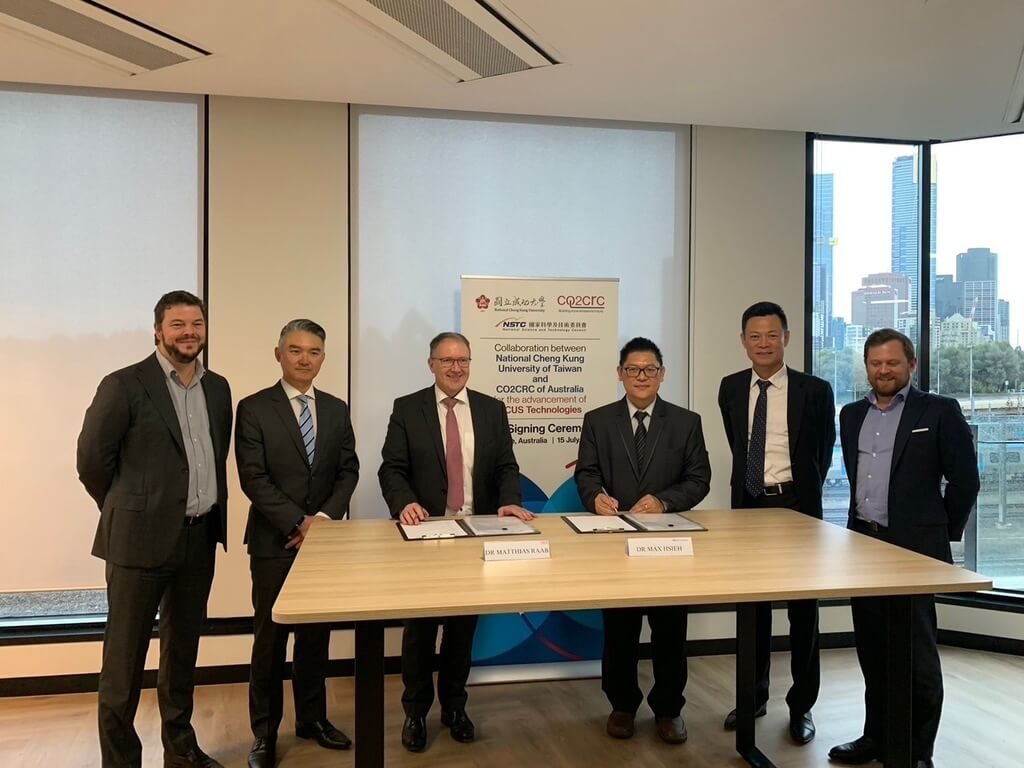
NCKU is advancing international collaboration in sustainable energy and net-zero technologies. In 2024, NCKU signed a Memorandum of Understanding with the CO2CRC (CO2 Cooperative Research Centre) in Melbourne to jointly develop Carbon Capture, Utilization, and Storage (CCUS) technologies. Led by Professor Ping-Chih Hsieh from the Department of Resources Engineering, a delegation including representatives from Taiwan’s National Science and Technology Council (NSTC) and CPC Corporation visited the Otway Project site in Victoria—one of the world’s leading carbon storage research facilities. The partnership integrates Australia’s advanced CCUS expertise with Taiwan’s geological research strengths to localize and accelerate CCUS deployment, supporting Taiwan’s 2050 Net-Zero Emissions goal. Beyond academic collaboration, the partnership extends to industrial applications, including CCUS demonstration projects by Taipower and CPC, fostering technology transfer and field implementation. Professor Hsieh emphasized that Taiwan’s strengths in high-tech industries and AI can enhance carbon data processing and monitoring, enriching the collaboration’s innovation potential. This initiative underscores NCKU’s leadership in sustainability-oriented international research and marks a key milestone in Taiwan–Australia cooperation toward a net-zero future.
- NCKU partners with NVIDIA to advance AI innovation.
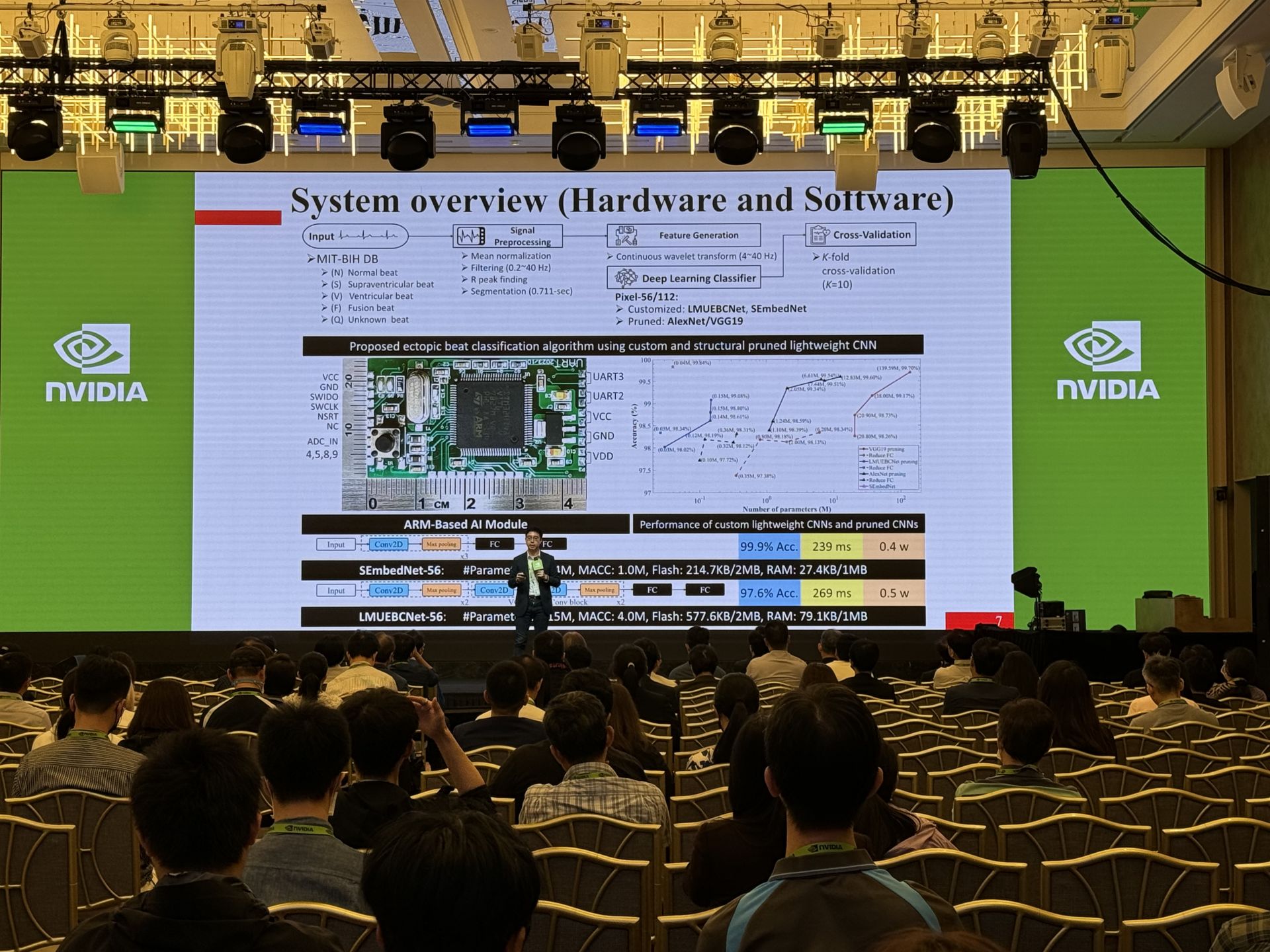
NCKU has established a long-term partnership with NVIDIA, advancing applications of Artificial Intelligence (AI) in sustainability, healthcare, and industrial innovation. Since introducing Taiwan’s first NVIDIA DGX-1 supercomputer in 2017, NCKU and NVIDIA have collaborated across AI hardware architecture, algorithm development, precision medicine, fintech, and creative design. In 2023, NCKU partnered with NVIDIA and ZOTAC to establish the NVIDIA Studio Smart Classroom, fostering interdisciplinary education and industry collaboration. NCKU Hospital built a genomics and precision medicine analysis hub powered by NVIDIA’s computing systems, while AI models for cardiac arrhythmia detection achieved up to 40× faster performance under NVIDIA’s technical guidance. The university also adopted Jetson Nano devices for edge computing and smart medical applications, offering courses on AIoT for digital precision health under the Ministry of Education’s program. Faculty members joined the NVIDIA Deep Learning Institute University Ambassador Program, further strengthening AI talent cultivation. Through these collaborations, NCKU demonstrates global leadership in sustainable AI innovation, biomedical technology, and education—driving forward a smarter and more sustainable future through international research cooperation.
- NCKU leverages technology for science diplomacy, earning recognition for supporting benzene pollution research in Houston, USA.
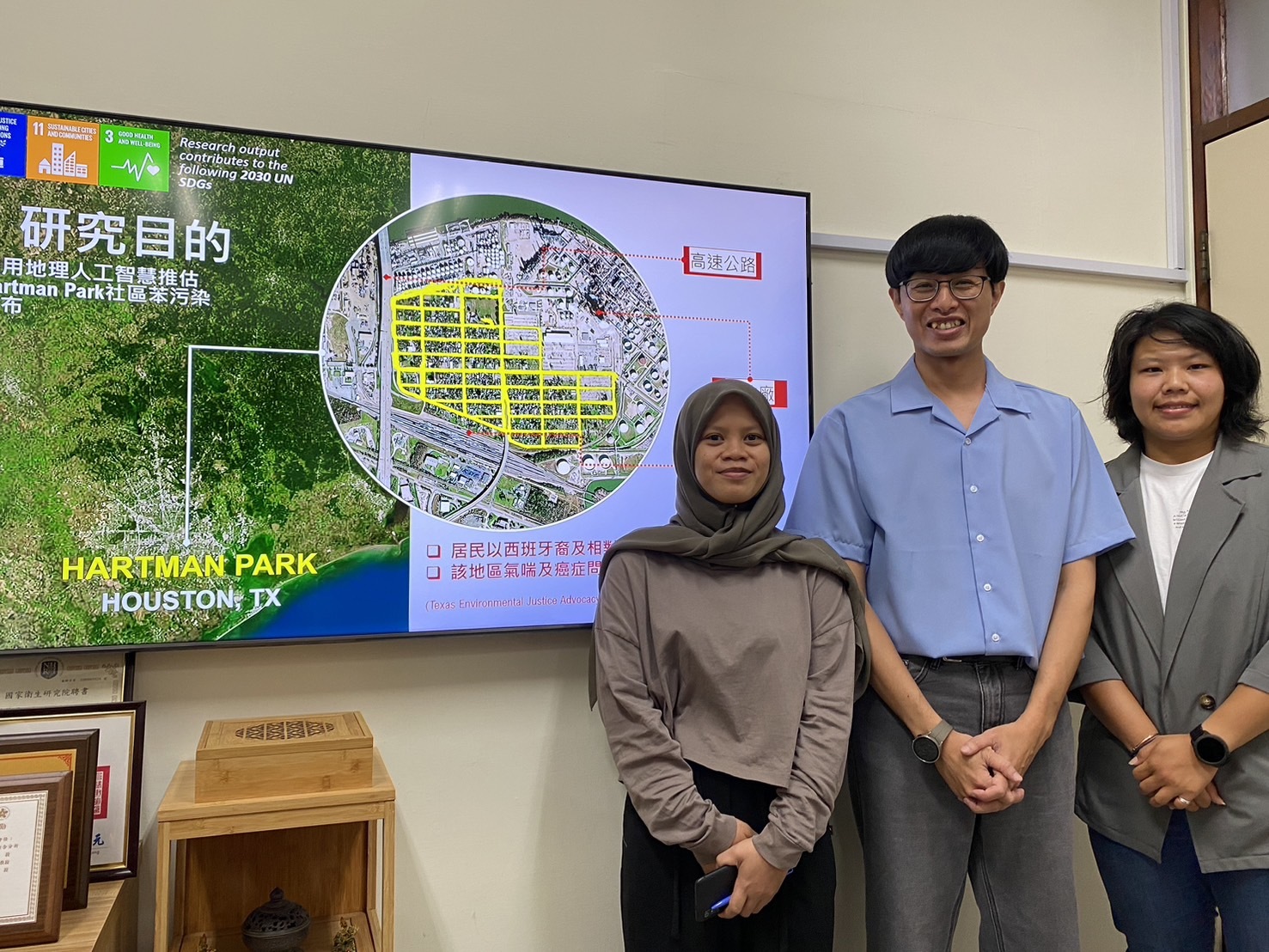
Professor Chih-Ta Wu and his team from the Department of Geomatics at NCKU applied Geographic Artificial Intelligence (GeoAI) to collaborate with Texas A&M University and Academia Sinica, analyzing the spatial distribution of the carcinogen benzene in Houston, Texas. Their study, published in the Journal of Hazardous Materials, achieved 98% accuracy in identifying pollution sources. Using over 300 environmental factors—including satellite imagery, meteorological data, and land-use patterns—the team developed a model that can map air pollutants with limited ground measurements, offering a breakthrough for environmental health risk assessment. The collaboration extends to projects in Dallas and Taiwan’s Kaohsiung, where NCKU works with Kaohsiung Medical University, Xiaogang Hospital, and the Ministry of Environment to advance precision environmental medicine. The research highlights a strong link between benzene exposure and higher incidences of leukemia, lung cancer, and colorectal cancer, emphasizing the urgent need for environmental health interventions. This international partnership exemplifies NCKU’s role in science diplomacy and its commitment to leveraging AI for sustainable urban health and environmental resilience, contributing a pioneering model for global pollution monitoring and prevention.
- NCKU College of Semiconductor Engineering partners with Vietnam National University Ho Chi Minh City to co-develop chip design and packaging talent programs.
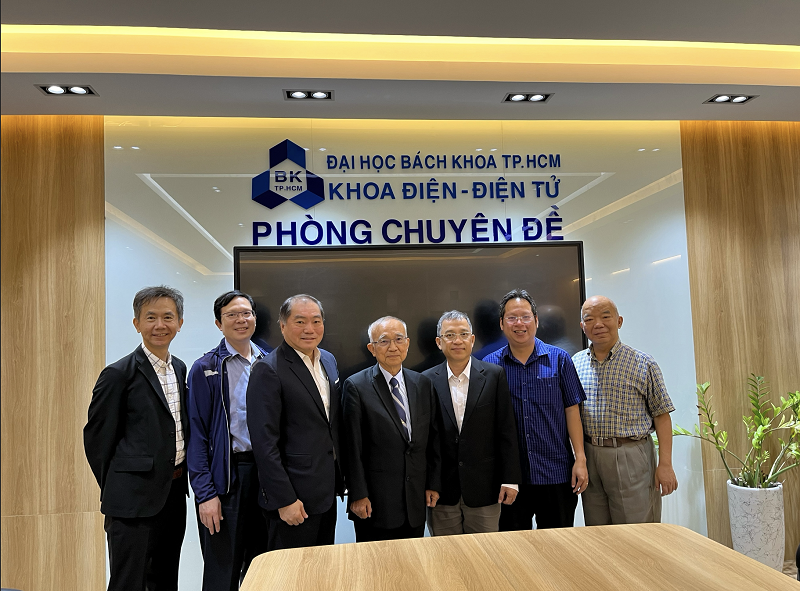
NCKU’s College of Semiconductor Engineering is actively advancing international collaboration in talent cultivation and industry-academia partnerships. In 2024, NCKU signed an MoU with Vietnam National University – Ho Chi Minh City (VNU-HCM) to jointly develop training programs in chip design and semiconductor packaging and testing. Led by Dean Yen-Kun Su, the NCKU delegation visited leading Vietnamese universities—including the University of Science, University of Technology, University of Information and Communications Technology, and Can Tho’s Kent University—to establish cooperation across the semiconductor value chain. The collaboration aims to strengthen Vietnam’s semiconductor education and technical capacity while supporting Taiwan’s talent development for the global chip industry. Through summer intensive programs, research exchanges, and dual-degree pathways, NCKU welcomes outstanding Vietnamese students to pursue advanced studies in Taiwan. This initiative not only accelerates Vietnam’s high-tech industrial growth but also contributes to economic advancement and improved living standards for its people. By integrating education, innovation, and sustainable development, NCKU demonstrates leadership in fostering mutual growth and sustainable prosperity through international cooperation in the semiconductor sector.