



National Cheng Kung University (NCKU) actively tracks and publicly discloses application and admission information for underrepresented groups. The university offers diverse admission pathways, such as special selection and the “Cheng Xing Program” specifically designed for economically disadvantaged students, with admission results for each group published regularly. In addition, NCKU releases annual statistics on the male-female student ratio, demonstrating transparency and commitment to diversity and equal access. All relevant information is openly available to the public and subject to ongoing review.
Access to university track underrepresented groups applications
10.6.2
SDG10
Access to university track underrepresented groups applications
- Admission Lists by Division for NCKU Cheng Xing Admission in Previous Years
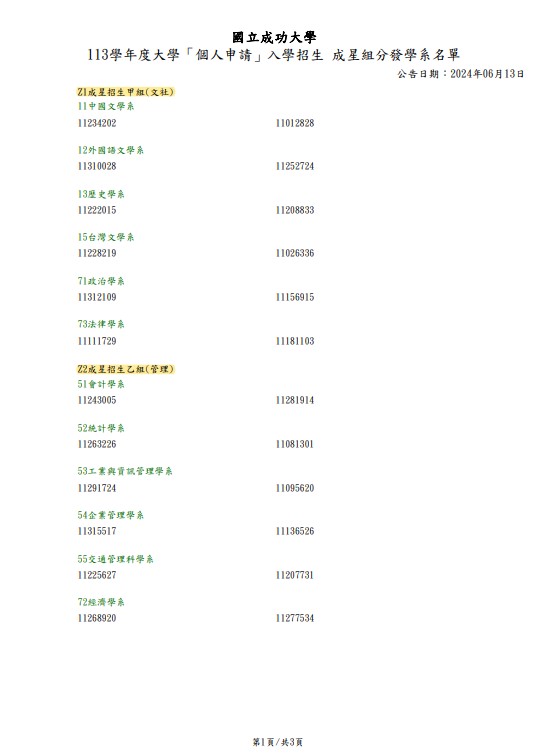 Through the “Chengxing Admission Program,” NCKU has established a dedicated admission pathway for students from low-income, middle-low-income, and special backgrounds, aiming to enhance equal access to education. Annual placement and admission lists are published on the official admissions website, clearly presenting the admitted students by department, thereby ensuring transparency and accessibility. This system not only guarantees that disadvantaged students can enter university through formal channels but also provides the public with a mechanism for oversight, reflecting the university’s principles of fairness and openness in admissions. By making admission data and group placements publicly available, NCKU effectively implements non-discriminatory and affirmative action policies, helping disadvantaged groups gain access to higher education opportunities.
- NCKU Gender Statistics for Faculty, Staff, and Students
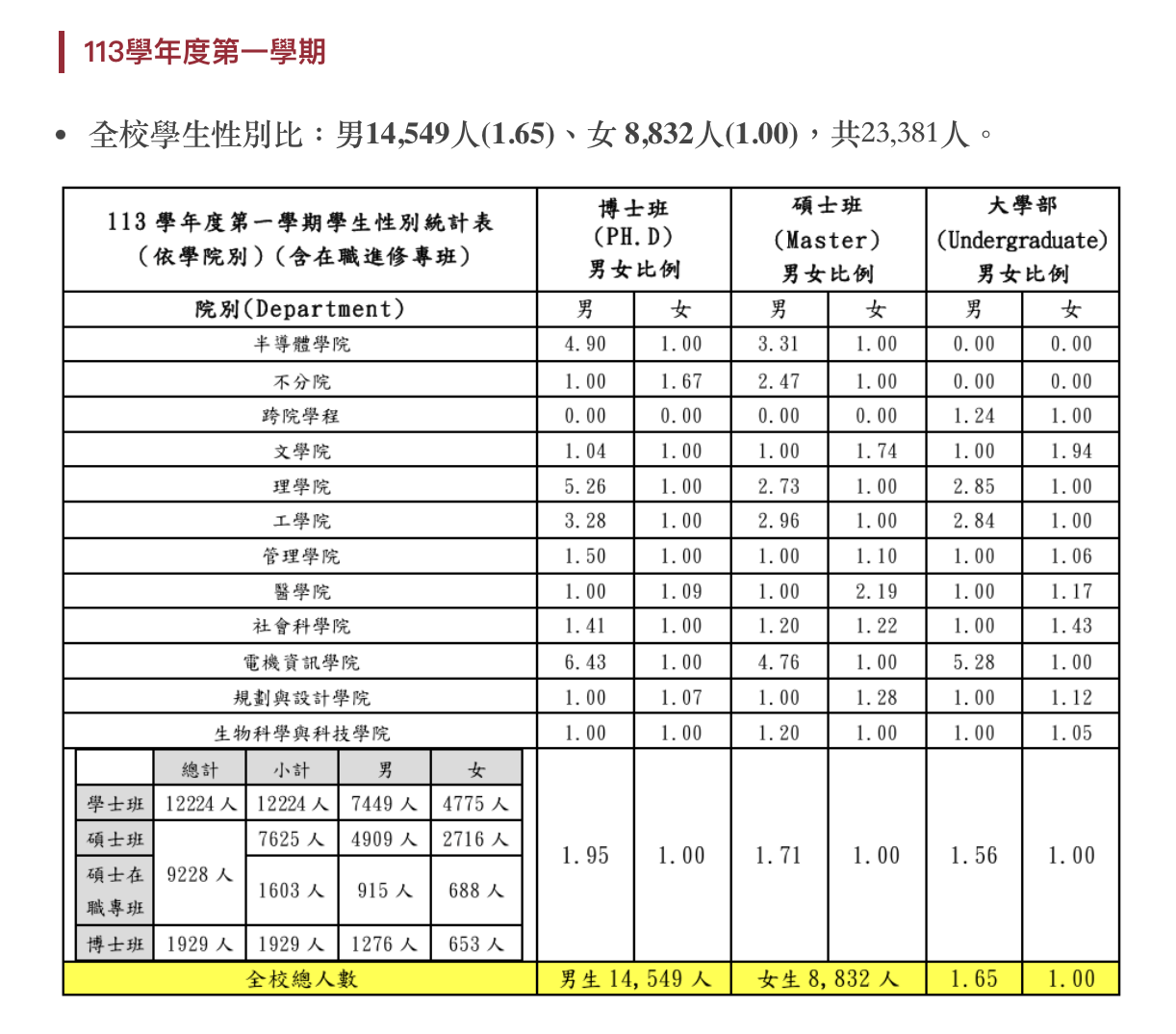 NCKU regularly publishes gender statistics for all students and staff, providing data on gender ratios across academic levels and colleges. For example, in the first semester of the 2024–2025 academic year, the total student population was 23,381, with 14,549 male students and 8,832 female students, resulting in a male-to-female ratio of approximately 1.65:1. The university further disaggregates gender ratios for doctoral, master’s, and undergraduate programs, as well as for each college (e.g., Humanities, Sciences, Engineering, Medicine). These publicly available data enable the tracking of gender participation at different levels of higher education, demonstrating NCKU’s commitment to gender equality and transparency, while also providing important references for external evaluation of the university’s gender composition.
- Allocation of Undergraduate Admission Quotas by Department in Previous Years (Indigenous Student Quotas)
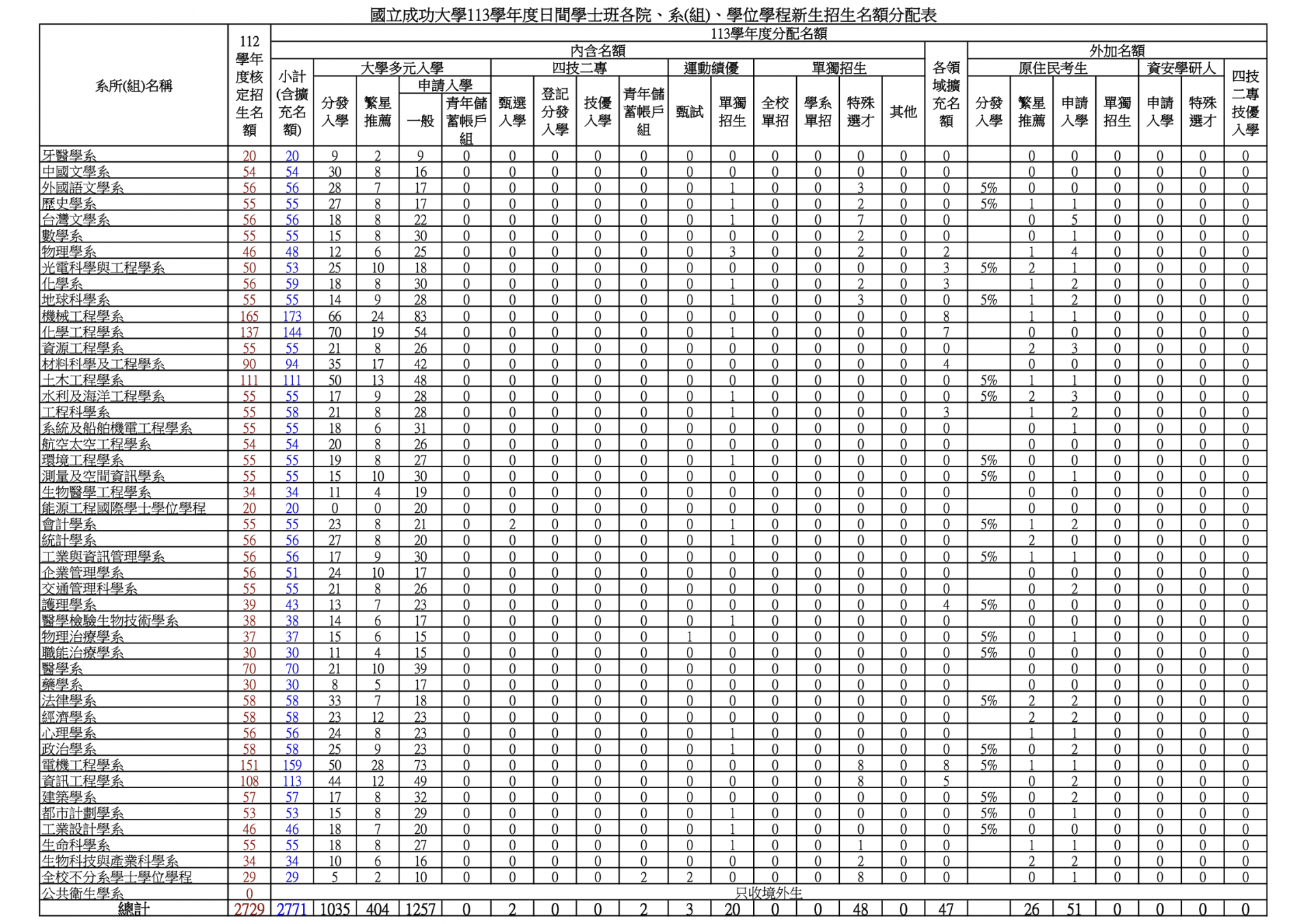 In its undergraduate admissions quota allocations, NCKU reserves a designated proportion of seats for Indigenous students in accordance with Ministry of Education regulations. Each department publicly discloses the reserved numbers and distribution, ensuring transparency and public oversight. This policy constitutes a form of affirmative action, aimed at safeguarding equal access to education and promoting ethnic diversity. By publishing admission data, the university also enables continuous monitoring of the effectiveness of its non-discriminatory admissions policy.