



- College X structure
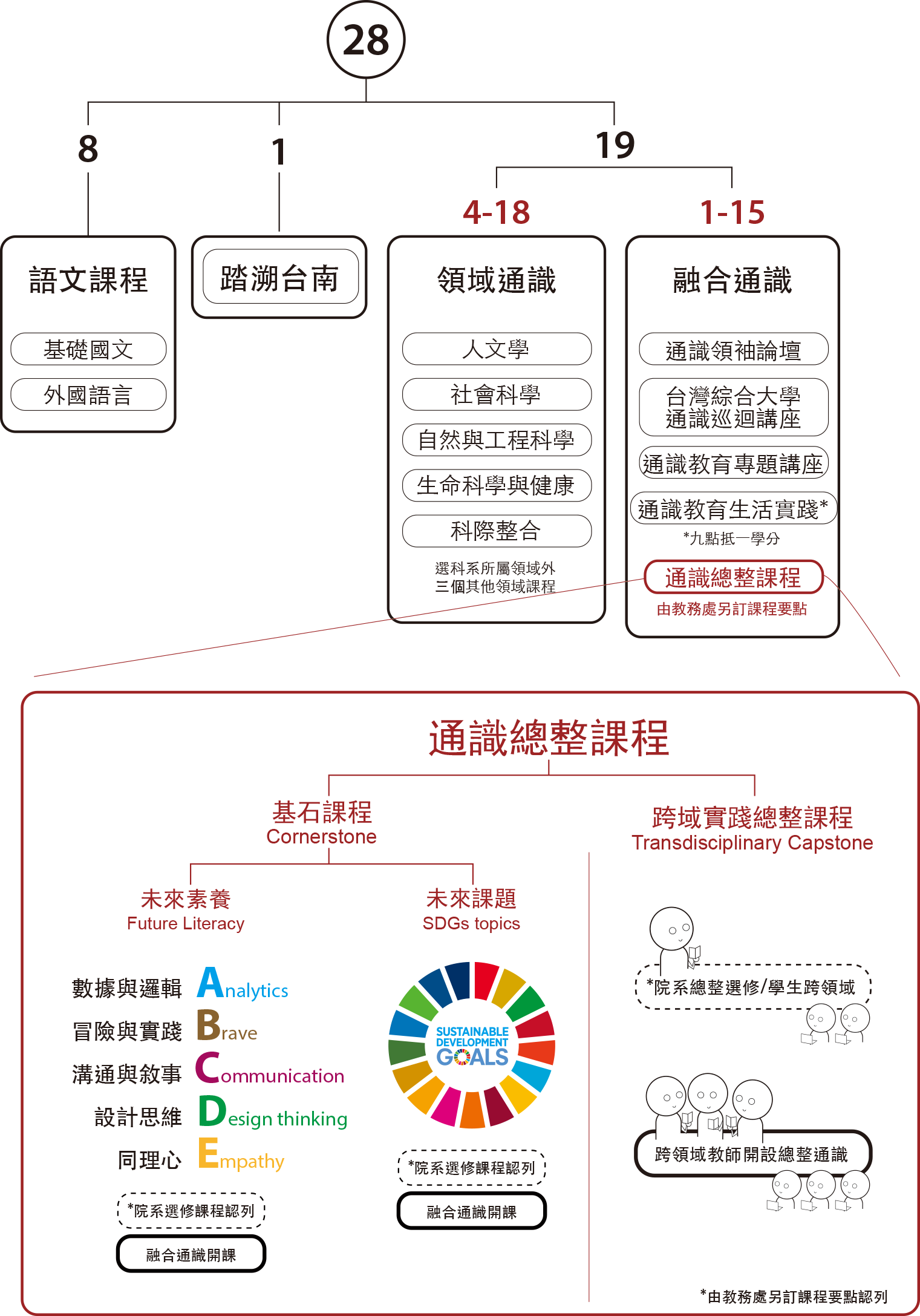
NCKU’s College X adopts a “Future-oriented Challenge” framework, embedding the UN Sustainable Development Goals (SDGs) into its integrated general education curriculum. Courses address topics such as climate action, net-zero transition, urban resilience, and social inclusion. Students engage in interdisciplinary collaboration and project-based learning (PBL), transforming SDG concepts into actionable solutions. This approach cultivates meaningful learning experiences and empowers students to become agents of sustainable change.
- NCKU’s Modular Course Integrates Digital Technology and Sustainability
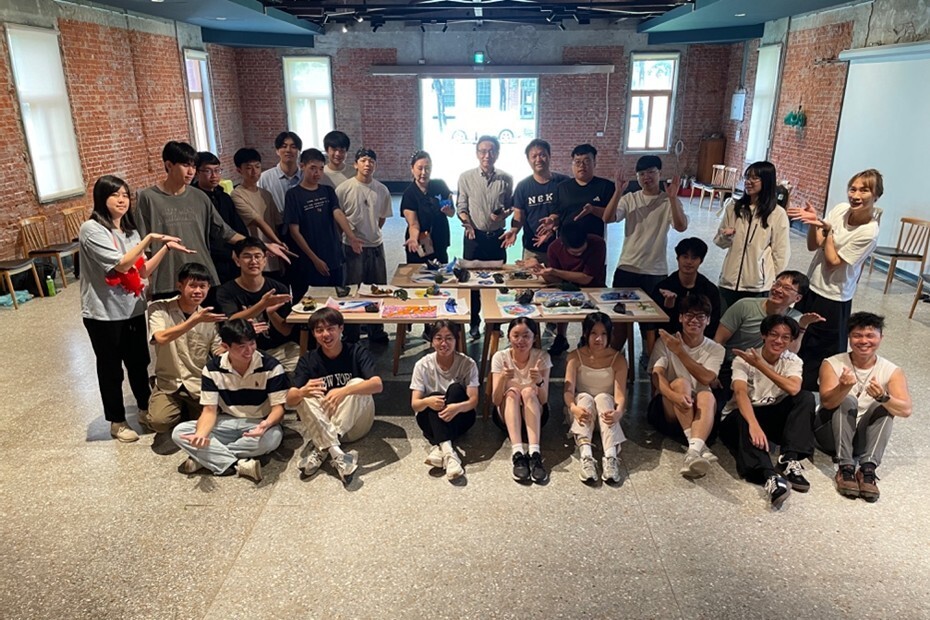
Since 2024, NCKU has launched university-wide modular general education programs under three core themes: “Sustainability and Net Zero,” “Social Inclusion,” and “Technology and Humanity.” Courses such as Art for Sustainability: Exploring SDGs and the Path to Net Zero combine creativity, science, and climate awareness. This modular design encourages student autonomy, connects knowledge with action, and strengthens sustainability literacy and civic responsibility across disciplines.
- NCKU SDG courses
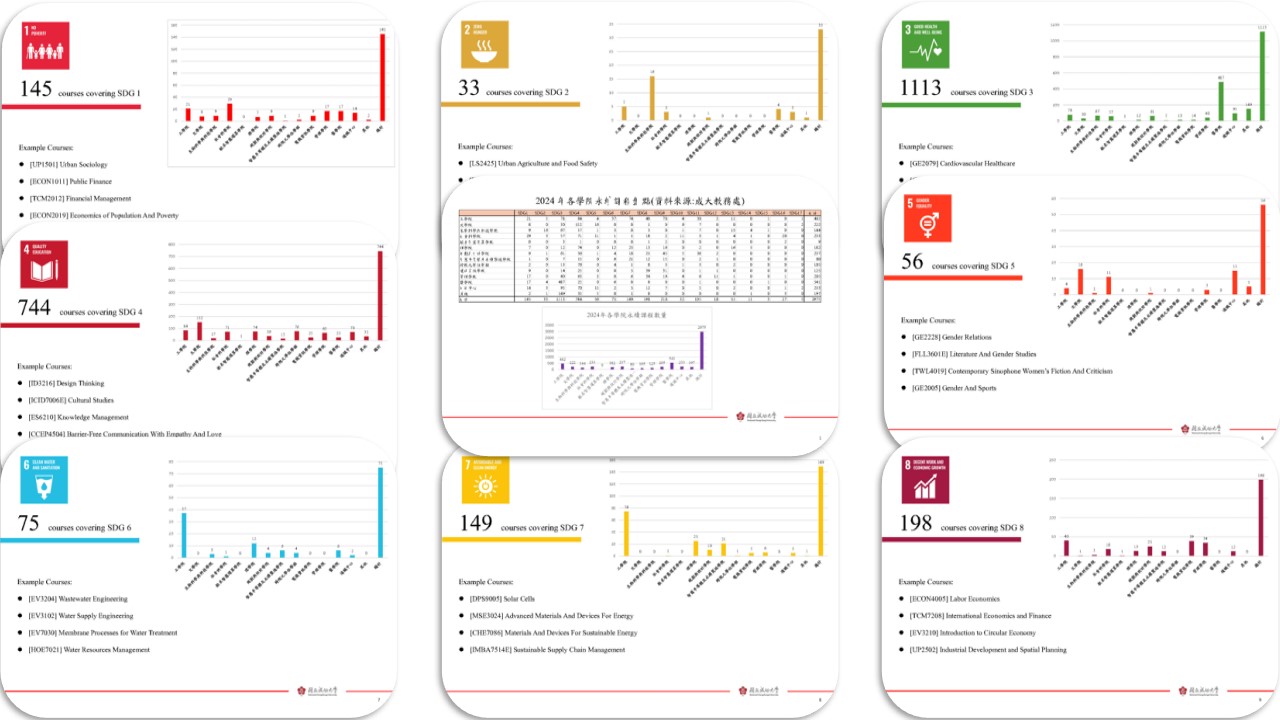
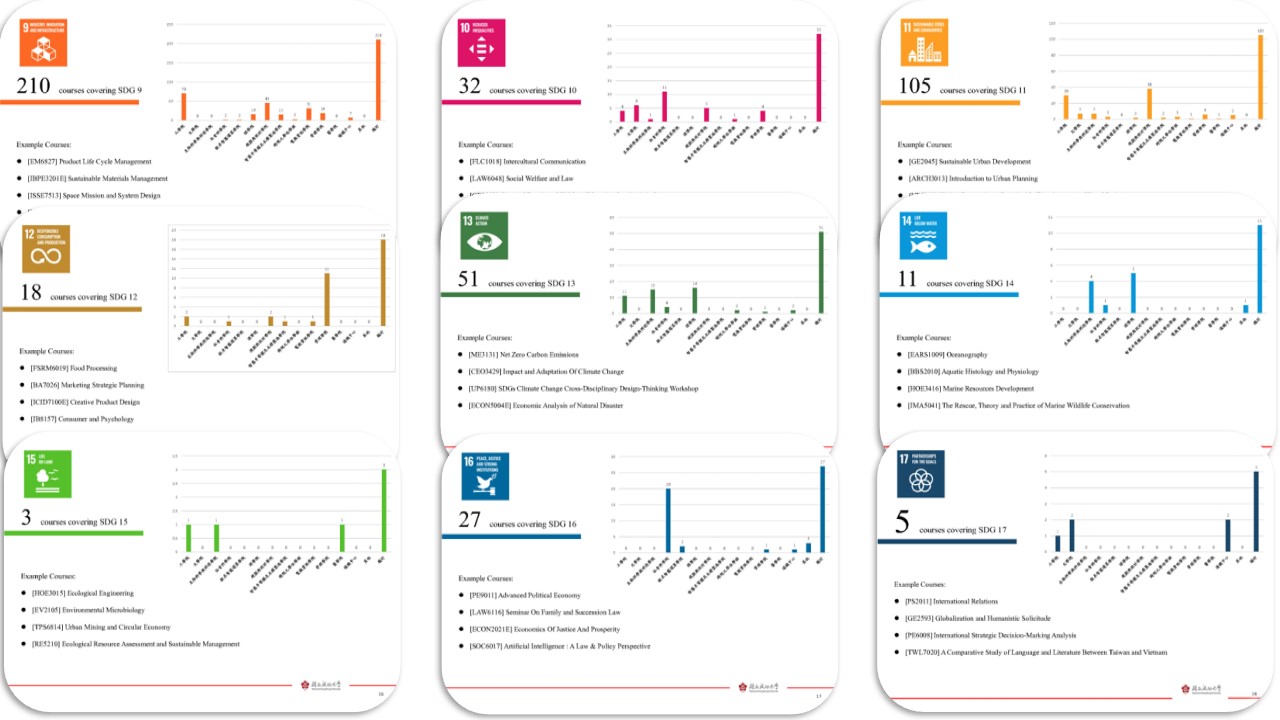
NCKU’s Office of Academic Affairs completed a comprehensive mapping of SDG-related courses, creating an institutional SDG Curriculum Map across general and professional programs. This initiative enables students to identify sustainability-focused learning paths and supports faculty in developing interdisciplinary materials and assessment methods. The results are integrated into the Future Success+ platform, enhancing transparency and tracking of students’ sustainability competencies.
- NCKU SDG Website
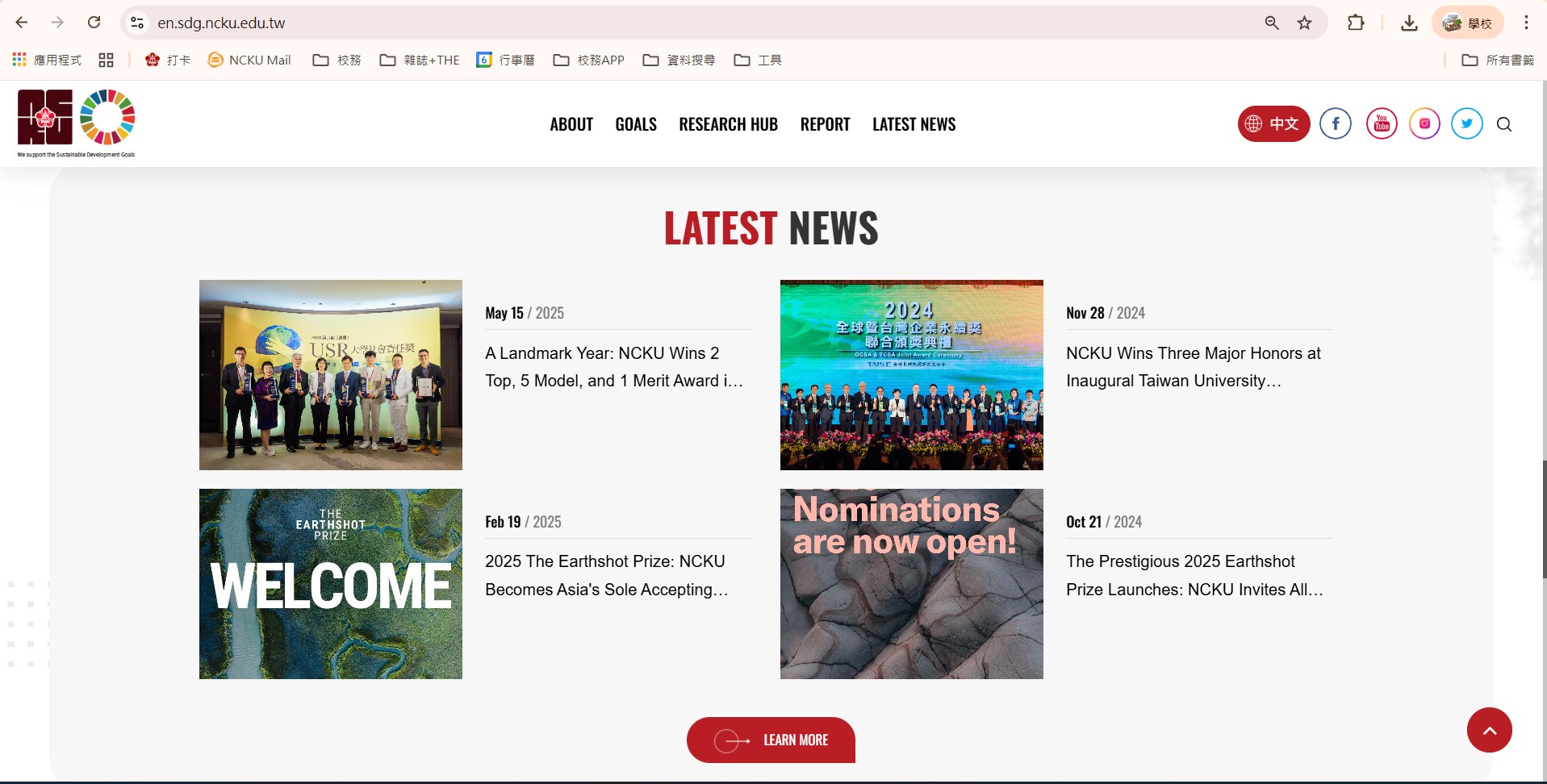
NCKU established a dedicated SDG Website (sdg.ncku.edu.tw) to showcase its achievements in sustainability education, research, and community engagement. Organized by the 17 SDGs, the bilingual platform highlights SDG-related courses, research projects, and USR initiatives across colleges. The website enhances institutional visibility, fosters international collaboration, and demonstrates NCKU’s structured and long-term commitment to meaningful education for sustainable development.
- International Master’s Program in Interdisciplinary Sustainability Studies
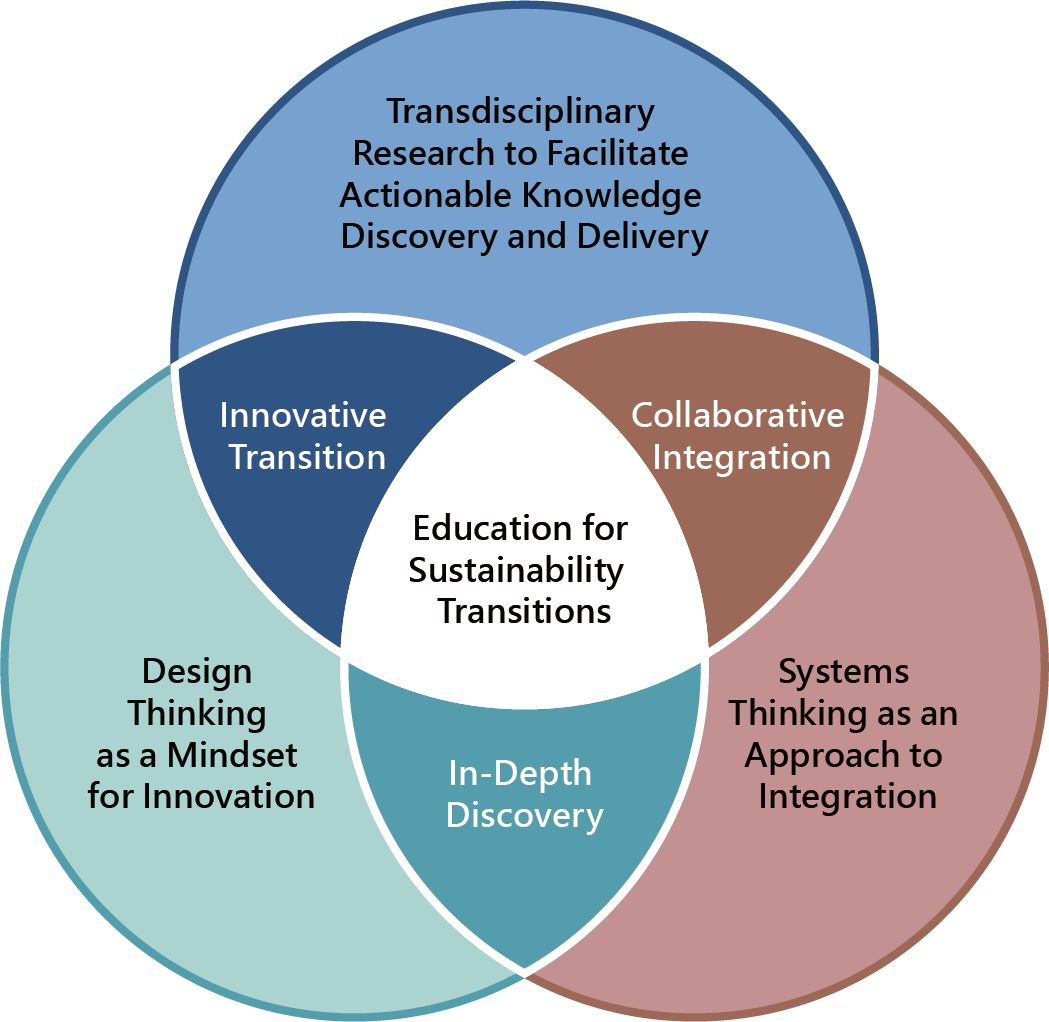
NCKU established the Master’s Program in Interdisciplinary Sustainability Studies (MSS) to cultivate future leaders with sustainability literacy, interdisciplinary research capacity, and global competence. In response to the world’s shared commitment to sustainable development, the program integrates science, engineering, social sciences, and management to address complex global challenges across social, environmental, and economic dimensions. Conducted entirely in English, MSS recruits both domestic and international students, fostering multicultural understanding and cross-disciplinary collaboration. Students are encouraged to apply creativity, practical skills, and integrative thinking to propose innovative and applicable solutions aligned with the UN Sustainable Development Goals (SDGs). Through research, experiential learning, and collaboration across disciplines, MSS empowers graduates to become global change-makers capable of advancing sustainability in academia, industry, and society.