




Comprehensive Water Resource Management
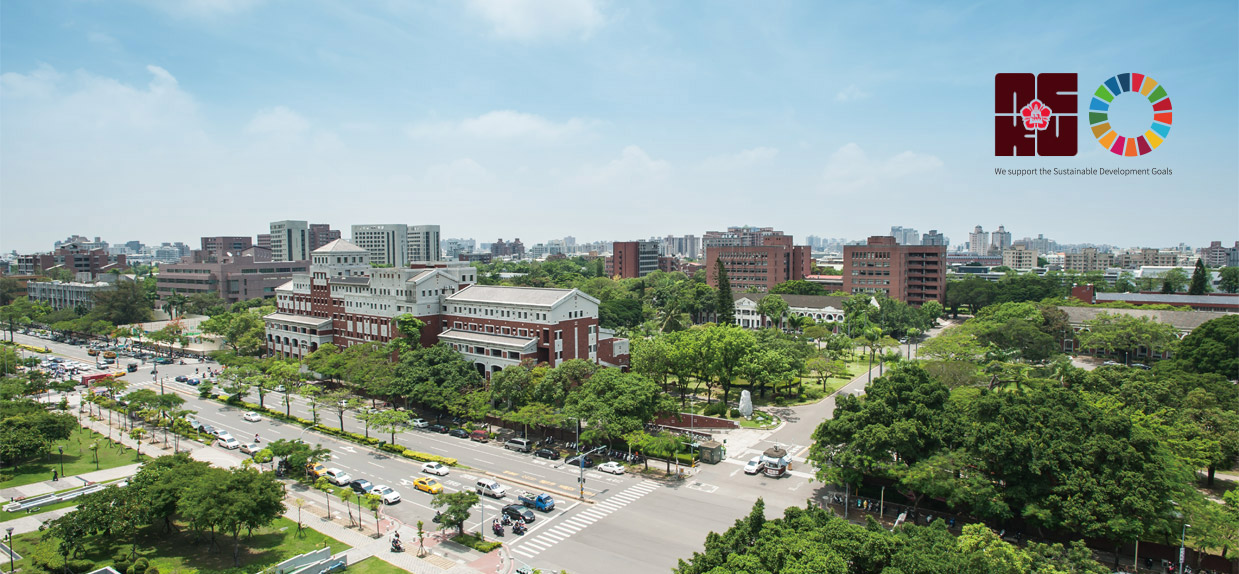
National Cheng Kung University (NCKU) demonstrates its commitment to sustainable development through a comprehensive water resource management system. The campus employs a two-track water treatment approach: laboratory wastewater is managed by the Environmental Protection, Safety, and Health Center (EPSH) in accordance with regulations, ensuring safe handling of hazardous substances; domestic wastewater and rainwater are collected and treated through eight dedicated treatment stations, making the water suitable for reuse, with the Shing-Li Road underground treatment station collecting the largest volume.
Cheng Kung Lake Ecological Restoration and Living Laboratory
The ecological restoration project of Cheng Kung Lake channels treated water into the lake and campus green spaces, combining practical activities such as dredging and removal of invasive species. This transforms routine maintenance into a practical sustainability education program, allowing students to actively participate in ecological conservation and deepen their understanding of the environment. Through this circular water system, NCKU not only enhances campus water reuse efficiency but also transforms the campus into a “Living Laboratory” that integrates technology application with ecological education, providing students with practical experience while showcasing the synergy between technology and environmental learning.
National Cheng Kung University (NCKU) demonstrates its commitment to sustainable development through a comprehensive water resource management system. The campus employs a two-track water treatment approach: laboratory wastewater is managed by the Environmental Protection, Safety, and Health Center (EPSH) in accordance with regulations, ensuring safe handling of hazardous substances; domestic wastewater and rainwater are collected and treated through eight dedicated treatment stations, making the water suitable for reuse, with the Shing-Li Road underground treatment station collecting the largest volume.
Cheng Kung Lake Ecological Restoration and Living Laboratory
The ecological restoration project of Cheng Kung Lake channels treated water into the lake and campus green spaces, combining practical activities such as dredging and removal of invasive species. This transforms routine maintenance into a practical sustainability education program, allowing students to actively participate in ecological conservation and deepen their understanding of the environment. Through this circular water system, NCKU not only enhances campus water reuse efficiency but also transforms the campus into a “Living Laboratory” that integrates technology application with ecological education, providing students with practical experience while showcasing the synergy between technology and environmental learning.
- NCKU Regulations for Wastewater Management in Buildings and Laboratories
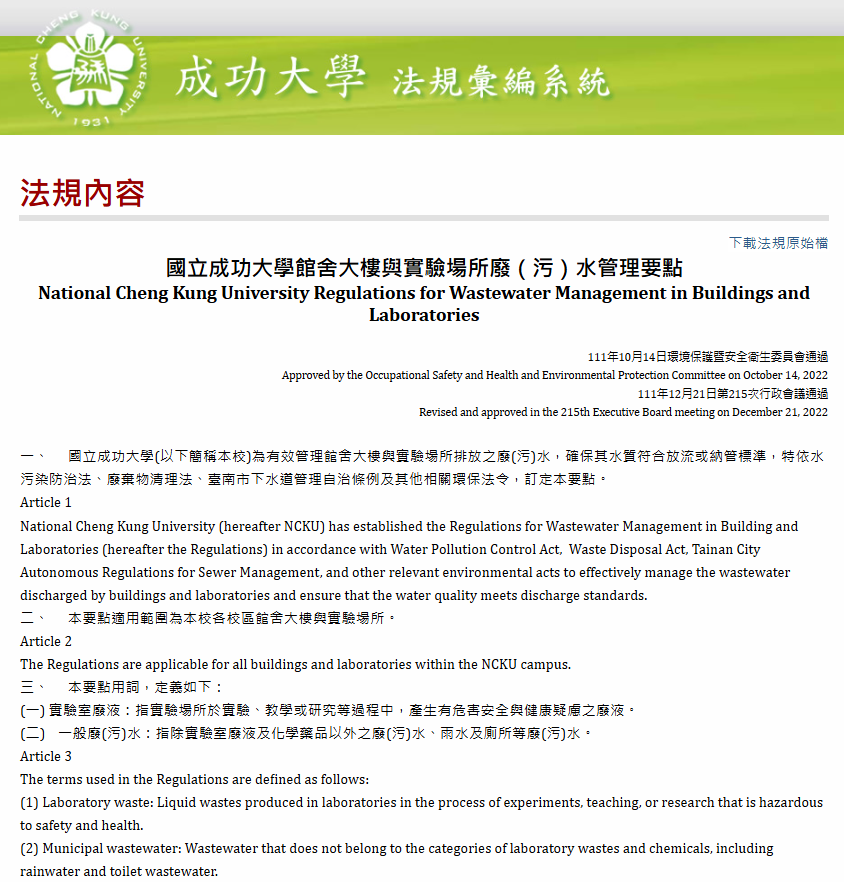 NCKU implements strict management of campus wastewater to ensure that water quality meets the standards of the sewer system and the Environmental Protection Administration. Laboratory wastes and chemicals are properly stored and handled according to classification standards, while radioactive wastes are managed following specific regulations. Responsibility for wastewater management in each building is clearly assigned to individual units or management committees, and violators must carry out corrective measures and pay fines. NCKU’s wastewater management emphasizes safety, environmental protection, and systematic monitoring, demonstrating the university’s commitment to sustainable campus operations.
- The waste liquid classification steps of laboratory, published by Center for Occupational Safety and Health and Environmental Protection
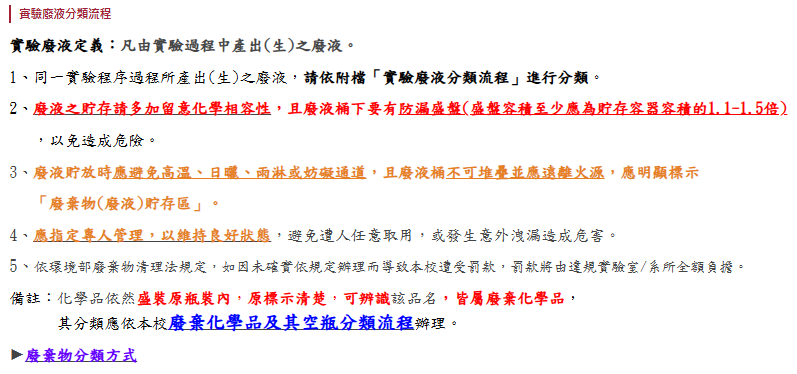 NCKU has established a clear waste classification and management system, covering the categorization, storage, transportation, and record-keeping of hazardous liquids, general waste, and laboratory waste. Through systematic management and regular monitoring, the university ensures proper waste handling to prevent pollution and environmental hazards. NCKU emphasizes that faculty and students follow proper classification procedures, integrating legal regulations with on-campus supervision, demonstrating a rigorous commitment to environmental protection and sustainable campus management.
- Cheng Kung Lake Ecological Restoration Project
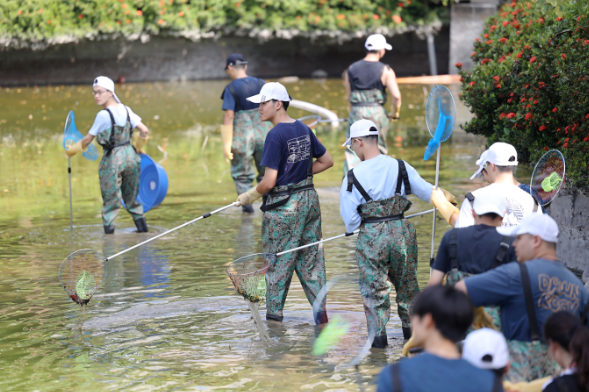 NCKU’s Cheng Kung Lake dredging project integrates environmental and ecological education, organizing activities that allow faculty and students to participate in hands-on waterwork, ecological exploration, and species identification. These experiences enhance understanding of water quality and biodiversity while fostering students’ care for and proactive engagement with the natural environment.