





- List of NCKU Faculty Seconded to Government and Public Institutions in 2024
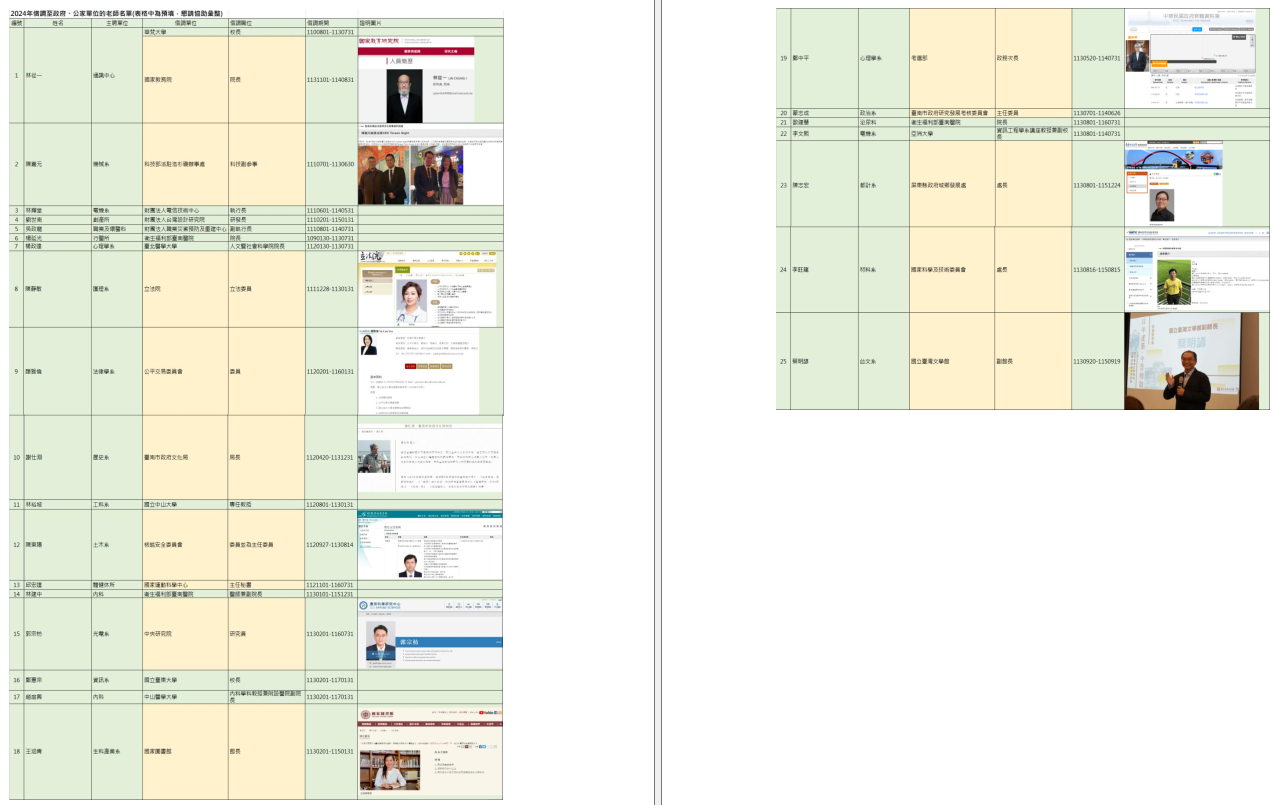 Many faculty members of NCKU are seconded to government agencies and public or private sectors, applying their expertise to policy formulation and technical consultation. They provide scientific evidence and practical recommendations to support the government’s efforts in promoting sustainable development and public policy, demonstrating NCKU’s professional influence in national development.
※ Faculty members seconded to government agencies are highlighted in yellow.
- Faculty Participating in National Committees and Research Centers

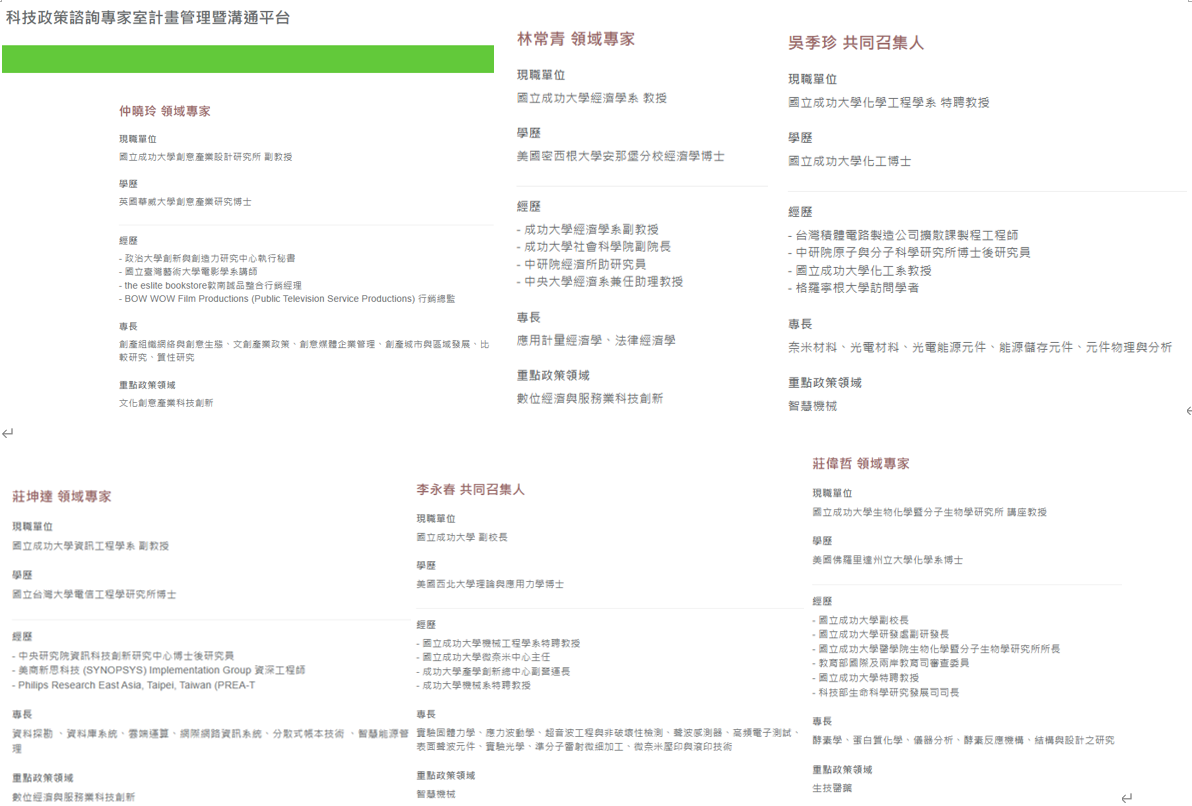 At NCKU, 6 faculty members serve as advisory experts and conveners at the Science and Technology Policy Research and Information Center (STPI) of the National Institutes of Applied Research (NIAR). They contribute expertise in providing recommendations and conducting policy studies on the nation’s medium- and long-term science and technology development strategies.
-Interdisciplinary and Cultural Group Experts: Prof. Chang-Ching Lin (Department of Economics), Assoc. Prof. Hsiao-Ling Chung (Institute of Creative Industries Design)
-Semiconductor Group Co-Convener: Distinguished Prof. Jih-Jen Wu (Department of Chemical Engineering)
-Information and Communications Technology Group Expert: Assoc. Prof. Kun-Ta Chuang (Department of Computer Science and Information Engineering)
-Engineering Strategy Group Co-Convener: NCKU Executive Vice President Yung-Chun Lee
-Biomedicine, Health, Agriculture Group Expert: University Chair Prof. Woei-Jer Chuang (Institute of Biochemistry and Molecular Biology)
2. Consulting Member of the Executive Yuan Expert Advisory Committee on Disaster Prevention and Rescue (July 2022 – June 2024)
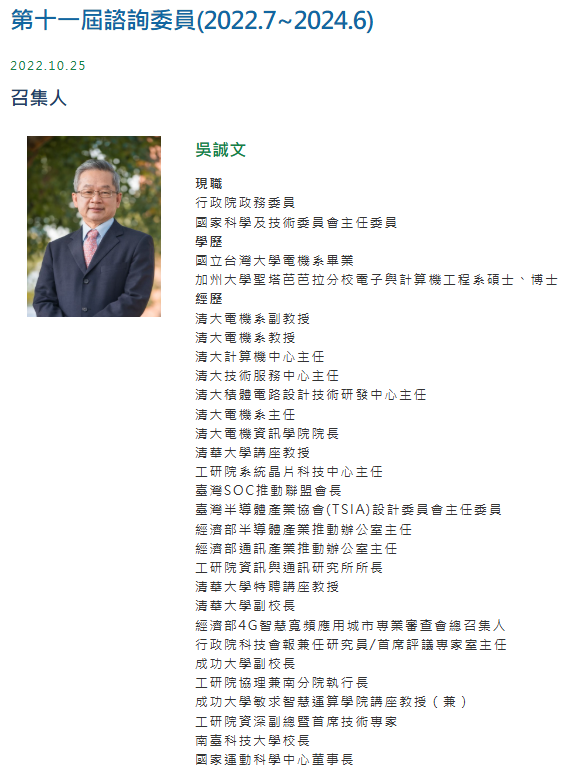 Professor Cheng-Wen Wu, faculty of the Department of Hydraulic and Ocean Engineering, International Affairs Officer, and Disaster Prevention Research Center at NCKU, serves as a member of the Executive Yuan’s Expert Advisory Committee on Disaster Prevention and Rescue. By applying his expertise in disaster prevention and hydraulic engineering to national policy recommendations, he provides strategic advice grounded in scientific analysis and practical experience. NCKU faculty demonstrate their commitment to public safety and societal welfare by enhancing the professionalism and efficiency of government disaster management decisions.
3. Academia Sinica’s Institute of Economics
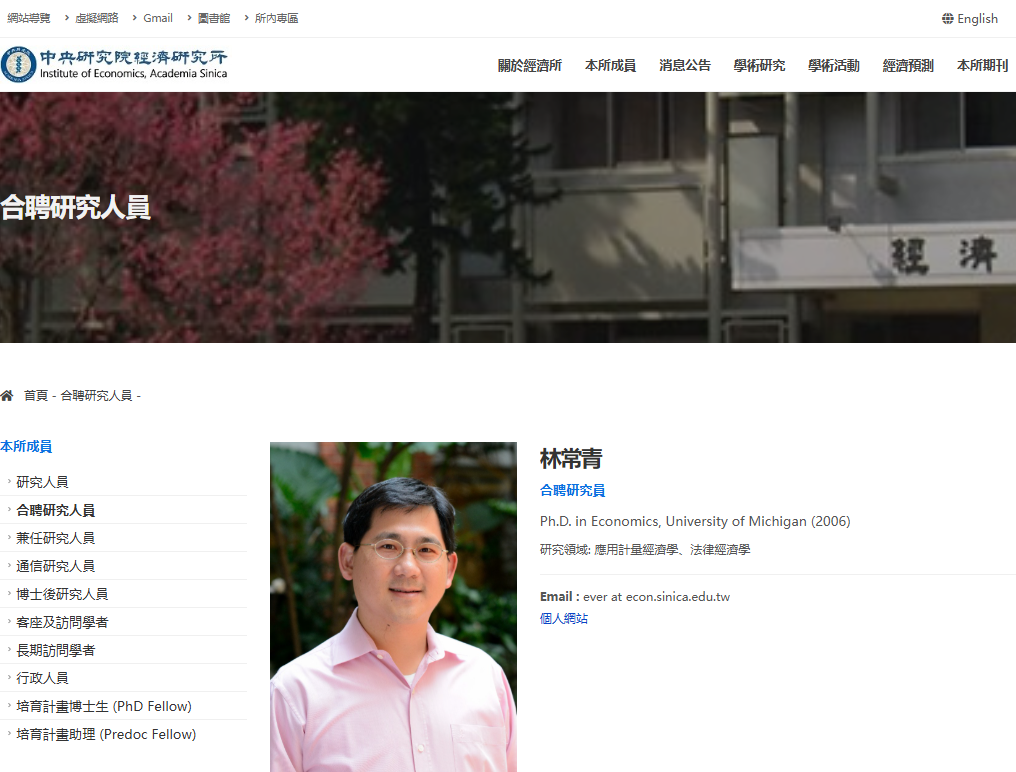 Faculty and staff at NCKU actively apply their expertise to public policy consultation. Professor Chang-Ching Lin of the Department of Economics, concurrently a research fellow at Academia Sinica’s Institute of Economics, provides the government with scientific and practical policy advice. By participating in decision-making consultations and offering expert opinions, NCKU faculty not only enhance the professionalism of policy formulation but also demonstrate the commitment and contribution of academic talent to the public good.
- Providing Policy Recommendations to the K-12 Education Administration, MOE for Improving School Lunches in Rural Areas
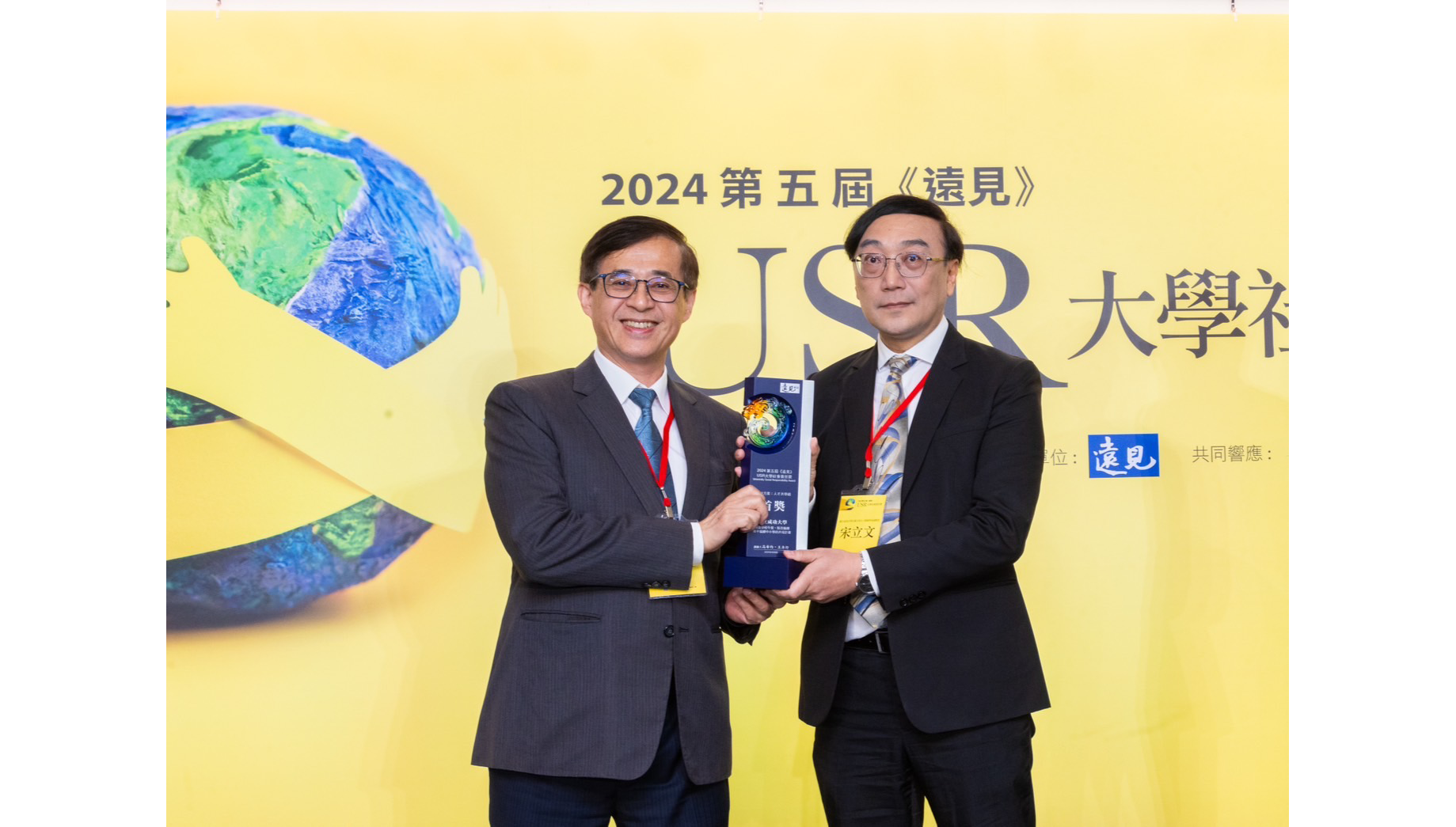 Built trust with lunch coordinators across counties and cities, clarified the root causes of issues, and engaged with stakeholders such as teachers, vendors, and farmers in rural schools to identify practical policy balance points. Provided policy recommendations that gained support from the Ministry of Education, and actively implemented initiatives, gradually promoting central kitchens and joint procurement alliances, achieving significant improvements in the quality of rural school lunches.
- Collaboration with the Forestry Research Institute, MOA: Tree Seekers – Giant Tree Mapping Project
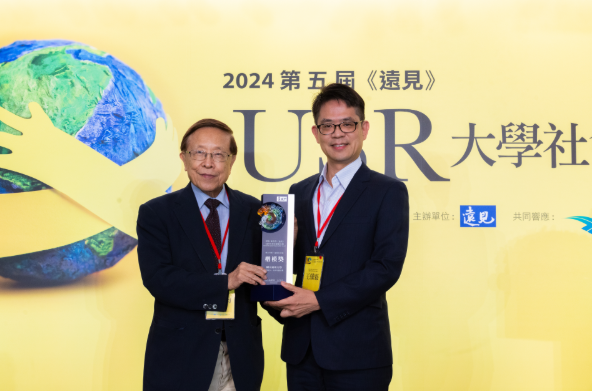 The “Tree Finders – Giant Tree Mapping Project” team, jointly formed by the Taiwan Forestry Research Institute of the Ministry of Agriculture and NCKU, utilizes nationwide 3D terrain data collected through airborne LiDAR surveys conducted after Typhoon Morakot. By applying advanced algorithms for data interpretation, the team has accelerated the exploration and identification of Taiwan’s giant trees. They have also developed an automated system to generate optimized visualized tree cross-sections, greatly enhancing research efficiency and expanding applications in environmental monitoring.