



National Cheng Kung University (NCKU) has implemented a comprehensive upgrade plan to continuously improve the energy efficiency of its existing buildings, covering top-level governance, design specifications, project retrofits, and campus-wide equipment replacement.
Establishment of Management Systems and Norms
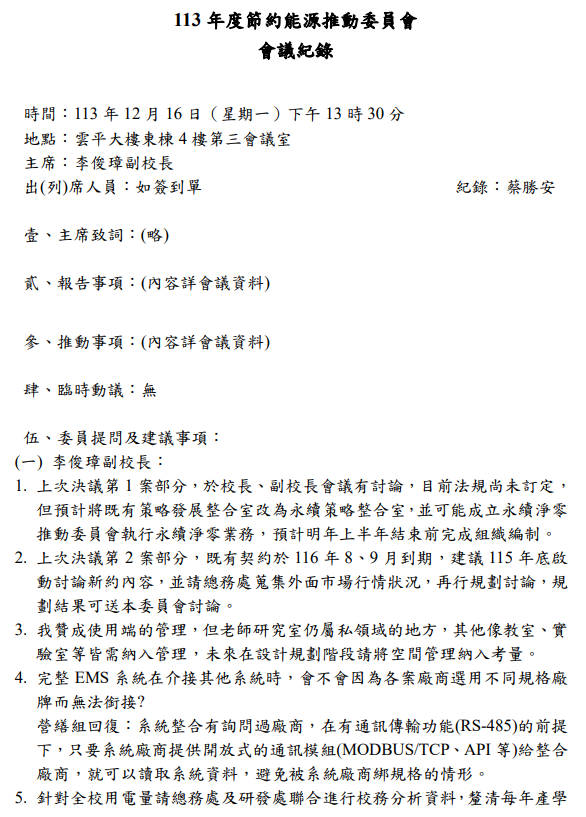
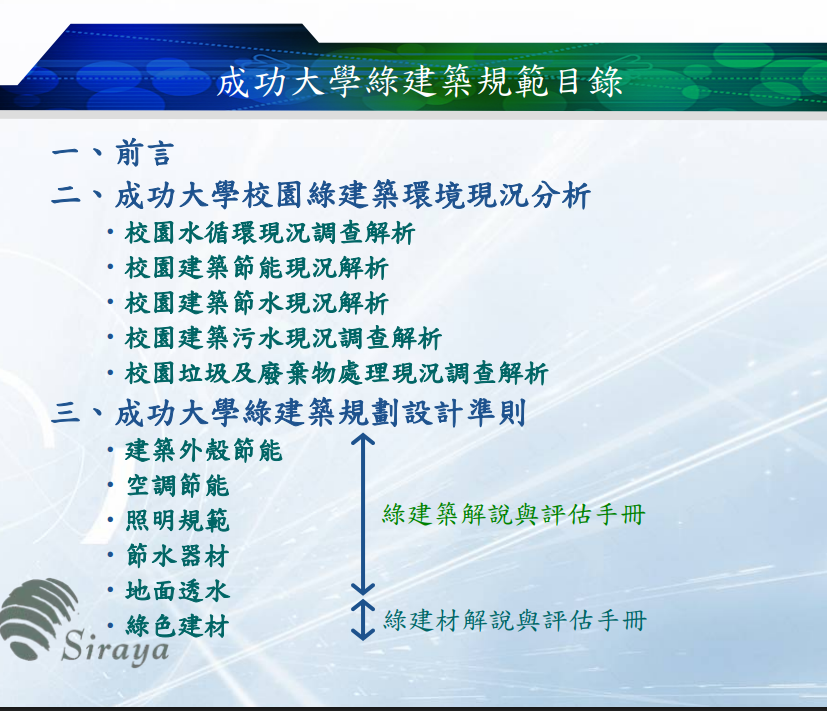
Our energy efficiency upgrade plan is strategically guided by the "Energy Conservation Promotion Committee," with its decision-making processes detailed in the 2024 Meeting Minutes. All technical retrofits adhere to the NCKU Campus Green Building Code, which provides a high-efficiency blueprint for upgrading equipment like HVAC and lighting systems.
Retrofitting Old Buildings
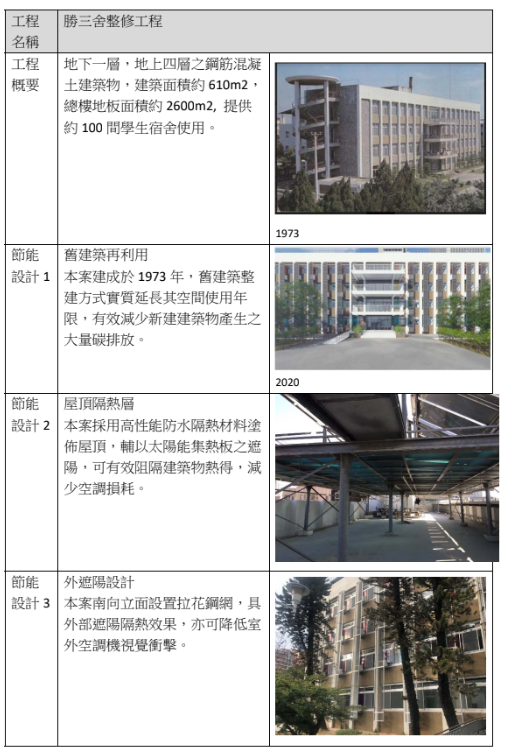
In practice, we implement deep energy retrofits on landmark older buildings. For example, the "Sheng-San Dormitory" was upgraded with roof insulation and external shading, while the "Old Main Library" received new facade sunshades. These major projects, detailed in our Green Campus Performance Report and Sustainability Report, serve as tangible proof of our commitment.
Equipment Replacement
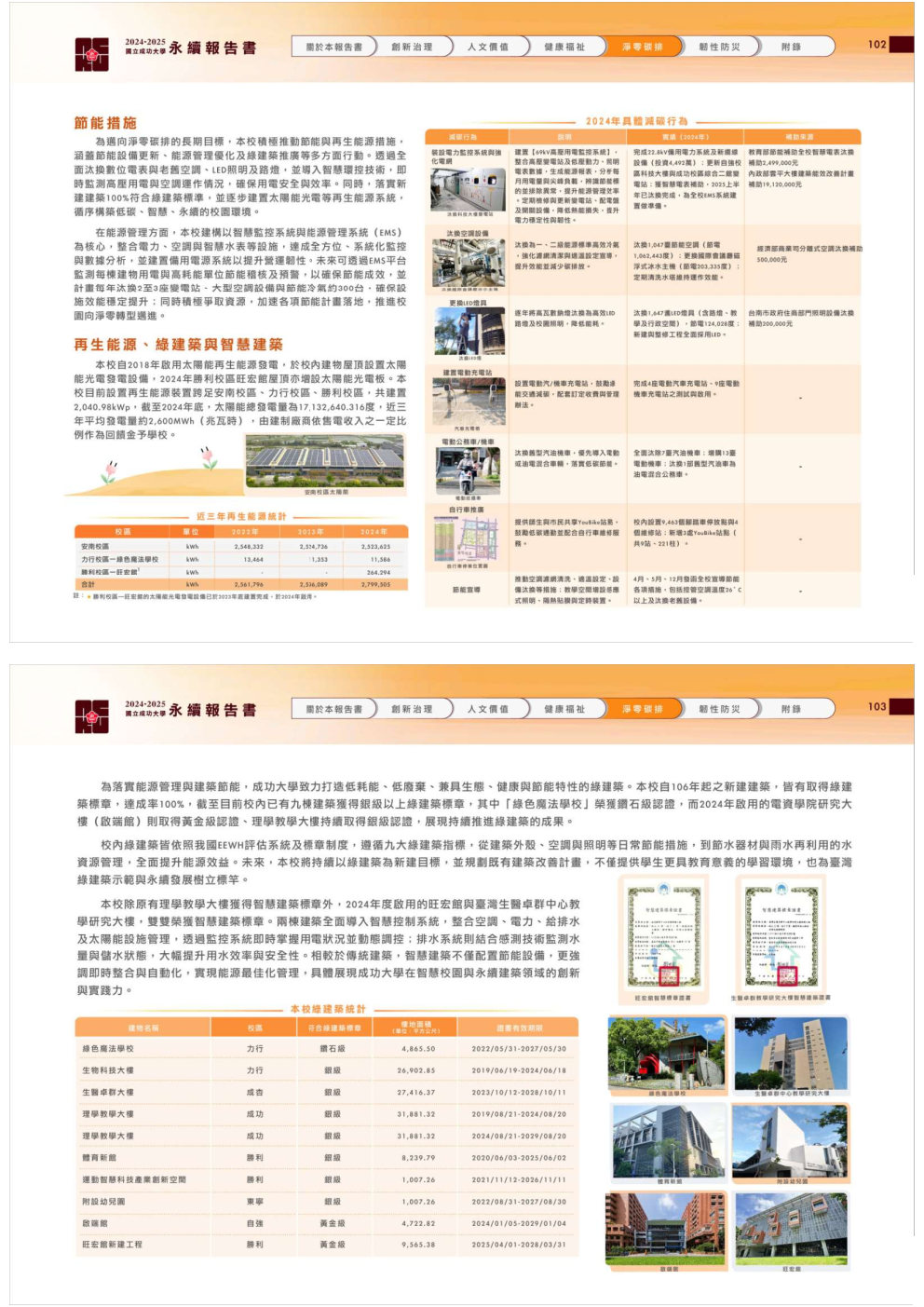
Beyond individual renovation projects, we have also carried out comprehensive and continuous equipment upgrades. According to the Sustainability Report, in 2024 the university replaced 1,047 high-efficiency air conditioning units, upgraded 1,434 LED lights, and continued modernizing substations to reduce power loss. These large-scale replacement initiatives demonstrate that the university is systematically investing resources to enhance overall campus energy efficiency, steadily advancing toward its net-zero goals.
Establishment of Management Systems and Norms
Our energy efficiency upgrade plan is strategically guided by the "Energy Conservation Promotion Committee," with its decision-making processes detailed in the 2024 Meeting Minutes. All technical retrofits adhere to the NCKU Campus Green Building Code, which provides a high-efficiency blueprint for upgrading equipment like HVAC and lighting systems.
Retrofitting Old Buildings
In practice, we implement deep energy retrofits on landmark older buildings. For example, the "Sheng-San Dormitory" was upgraded with roof insulation and external shading, while the "Old Main Library" received new facade sunshades. These major projects, detailed in our Green Campus Performance Report and Sustainability Report, serve as tangible proof of our commitment.
Equipment Replacement
Beyond individual renovation projects, we have also carried out comprehensive and continuous equipment upgrades. According to the Sustainability Report, in 2024 the university replaced 1,047 high-efficiency air conditioning units, upgraded 1,434 LED lights, and continued modernizing substations to reduce power loss. These large-scale replacement initiatives demonstrate that the university is systematically investing resources to enhance overall campus energy efficiency, steadily advancing toward its net-zero goals.