



The university has also established dedicated units for cultural preservation. The Center for Humanities and Social Sciences launched the digital platform Viewing Tainan City, which, from a southern Taiwan perspective, integrates five major themes—environmental sustainability, human rights and justice, industrial governance, socio-economic issues, and health care—to explore the challenges and opportunities faced by Tainan and Taiwan as a whole. Meanwhile, the Centre for Archaeology and Cultural Heritage has long been engaged in archaeological site surveys. In addition, the Southeast Asian Culture Minor Programme, covering themes such as history and music, broadens cross-cultural education and cultural heritage research.
Finally, the 2024 International Exchange on East Asian Traditional Shipbuilding Techniques, held on campus, combined craftsmanship demonstrations with academic discussions, fostering cross-national dialogue and cultural transmission of traditional artisanal knowledge.
- Explore Tainan- Cultural Asset District in NCKU
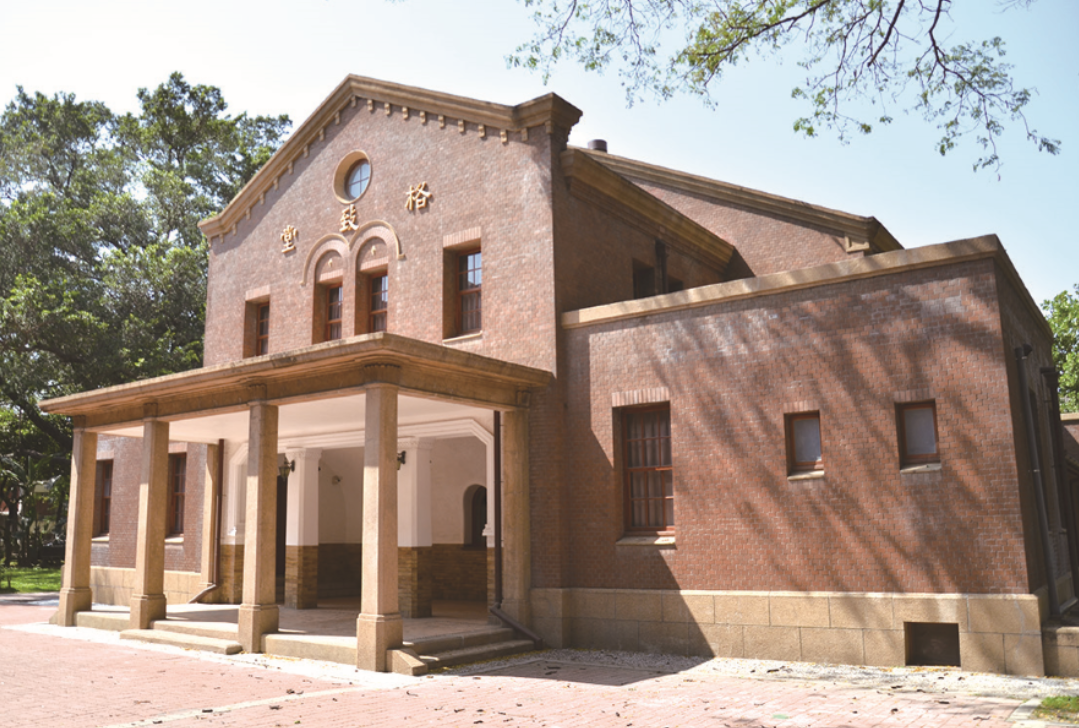 The Cultural Asset District of NCKU is part of the “Exploring Tainan – The NCKU Way” project, dedicated to preserving and revitalizing campus historical buildings from the Japanese colonial period. Structures such as Gezhi Hall not only bear witness to the development of Tainan but also embody NCKU’s cultural memory. Through guided tours, exhibitions, and digital archives, the project enables broader public understanding and appreciation of these historical assets, positioning the campus as an important venue for local cultural education. This initiative demonstrates NCKU’s active commitment to recording and preserving local cultural heritage, ensuring that historical memory and humanistic values are passed down to future generations.
- Centre for Archaeology and Cultural Heritage
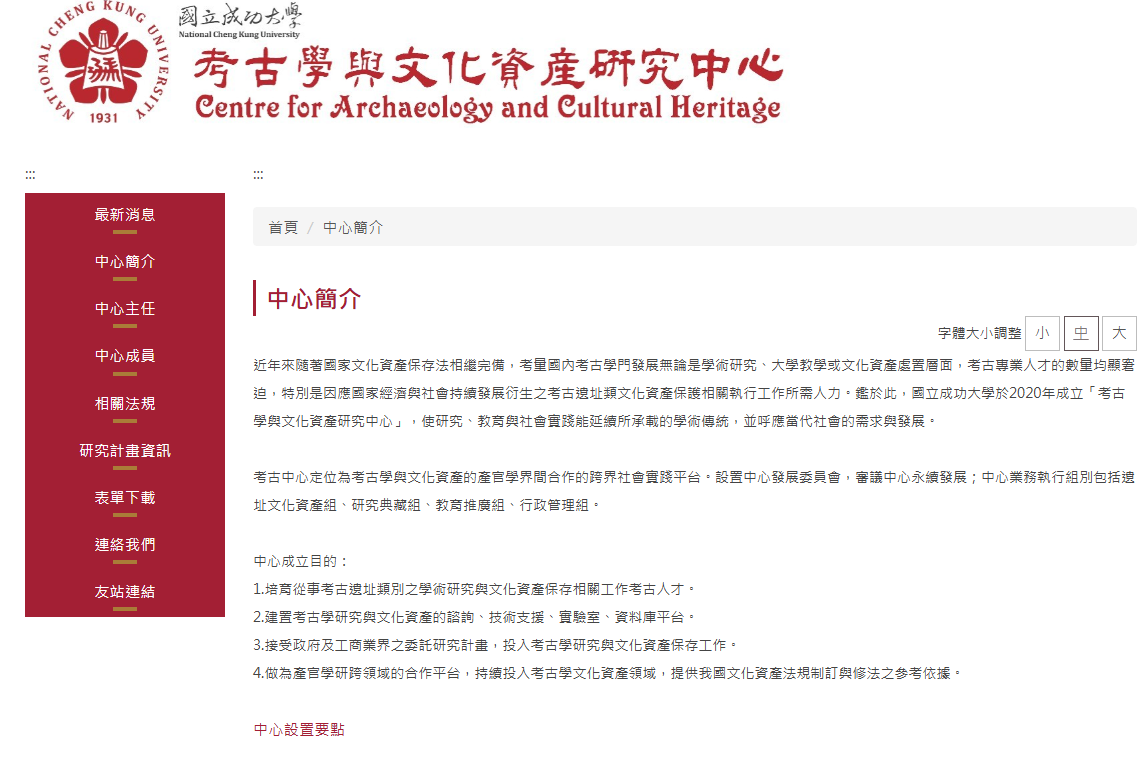 The Center for Archaeology and Cultural Heritage at NCKU was established in 2020 to address the growing national demand for the protection of archaeological sites and cultural heritage in the context of ongoing economic and social development. Positioned as a cross-disciplinary platform for collaboration among academia, government, and industry, the Center integrates research, education, and social practice to sustain and advance Taiwan’s academic tradition in archaeology and cultural heritage. Its work encompasses talent cultivation, research and collections, educational outreach, and administrative management. Through technical support, laboratories, and database platforms, the Center promotes academic research and cultural heritage preservation. It also undertakes government and industry-commissioned projects, strengthening legal reforms and policy development in the field of cultural heritage.
- NCKU Center for Humanities and Social Sciences - Viewing Tainan City
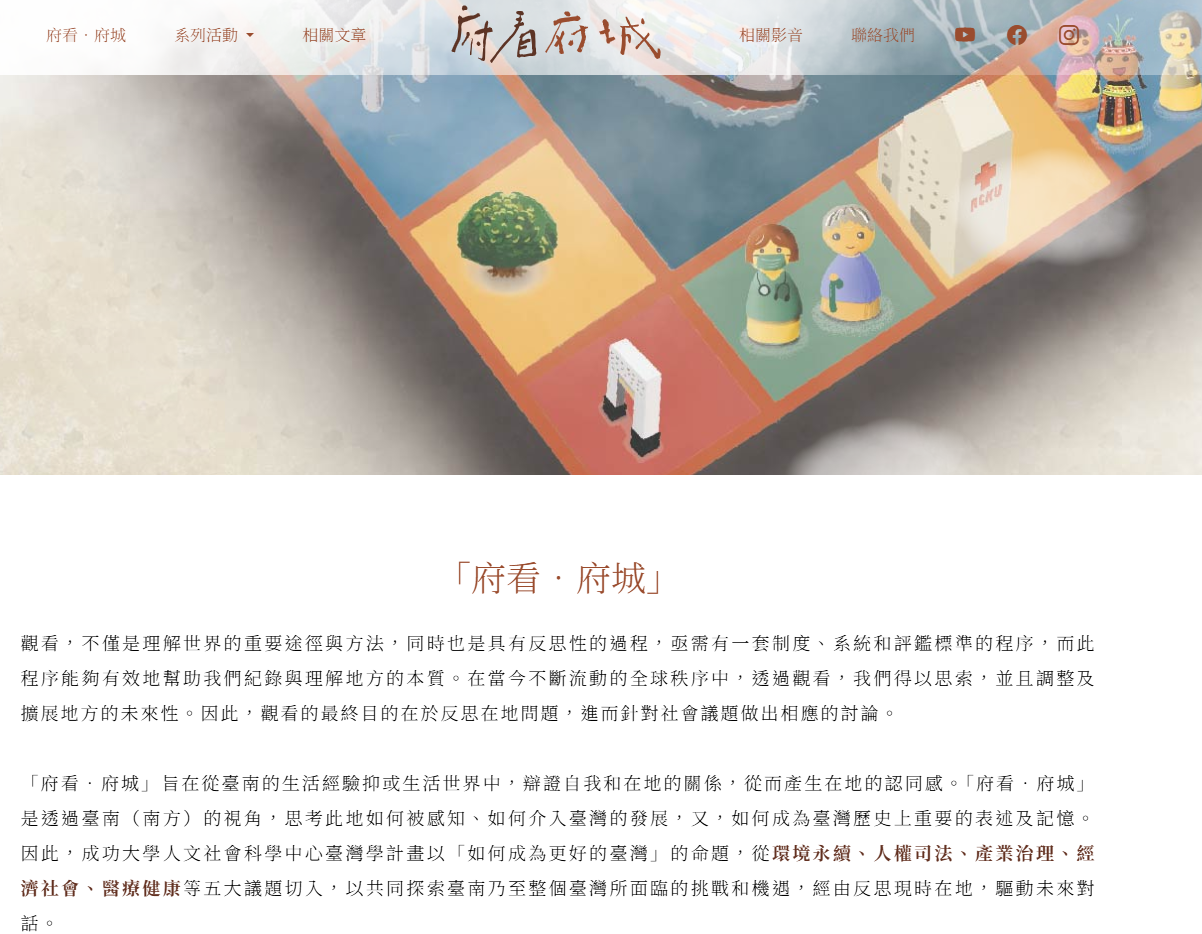 “Viewing Tainan City”, promoted by the Center for Humanities and Social Sciences at NCKU, is a research and documentation project that seeks to reinterpret Tainan’s lived experiences and historical contexts. It examines how local experiences are perceived, how they have influenced Taiwan’s development, and how they have become vital expressions and memories in the nation’s history. Centered on the theme of “How to create a better Taiwan,” the project addresses five major dimensions: environmental sustainability, human rights and justice, industrial governance, socioeconomic development, and healthcare. By doing so, it highlights both the continuity and reflective transformation of local culture, not only preserving the cultural heritage of everyday life in Tainan but also fostering intergenerational cultural transmission.
- Southeast Asian Cultural Studies Credit Program
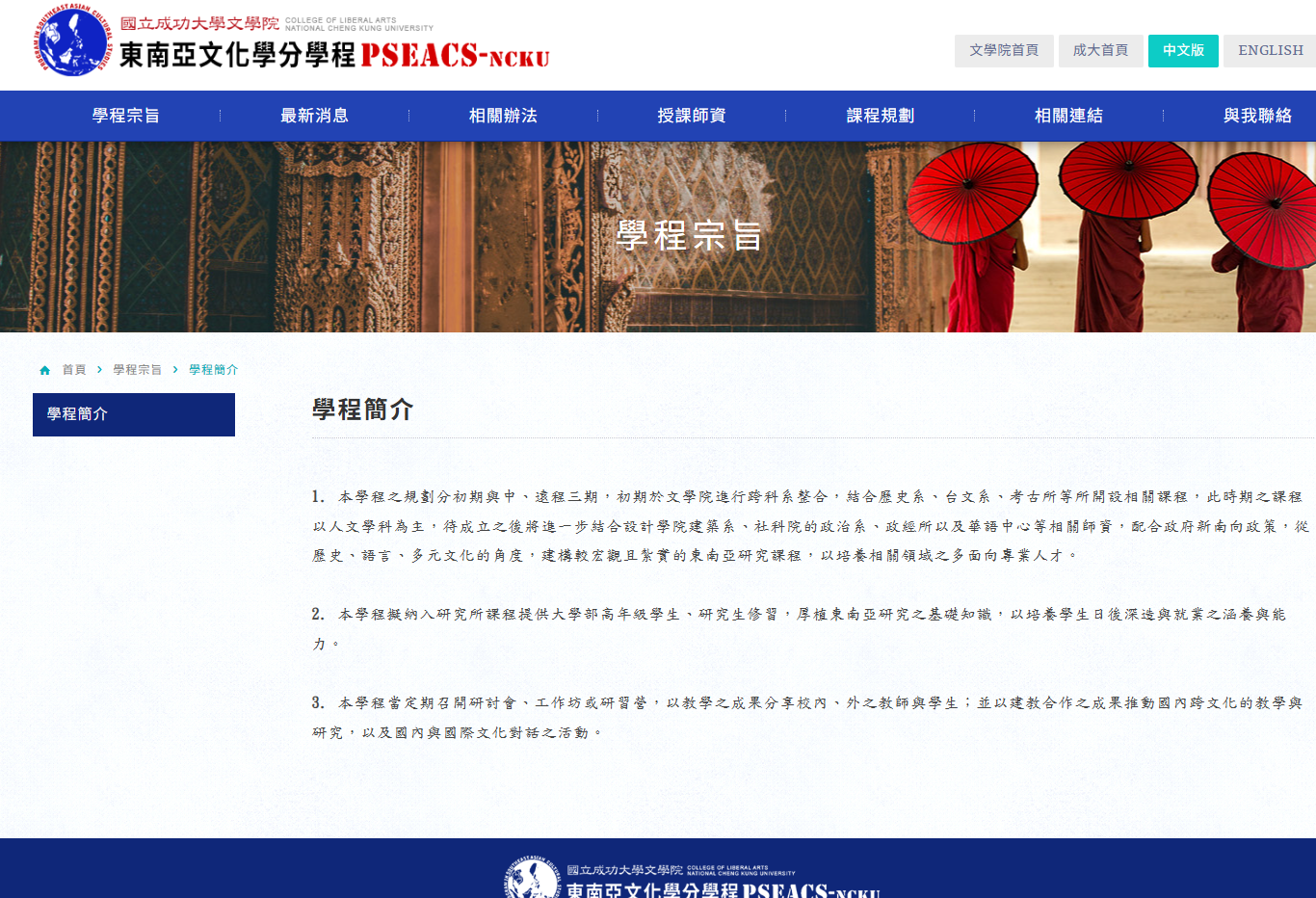 The Southeast Asian Cultural Studies Program at NCKU was established in response to Taiwan’s New Southbound Policy and to promote cross-cultural academic research and education. The curriculum spans history, language, and multicultural studies, integrating resources from the College of Liberal Arts, the Department of History, the Department of Taiwanese Literature, and the Institute of Archaeology, and extending further to architecture, politics, economics, and the Chinese Language Center. It offers courses for both undergraduate and graduate students, cultivating knowledge of Southeast Asian history, languages, and cultures. Through seminars, workshops, and cultural exchange activities, the program fosters transnational cultural dialogue. In doing so, it not only preserves and promotes the languages and cultural knowledge of Southeast Asian communities but also responds to the needs of new immigrant groups within Taiwan.
- NCKU “Traditional East Asian Shipbuilding Techniques” International Exchange Conference
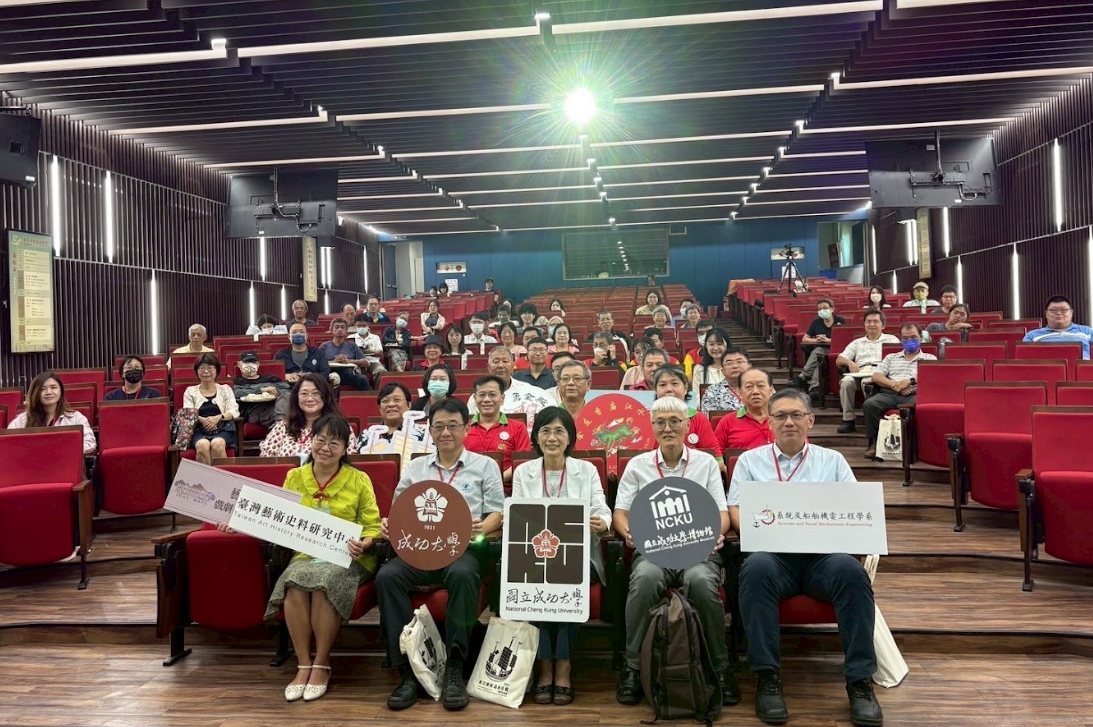 The International Symposium on East Asian Traditional Shipbuilding Techniques hosted by NCKU brought together experts and scholars from Taiwan, Japan, Korea, and other regions to showcase, discuss, and exchange knowledge about traditional shipbuilding craftsmanship. The event focused on documenting and preserving this intangible cultural heritage of transnational significance while promoting international knowledge sharing and technical transmission. Through forums and special presentations, the symposium not only enhanced awareness of East Asian maritime culture but also echoed UNESCO’s advocacy for the safeguarding of intangible cultural heritage.