



National Cheng Kung University advances sustainable commuting through a “policy + measurement + tools” approach, with the process fully transparent and publicly accessible.
On the policy side, the Regulations Governing Vehicle Traffic on Campus regulate vehicle access and violations, explicitly listing failure to yield to pedestrians as an offense. Fees for car permits, motorcycle parking, EV charging, and fines are administered under unified guidelines, balancing people-centered safety with EV-commuting support.
On measurement and tools, the University (via the Student Association) conducts the Car-Free Campus Plan survey to collect commuting habits that inform planning, while NCKU Hospital promotes the YouBike Carbon-Reduction Passbook and uses back-end quarterly ride totals as performance indicators, making cycling behavior quantifiable and trackable.
As enablers, the on-campus Green Roadways and Infrastructure Center has developed a roadway sustainability assessment system with 7 categories and 25 indicators, providing a basis for indicator-driven governance of roads and the commuting environment; the University also offers a Sustainable Transportation course to embed sustainable commuting in teaching.
On the policy side, the Regulations Governing Vehicle Traffic on Campus regulate vehicle access and violations, explicitly listing failure to yield to pedestrians as an offense. Fees for car permits, motorcycle parking, EV charging, and fines are administered under unified guidelines, balancing people-centered safety with EV-commuting support.
On measurement and tools, the University (via the Student Association) conducts the Car-Free Campus Plan survey to collect commuting habits that inform planning, while NCKU Hospital promotes the YouBike Carbon-Reduction Passbook and uses back-end quarterly ride totals as performance indicators, making cycling behavior quantifiable and trackable.
As enablers, the on-campus Green Roadways and Infrastructure Center has developed a roadway sustainability assessment system with 7 categories and 25 indicators, providing a basis for indicator-driven governance of roads and the commuting environment; the University also offers a Sustainable Transportation course to embed sustainable commuting in teaching.
- Regulations for Vehicle Access Control on Campus
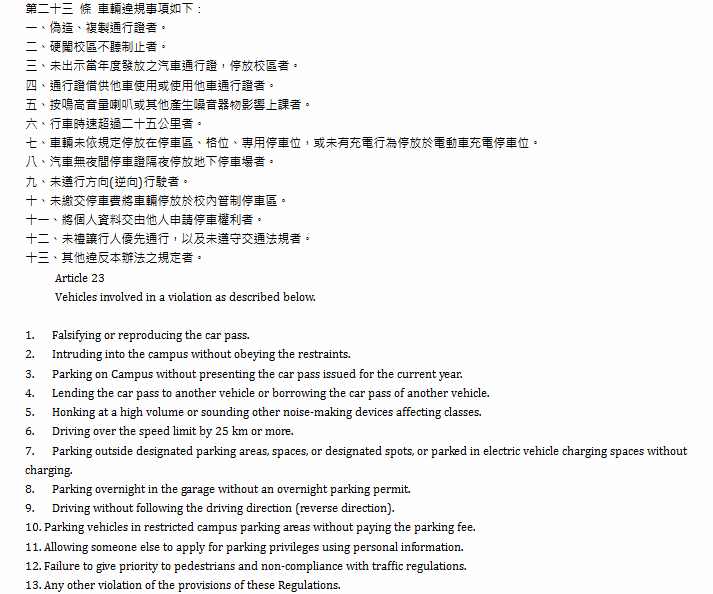 The “Regulations on Vehicle Access and Control within Campus” of NCKU clearly stipulates traffic violations and corresponding penalties, aiming to maintain campus safety and promote sustainable transportation. The rules cover prohibitions such as forging or lending permits, illegal parking, speeding, unnecessary horn use, driving in the wrong direction, failing to yield to pedestrians, and other breaches of traffic laws. Notably, Article 12 emphasizes that failure to give priority to pedestrians constitutes a violation, reflecting the university’s commitment to a pedestrian-first traffic culture. This contributes to fostering a safe, low-carbon, and people-centered commuting environment on campus.
- NCKU Campus Car-Free Initiative Survey
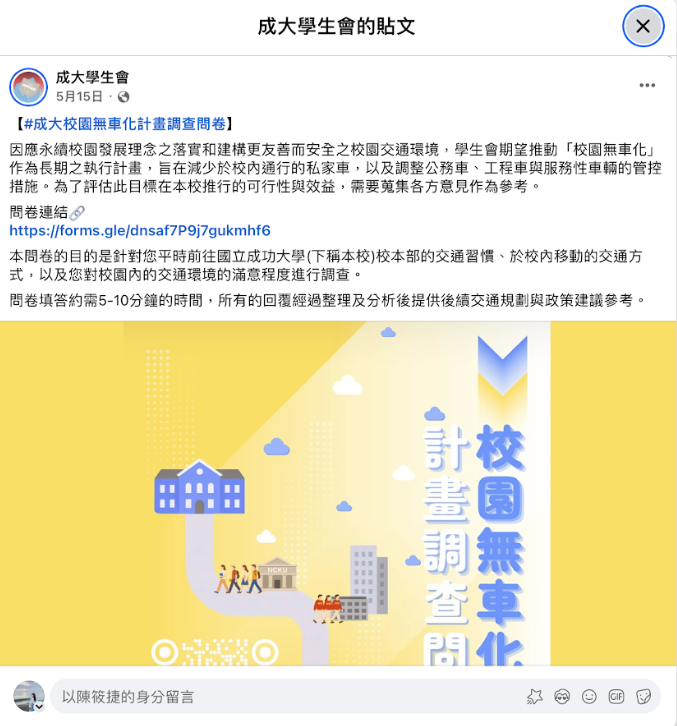 To improve the campus traffic environment, enhance safety, and promote sustainable development, the Student Association of NCKU proposed a “car-free campus” policy and conducted a university-wide survey. The questionnaire collected data on students’ and staff’s commuting habits (such as walking, cycling, and using public transportation) as well as their opinions on reducing private car access to campus, while also assessing feasibility and potential impacts. The survey results will serve as a basis for future transportation planning and policy recommendations. This initiative demonstrates that the university not only intends to set sustainable commuting targets but also engages the campus community in an open and transparent manner to ensure that measures meet actual needs, thereby moving the campus toward a low-carbon and safe mobility model.
- YouBike Carbon Reduction Ledger (Encouraging the Use of Public Transportation)
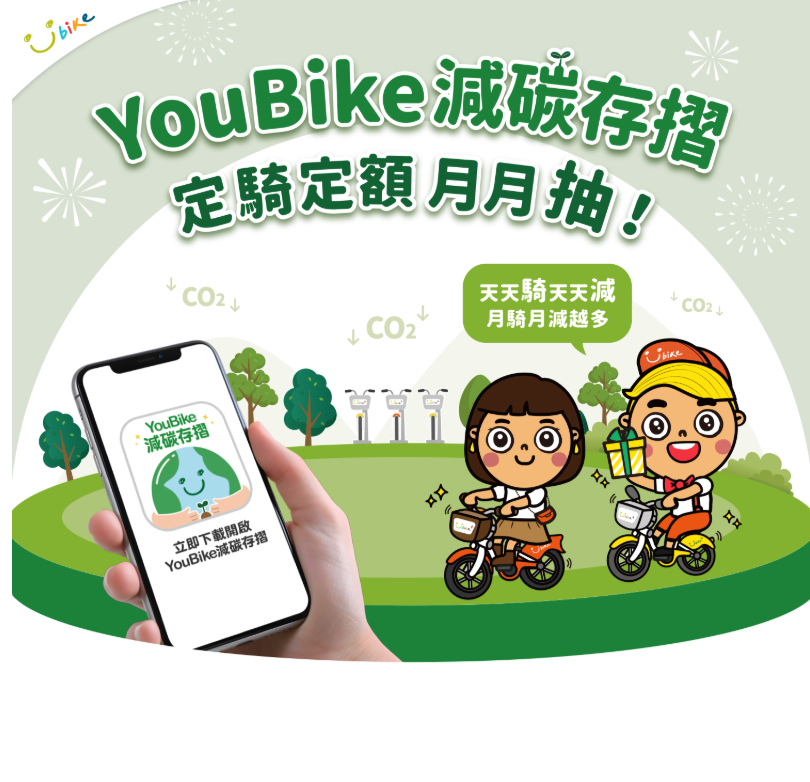 The College of Medicine and the Office of General Affairs at NCKU jointly launched the campaign “Ride Together for Carbon Reduction, Toward a Sustainable Future!” through the YouBike Carbon Reduction APP. The initiative encourages faculty and staff to use public transportation and tracks actual cycling frequency. Participants are required to download the APP and register; after verification by local administrators, both individual and organizational total cycling counts are recorded each quarter. An incentive system with rewards is provided to boost participation. The program aims to reduce the use of cars and motorcycles on campus, promote low-carbon transportation and healthy lifestyles, and align with national net-zero policies, thereby enhancing sustainability literacy among university members.
- Green Roadways and Infrastructure Center
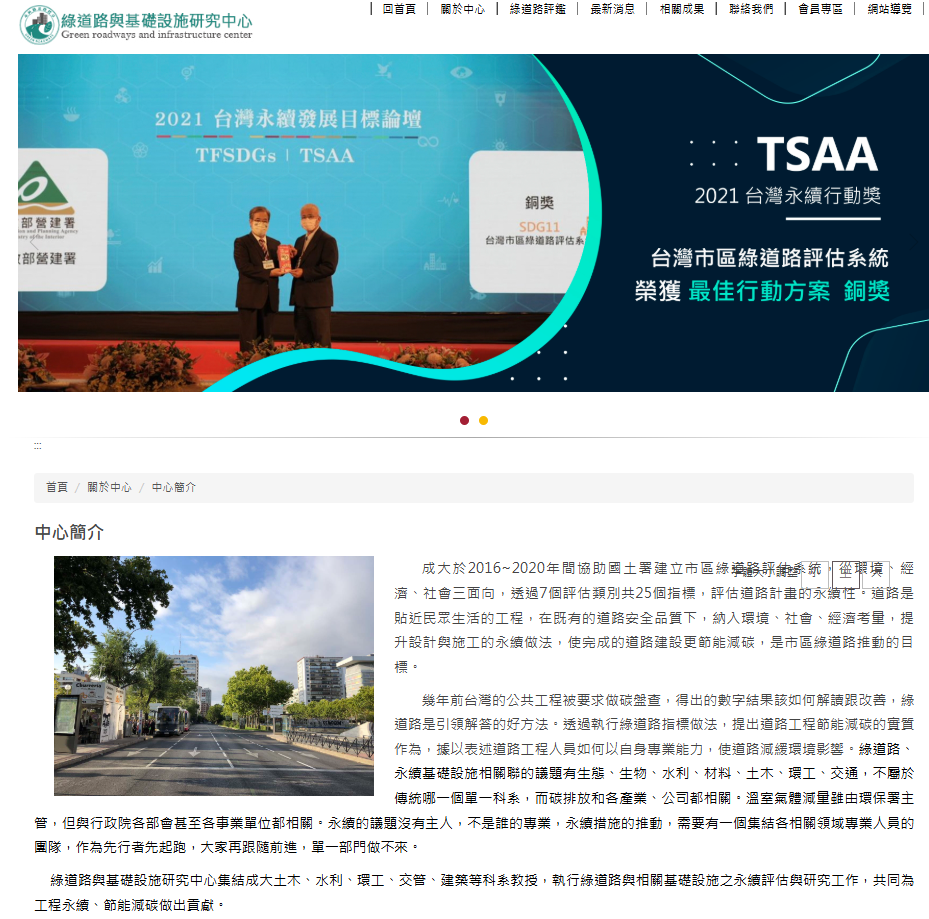 From 2016 to 2020, the Green Roadways and Infrastructure Research Center at NCKU assisted the National Land Administration in establishing an urban roadway assessment system, incorporating environmental, economic, and social dimensions across 25 indicators to evaluate the sustainability of road projects. The Center’s research emphasizes ensuring road safety while integrating environmental, social, and economic considerations, and it proposes sustainable design and construction practices that enhance energy efficiency and carbon reduction in road development. These methods have been applied in Taiwan’s public works carbon audits and improvement recommendations, providing concrete practices to help engineers strengthen their professional capacity and mitigate environmental impacts. By integrating expertise from civil engineering, hydraulic engineering, environmental engineering, traffic management, and architecture, the Center fosters cross-disciplinary collaboration and makes long-term contributions to sustainable transportation and infrastructure development.
- Sustainable Transportation Course
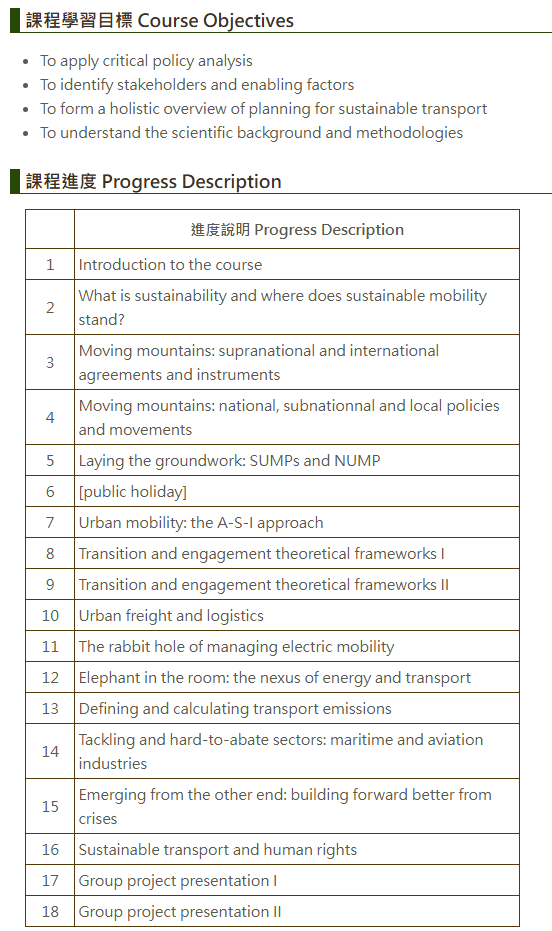 NCKU has launched a “Sustainable Transportation” course. The course not only focuses on transport decarbonisation but also addresses aspects of accessibility, social equity, safety, and efficiency. It further examines policy and regulation, multi-level governance, international partnerships, and global developmentthrough international case studies. This demonstrates NCKU’s commitment in education by systematically integrating transport decarbonisation and sustainable mobility into its curriculum, providing students with international perspectives and practical training in public policy. As a publicly available course, it serves as concrete evidence of the university’s efforts in promoting sustainable transport education and cultivating professional talents.