



Affordable housing for students
11.4.5
SDG11
Affordable housing for students
The “Forms of Student Dormitory Charge and Specification” page discloses, for each dorm, the 18-week semester fee, room types, and bed counts. The University also offers an external price benchmark—stating “Off-campus housing will be at least NT$3,500 per month”—and lists the on-campus BOT Prince Dormitory as an optional resource, whose official site shows monthly rents of NT$4,200 per bed (double room) and NT$7,100 (single room), facilitating affordability assessment.
For financial support, the Housing Service Division maintains an annual “Dorm Fee Reduction” page with timelines and procedures for semester-based reductions and priority placement for low-income and other eligible students, easing the housing burden on disadvantaged groups.
Meanwhile, NCKU continues to expand supply through the newly built Dong-Ning Student Dormitory: ground was broken in 2020, and it officially opened in 2025 with 993 beds and published fees—demonstrating ongoing capacity expansion and information transparency.
- NCKU Forms of Student Dormitory Charge and Specification
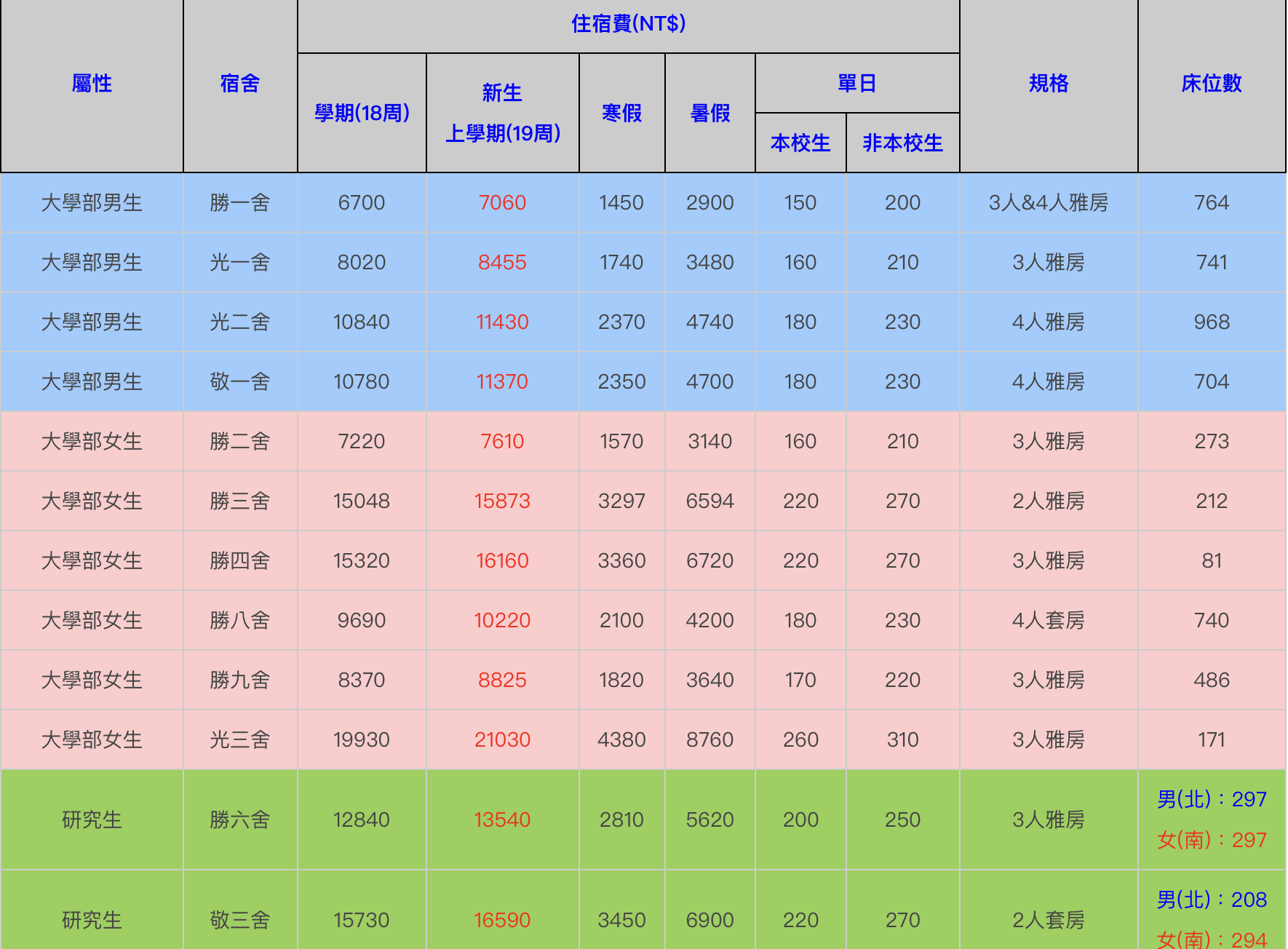 At NCKU, student dormitories are categorized by gender and level of study, with fees calculated per semester, winter/summer vacation, or per day. For undergraduate male students, dormitory fees range from NT$6,700 per semester at Sheng-Li Student Dorm No.1 to NT$10,840 at Kuang-Fu Student Dorm No.2. For undergraduate female students, Sheng-Li Student Dorm No.2 costs NT$7,220 per semester, while Kuang-Fu Student Dorm No.3 reaches NT$19,930. Graduate dormitories are more expensive, such as Ching-Yeh Student Dorm No.3 at NT$15,730 per semester. Vacation housing is charged separately, from about NT$1,450 to NT$6,900, while daily rates range from NT$150 to NT$310 depending on whether the resident is an NCKU student. Room types include 2- to 4-person shared rooms or suites, with over 5,000 beds available, offering diverse options to meet students’ needs.
- BOT Student Dormitory- Prince Dorm
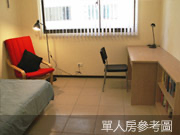 The BOT student dormitory “Prince Dorm” at NCKU is constructed and operated by the private sector, featuring a modern living environment. It offers a variety of options, including single and double rooms, each furnished with a bed, desk, chair, wardrobe, internet access, and air conditioning, providing a comfortable and independent living space. Public facilities include a lounge, study rooms, and laundry rooms. The dormitory is well-managed, with access control systems to ensure safety. Located near the campus, Prince Dorm combines convenience with privacy, making it especially suitable for students seeking a quiet living environment or focusing on research needs.
- NCKU Newly Constructed Dong-Ning Dormitory
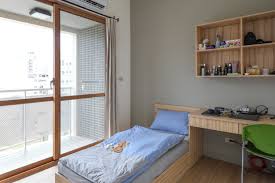 The newly built Dong-Ning Dormitory at NCKU is a modern student residence with a bright and simple design. Rooms are available in single or shared arrangements, equipped with a bed, desk, wardrobe, internet access, air conditioning, and a private balcony, providing a balance of comfort and privacy. The dormitory building includes shared facilities such as lounges, study rooms, and laundry rooms, and is managed with access control and safety systems to enhance living quality and security. Conveniently located near the campus, with easy access to transportation and daily amenities, it is designed to provide students with a well-rounded living and learning environment that meets the needs of a modern campus residence.
- Fee Reduction or Free Accommodation for Eligible Students
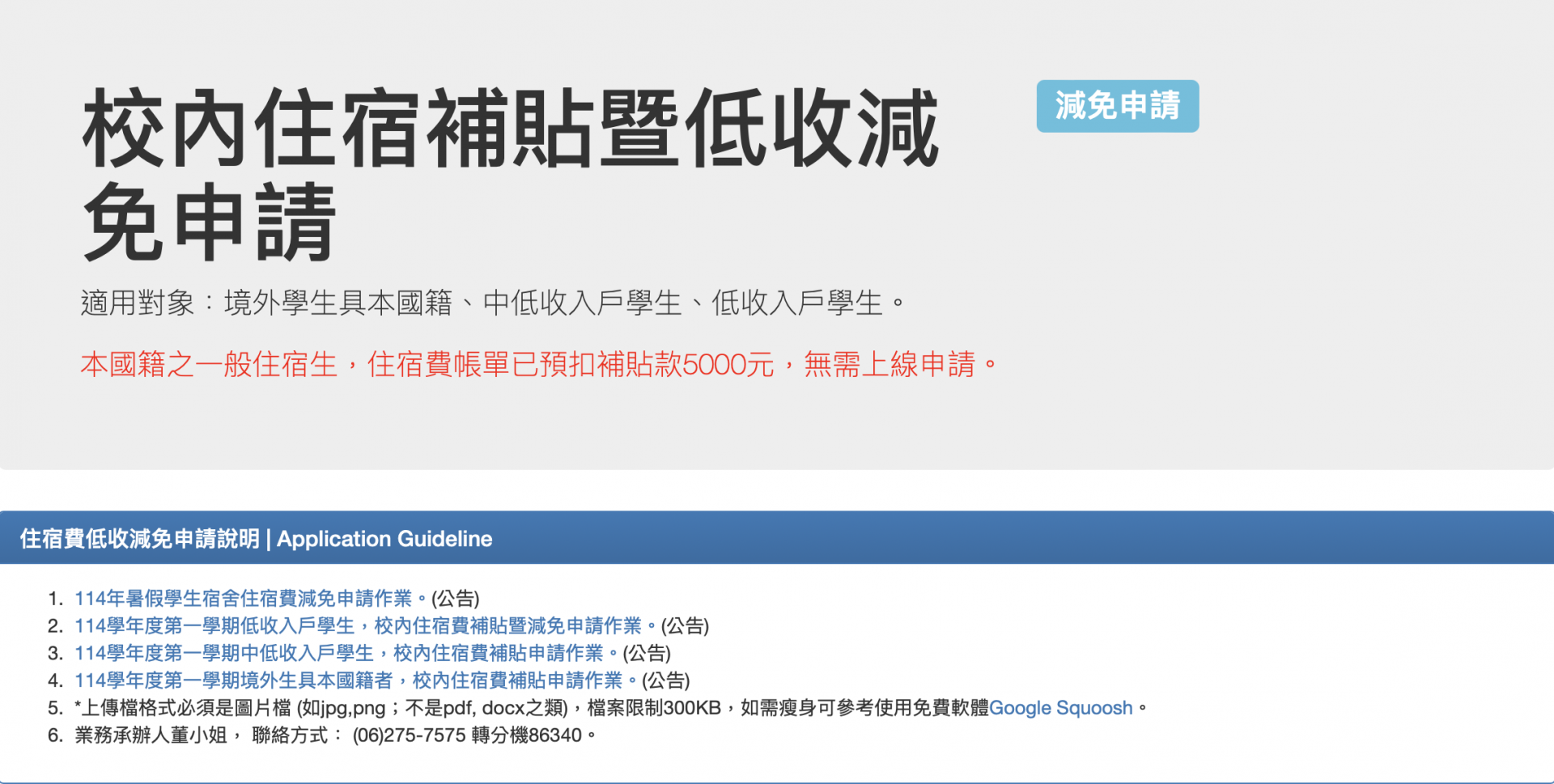 NCKU provides on-campus housing subsidies and fee reduction programs. Eligible students include foreign students with ROC nationality, as well as students from middle- and low-income households. For domestic students in standard dormitories, a subsidy of NT$5,000 is automatically deducted from the dormitory fee bill, with no online application required. Other qualified students may apply for housing fee reductions or subsidies during the designated application periods each semester by uploading the required supporting documents. This initiative aims to ease the housing burden on disadvantaged students and ensure equal access to education.
- 2024 Household Income Distribution in Taiwan
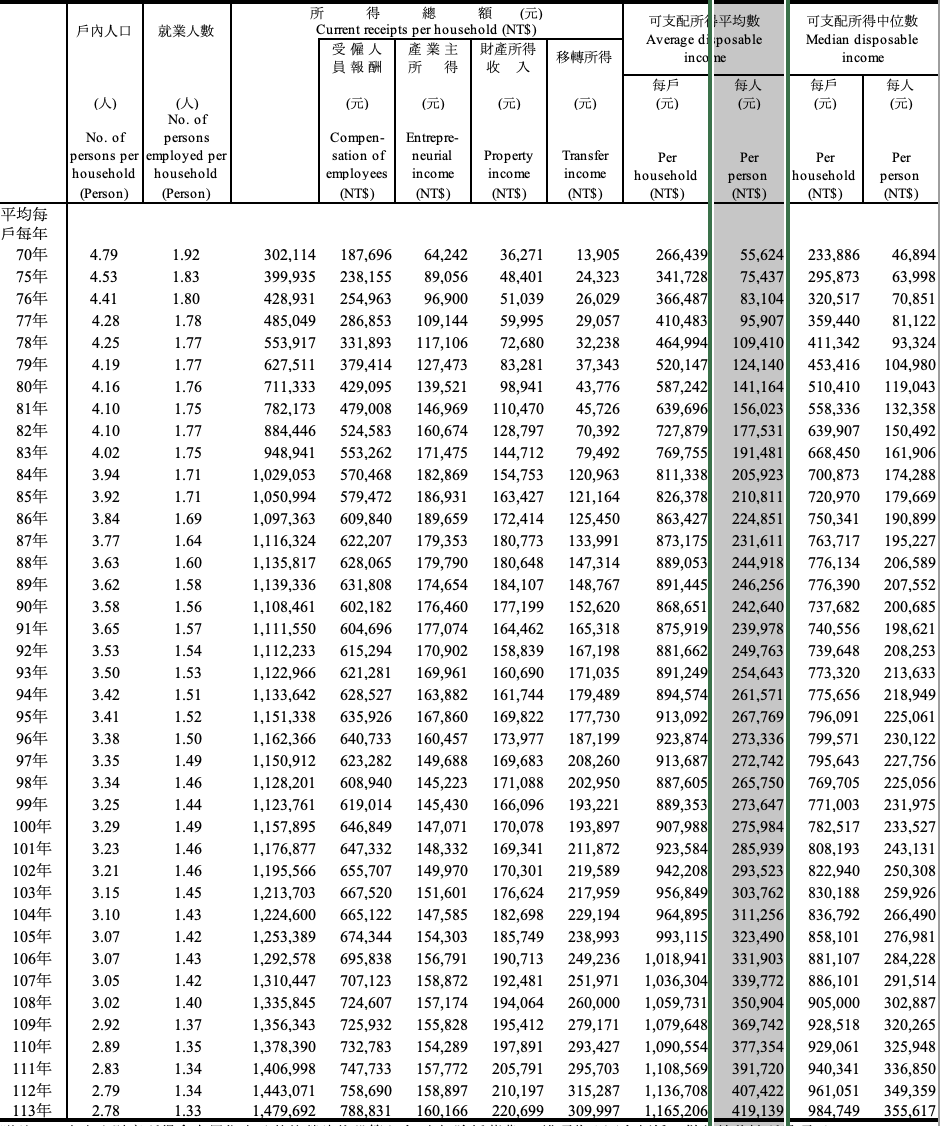 According to the 2024 Survey of Family Income and Expenditure released by the Directorate-General of Budget, Accounting and Statistics (DGBAS), the average disposable income per household in Taiwan was approximately NT$1,165,000, which amounts to about NT$419,000 per person.