


National Cheng Kung University (NCKU) champions a people-centered campus by prioritizing pedestrian access and safety through institutional regulations, physical engineering interventions, and collaborative governance. In institutional policy, NCKU enforces the statutory "Regulations on the Control of Vehicles Driving on Campus at NCKU," codifying within Article 23 that failure to yield to pedestrians constitutes a punishable violation, thereby establishing statutory legal protection for pedestrian right-of-way. In physical engineering, the university implemented a pilot "Pedestrian Priority Zone" on the Sheng-Li Campus, strictly capping vehicular speed at 25 km/h, installing physical speed-calming infrastructure, and applying distinctively colored road surfaces and boundary signage to guarantee pedestrian-vehicle separation. In collaborative governance, NCKU holds recurring Traffic Safety Education Committee meetings with publicly available minutes, engaging faculty, students, and municipal transportation officials to implement pedestrian-exclusive signal phases and pedestrian-first infrastructure across perimeter thoroughfares. Together, these coordinated efforts cultivate a secure, accessible, and walking-friendly campus commons.
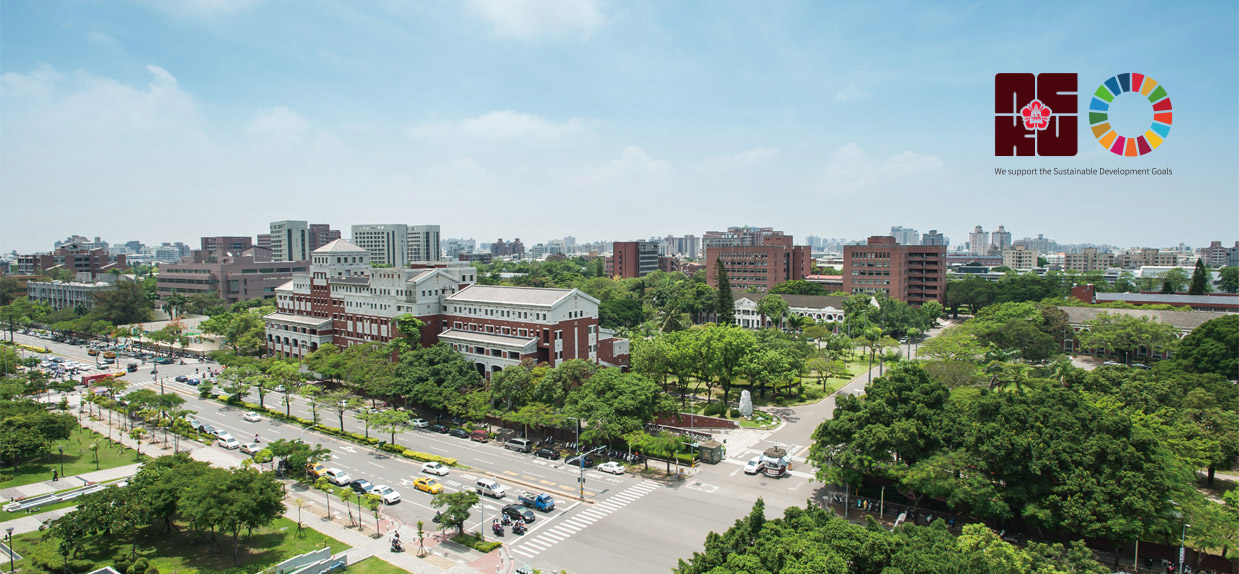
Pedestrian priority on campus

Pedestrian priority on campus
- Regulations on the Control of Vehicles Driving on Campus at NCKU
 Article 23 of the Regulations on the Control of Vehicles Driving on Campus at NCKU lists various types of vehicle violations, including forging or lending permits, parking without authorization, failing to renew permits or pay fees, speeding, honking or creating noise that disrupts classes, improper parking, driving in the wrong direction, occupying EV charging spaces without charging, submitting personal information for others to apply for parking rights, failing to yield to pedestrians, or violating traffic laws. Overall, the purpose is to maintain traffic order on campus and promote pedestrian priority, ensuring that vehicles do not interfere with teaching and campus life.
https://www.cc.ncku.edu.tw/rule/content.php?sn=2795
- NCKU Pilot Pedestrian Priority Zone: Enforcing 25 km/h Speed Limit, Speed Calming, and Distinct Pavements

NCKU has planned a pilot “Pedestrian Priority Zone” in the Sheng-Li campus, starting from the south side of the current control gate and extending to the north side of the fence near Sheng-9 Dormitory. Vehicles entering this area must comply with the speed limit of 25 km/h and are subject to speed-reducing measures to ensure pedestrian safety. The entrances and exits of the zone are paved with materials or colors different from the surroundings and equipped with signs to alert road users, creating a clearly identifiable pedestrian-friendly space. This initiative aims to reduce vehicle speeds, strengthen pedestrian-vehicle separation, and enhance walking safety and environmental quality on campus.
https://serv-oga.ncku.edu.tw/var/file/57/1057/img/1385/667318368.pdf
- NCKU Traffic Safety Education Committee Regular Meetings: Deliberating Pedestrian Circulation Improvements
 NCKU regularly convenes the Traffic Safety Education Committee, bringing together university administration, student representatives, and local government officials. Placing top priority on pedestrian-first mobility and safety, the committee analyzes traffic statistics along high-density perimeter corridors—such as Xiaodong Road, Shengli Road, and Dongfeng Road—to pinpoint focal areas for safety campaigns. Furthermore, faculty and student representatives actively collaborate with Tainan City Bureau of Transportation delegates to evaluate concrete infrastructure interventions, including pedestrian-exclusive signal phases and technological enforcement, demonstrating a resolute institutional commitment to pedestrian safety for campus members and the public.
https://military-osa.ncku.edu.tw/p/405-1055-291109,c14402.php?Lang=zh-tw