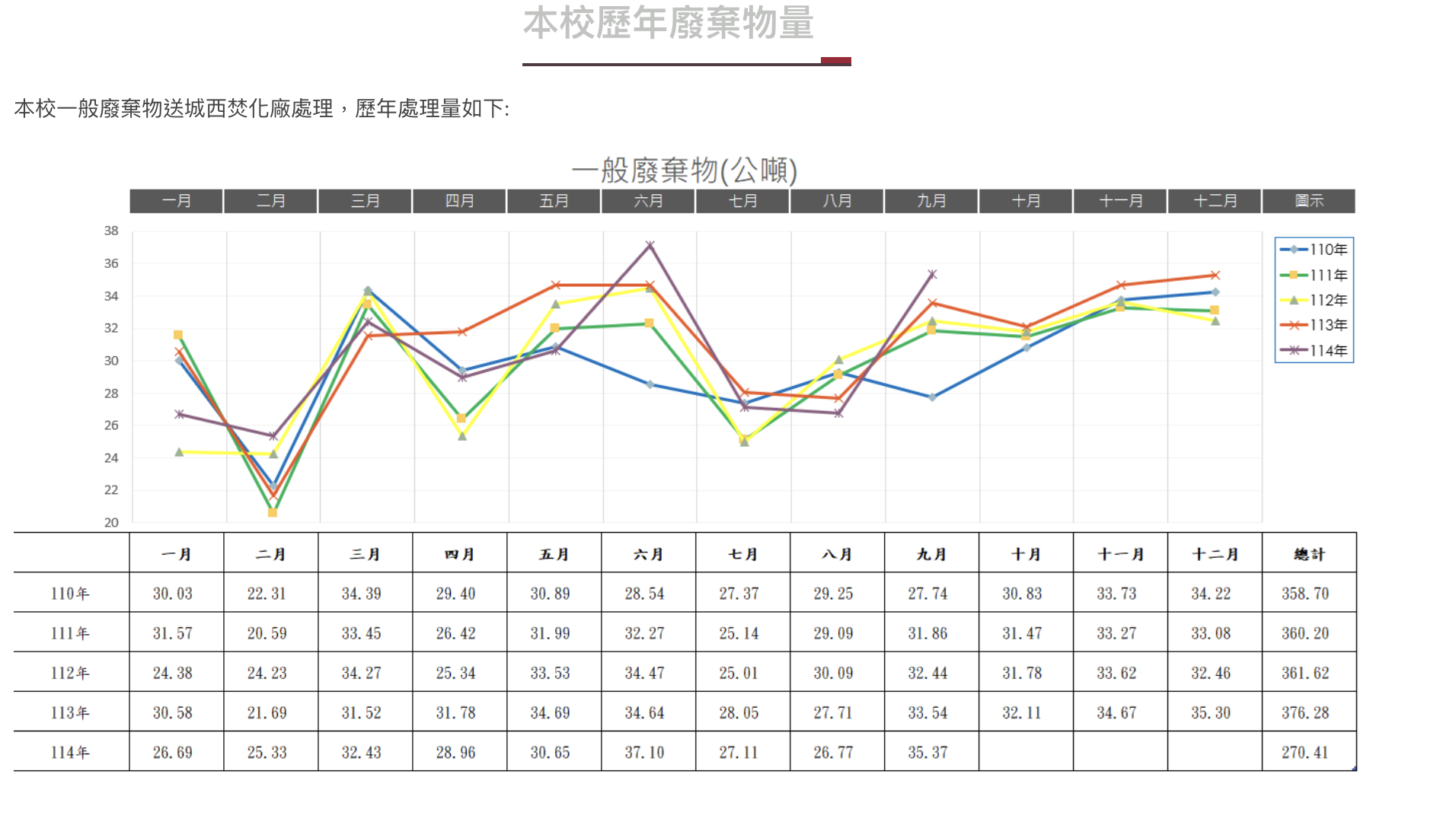




National Cheng Kung University (NCKU) actively monitors waste generation and recycling to track annual volumes and trends. In 2024, the university generated a total of 376.28 tons of waste, a slight 0.41% increase compared to the previous year. To strengthen resource recovery, NCKU introduced smart recycling machines in 2024, which significantly enhanced recycling efficiency and brought the total amount of recycled resources to 111.19 tons. Through the university’s plastic reduction policy and the active promotion of reusable utensils and reduced single-use items, NCKU continues to advance waste minimisation and circular resource management across the campus.
Comprehensive Campus Waste Tracking System
NCKU has fully implemented a comprehensive waste tracking system to accurately measure and publicly disclose both general waste and recyclable materials. Monthly statistics on general waste disposal are compiled and transported to the Chengxi Incineration Plant for treatment. Historical trend charts and data tables are published on the university’s official website, showcasing a transparent, institution-wide monitoring mechanism.
Standardized Collection and Recycling Procedures
The university has established designated waste collection routes and employs sealed, compacting garbage trucks for regular collection. Each administrative unit follows a fixed schedule for classified waste disposal. Recyclables are sorted and processed by licensed recyclers, and the proceeds are incorporated into the university fund—creating a closed-loop system of tracking, recycling, and reuse.
Digitalized EHS Information Platform
An Environmental Health and Safety (EHS) Integrated Information System enables faculty, students, and departments to log and report waste disposal activities, strengthening data tracking and management. Through publicly accessible datasets and digital platforms, NCKU ensures transparency and accountability in waste management, aligning fully with the sustainability objectives of the UN SDGs.
Comprehensive Campus Waste Tracking System
NCKU has fully implemented a comprehensive waste tracking system to accurately measure and publicly disclose both general waste and recyclable materials. Monthly statistics on general waste disposal are compiled and transported to the Chengxi Incineration Plant for treatment. Historical trend charts and data tables are published on the university’s official website, showcasing a transparent, institution-wide monitoring mechanism.
Standardized Collection and Recycling Procedures
The university has established designated waste collection routes and employs sealed, compacting garbage trucks for regular collection. Each administrative unit follows a fixed schedule for classified waste disposal. Recyclables are sorted and processed by licensed recyclers, and the proceeds are incorporated into the university fund—creating a closed-loop system of tracking, recycling, and reuse.
Digitalized EHS Information Platform
An Environmental Health and Safety (EHS) Integrated Information System enables faculty, students, and departments to log and report waste disposal activities, strengthening data tracking and management. Through publicly accessible datasets and digital platforms, NCKU ensures transparency and accountability in waste management, aligning fully with the sustainability objectives of the UN SDGs.