




National Cheng Kung University (NCKU) continues to advance campus sustainability and demonstrates its achievements through several publicly available reports. The 2024–2025 Sustainability Report discloses information on university governance, environmental sustainability, social responsibility, and institutional management. The University Social Responsibility (USR) Report focuses on NCKU’s engagement with local communities, support for disadvantaged groups, and promotion of sustainability education, showcasing the university’s tangible social impact. The Green Campus Performance Report systematically presents outcomes in energy management, carbon reduction, green procurement, and environmental conservation, reflecting NCKU’s progress in sustainable campus governance. In addition, the university actively promotes a culture of sustainability—for instance, the “Sustainable Food Innovation” initiative integrates local cuisine and eco-design to encourage participation and social practice among faculty and students—demonstrating NCKU’s commitment to serving as a model institution for sustainability.
Publication of a sustainability report
12.4.1
SDG12
Publication of sustainability report
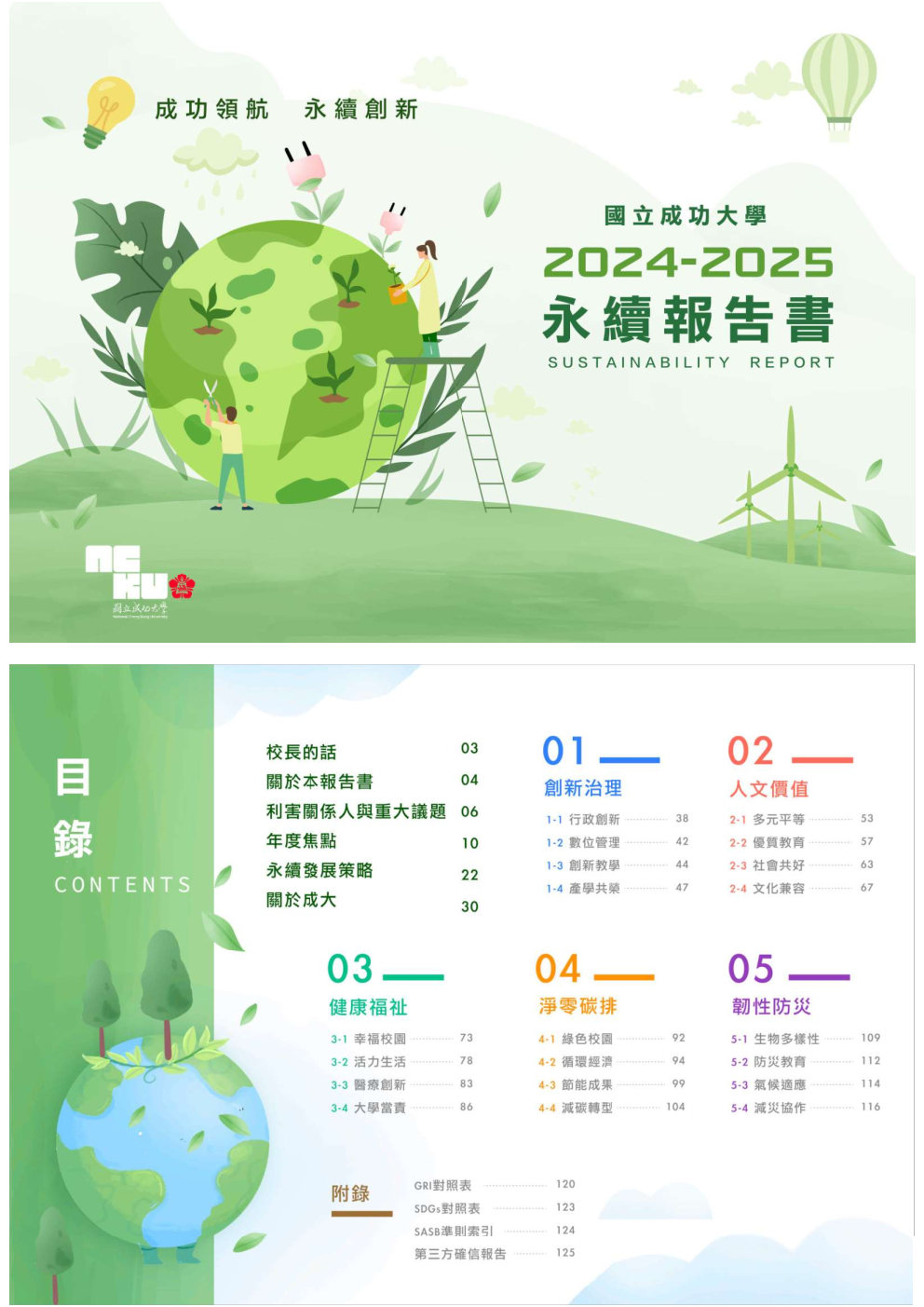
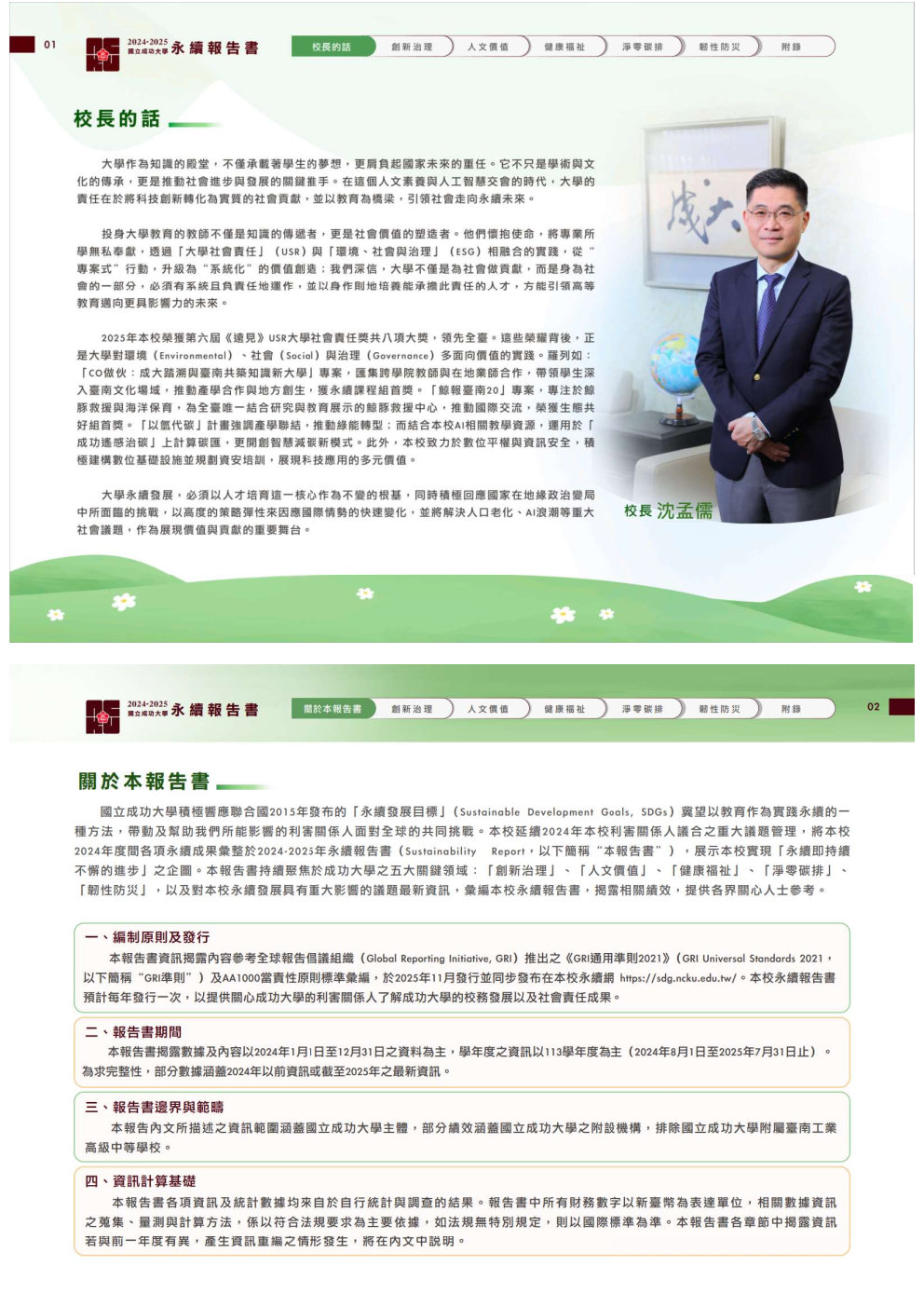
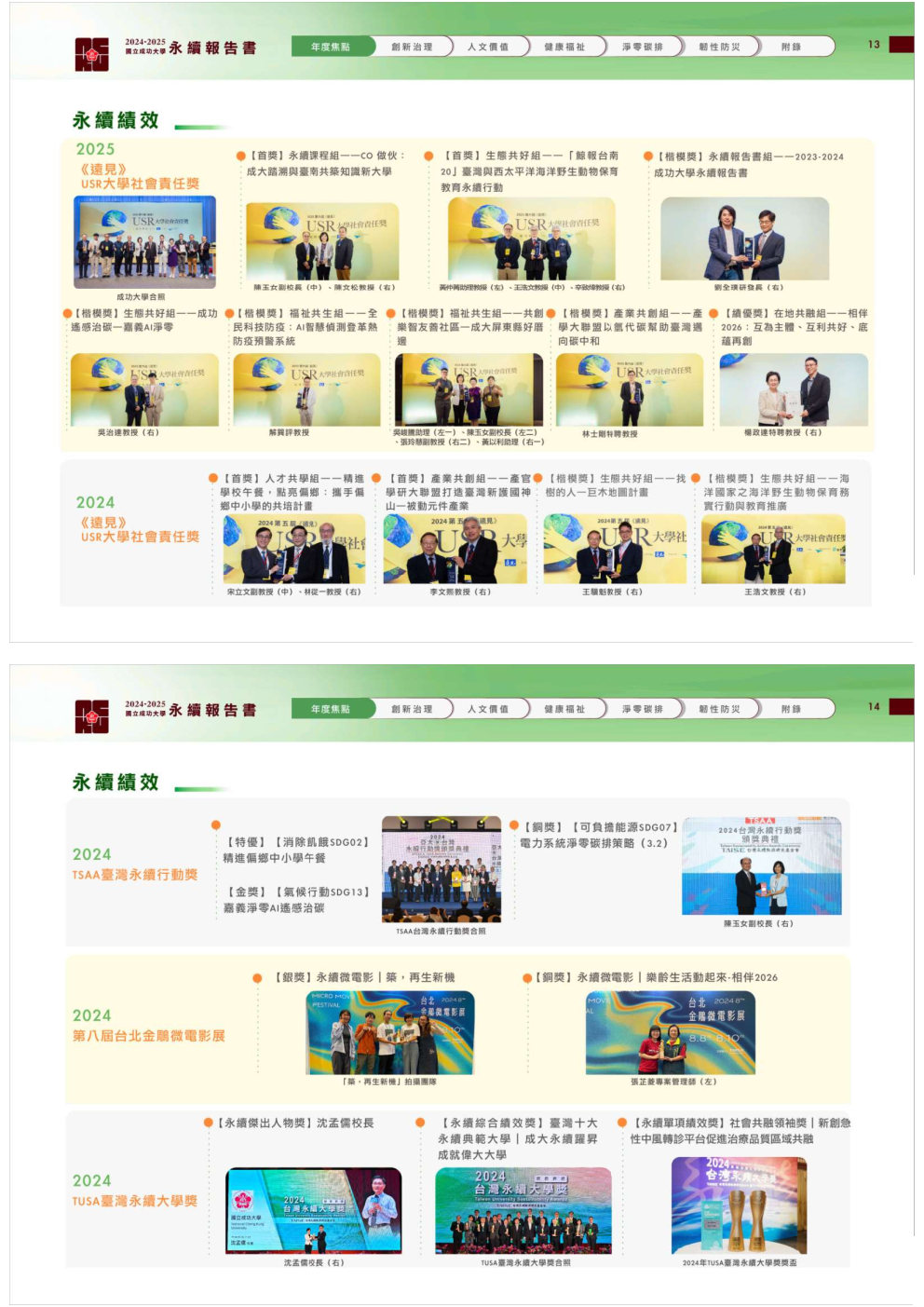
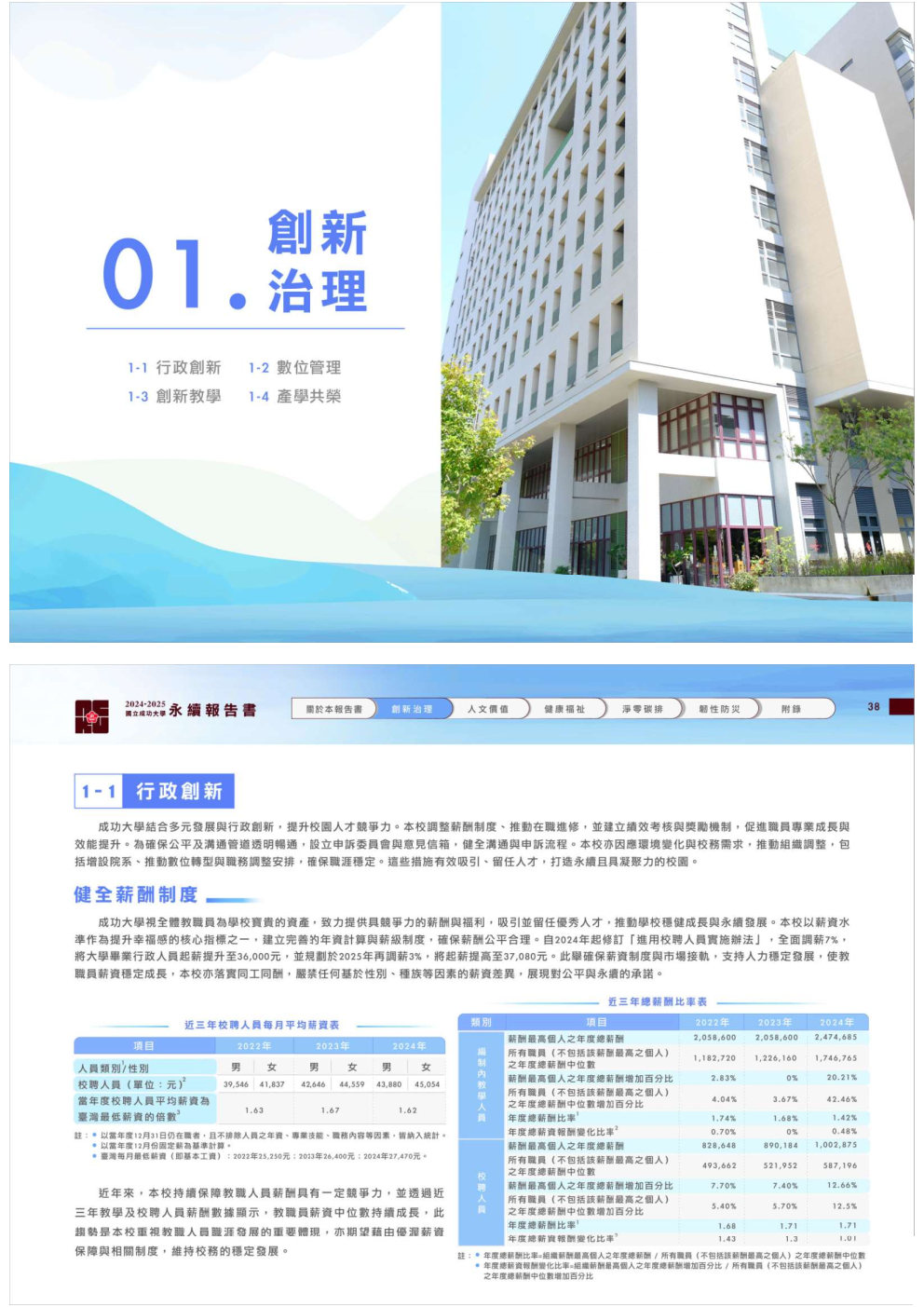
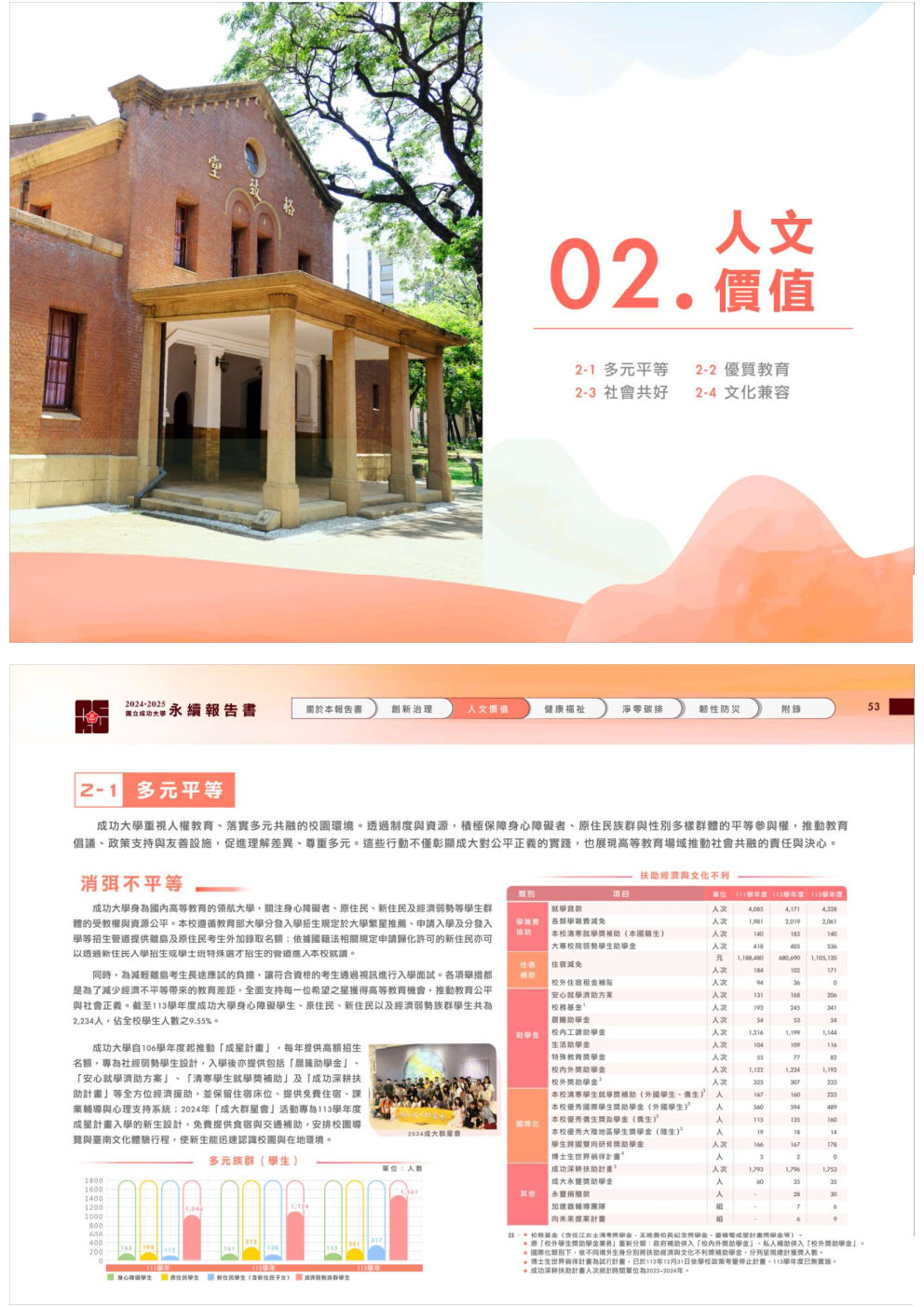
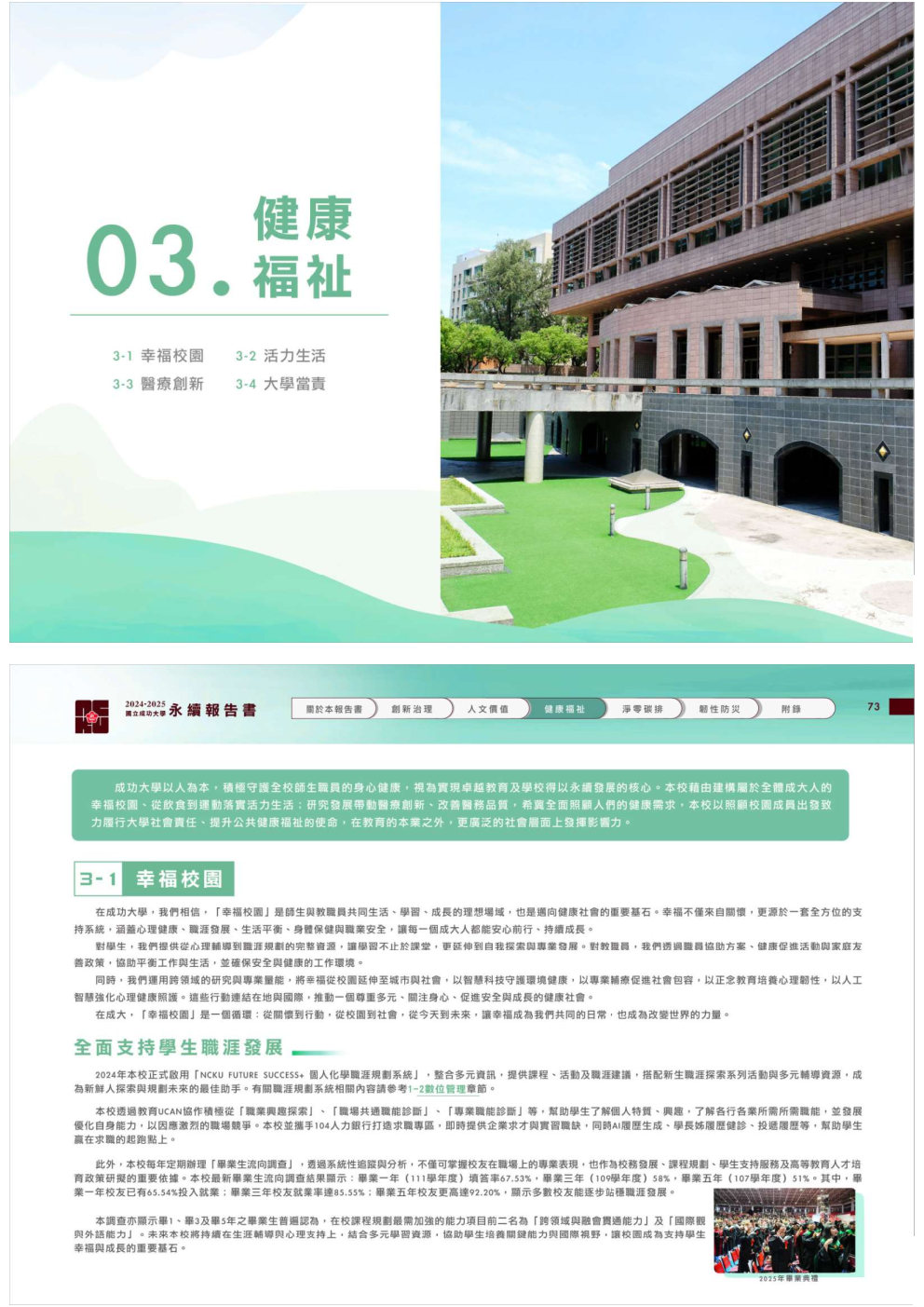
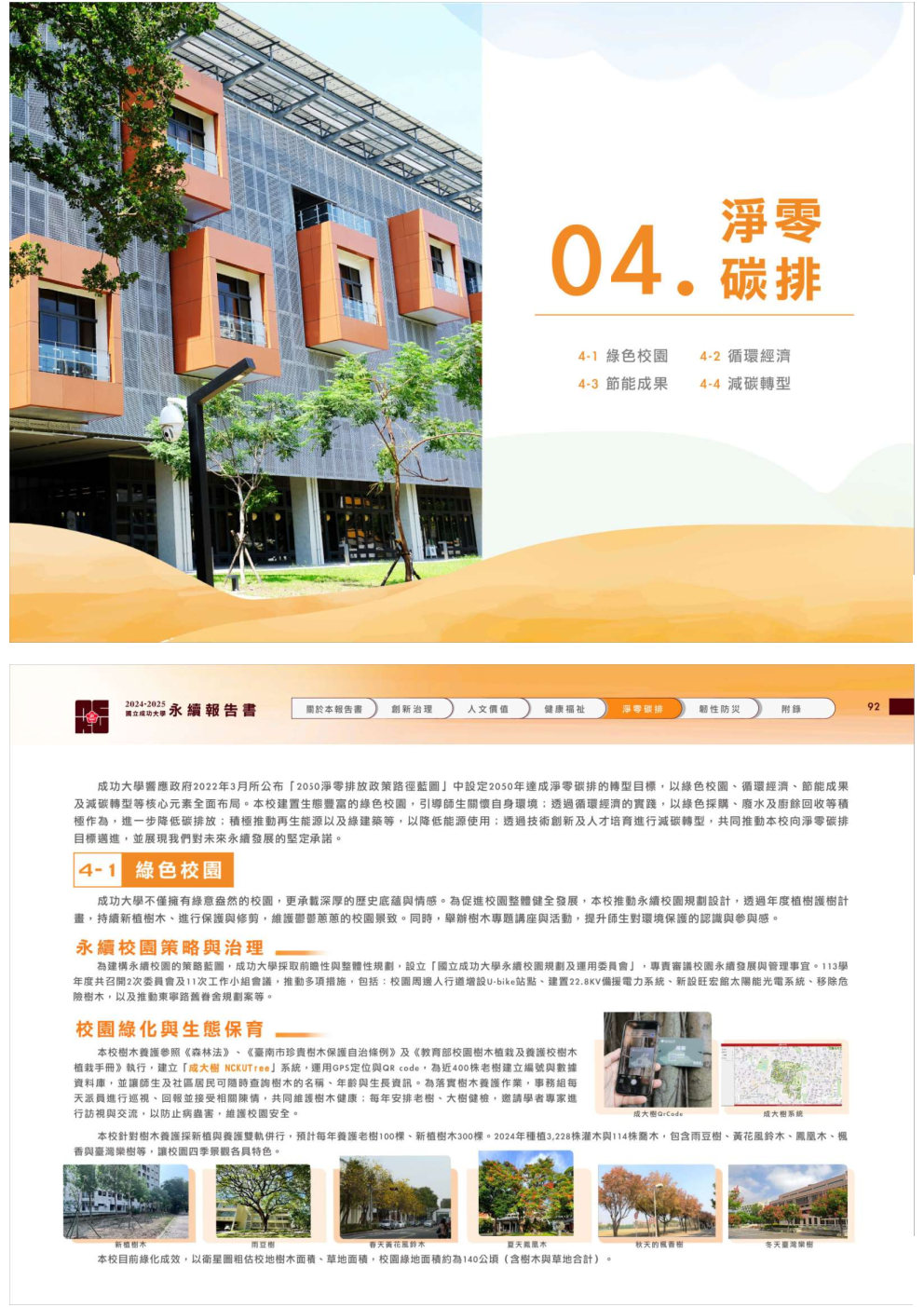

The NCKU 2024–2025 Sustainability Report of NCKU, prefaced by President Meng-Ru Shen, centers on five major themes: innovative governance, humanistic values, health and well-being, net-zero carbon emissions, and disaster resilience. Following the GRI and SDGs frameworks, the report highlights NCKU’s integrated achievements in research innovation, social engagement, and environmental sustainability. President Shen emphasizes that “academic excellence and sustainable practice” are the university’s core principles, driving the advancement of a green campus, cross-disciplinary collaboration, and educational innovation, with the goal of cultivating sustainability-oriented talent and leading higher education toward a sustainable future.
- 2024 University Social Responsibility Annual Report
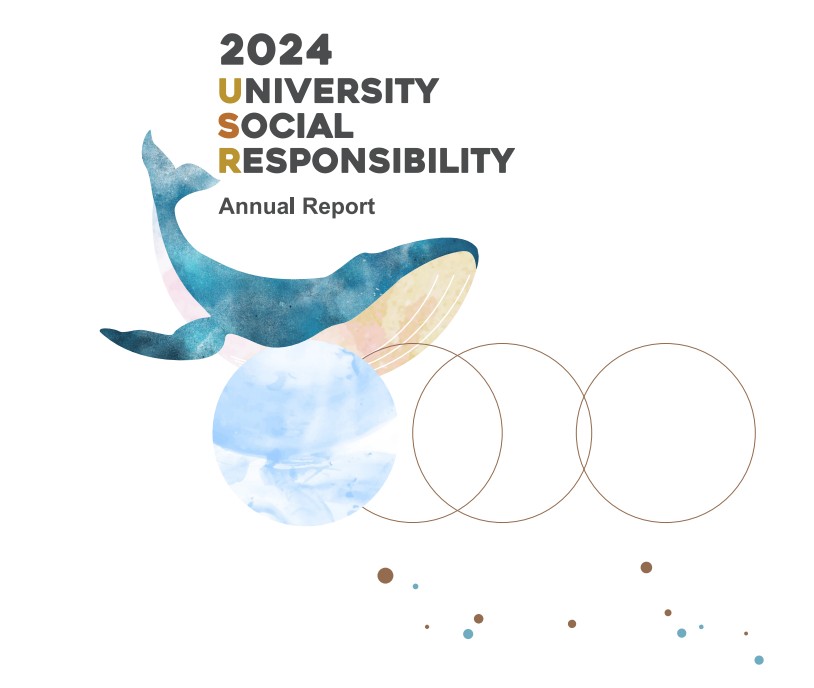
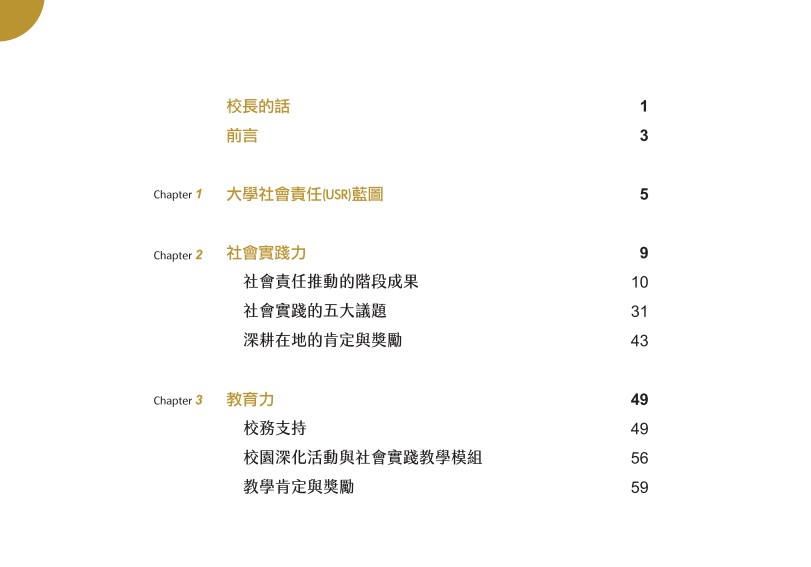
The 2024 University Social Responsibility (USR) Report of NCKU focuses on the university’s blueprint for implementing social responsibility, showcasing its multifaceted achievements in education, social inclusion, and community engagement. The report is divided into three chapters: Chapter 1 outlines NCKU’s USR framework and guiding principles; Chapter 2 presents the stages of progress and five key themes of social responsibility, including local engagement and award-winning initiatives; and Chapter 3 highlights educational capacity, detailing administrative support, social practice-based teaching models, and faculty and student achievements. Overall, the report underscores NCKU’s commitment to the philosophy of “rooting locally and co-creating sustainability,”continuously advancing social engagement and innovation in higher education.
- Green Campus Performance Report
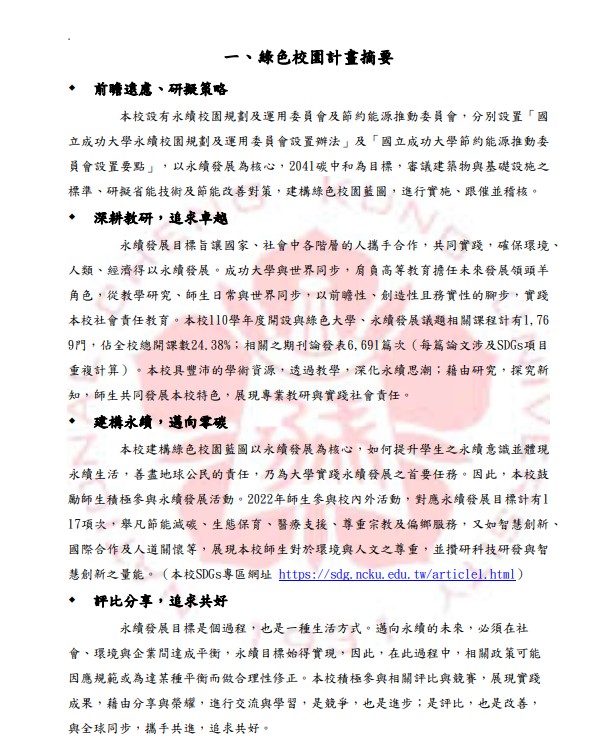 The Green Campus Performance Report of NCKU centers on sustainable development, detailing the university’s achievements since 2014 in energy conservation, carbon reduction, green architecture, and renewable energy infrastructure. The report highlights four main directions:
1. Integrating campus governance through the Sustainable Campus Committee;
2. Embedding the SDGs into teaching, research, and practical initiatives;
3. Encouraging faculty and student participation in environmental education and social engagement; and
4. Strengthening efforts in energy efficiency, carbon reduction, healthcare support, and international collaboration.
It emphasizes that sustainability is not merely a goal but a way of life. Guided by the vision of “rooting locally and moving toward net zero,” NCKU continues to promote campus sustainability and social well-being.
- NCKU Promotes Sustainable Food Innovation
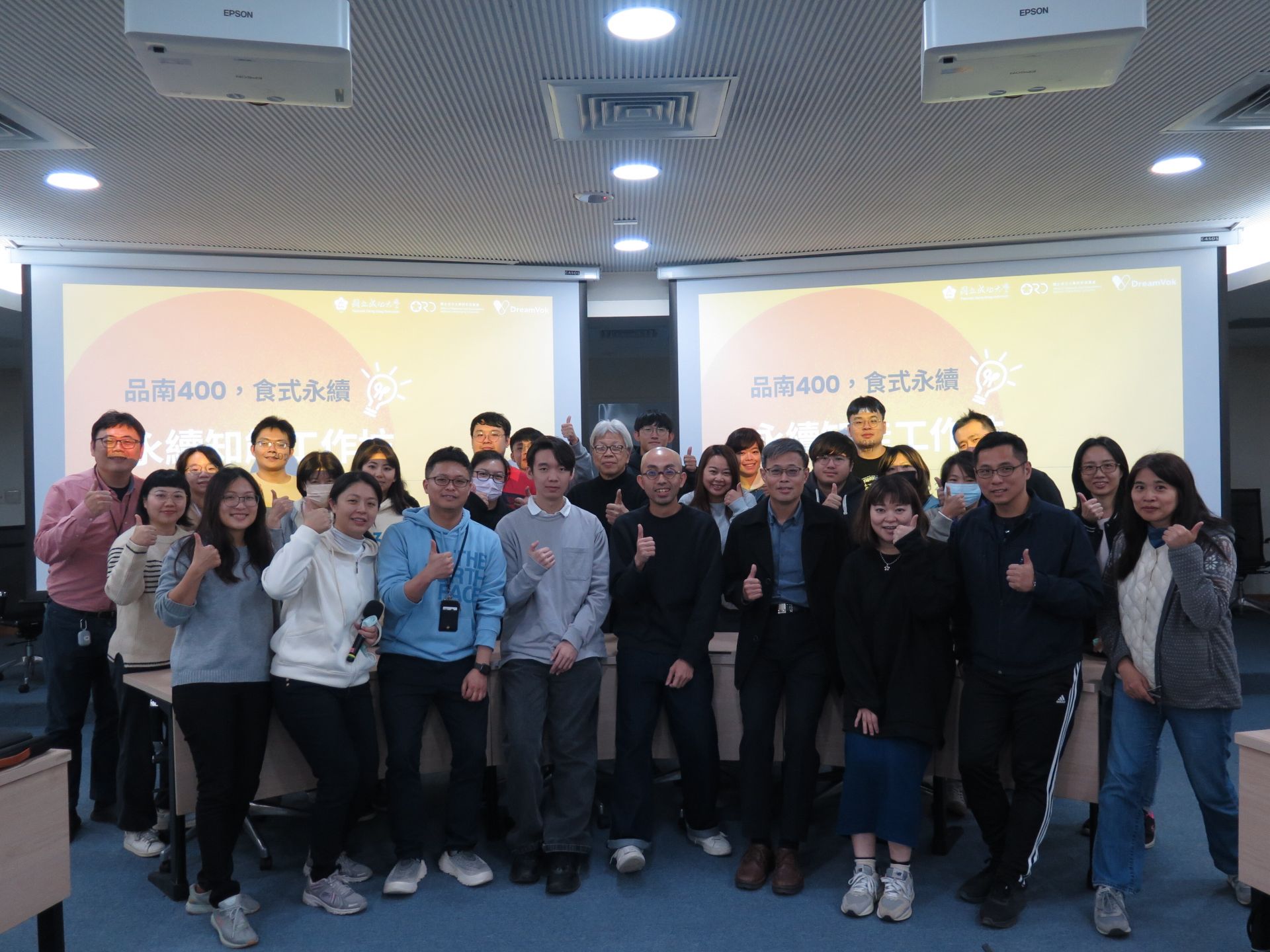 In 2024, NCKU held the “Taste of the South 400: Sustainable Food Innovation Workshop,” co-organized by the Office of Research and Development and the College of Design. The event focused on local food culture and sustainable development, bringing together faculty, students, local businesses, and design experts to explore sustainable transformation in campus dining through design thinking. Aligned with SDG 12: Responsible Consumption and Production, the workshop promoted cross-disciplinary collaboration, aiming to integrate creativity and research with local characteristics to develop a new model of sustainable dining that embodies both cultural depth and environmental consciousness.