




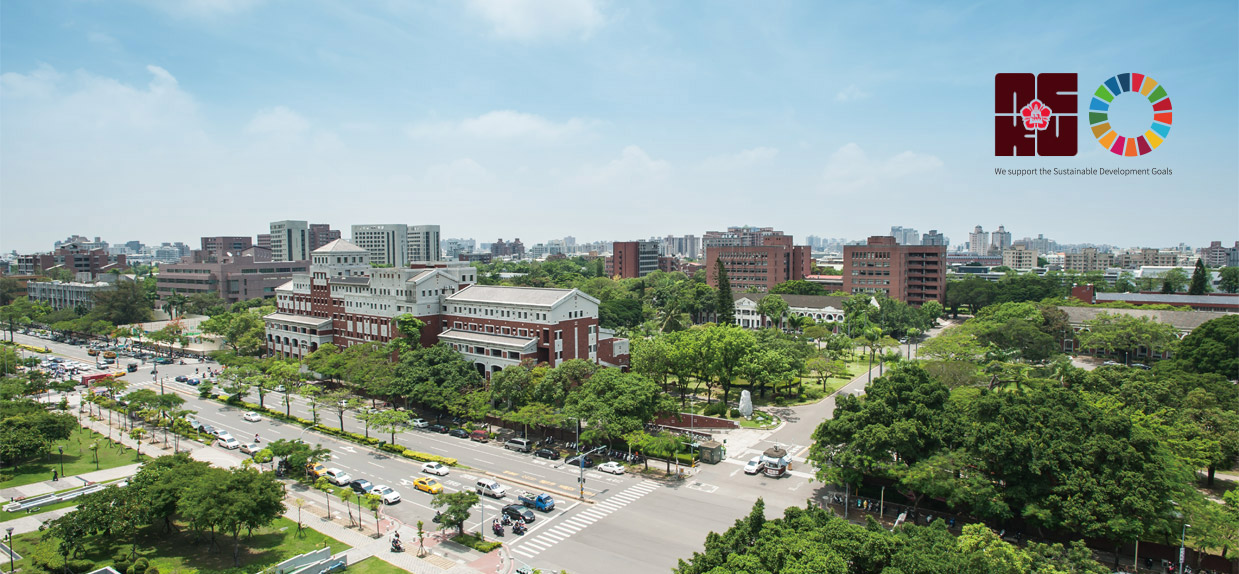
Local biodiversity included in planning and development
15.3.3
SDG15
NCKU’s local biodiversity included in planning and development
The Magic School of Green Technologies: Sustainable Architecture and Biodiversity
A representative example is the Green Magic School, the first nationally certified green building in Taiwan. This building not only adopts renewable materials and modular construction to reduce environmental impact, but also enhances biodiversity: rough stone walls and three-dimensional facades provide habitats for birds and reptiles; bird-protection glass reduces collisions; diverse vegetation supplies food and shelter for insects and birds; and the rooftop garden lowers roof temperatures while increasing urban greenery.
Ecological Preservation in New Campus Construction
New campus construction projects also emphasize ecological preservation. For instance, the Innovation Center (Macronix Hall) integrates sun-shading structures, natural ventilation corridors, and green spaces, while preserving existing flora and fauna as well as maintaining the harmony between historical buildings and the natural environment.
Through these multifaceted green campus initiatives, NCKU demonstrates a holistic strategy that combines low-carbon architecture, biodiversity conservation, and ecological education. By making biodiversity a core element of campus design, NCKU has become a model of ecological resilience within urban environments.
- NCKU Protecting Campus Biodiversity
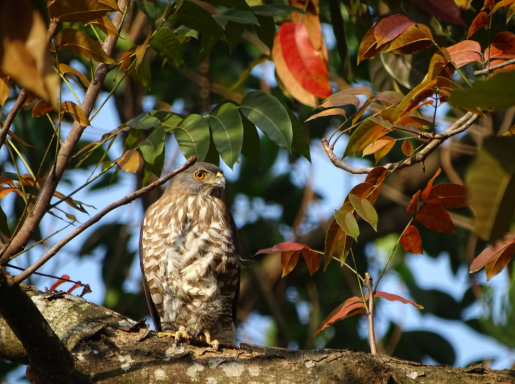 NCKU actively promotes biodiversity conservation through Professor Hsiao-Wen Wang’s long-term research on the Budai Salt Pan Wetlands, which enhances waterbird habitat restoration and community flood prevention awareness; additionally, studies on amphibian diversity in Vietnam’s rainforests deepen understanding of ecological changes. On campus, the university fosters a biodiversity-friendly environment by planting native species, establishing ecological corridors, and developing online databases, demonstrating its strong commitment to protecting biodiversity.
- NCKU Green Magic School - Rooftop Garden
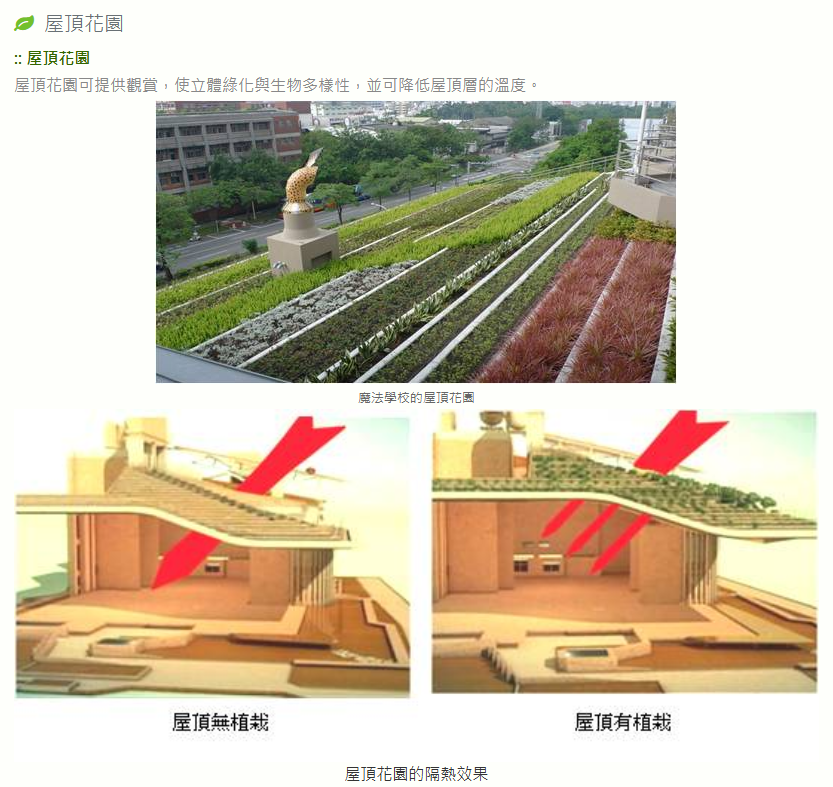 Rooftop gardens not only enhance aesthetics and biodiversity but also effectively reduce roof temperatures. The upper layer is planted with shallow green vegetation, while the lower layer features continuous, independent water storage tanks with “drought-resistant” and “overflow” functions. Whether on rooftops or balconies, the planters can be freely combined to form continuous green spaces, offering easy maintenance: if a plant dies, the entire planter can be replaced without digging or damaging the structure. In case of leaks, planters can be easily moved to access repairs, ensuring both safety and beauty, perfectly realizing rooftop greening.
- National Cheng Kung University Green Magic School - Biologically Friendly Building Facades
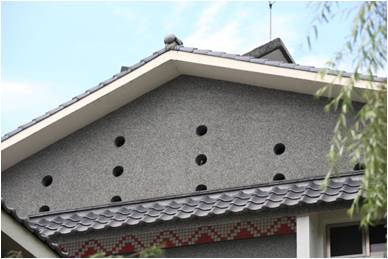 Urban courtyards and outdoor green spaces, designed with "Torii spaces," provide microhabitats for birds to nest and perch. Building façades incorporate textured surfaces, recesses, and balcony plantings, attracting swallows, doves, pigeons, and supporting butterflies, bees, and microorganisms, creating a multi-layered, symbiotic ecosystem. Integrating vertical greening with "Torii spaces" enhances urban biodiversity, regulates microclimates, mitigates the heat island effect, and fosters ecologically friendly city architecture.