



Collaboration for shared land ecosystems
15.3.5
SDG15
NCKU’s collaboration for shared land ecosystems
Ecological engineering is a technology that balances environmental protection with pollution mitigation. Its core principle lies in selecting and cultivating organisms capable of degrading or eliminating specific pollutants. Since these organisms naturally exist in the environment, their use has minimal ecological impact compared to traditional chemical methods for pollutant removal. The Ecological Engineering Laboratory at National Cheng Kung University (NCKU) focuses on studying the degradation abilities of these organisms. Using precise analytical instruments, the lab measures pollutant levels to verify the organisms’ effectiveness and aims to identify promising species for future pollution control applications. Currently, the lab cultivates organisms such as algae, earthworms, black soldier fly larvae, and mealworms, and experiments have confirmed their pollutant-degrading capabilities.
Badlands Collaboration and Integration of Ecology and Culture
In addition, NCKU actively promotes local collaboration for shared ecosystems in “badlands” areas. Badlands refer to barren, rugged mudstone landscapes where vegetation and crops struggle to grow, also known as “Moon World.” Despite the seemingly barren surface, these areas are rich in cultural history and natural ecology. The NCKU Badlands Collaboration Team works with local residents, integrating elements of arrowroot, bamboo, and Siraya culture, to organize various artistic and cultural activities that showcase life in the badlands. During art festivals, bamboo masters, local craftsmen, young creators, and NCKU faculty and students jointly exhibit their works. NCKU students also presented two pieces, forming a shared model that combines ecology, culture, and education.
Through ecological engineering research and local badlands collaboration, NCKU not only promotes environmental protection and pollution mitigation but also fosters the development of shared ecosystems between campus and community, demonstrating interdisciplinary collaboration and the practical spirit of sustainable development.
- Ecological Engineering Laboratory
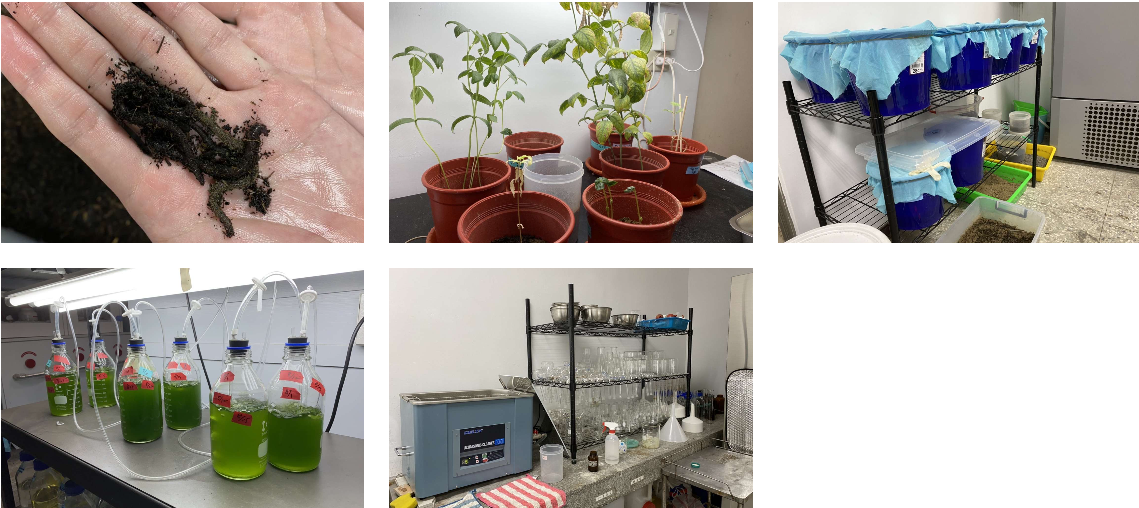 The Ecological Engineering Laboratory focuses on studying how organisms degrade environmental pollutants. Target organisms are selected for cultivation in the lab, and precise analytical instruments are used to measure pollutant levels, verifying the organisms’ degradation effectiveness. The goal is to identify promising organisms for future application in pollution prevention and control.
- The 2024 Badlands Living Arts Festival and Taro Agri-Food Carnival
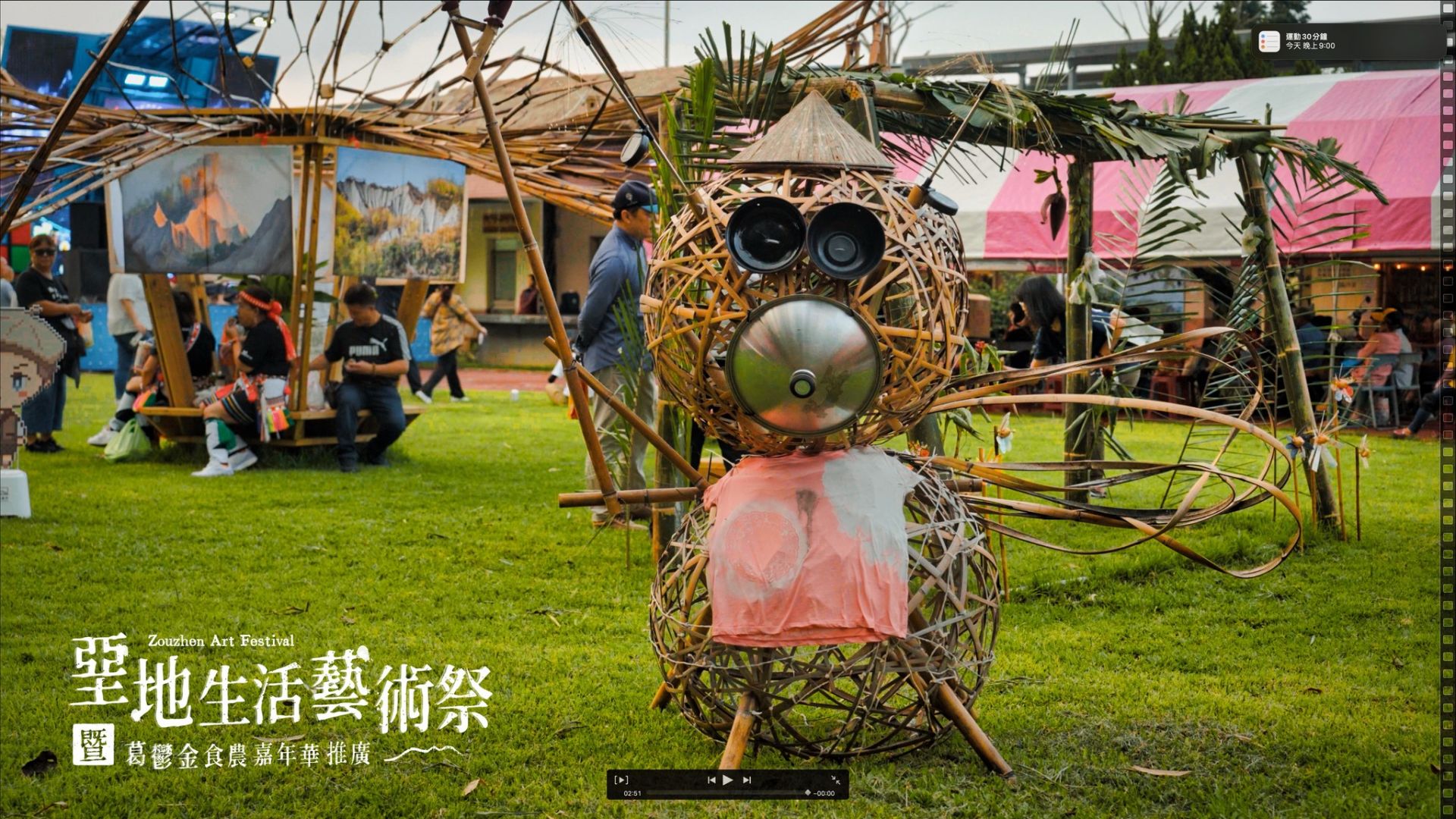 The Siraya people of Zuozhen Gongguan Community cultivate arrowroot as a traditional crop, producing powder, noodles, beverages, and jams to promote food-agriculture education and local innovation. Co-organized by NCKU, the 2024 Badlands Life Arts Festival combines arrowroot, Siraya culture, and bamboo-based art, featuring works by local artisans, young creators, and NCKU students, showcasing the badlands’ rich ecology, culture, and creativity, and creating a unique event that integrates culture, agriculture, and art.
- Restoring the Health of the Land — An Interview with Satoyama-Satoumi Studio
 The Satoyama-Satoumi Studio, composed of NCKU alumni and teachers who have long promoted food and agricultural education at NCKU, advocates for branch-and-leaf gardens suited to Tainan’s climate, creating “biological refuges” that attract pheasants, solitary bees, and other wildlife, fostering a multi-layered symbiotic environment. Through leaf capsules, food and agricultural education, and women’s empowerment initiatives integrated with social inclusion, citizen observation data are shared with academic research, achieving land stewardship, community engagement, and biodiversity conservation goals.