





Water discharge guidelines and standards
15.4.1
SDG15

NCKU’s water discharge guidelines and standards
National Cheng Kung University (NCKU) has established comprehensive wastewater management guidelines to effectively control discharges from campus buildings and laboratories while ensuring that water quality meets regulatory standards for discharge or sewer connection. In accordance with the Water Pollution Control Act, Waste Disposal Act, the Tainan City Sewage Management Regulations, and other relevant environmental laws, NCKU has implemented the detailed Guidelines for Wastewater Management in Campus Buildings and Laboratories. These guidelines clearly regulate the collection, classification, treatment, and discharge of wastewater, requiring all laboratories and administrative units to strictly comply. The goal is to reduce water pollution at the source, create a healthy and safe campus environment, and fulfill the university’s environmental responsibilities to society.
Multi-Tiered Water Quality Monitoring System
NCKU’s Environmental Safety and Health Center has established a multi-tiered water quality monitoring system covering key areas such as campus perimeter drainage, departmental drainage, and groundwater. Sampling and testing parameters include total dissolved solids (TDS), suspended solids (SS), biochemical oxygen demand (BOD), chemical oxygen demand (COD), ammonia nitrogen (NH₃-N), and other important indicators. Regular sampling and on-site analyses provide comprehensive data reports for reference by campus management.
Through strict wastewater management procedures, scientifically guided treatment processes, and continuous monitoring, NCKU not only ensures safe water quality on campus but also demonstrates its strong commitment as an academic institution to environmental protection and social responsibility, serving as a model for sustainable campus water management.
- NCKU Regulations for Wastewater Management in Buildings and Laboratories
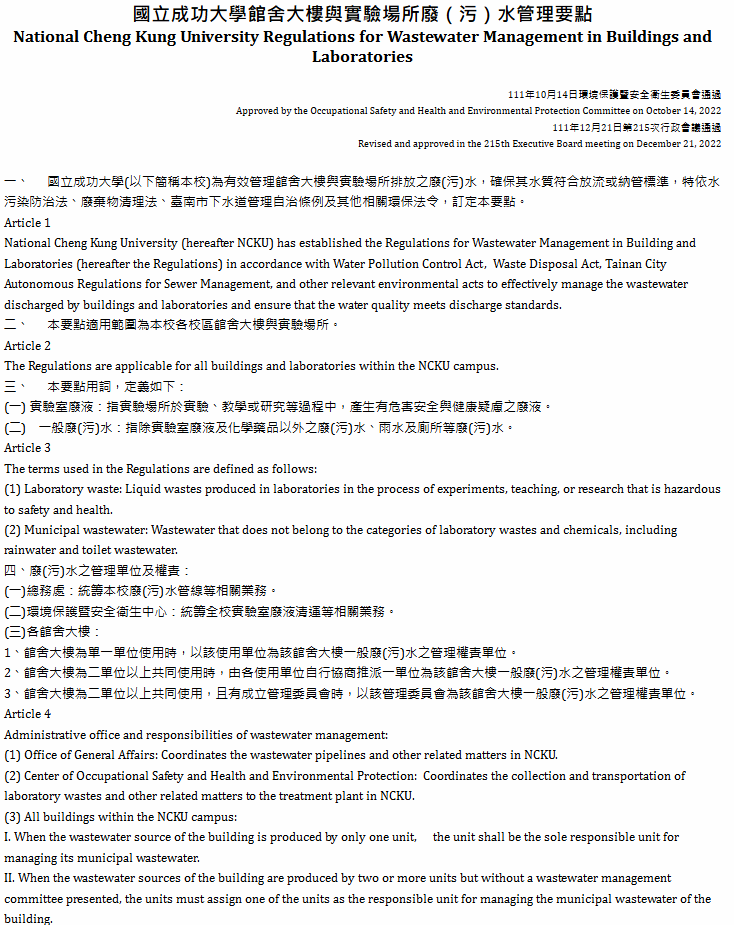
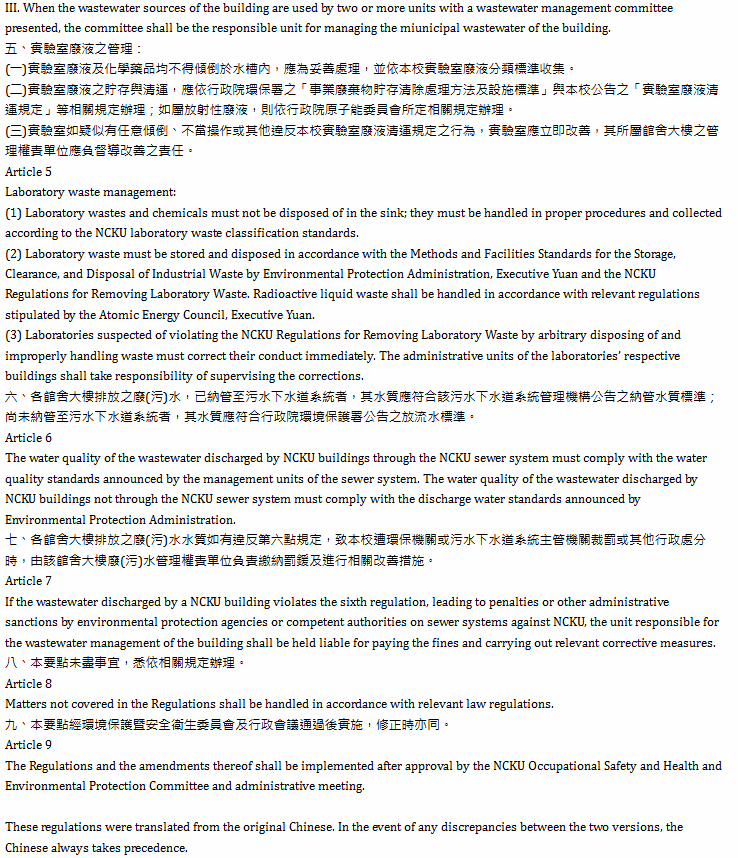 NCKU implements strict management of campus wastewater to ensure that water quality meets the standards of the sewer system and the Environmental Protection Administration. Laboratory wastes and chemicals are properly stored and handled according to classification standards, while radioactive wastes are managed following specific regulations. Responsibility for wastewater management in each building is clearly assigned to individual units or management committees, and violators must carry out corrective measures and pay fines. NCKU’s wastewater management emphasizes safety, environmental protection, and systematic monitoring, demonstrating the university’s commitment to sustainable campus operations.
- Campus Environmental Monitoring
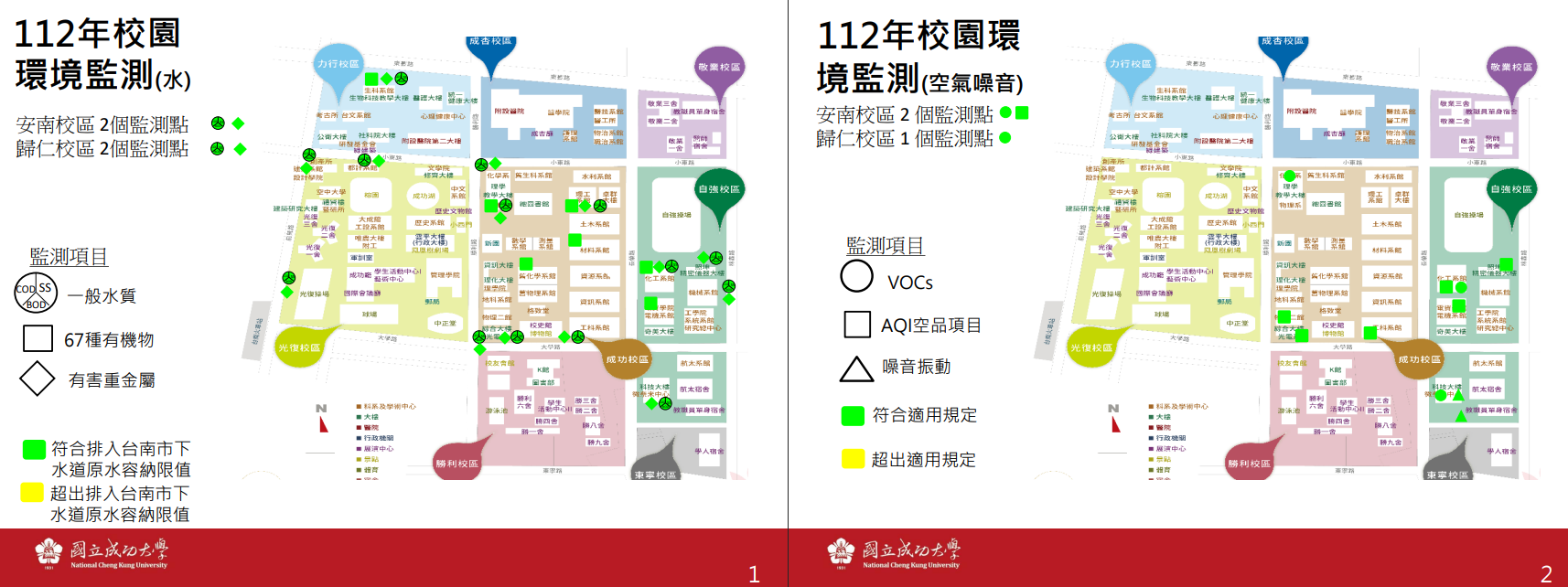 The NCKU Center for Occupational Safety, Health, and Environmental Protection conducts comprehensive campus environmental monitoring, including peripheral and departmental wastewater quality, groundwater quality, air quality, exhaust emissions, noise, and vibrations. Nine monitoring points are set for peripheral wastewater and another nine for departmental wastewater, measuring indicators such as total dissolved solids, suspended solids, BOD, COD, and ammonia nitrogen to ensure no laboratory waste mixes into the drainage, safeguarding campus environmental safety and sustainable management.
- Manual of Experimental Waste Incoming Procedure
 NCKU strictly manages hazardous liquid waste, covering classification, storage, collection, and record-keeping to prevent experimental pollution and environmental hazards. The university has established clear regulations, including joining the Joint Waste Treatment Association, signing disposal contracts, waste classification, scheduling deliveries, proper disposal, and expense reimbursement. Treatment records are maintained in accordance with regulations, reflecting NCKU’s commitment to fulfilling its responsibilities as a reputable academic institution.
- Experimental Waste Effluent Classification Procedure
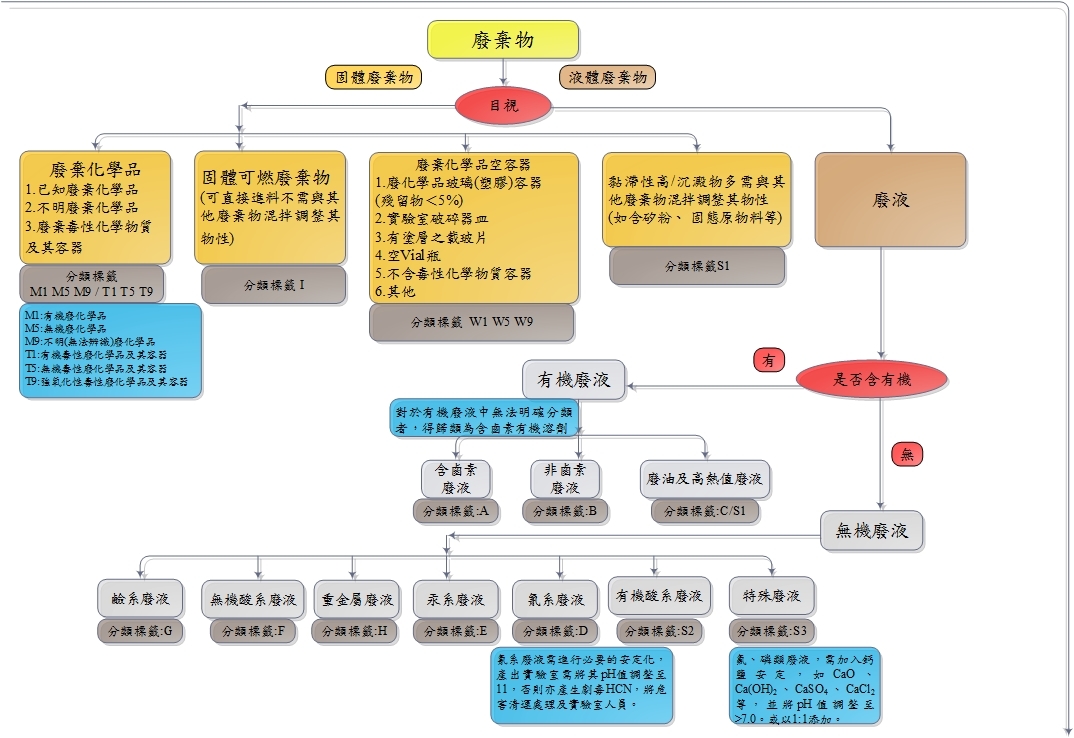 NCKU has established a clear waste classification and management system, covering the categorization, storage, transportation, and record-keeping of hazardous liquids, general waste, and laboratory waste. Through systematic management and regular monitoring, the university ensures proper waste handling to prevent pollution and environmental hazards. NCKU emphasizes that faculty and students follow proper classification procedures, integrating legal regulations with on-campus supervision, demonstrating a rigorous commitment to environmental protection and sustainable campus management.