






Public Access to University Resources for Farmers
In 2024, National Cheng Kung University (NCKU) opened multiple publicly documented channels for external applications, enabling local farmers and food producers to access university laboratories, instruments, and technologies to directly strengthen sustainable farming.
Smart Agriculture Production Capacity Management
NCKU’s Biotechnology Center runs Smart Agriculture Production Capacity Management, using UAVs combined with hyperspectral imaging and big data to provide real-time information on cultivated area, growth status, and estimated yields as decision support for farmers and agricultural agencies.
Pesticide Testing and Regulatory Support
The Institute of Sustainable Environment – Drug and Toxic Analysis Laboratory offers multi-residue pesticide testing (including 410 items) and rapid mass-spectrometry screening, with published “testing procedures & submission” and TAF/TFDA accreditations to support pesticide reduction and regulatory compliance.
Shared Core Facilities for Research and Industry
The Core Facility Center publishes fee schedules and a shared instrument reservation platform for both internal and external users.
Orchid Research and Development Services
The Orchid Research and Development Center provides Phalaenopsis DNA fingerprinting and variety/disease services to support breeding and industry diagnostics.
Community Outreach and Practical Technology Transfer
Finally, NCKU extends coursework into communities so farmers can learn microbe-based farming methods, translating university technology into practical, locally applicable practices.
In 2024, National Cheng Kung University (NCKU) opened multiple publicly documented channels for external applications, enabling local farmers and food producers to access university laboratories, instruments, and technologies to directly strengthen sustainable farming.
Smart Agriculture Production Capacity Management
NCKU’s Biotechnology Center runs Smart Agriculture Production Capacity Management, using UAVs combined with hyperspectral imaging and big data to provide real-time information on cultivated area, growth status, and estimated yields as decision support for farmers and agricultural agencies.
Pesticide Testing and Regulatory Support
The Institute of Sustainable Environment – Drug and Toxic Analysis Laboratory offers multi-residue pesticide testing (including 410 items) and rapid mass-spectrometry screening, with published “testing procedures & submission” and TAF/TFDA accreditations to support pesticide reduction and regulatory compliance.
Shared Core Facilities for Research and Industry
The Core Facility Center publishes fee schedules and a shared instrument reservation platform for both internal and external users.
Orchid Research and Development Services
The Orchid Research and Development Center provides Phalaenopsis DNA fingerprinting and variety/disease services to support breeding and industry diagnostics.
Community Outreach and Practical Technology Transfer
Finally, NCKU extends coursework into communities so farmers can learn microbe-based farming methods, translating university technology into practical, locally applicable practices.
- NCKU Biotechnology Center – Smart Agriculture Production Management:
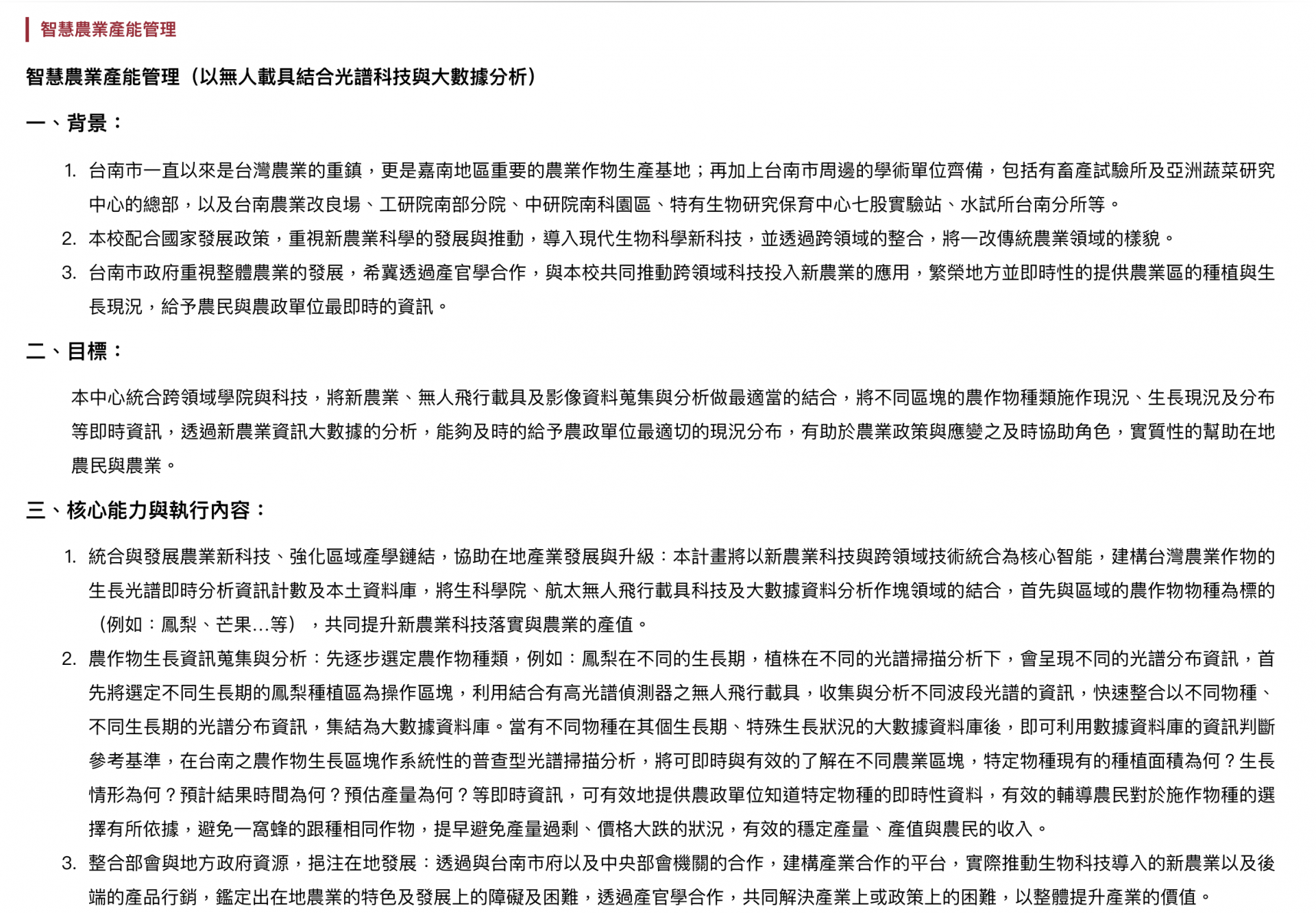 NCKU’s Biotechnology Center is promoting the “Smart Agriculture Production Management” project, which integrates drones, sensing technologies, and big data analytics to help farmers monitor crop growth conditions and spatial distribution. Through cross-disciplinary collaboration and open resources, the project provides local farmers and agricultural authorities with real-time monitoring and decision-making support. This initiative helps improve crop yields and quality while reducing resource waste. It demonstrates NCKU’s commitment to applying on-campus research facilities and technological achievements to local agriculture, offering farmers free access to knowledge and technology, and fostering sustainable agricultural development.
- Extending courses into local communities, enabling farmers to learn and apply microbe-based agricultural practices in their fields:
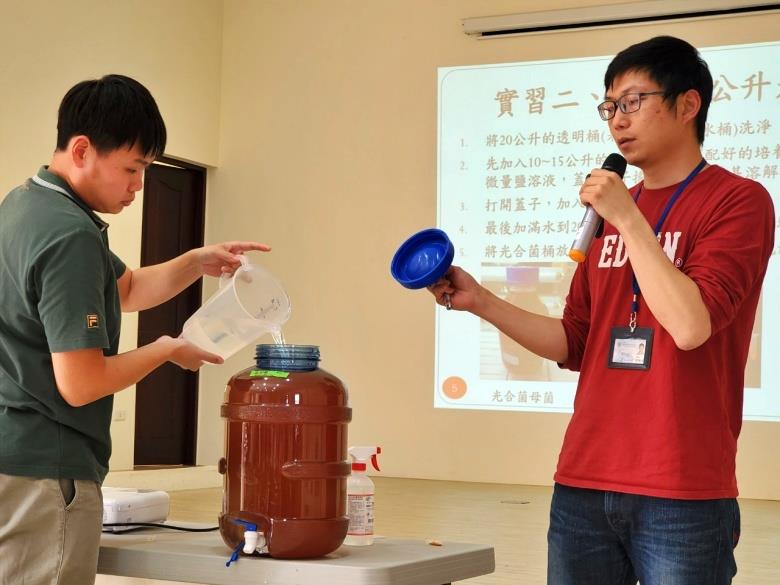 NCKU promotes the dissemination of agricultural knowledge to rural communities by introducing microbial farming courses into local areas, enabling farmers to directly learn and apply the practices in field management. The courses integrate theory with hands-on practice, and through demonstration-based teaching, farmers acquire the skills to use microbial technologies to improve soil health, enhance crop resistance and yields, and reduce reliance on chemical fertilizers and pesticides.
- Core Facility Center: Instrument Access and Fees:
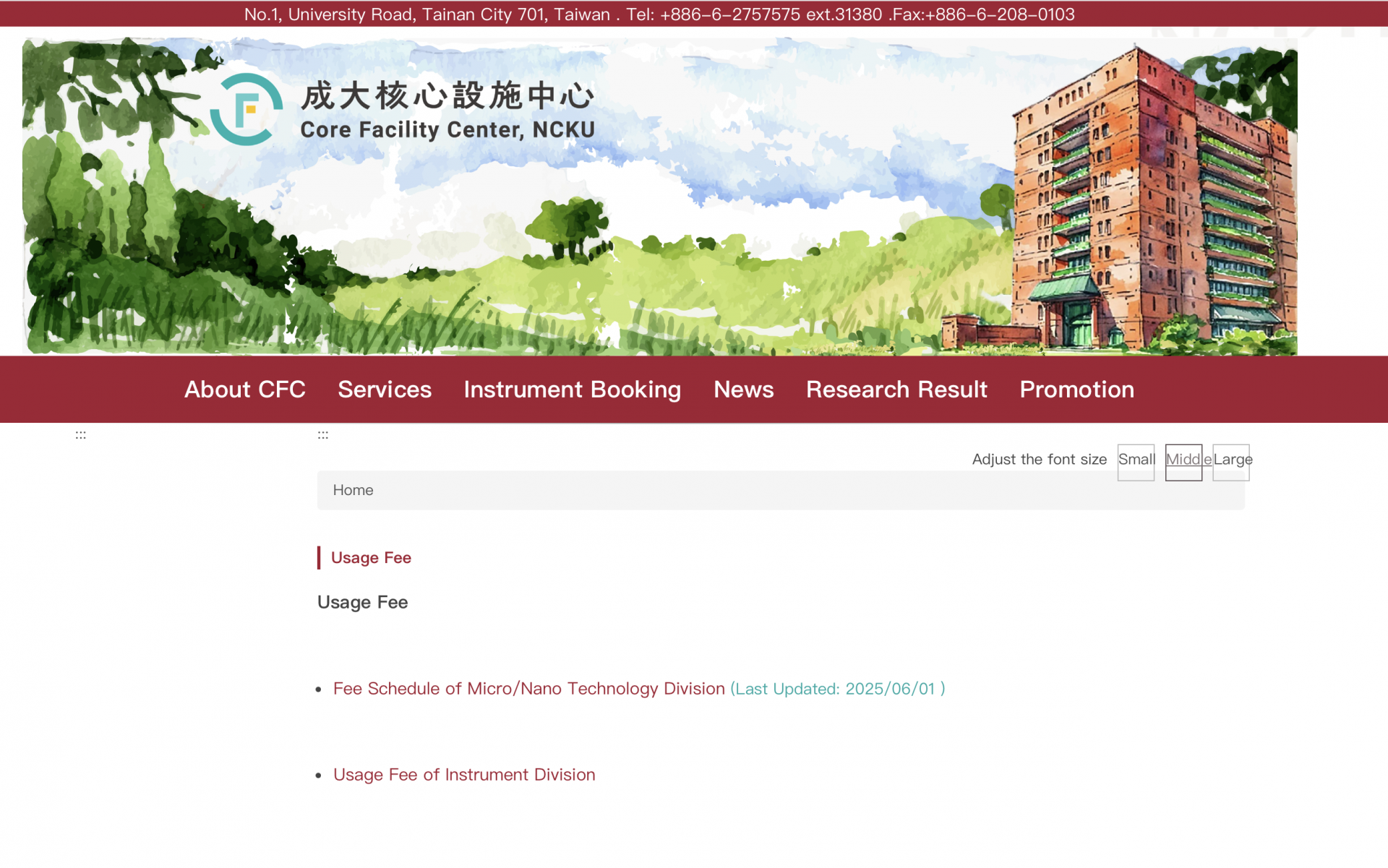 NCKU's Core Facility Center integrates advanced scientific instruments and technologies, and is open for applications from both internal researchers and external industry users. The center includes divisions such as Nano-Micro Technology and Instrumentation, providing diverse experimental services ranging from material analysis to biological testing. Its official website publicly lists the “usage fee standards” to ensure transparency and fairness, with external users also able to access facilities by paying according to regulations. This initiative not only supports academic research but also assists producers in agriculture, food, and environmental sectors in gaining access to experimental resources, thereby promoting sustainable agriculture and cross-disciplinary collaboration.
- Phalaenopsis DNA Fingerprinting:
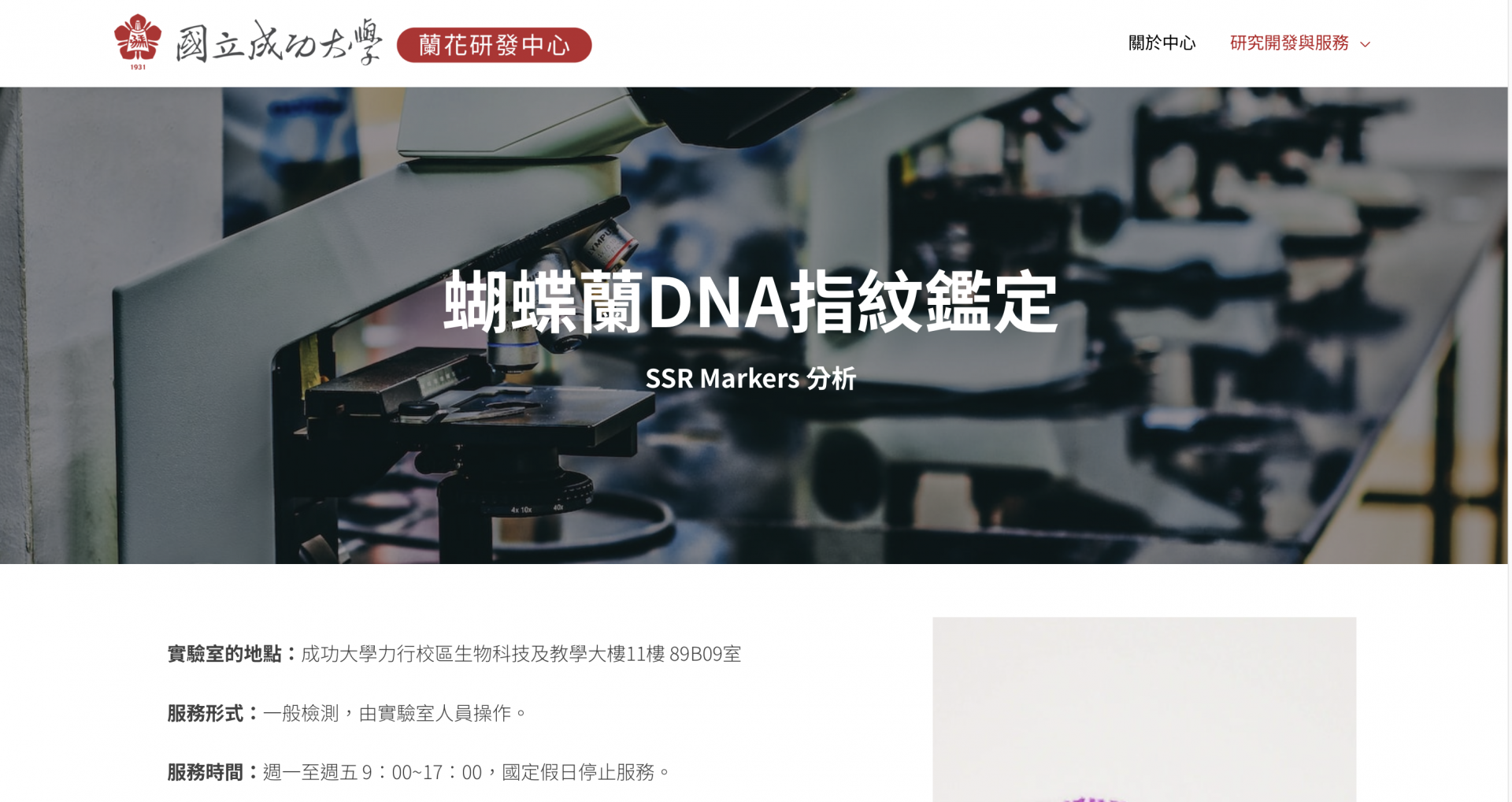 NCKU’s Orchid Research and Development Center offers a “Phalaenopsis DNA Fingerprinting Identification” service, using SSR marker analysis technology to assist industry partners and farmers in variety identification and germplasm verification. The laboratory, located in the Biotechnology and Teaching Building on the Lixing Campus, provides services including sample testing and professional operation, available Monday through Friday. This technology is applied in Phalaenopsis breeding, patent protection, and industrial upgrading, enabling farmers to effectively utilize the university’s molecular testing resources to enhance crop quality and market competitiveness.
- Orchid Research and Development Center – Overview of “Research, Development, and Services” (including variety identification, fragrance profiling, disease diagnosis, and more):

NCKU’s Orchid Research and Development Center has established a “Comprehensive Development Platform” that integrates the resources of academia, industry, and government. The platform provides research and testing services such as variety identification, fragrance profiling, and disease diagnostics, helping the Phalaenopsis orchid and related agricultural industries address practical challenges. This initiative not only enhances the international visibility of orchid research but also makes professional technologies and testing resources accessible to the public, supporting local farmers and producers in crop improvement and disease management. Through the university’s advanced laboratories and expert teams, farmers can directly obtain scientific and technical support, fostering industrial upgrading and strengthening sustainable agricultural practices.