




Sustainable Food Procurement Policies
National Cheng Kung University (NCKU) states on its official website that on-campus food vendors, via concession contracts, must prioritize ingredients from eco-friendly farming, local production, low-carbon plant-based options, minimal additives, and sustainable sources as the guiding standard for campus food procurement.
Green Procurement Procedures
Meanwhile, the Procurement Division publishes green-procurement procedures and evaluation criteria, including requirements that designated items carry eco-labels.
Plastic Reduction and Sustainable Packaging
The University also implements a Campus Plastic-Reduction Charter to curb purchases of over-packaged foods or single-use catering materials and to encourage foods with sustainable packaging.
Access to Local and Healthy Products
On the supply side, the NCKU Hospital Employees’ Consumer Cooperative offers healthy fresh produce and Tainan-sourced agricultural, livestock, and fishery gift foods, improving accessibility to local, sustainable products.
National Cheng Kung University (NCKU) states on its official website that on-campus food vendors, via concession contracts, must prioritize ingredients from eco-friendly farming, local production, low-carbon plant-based options, minimal additives, and sustainable sources as the guiding standard for campus food procurement.
Green Procurement Procedures
Meanwhile, the Procurement Division publishes green-procurement procedures and evaluation criteria, including requirements that designated items carry eco-labels.
Plastic Reduction and Sustainable Packaging
The University also implements a Campus Plastic-Reduction Charter to curb purchases of over-packaged foods or single-use catering materials and to encourage foods with sustainable packaging.
Access to Local and Healthy Products
On the supply side, the NCKU Hospital Employees’ Consumer Cooperative offers healthy fresh produce and Tainan-sourced agricultural, livestock, and fishery gift foods, improving accessibility to local, sustainable products.
- Green Procurement:
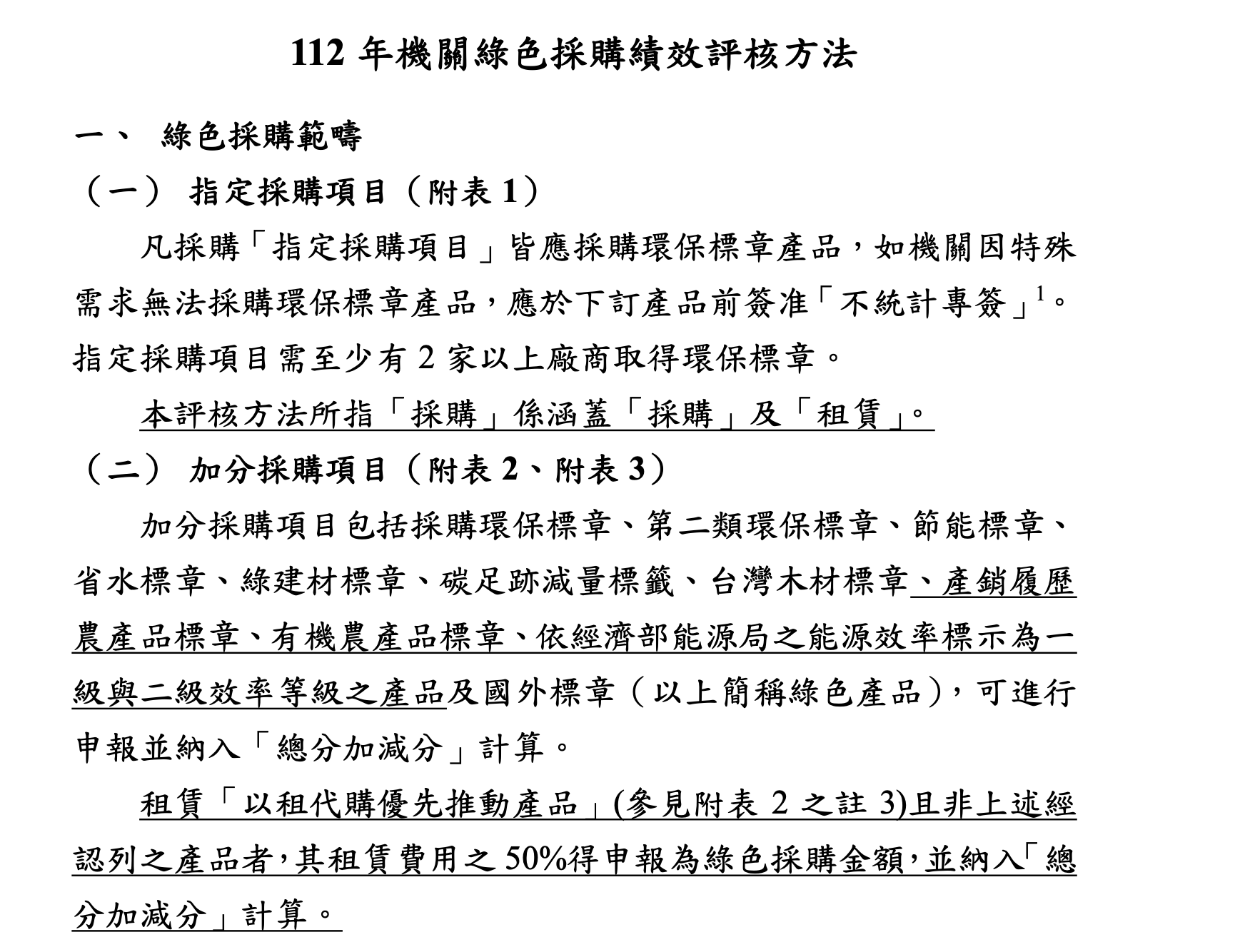 NCKU actively promotes sustainable food procurement. Under its Green Procurement Policy, designated items are required to carry eco-label certification, while additional credit is given for purchases with labels such as organic agricultural products, agricultural product certification, water-saving, and energy-efficiency. This framework directs campus procurement toward environmental protection and sustainability. In addition, catering contracts explicitly state that food providers must prioritize ingredients from sustainable farming, local production, and low-carbon vegetarian sources. Moreover, the NCKU Hospital Cooperative Store’s “Healthy Market” publicly offers local agricultural, livestock, and fishery products, as well as organic produce. Through institutional regulations and transparent supply channels, NCKU ensures the practice of sustainable food procurement, supporting local agriculture while enhancing food safety and quality.
- Sustainable Ingredient Selection:
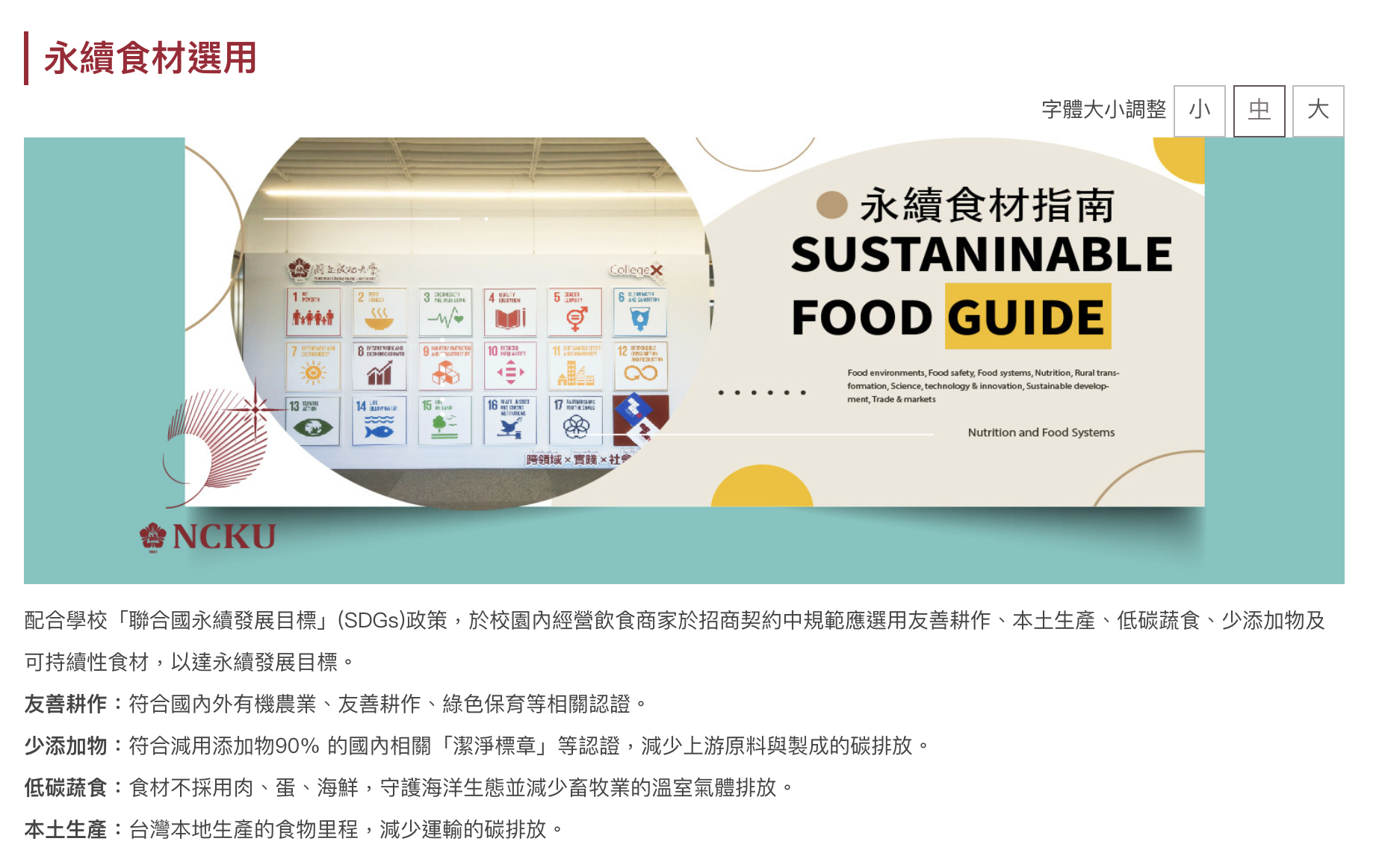 In line with the UN Sustainable Development Goals, NCKU requires campus catering contracts to prioritize sustainable ingredients, including eco-friendly farming (organic or eco-certification), local production, low-carbon vegetarian options, and reduced additives. These guidelines ensure food safety, support local agriculture, reduce environmental impact, and embed sustainable diets into daily campus operations.
- Campus Plastic Reduction Policy:
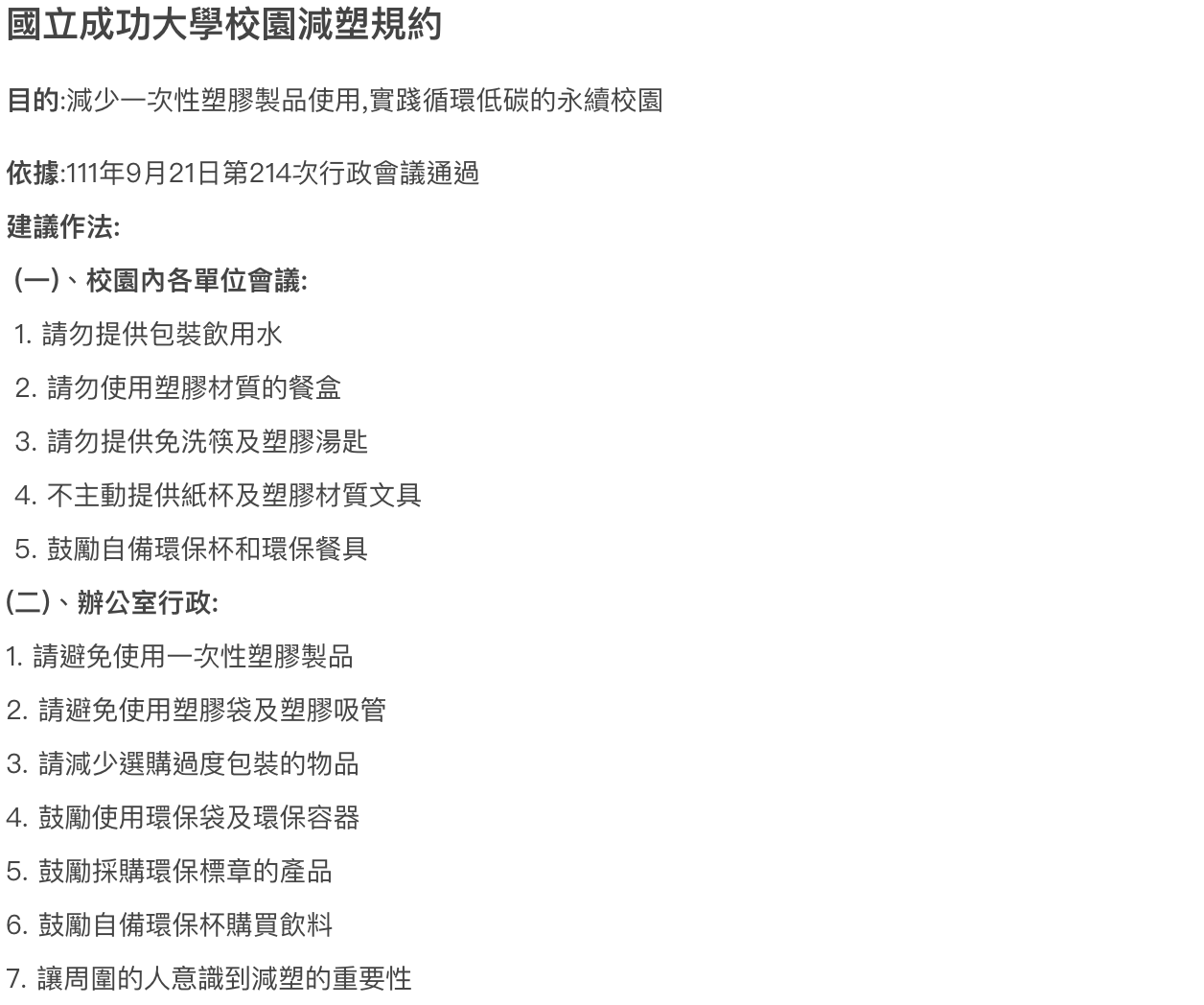 NCKU has adopted the “Campus Plastic Reduction Regulation” with the goal of reducing single-use plastics and fostering a circular, low-carbon sustainable campus. The regulation specifies that campus units should avoid using plastic bottles for packaged drinking water, prohibit plastic food containers and disposable spoons, and encourage the use of reusable cups and tableware. Offices are required to avoid plastic bags, straws, and excessive packaging, while promoting eco-labeled products and reusable containers, alongside awareness campaigns on plastic reduction. This initiative combines institutional measures with education to ensure that daily campus dining practices reduce dependence on plastics, thereby advancing low-carbon transition and sustainable consumption.
- NCKUH Employee Consumer Cooperative (offering fresh, healthy produce and specialty food and ingredient gifts from Tainan’s local agriculture, livestock, and fisheries):

The Employee Consumer Cooperative of the National Cheng Kung University Hospital (NCKUH) operates as a non-profit organization, emphasizing mutual support and employee welfare. The cooperative runs the “Healthy Market,” which provides fresh fruits and vegetables as well as agricultural, livestock, and fishery specialty products from the Tainan region, while also offering group purchase distribution and delivery services. This initiative not only facilitates convenient access to food for hospital faculty and staff but also providing an internal channel to promote and sell local agricultural products. Through its sustainable operating model, the cooperative integrates local produce into the campus consumption chain, enhancing food safety and accessibility, and demonstrating the university’s commitment to supporting local agriculture and healthy diets.