



Identify and engage with local stakeholders
16.2.3
SDG16
NCKU’s strategies for identifying and engaging with local stakeholders
National Cheng Kung University (NCKU) is committed to fostering collaboration between the campus and local communities, actively promoting peace, justice, and strong institutions. Through the general education course “Exploring Tainan”, the university integrates perspectives from history, archaeology, cultural heritage, agriculture, ecology, urban development, and economics. This course helps students appreciate the beauty of Tainan, understand the industries and cultural contexts surrounding the university, and strengthen interactions with the local community.
Public Feedback and Transparent Governance Mechanisms
To establish effective communication channels, NCKU has set up an online feedback mailbox, allowing the public to provide suggestions on university governance, policies, legal consultation, and rights-related issues. The university has also organized an International Advisory Board, inviting experts from academia, government, and industry—both domestic and international—to offer strategic advice, review potential challenges, and engage in in-depth discussions on current issues. In addition, NCKU has developed policies on industry–academia collaboration and regulations for disclosing and avoiding conflicts of interest in research and innovation. These measures prevent the misuse of benefits while safeguarding the rights of both university members and external industry partners.
Stakeholder Engagement and Local Community Development
NCKU has also established systematic procedures to identify and engage with local stakeholders—including government agencies, community organizations, and businesses. Through seminars, workshops, and resource support, the university maintains ongoing communication and feedback mechanisms. These efforts not only strengthen governance and participation within and beyond the campus but also contribute to the development of local communities, embodying the core principles of justice, peace, and institutional accountability.
- Required General Education Course — Exploring Tainan
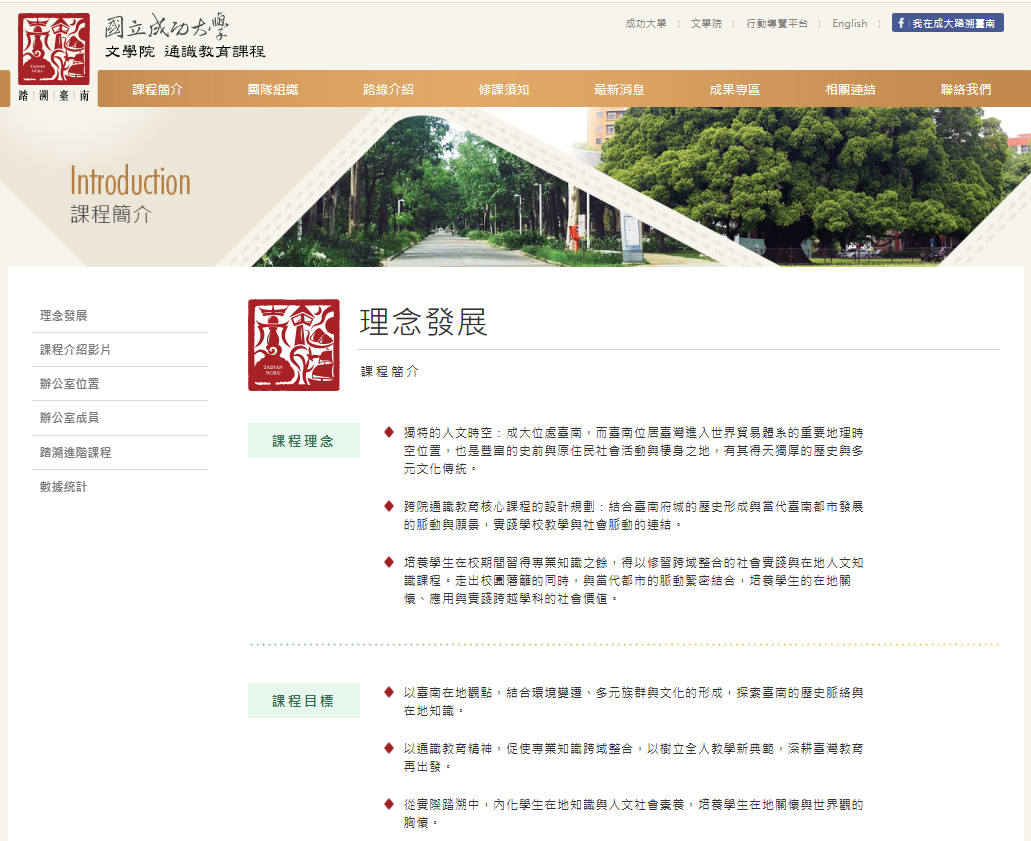 NCKU leverages its unique cultural and geographic advantages through cross-college general education courses that integrate Tainan’s history and urban development, fostering strong links between academic learning and society. While acquiring professional knowledge, students engage in interdisciplinary social practice and local humanities courses, exploring environmental changes, multicultural formation, and historical contexts. This process helps them internalize local knowledge, cultivate civic awareness, and apply professional skills across disciplines, embodying holistic education, social responsibility, and a global perspective.
- NCKU International Advisory Board
 NCKU held its International Advisory Board, bringing together domestic and international experts from industry, government, academia, and research to provide recommendations for university development. The committee focused on interdisciplinary innovative research, creating international value, fulfilling educational commitments, talent cultivation, and sustainable campus strategies. Through cross-departmental collaboration, NCKU advances internationalization, innovation, and digital equity, fostering a sustainable and inclusive environment while striving to become an international model university.
- NCKU Guidelines for Disclosure and Avoidance of Conflicts of Interest in Industry–Academia Collaboration Projects and Utilization of R&D Results
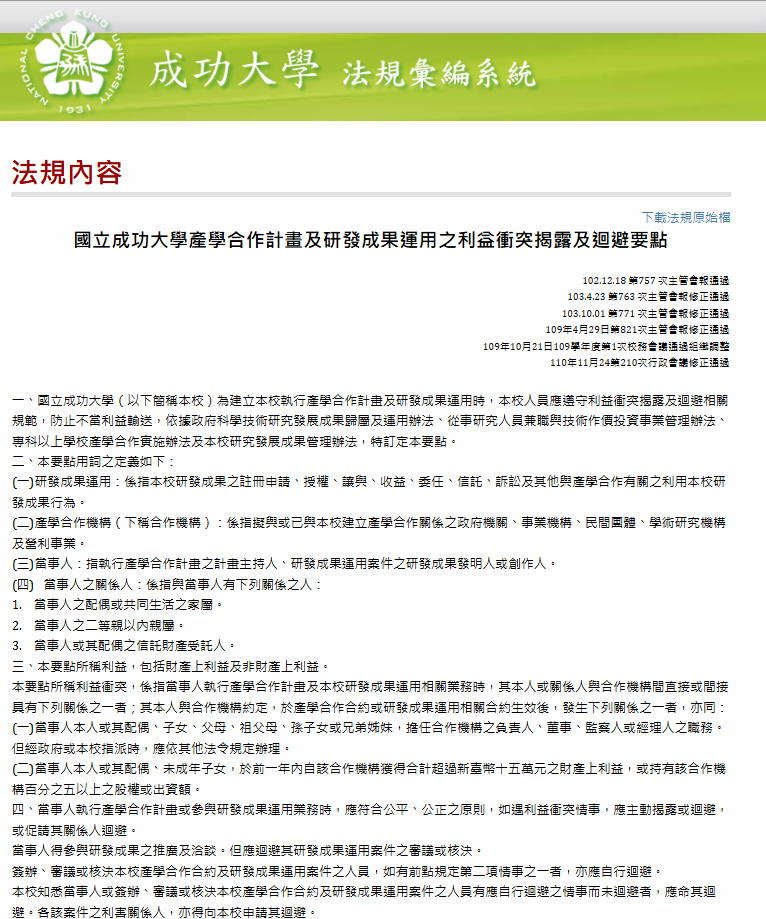 NCKU has established a comprehensive system for disclosing and avoiding conflicts of interest in industry-academia collaborations and the utilization of research and development outcomes. The system requires project leaders, researchers, and relevant review personnel to declare and recuse themselves when necessary, supported by dedicated review and audit mechanisms, along with education and information protection measures. Through this transparent and fair management process, NCKU effectively prevents improper benefits, safeguards the rights of diverse groups and stakeholders, and demonstrates a campus governance culture of fairness, responsibility, and inclusive participation.
- NCKU Directions for Handling Statements
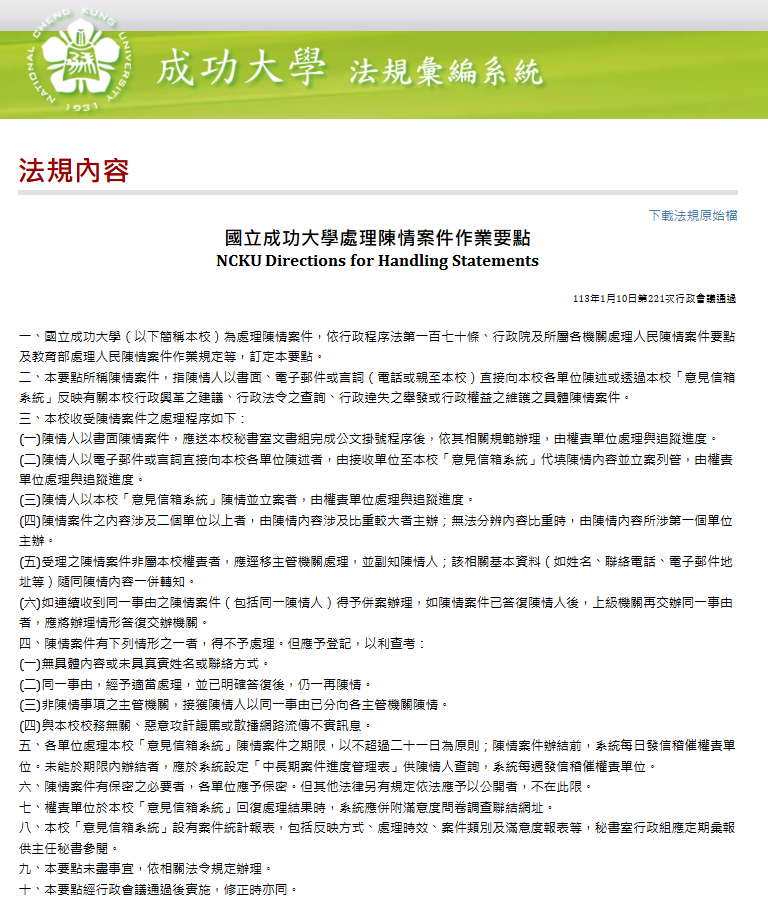 NCKU has established a comprehensive grievance handling system, accepting submissions via written documents, email, phone, and the “Feedback Mailbox System.” The system clearly regulates case intake, tracking, response, and confidentiality, sets processing deadlines, includes satisfaction surveys, and assigns or transfers cases to the responsible units. This system ensures that the opinions of all faculty, students, and stakeholders are treated fairly, safeguarding the rights of all groups and ensuring equitable treatment for everyone.
- NCKU Sustainability Report
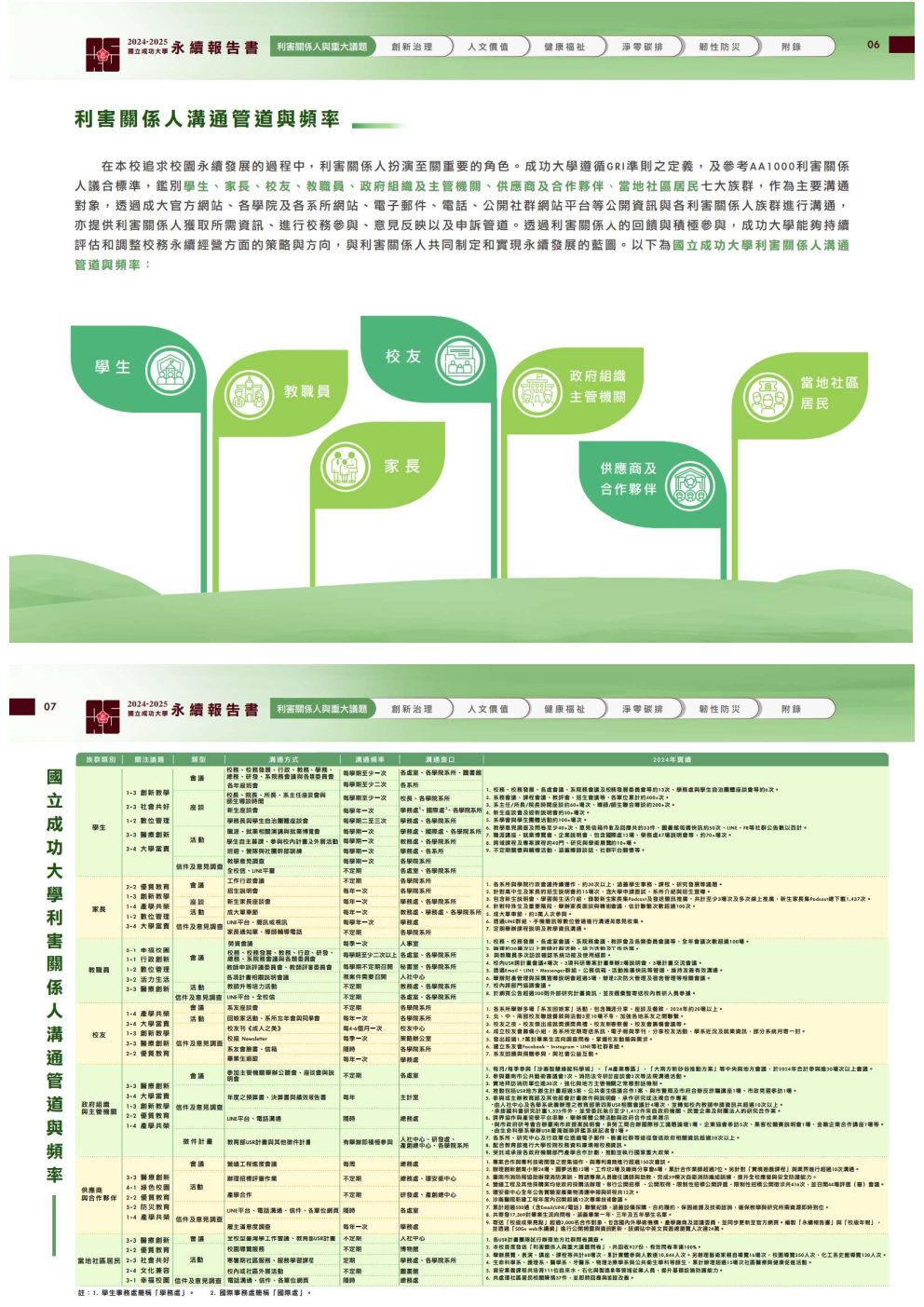 NCKU publishes an annual Sustainability Report, providing transparent disclosure of its governance performance and serving as a key mechanism for communication and engagement with external stakeholders.