



National Cheng Kung University (NCKU) boasts numerous research teams and departments, such as Environmental Engineering and Hydraulic & Ocean Engineering, actively developing emerging technologies for monitoring and simulation, water extraction, flooding control, and water treatment. These efforts aim to ensure that water utilization methods are more efficient and minimize environmental impact:
Collaborating with Government and Industry to Promote Water Resource Recycling and Reuse
Collaborating with Government and Industry to Promote Water Resource Recycling and Reuse
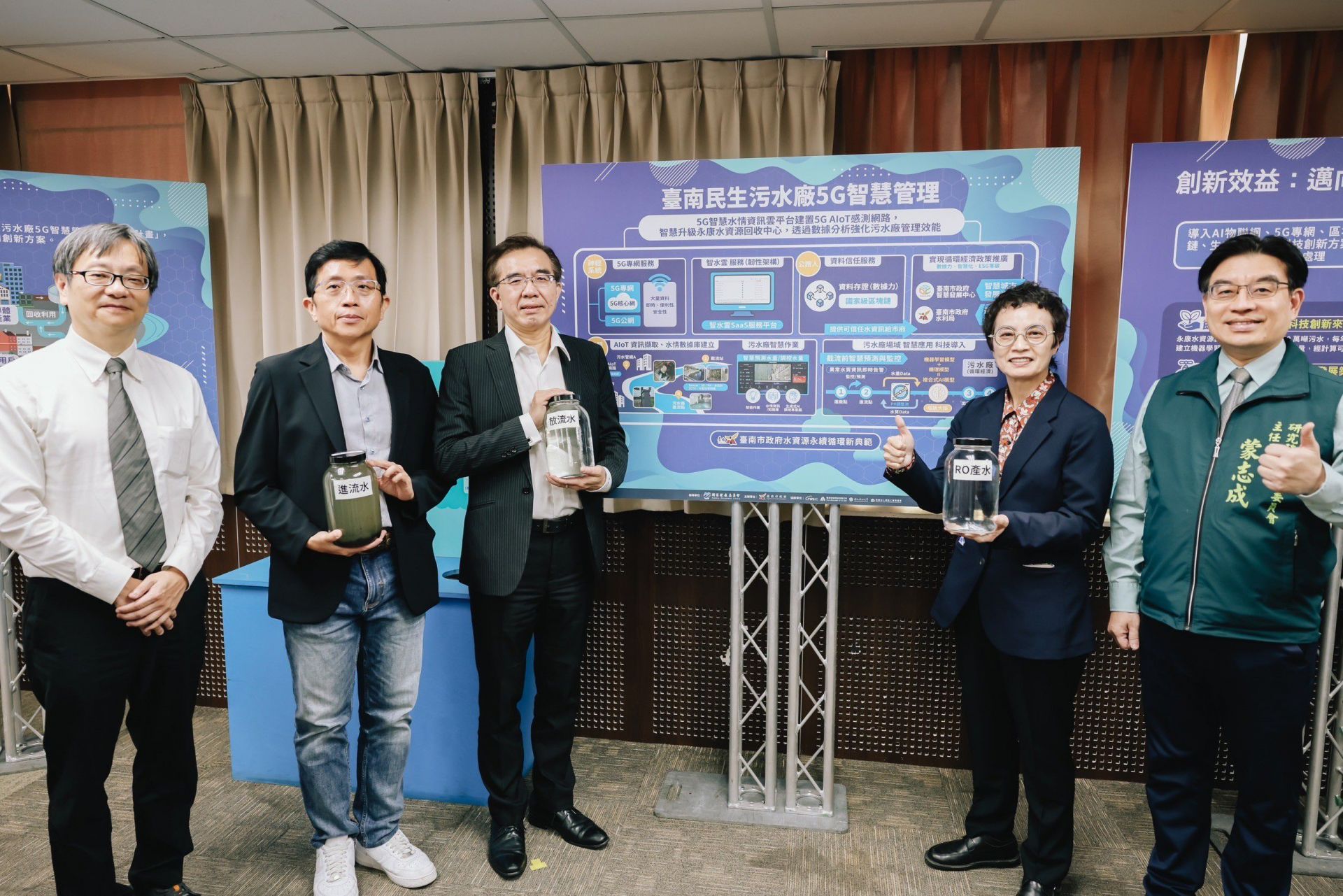
NCKU's Department of Environmental Engineering is partnering with the Tainan City Government and industry leaders like ASUS to implement the "Yongkang Water Reclamation Center 5G Smart Management Demonstration Project." This initiative integrates AIoT, 5G, Blockchain, and AI technology to reclaim and process wastewater from the Yongkang treatment plant into high-quality water for the high-tech sector. By establishing this non-traditional water source, the project significantly reduces industrial reliance on conventional natural sources (such as reservoirs and groundwater), thereby enhancing overall water supply stability.
NCKU’s Microalgae Technology for Wan-Nian River Water Quality Improvement and Carbon Capture Restoration Project
NCKU applied its carbon capture and environmental governance technologies to the Council of Agriculture’s “Wan-Nian River Environmental Improvement Pilot Project” in Pingtung. The team introduced a microalgae–bacteria symbiosis system for livestock wastewater treatment and wetland restoration, reducing pollution at the source. Through regular water quality monitoring, farm counseling, and resource recovery promotion, the project effectively lowered COD, BOD, SS, and NH₃-N levels, enhancing aquatic ecology. The microalgae system not only purifies water but also captures CO₂ and nutrients, achieving carbon sequestration and ecosystem restoration. This collaboration exemplifies academia–community partnership for low-carbon, climate-resilient rural sustainability.
Improving Source Water Quality in the Kaohsiung Area through Biological Treatment MethodsThe Source Water Treatment of Tong-Gang River (2020~2023) is executed by NCKU Department of Environmental Engineering and teams from Industrial Technology Research Institute (ITRI). The program is aimed to improve the source water quality and protect Kaohsiung residents’ drinking water quality.The research team from NCKU Department of Environmental Engineering initiated the Pilot Plant Project from 2012 to 2012, which purifies pumped water, which is polluted by slight Ammonia, in Feng-Shan Reservoir from Tong-Gang River with the biological treatment method with low energy cost. The purified water is utilized for the source of drinking water and industrial water. The source water treatment plant has been constructed to increase the drinking water volume in Kaohsiung up to 30 tons per day (which takes 20% of the provided water volume) to protect the stability of water quality. Even though the plant is successfully established, issues of operation and energy consumption require improvements, and problems derived from water treatment plants including in reservoirs and water treatment plants are waiting to be solved. The team from NCKU Department of Environmental Engineering assisted the Taiwan Water Corporation evaluating and solving problems mentioned before head.
 (Top left) The Original Water Treatment Plant (Treated water volume: 30 tons per day)
(Top right) The Team is sampling and analyzing on the site
(Bottom left) The aerial phtograph of origin water treatment plant
(Bottom right) The Original Water Treatment Plant
NCKU’s Microalgae Technology for Wan-Nian River Water Quality Improvement and Carbon Capture Restoration Project
NCKU applied its carbon capture and environmental governance technologies to the Council of Agriculture’s “Wan-Nian River Environmental Improvement Pilot Project” in Pingtung. The team introduced a microalgae–bacteria symbiosis system for livestock wastewater treatment and wetland restoration, reducing pollution at the source. Through regular water quality monitoring, farm counseling, and resource recovery promotion, the project effectively lowered COD, BOD, SS, and NH₃-N levels, enhancing aquatic ecology. The microalgae system not only purifies water but also captures CO₂ and nutrients, achieving carbon sequestration and ecosystem restoration. This collaboration exemplifies academia–community partnership for low-carbon, climate-resilient rural sustainability.
Improving Source Water Quality in the Kaohsiung Area through Biological Treatment MethodsThe Source Water Treatment of Tong-Gang River (2020~2023) is executed by NCKU Department of Environmental Engineering and teams from Industrial Technology Research Institute (ITRI). The program is aimed to improve the source water quality and protect Kaohsiung residents’ drinking water quality.The research team from NCKU Department of Environmental Engineering initiated the Pilot Plant Project from 2012 to 2012, which purifies pumped water, which is polluted by slight Ammonia, in Feng-Shan Reservoir from Tong-Gang River with the biological treatment method with low energy cost. The purified water is utilized for the source of drinking water and industrial water. The source water treatment plant has been constructed to increase the drinking water volume in Kaohsiung up to 30 tons per day (which takes 20% of the provided water volume) to protect the stability of water quality. Even though the plant is successfully established, issues of operation and energy consumption require improvements, and problems derived from water treatment plants including in reservoirs and water treatment plants are waiting to be solved. The team from NCKU Department of Environmental Engineering assisted the Taiwan Water Corporation evaluating and solving problems mentioned before head.
- Conducting Long-Term Groundwater Monitoring and Land Subsidence Assessment
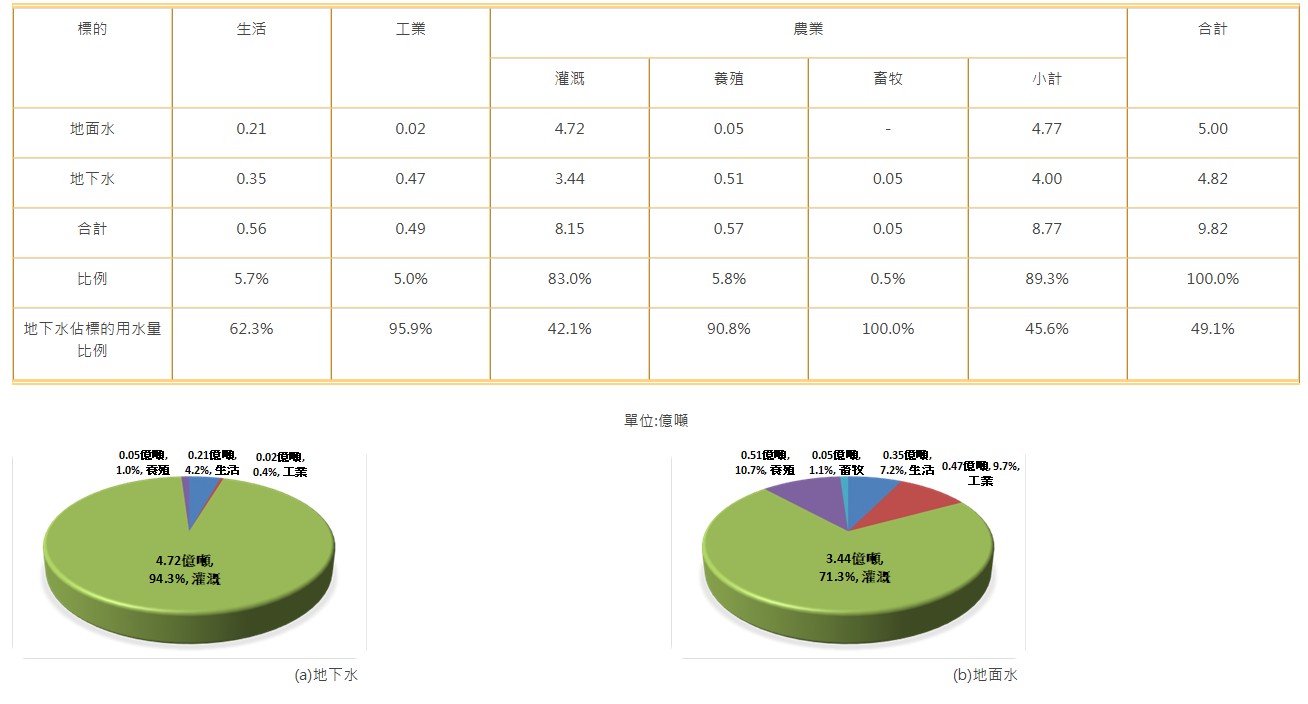
NCKU maintains long-term groundwater monitoring utilizing advanced techniques (drilling, geoelectric surveys) for high-precision, continuous tracking of water quality and flow. This enables early pollution detection, emergency response, and sustained groundwater health. Furthermore, the Hydraulics Lab uses the Water-Electricity Ratio Estimation method and smart metering APP to quantify pumping, promote distributed water extraction from irrigation wells, conserve water, balance aquifer levels, and enhance subsidence prevention efforts.
(Top left) The Original Water Treatment Plant (Treated water volume: 30 tons per day)(Top right) The Team is sampling and analyzing on the site
(Bottom left) The aerial phtograph of origin water treatment plant
(Bottom right) The Original Water Treatment Plant