



SDG11
NCKU 6th Indigenous Arts Window: In Between Weaving
The Indigenous Student Resource Center under the Office of Student Affairs at National Cheng Kung University (NCKU OSA ISRC) is hosting the "2026 6th Indigenous Arts Window" exhibition in the first-floor display windows of the Yun-Ping Administration Building from August 18 to October 29. Under the theme "In Between Weaving, Seeing the Traces of Time," the exhibition invites outstanding Paiwan artisan and founder of "qatjatjipi Studio", Ms. Ke-Xin Yao (qadeves), together with students from the 2026 cultural workshop "Tension of Weaving: Bow Weaving Craft Course," to showcase their creative works. NCKU faculty, students, and the general public are warmly invited to visit and experience the beauty woven through traditional craft and time.
At the opening ceremony held on the morning of August 18, Vice President for Student Affairs Liang-Yi Hung expressed her gratitude to the ISRC for planning and organizing the event. Highlighting "bow weaving" as this year's core theme, she noted that the exhibition showcases the profound cultural significance and traditional craft of Indigenous peoples while offering hands-on experiences and exchange opportunities on-site. VP Hung particularly pointed out that the cultural workshops launched each period are consistently in high demand; however, due to venue size and instructor capacity, registration typically exceeds available slots by six to seven times. She emphasized that the "Indigenous Arts Window" holds immense meaning—participants do not merely complete a piece of artwork, but also deeply experience, understand, and pass down this precious Indigenous heritage during the crafting process.
Paiwan artisan Ke-Xin Yao (qadeves) has long dedicated herself to the preservation and promotion of traditional weaving culture, exploring diverse contemporary expressions of Indigenous culture through cross-disciplinary practice in design and craft. She explained that "bow weaving" techniques are commonly found among Atayalic groups. Unlike traditional loom weaving, which is mostly performed by women, bow weaving actually originated from men's hunting wisdom. To adapt to mountain terrain and mobility needs, hunters gathered local materials to craft "temporary looms" using bamboo or rattan strips. Utilizing the tension of the bow to pull the warp threads taut, weavers could craft delicate yet sturdy woven bands anywhere and anytime. This not only demonstrates survival wisdom, but also unites strength and aesthetics, becoming a form of "mobile craftsmanship."
Yao noted that the value of craftsmanship lies not only in material symbols, raw elements, or techniques, but in how culture teaches us to apply effort and labor to care for people, land, and the meaning of life. Through the intersecting lines and patterns of warp and weft, visitors can appreciate the cultural memory and living wisdom embodied in traditional crafts, as well as the journey of learners practicing cultural transmission with their own hands. Through the emotions, ideas, and skills conveyed by these artistic works, the exhibition aims to guide visitors in understanding the cultural meanings of Indigenous crafts, ensuring the continuation of these precious traditions.
Grounded in diverse ethnic cultures, Indigenous arts have developed unique aesthetic styles that display Taiwan's rich cultural tapestry. To deepen campus understanding of Indigenous cultures, the NCKU ISRC has organized the "Indigenous Arts Window" exhibition series since 2021, allowing faculty and students to connect closely with Indigenous creations through art. Starting in 2024, the ISRC further combined the "Indigenous Arts Window" with cultural learning courses, transitioning from exhibiting solo artists' works to having artists guide students through learning, creating, and displaying together.
According to the NCKU ISRC, the "Indigenous Arts Window" has gradually become a vital platform for promoting Indigenous culture on campus. Moving forward, the center will continue to foster an inclusive and prosperous campus environment through exhibitions, cultural courses, and artistic exchanges, enabling more faculty and students to appreciate the richness of Indigenous cultures through art, deepen mutual understanding through dialogue, and practice the spirit of cultural co-prosperity and sustainable inheritance.
At the opening ceremony held on the morning of August 18, Vice President for Student Affairs Liang-Yi Hung expressed her gratitude to the ISRC for planning and organizing the event. Highlighting "bow weaving" as this year's core theme, she noted that the exhibition showcases the profound cultural significance and traditional craft of Indigenous peoples while offering hands-on experiences and exchange opportunities on-site. VP Hung particularly pointed out that the cultural workshops launched each period are consistently in high demand; however, due to venue size and instructor capacity, registration typically exceeds available slots by six to seven times. She emphasized that the "Indigenous Arts Window" holds immense meaning—participants do not merely complete a piece of artwork, but also deeply experience, understand, and pass down this precious Indigenous heritage during the crafting process.
Paiwan artisan Ke-Xin Yao (qadeves) has long dedicated herself to the preservation and promotion of traditional weaving culture, exploring diverse contemporary expressions of Indigenous culture through cross-disciplinary practice in design and craft. She explained that "bow weaving" techniques are commonly found among Atayalic groups. Unlike traditional loom weaving, which is mostly performed by women, bow weaving actually originated from men's hunting wisdom. To adapt to mountain terrain and mobility needs, hunters gathered local materials to craft "temporary looms" using bamboo or rattan strips. Utilizing the tension of the bow to pull the warp threads taut, weavers could craft delicate yet sturdy woven bands anywhere and anytime. This not only demonstrates survival wisdom, but also unites strength and aesthetics, becoming a form of "mobile craftsmanship."
Yao noted that the value of craftsmanship lies not only in material symbols, raw elements, or techniques, but in how culture teaches us to apply effort and labor to care for people, land, and the meaning of life. Through the intersecting lines and patterns of warp and weft, visitors can appreciate the cultural memory and living wisdom embodied in traditional crafts, as well as the journey of learners practicing cultural transmission with their own hands. Through the emotions, ideas, and skills conveyed by these artistic works, the exhibition aims to guide visitors in understanding the cultural meanings of Indigenous crafts, ensuring the continuation of these precious traditions.
Grounded in diverse ethnic cultures, Indigenous arts have developed unique aesthetic styles that display Taiwan's rich cultural tapestry. To deepen campus understanding of Indigenous cultures, the NCKU ISRC has organized the "Indigenous Arts Window" exhibition series since 2021, allowing faculty and students to connect closely with Indigenous creations through art. Starting in 2024, the ISRC further combined the "Indigenous Arts Window" with cultural learning courses, transitioning from exhibiting solo artists' works to having artists guide students through learning, creating, and displaying together.
According to the NCKU ISRC, the "Indigenous Arts Window" has gradually become a vital platform for promoting Indigenous culture on campus. Moving forward, the center will continue to foster an inclusive and prosperous campus environment through exhibitions, cultural courses, and artistic exchanges, enabling more faculty and students to appreciate the richness of Indigenous cultures through art, deepen mutual understanding through dialogue, and practice the spirit of cultural co-prosperity and sustainable inheritance.
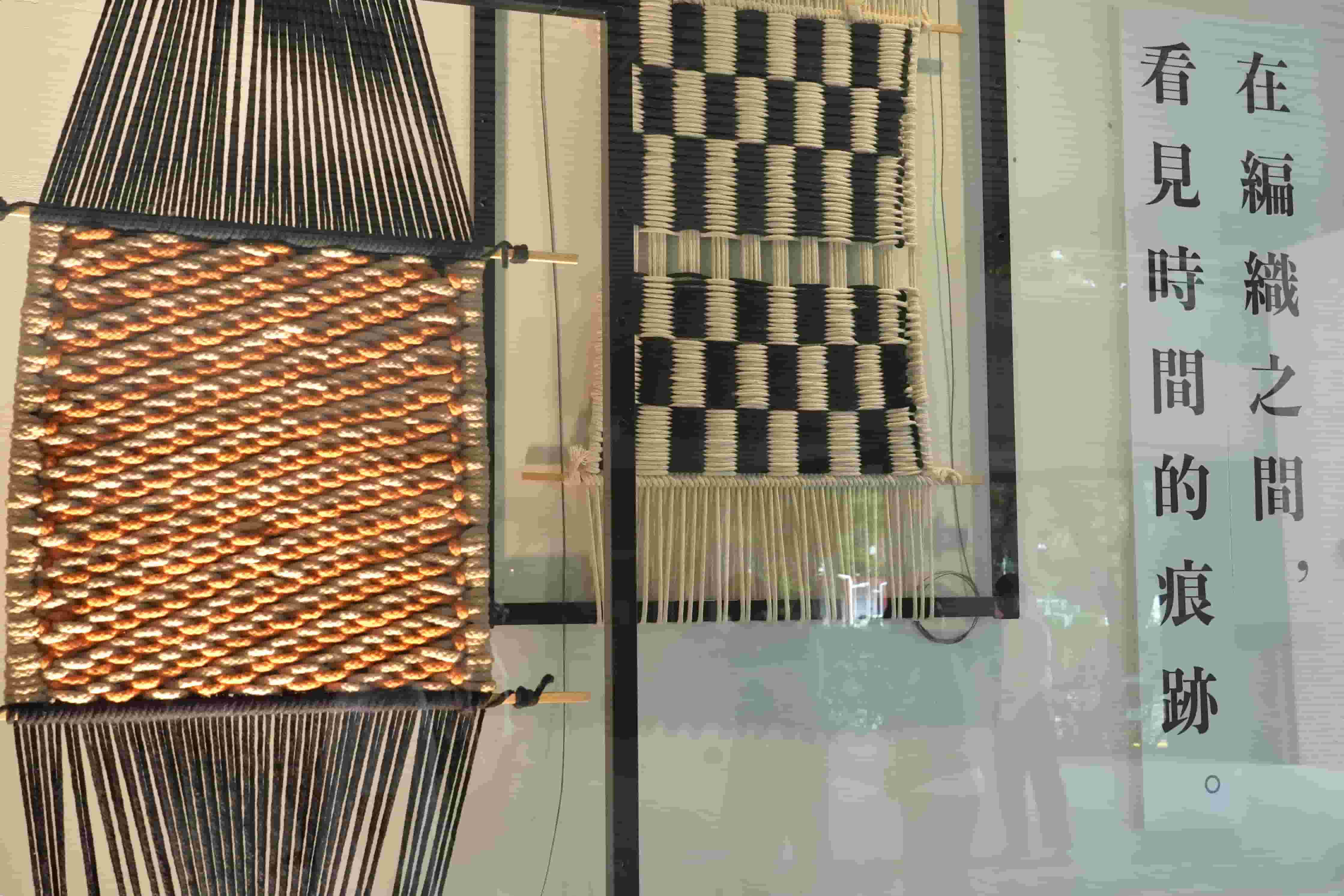
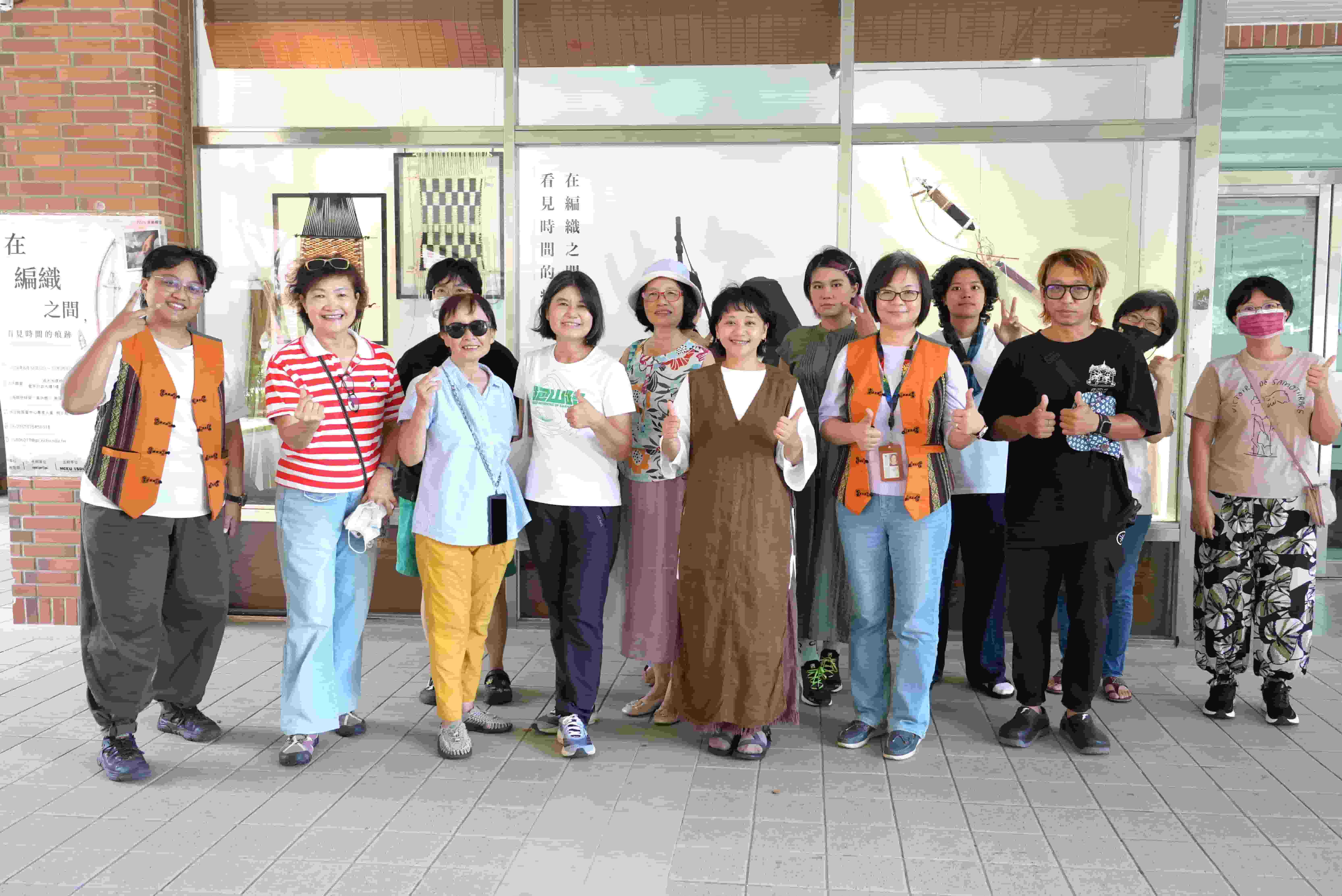
The 6th "Indigenous Arts Window" exhibition, themed "In Between Weaving, Seeing the Traces of Time," is on display on the first floor of the Yun-Ping Administration Building from August 18 to October 29.
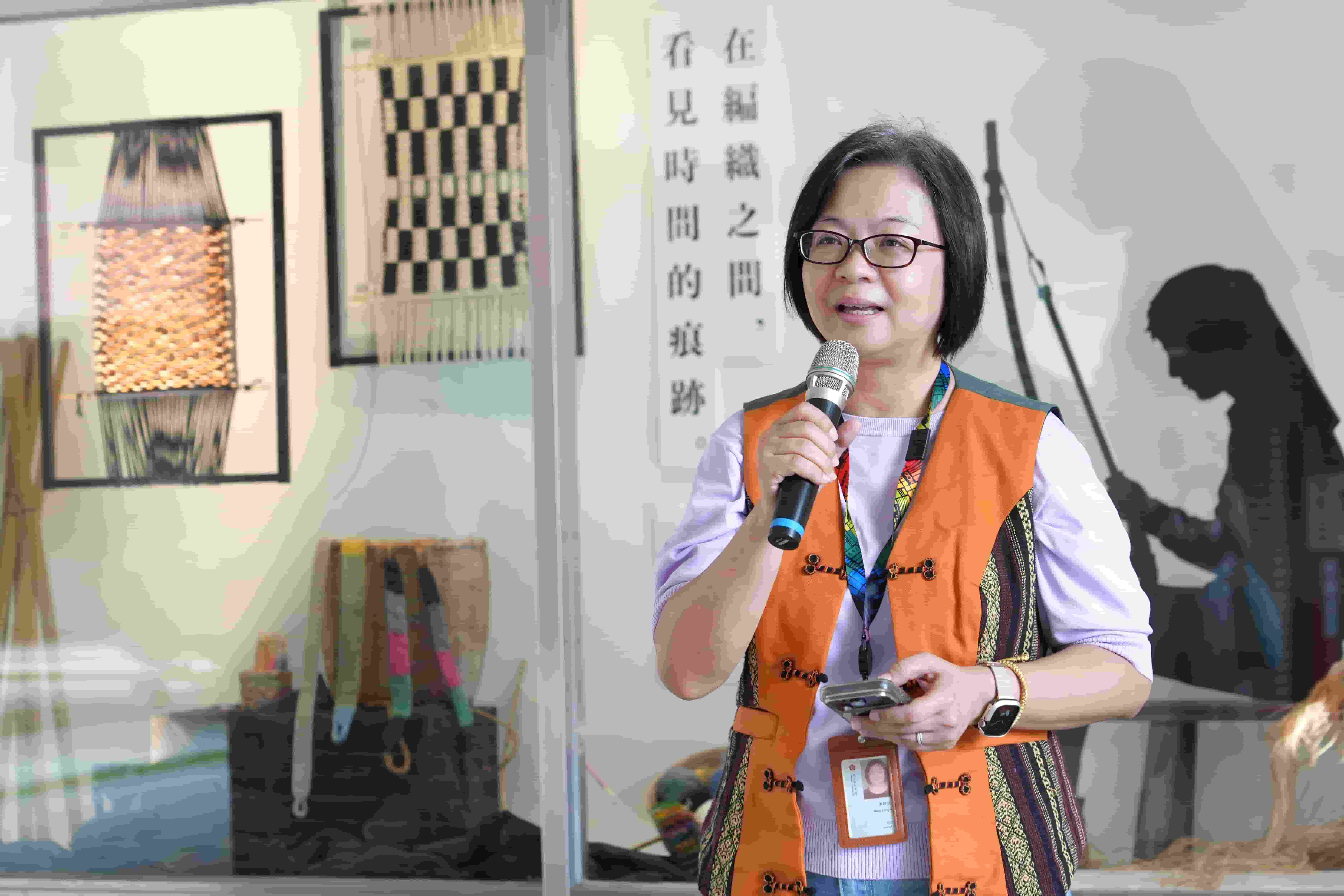
In her address, Vice President for Student Affairs Liang-Yi Hung expressed her appreciation to the Indigenous Student Resource Center (ISRC) for planning and organizing the event, noting that this year's theme, "bow weaving," showcases the traditional craft and deep cultural significance of Indigenous peoples.
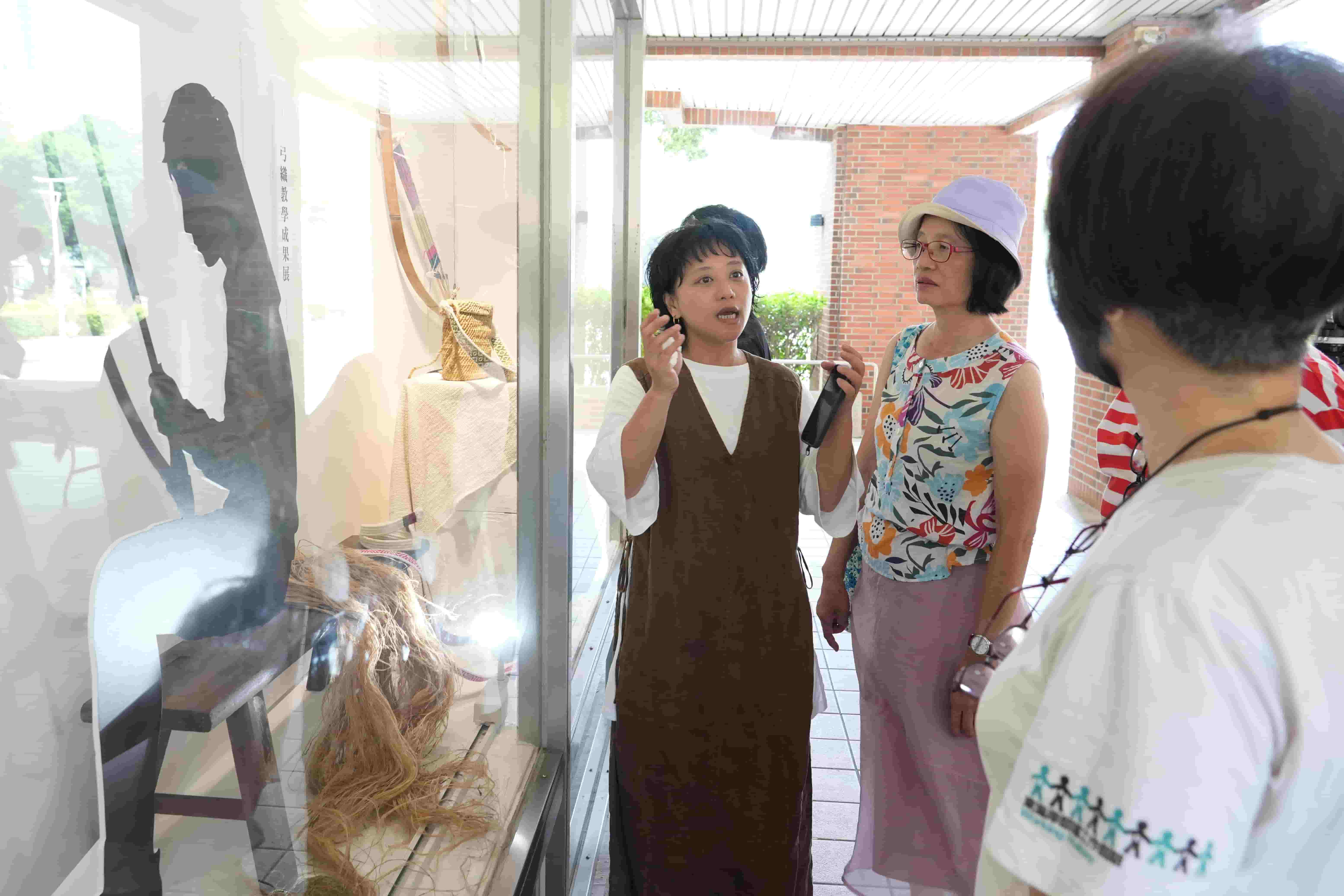
Paiwan artisan Ms. Ke-Xin Yao (qadeves), who has long dedicated herself to the preservation and promotion of traditional weaving culture, gives a guided tour, engages in exchanges, and interacts with visitors on-site.
Group photo of attendees