



SDG15
NCKU Research Station Connects Central and Local Governments to Promote Resilient Management of the Mataian River Basin

Text and Photos credit to NCKU Research Station in Guangfu, Hualien
To advance post-disaster recovery and long-term watershed management in the Mataian River Basin, National Cheng Kung University held a working meeting at the NCKU Research Station in Guangfu, Hualien, on August 21. The meeting was led by NCKU President Meng-Ru Shen, with Minister without Portfolio Chin-Te Chen of the Executive Yuan invited to provide guidance and remarks. Representatives from the Public Construction Commission, the Ministry of Agriculture, and other relevant agencies also attended the meeting to exchange views on post-disaster recovery, risk management, and basin-wide resilience governance for the Mataian River Basin.
NCKU is currently implementing the Executive Yuan Public Construction Commission’s “Risk Management of Landslide Dam Breach and Watershed Resilience Governance Project”. The project aims to develop comprehensive solutions for managing the Mataian River and Hualien River basins. It expands the focus from responding to individual disasters to long-term risk management across the entire river basin. The project brings together five major strategies: an integrated risk analysis and decision-support platform for the entire river basin, hydrological scenarios and sediment sources, water and sediment monitoring and transport simulation, environmental health and agricultural land recovery, and University Social Responsibility (USR). These strategies cover 11 areas of work and connect multiple fields including engineering, environment, agriculture, public health, and local governance.
At the meeting, the NCKU team reported on the progress and interim results of the project. These included quantifying unstable sediment sources, automated monitoring of sediment concentrations in rivers, simulating the movement of water and sediment with high sediment concentrations, evaluating sediment properties and resource utilization potential, restoring soil microorganisms and agricultural land, and monitoring environmental pathogens and providing risk alerts. The NCKU team developed many of these technologies in-house. The team focuses on using local research to address problems in the Mataian River area, gradually turning research findings into monitoring and analysis tools that can be used for disaster management.
The integrated risk analysis and decision-support platform for the entire river basin is a key highlight of the project’s interim results. The platform brings together information on river basin engineering projects, risks, the environment, and governance in a shared framework. It also uses large language model (LLM) and retrieval-augmented generation (RAG) technologies to improve information searches and knowledge integration efficiency. The platform provides government agencies with quick access to governance information and supports their decision-making on risk management. It also aims to provide the public with an easy way to understand engineering and governance information. The goal is to help decision-makers integrate information and identify governance risks, while allowing the public to easily find information about engineering projects and ask questions about related issues.
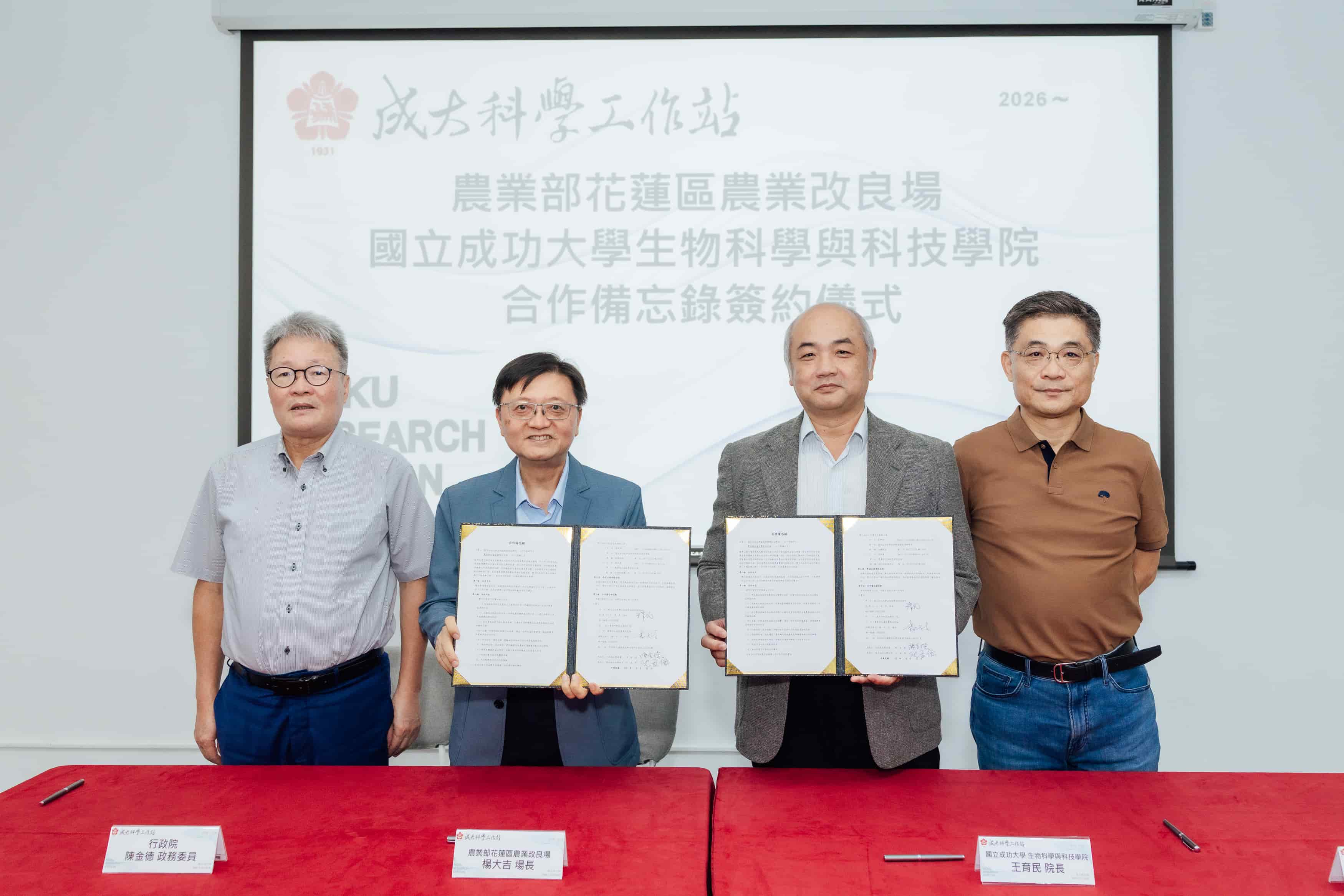
Post-disaster agricultural land restoration was another major focus of the meeting. During the meeting, the Hualien District Agricultural Research and Extension Station under the Ministry of Agriculture and the College of Bioscience and Biotechnology of NCKU signed a memorandum of understanding. The MOU was signed by Ta-Chi Yang, Director of the Hualien District Agricultural Research and Extension Station, and Ju-Ming Wang, Dean of the NCKU College of Bioscience and Biotechnology. Executive Yuan Minister without Portfolio Chin-de Chen and NCKU President Meng-Ru Shen witnessed the signing. The two sides will combine their expertise in agricultural research, biotechnology, and soil and microbial analysis, working together on post-disaster agricultural land monitoring, restoration technologies, and local agricultural development, ensuring that research findings more directly address the recovery needs of disaster-affected areas.
Since establishing the NCKU Research Station in Guangfu, Hualien, at the end of May this year, NCKU has continued to promote river basin governance and community collaboration through its local presence. Recent activities have included local interviews, post-disaster environmental monitoring and medical sampling, agricultural restoration workshops, field inspections of river sediment monitoring systems, soil and environmental sample collection, and monitoring of pathogens and vector mosquitoes, while also working with local indigenous communities, civic groups, and government agencies. Through its long-term presence in the area, NCKU hopes to make local needs the starting point for research then to bring research findings back to the field, establishing the cycle of “local dialogue, cross-disciplinary collaboration, scientific research, and governance in practice.”
Before the central and local government meeting, the NCKU team held the eighth working meeting for the “Risk Management of Landslide Dam Breach and Watershed Resilience Governance Project” at the NCKU Research Station on the afternoon of August 20. NCKU President Meng-Ru Shen chaired the meeting, which focused on discussing and reviewing progress in several areas, including integrated risk assessment for the entire river basin, hydrology and sediment, water and sediment monitoring and simulation, agricultural land restoration, and environmental health. The meeting provided a scientific foundation for future governance collaboration.
Moving from post-disaster recovery to long-term governance, the NCKU Research Station is gradually becoming an important platform that connects central and local governments, academia, and local communities. NCKU hopes to develop a sustainable model for resilient river basin governance through long-term field monitoring, local technology development, cross-disciplinary information integration, and local collaboration. The model can be continuously improved and applied to other situations. It will also help Taiwan build scientific research and practical experience in preparing for barrier lakes and other large-scale, complex disasters in the future.
Provider: NCKU News Center
Date: 2026-08-27
To advance post-disaster recovery and long-term watershed management in the Mataian River Basin, National Cheng Kung University held a working meeting at the NCKU Research Station in Guangfu, Hualien, on August 21. The meeting was led by NCKU President Meng-Ru Shen, with Minister without Portfolio Chin-Te Chen of the Executive Yuan invited to provide guidance and remarks. Representatives from the Public Construction Commission, the Ministry of Agriculture, and other relevant agencies also attended the meeting to exchange views on post-disaster recovery, risk management, and basin-wide resilience governance for the Mataian River Basin.
NCKU is currently implementing the Executive Yuan Public Construction Commission’s “Risk Management of Landslide Dam Breach and Watershed Resilience Governance Project”. The project aims to develop comprehensive solutions for managing the Mataian River and Hualien River basins. It expands the focus from responding to individual disasters to long-term risk management across the entire river basin. The project brings together five major strategies: an integrated risk analysis and decision-support platform for the entire river basin, hydrological scenarios and sediment sources, water and sediment monitoring and transport simulation, environmental health and agricultural land recovery, and University Social Responsibility (USR). These strategies cover 11 areas of work and connect multiple fields including engineering, environment, agriculture, public health, and local governance.
At the meeting, the NCKU team reported on the progress and interim results of the project. These included quantifying unstable sediment sources, automated monitoring of sediment concentrations in rivers, simulating the movement of water and sediment with high sediment concentrations, evaluating sediment properties and resource utilization potential, restoring soil microorganisms and agricultural land, and monitoring environmental pathogens and providing risk alerts. The NCKU team developed many of these technologies in-house. The team focuses on using local research to address problems in the Mataian River area, gradually turning research findings into monitoring and analysis tools that can be used for disaster management.
The integrated risk analysis and decision-support platform for the entire river basin is a key highlight of the project’s interim results. The platform brings together information on river basin engineering projects, risks, the environment, and governance in a shared framework. It also uses large language model (LLM) and retrieval-augmented generation (RAG) technologies to improve information searches and knowledge integration efficiency. The platform provides government agencies with quick access to governance information and supports their decision-making on risk management. It also aims to provide the public with an easy way to understand engineering and governance information. The goal is to help decision-makers integrate information and identify governance risks, while allowing the public to easily find information about engineering projects and ask questions about related issues.
Post-disaster agricultural land restoration was another major focus of the meeting. During the meeting, the Hualien District Agricultural Research and Extension Station under the Ministry of Agriculture and the College of Bioscience and Biotechnology of NCKU signed a memorandum of understanding. The MOU was signed by Ta-Chi Yang, Director of the Hualien District Agricultural Research and Extension Station, and Ju-Ming Wang, Dean of the NCKU College of Bioscience and Biotechnology. Executive Yuan Minister without Portfolio Chin-de Chen and NCKU President Meng-Ru Shen witnessed the signing. The two sides will combine their expertise in agricultural research, biotechnology, and soil and microbial analysis, working together on post-disaster agricultural land monitoring, restoration technologies, and local agricultural development, ensuring that research findings more directly address the recovery needs of disaster-affected areas.
Since establishing the NCKU Research Station in Guangfu, Hualien, at the end of May this year, NCKU has continued to promote river basin governance and community collaboration through its local presence. Recent activities have included local interviews, post-disaster environmental monitoring and medical sampling, agricultural restoration workshops, field inspections of river sediment monitoring systems, soil and environmental sample collection, and monitoring of pathogens and vector mosquitoes, while also working with local indigenous communities, civic groups, and government agencies. Through its long-term presence in the area, NCKU hopes to make local needs the starting point for research then to bring research findings back to the field, establishing the cycle of “local dialogue, cross-disciplinary collaboration, scientific research, and governance in practice.”
Before the central and local government meeting, the NCKU team held the eighth working meeting for the “Risk Management of Landslide Dam Breach and Watershed Resilience Governance Project” at the NCKU Research Station on the afternoon of August 20. NCKU President Meng-Ru Shen chaired the meeting, which focused on discussing and reviewing progress in several areas, including integrated risk assessment for the entire river basin, hydrology and sediment, water and sediment monitoring and simulation, agricultural land restoration, and environmental health. The meeting provided a scientific foundation for future governance collaboration.
Moving from post-disaster recovery to long-term governance, the NCKU Research Station is gradually becoming an important platform that connects central and local governments, academia, and local communities. NCKU hopes to develop a sustainable model for resilient river basin governance through long-term field monitoring, local technology development, cross-disciplinary information integration, and local collaboration. The model can be continuously improved and applied to other situations. It will also help Taiwan build scientific research and practical experience in preparing for barrier lakes and other large-scale, complex disasters in the future.
Provider: NCKU News Center
Date: 2026-08-27
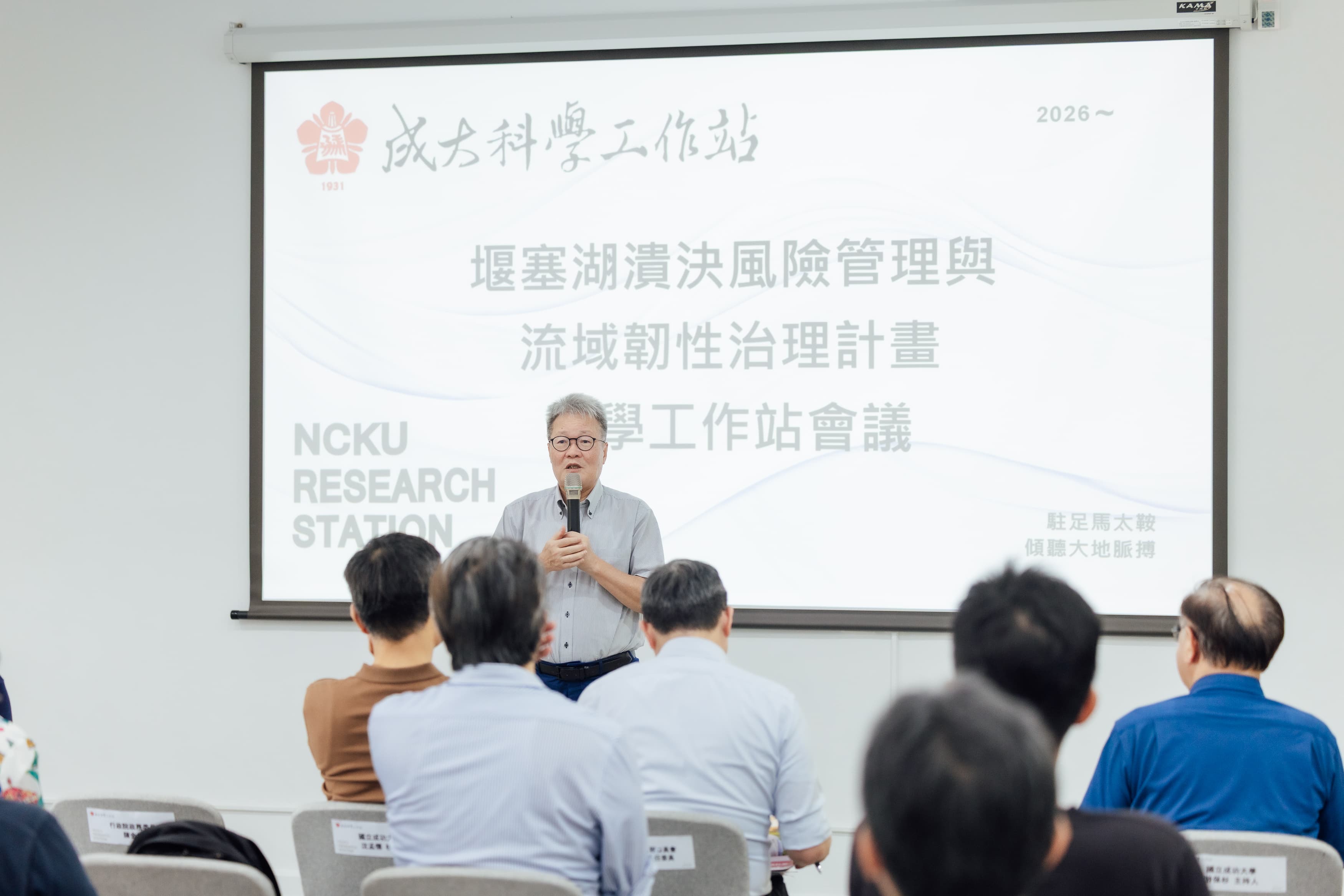
Chin-de Chen, Minister without Portfolio of the Executive Yuan delivers remarks at the NCKU Research Station on August 21
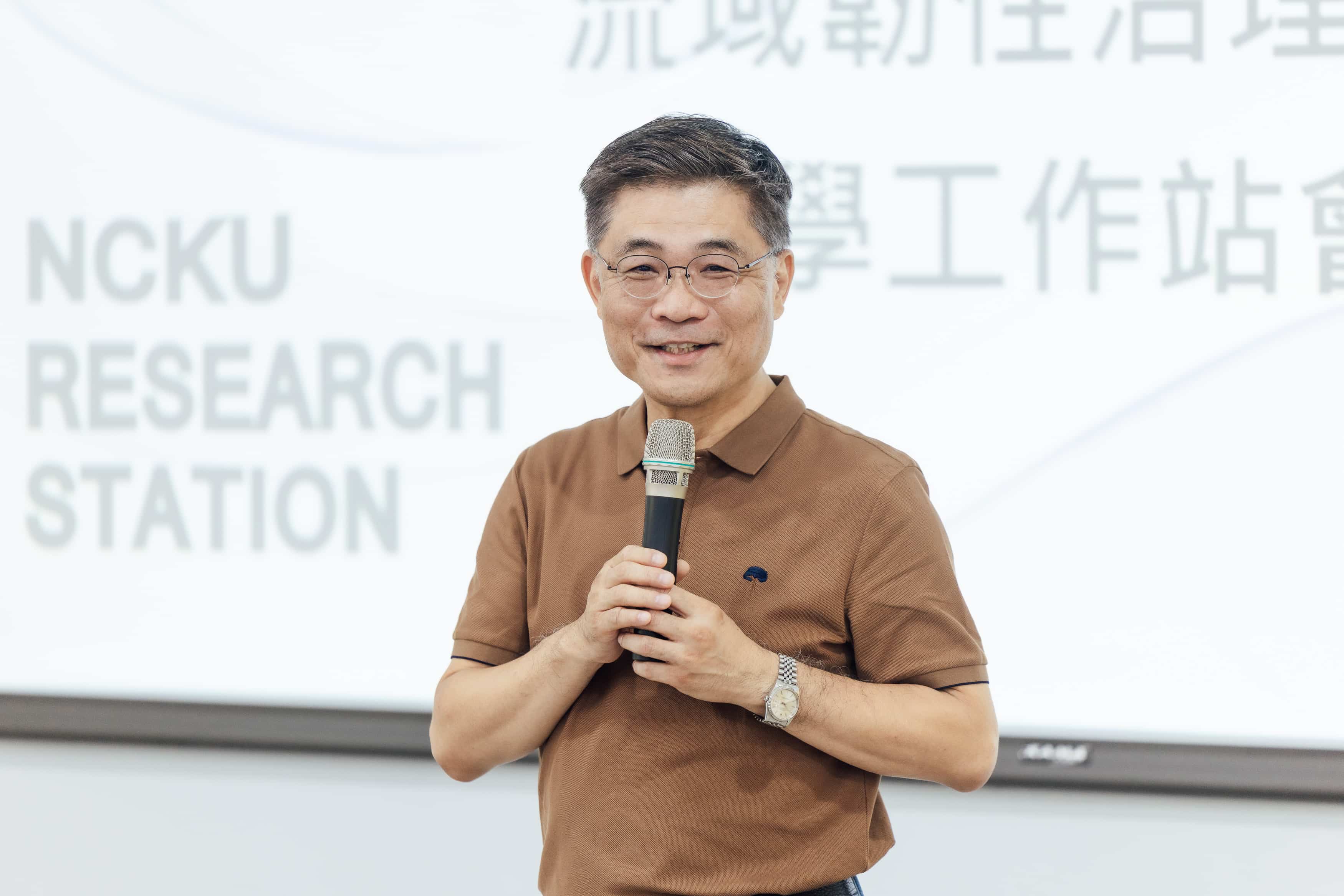
NCKU President Meng-Ru Shen led the team members to attend the meeting
Ju-Ming Wang (2nd from the right), Dean of NCKU College of Bioscience and Biotechnology, and Ta-Chi Yang (2nd from the left), Director of the Hualien District Agricultural Research and Extension Station under the Ministry of Agriculture, signed a memorandum of understanding. Executive Yuan Minister without Portfolio Chin-de Chen (1st from the left) and NCKU President Meng-Ru Shen (1st from the right) witnessed the signing
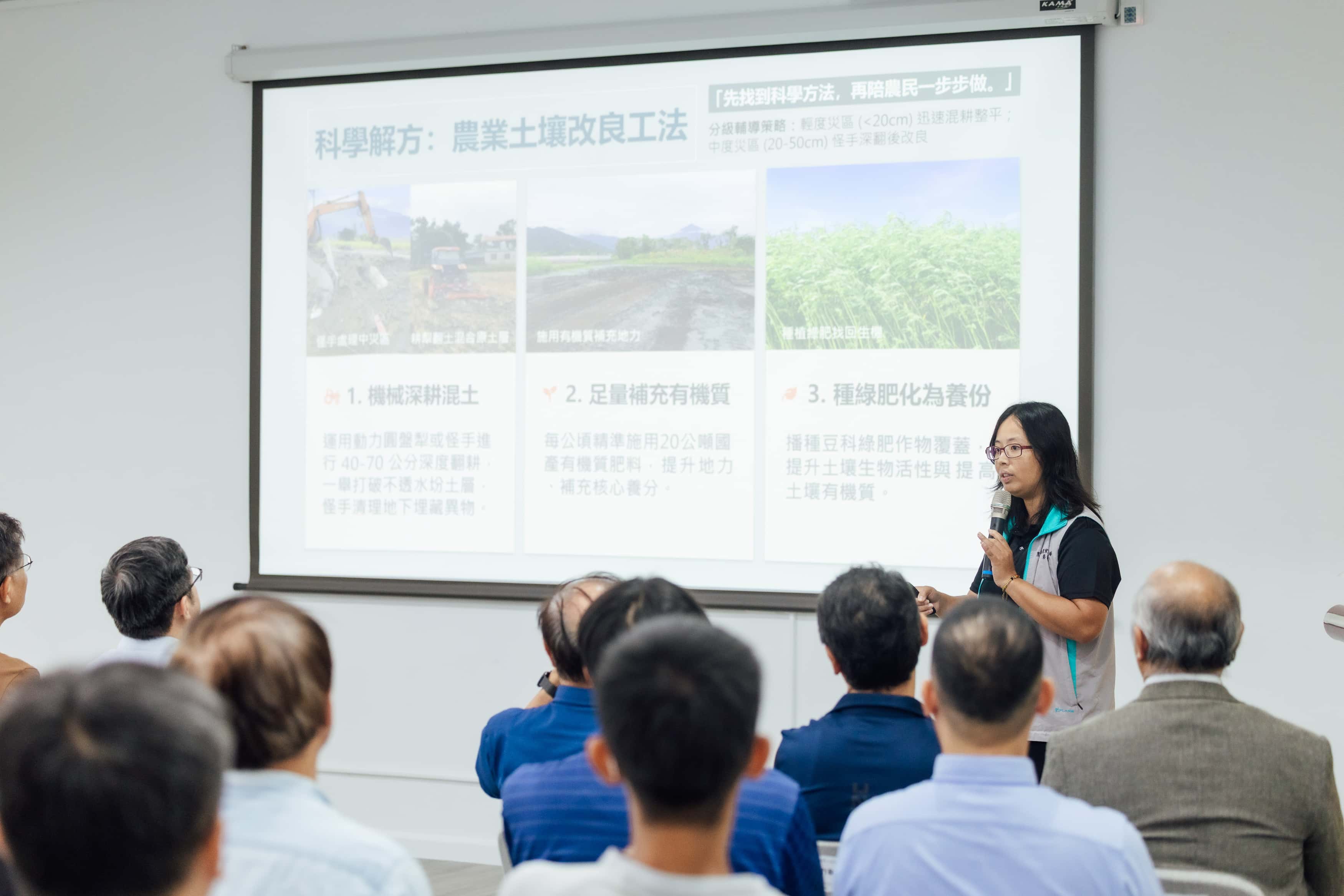
Section Chief Yi-Chen Tsai of the Hualien District Agricultural Research and Extension Station shares updates on collaborative research on agricultural land restoration
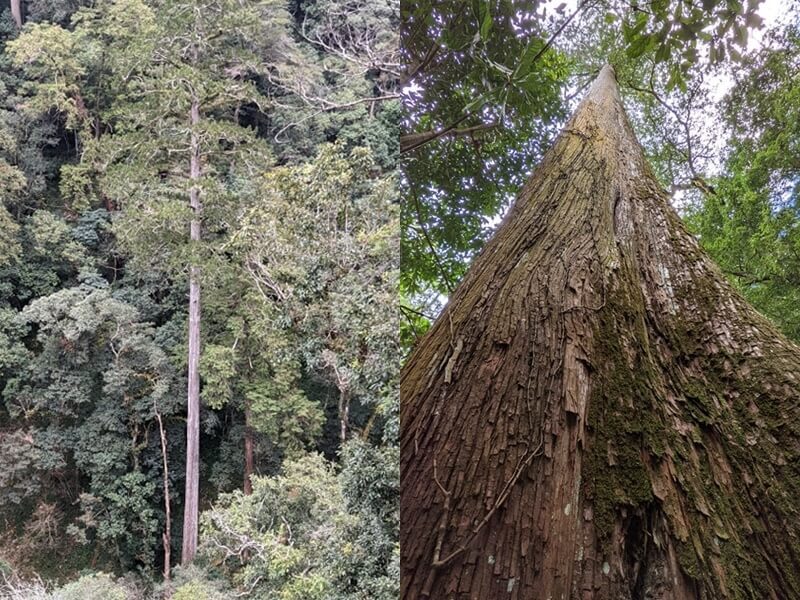
SDG15Taiwania cryptomerioides in Da-an River reaches 84.1 meters, setting East Asia's tallest record.
View more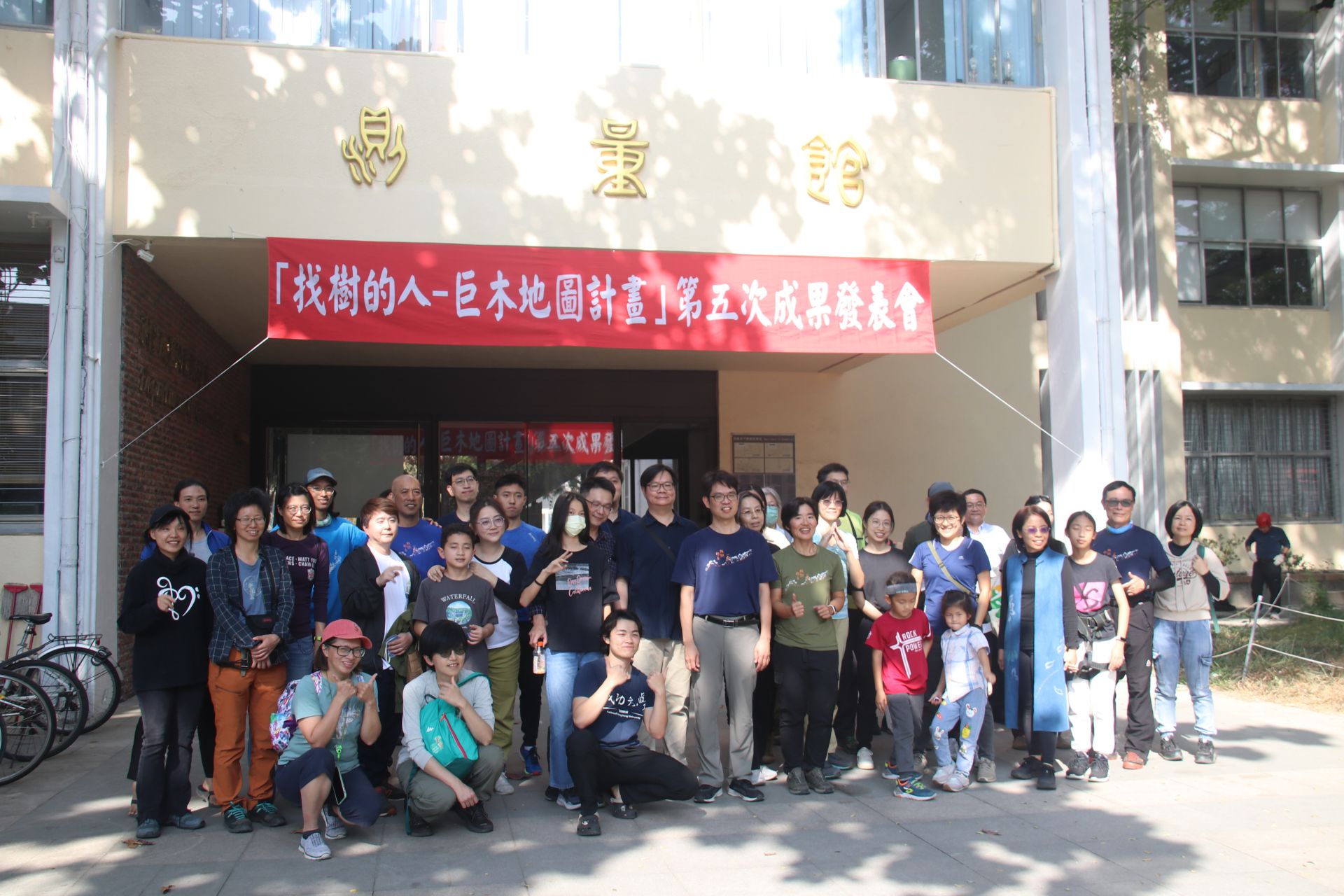
SDG15Discovery of Giant Tree “Heaven sword of Da-An River” in The Project Presentation of Giant Tree Mapping Project in NCKU
View more