



SDG9
【94th Anniversary】60th Anniversary of NCKU Department of Engineering Science: Inaugural NCKU Engineering Forum

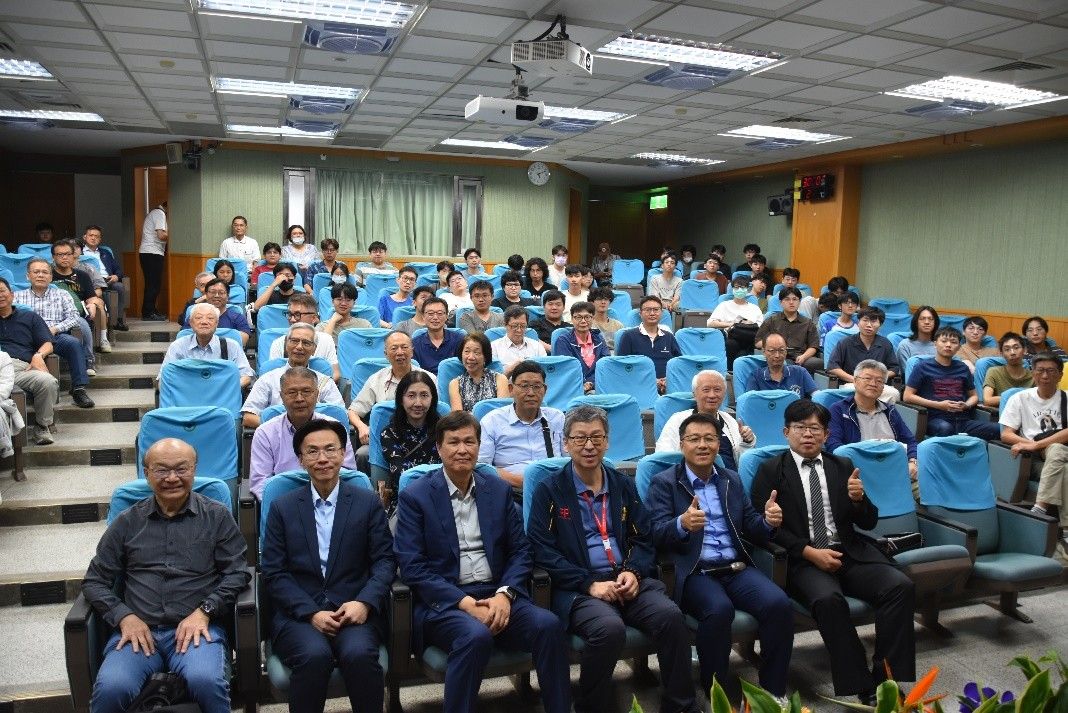
On November 7, the Department of Engineering Science at National Cheng Kung University (NCKU), together with the NCKU Engineering Science Cultural and Educational Foundation (財團法人成功大學工程科學文教基金會), held the inaugural “NCKU Engineering Science Forum: AI-Driven, Intelligent Integration” at 2:00 PM in Yue-Sheng Lecture Hall. The event invited alumni, industry leaders, and NCKU faculty and students to participate, focusing on the integrated applications of artificial intelligence in engineering — from intelligent robotics and vision chips to advanced server cooling and system-level integration — demonstrating NCKU’s cross-disciplinary strength and momentum in AI and engineering. Over 200 participants attended the forum.
The 60th anniversary celebration of the Department of Engineering Science was also warmly held on November 8, 2025, at the Engineering Science Building, attracting more than 300 alumni from Taiwan and abroad.
Vice President Yong-Chun Li (李永春) of NCKU delivered the opening remarks, expressing gratitude for the long-term support for the Department of Engineering Science. He noted that AI is accelerating the transformation of engineering research, development, and industry, and expressed the hope that the forum would strengthen the connection between academic research capabilities and industry, creating replicable and scalable demonstration cases, and fostering joint growth among alumni, faculty, and students in fields such as intelligent robotics, smart manufacturing, and information and communication technologies.
The first session of the forum was delivered by Chen-Chieh Lian (連震杰), Director of the Intelligent Robotics Research Center at the National Applied Research Laboratories, titled “Strategies and Missions of the Intelligent Robotics Research Center at NARLabs.” He explained how a national-level platform integrates academic research resources and industry needs, developing R&D capabilities for key robotic modules and systems—from core technologies and experimental validation to field deployment—and accelerating the practical application of results.
The second session was presented by Heng-Tsung Wang (王恒聰), General Manager of the Robotics and Smart Healthcare Business Unit at ASUS, who shared “AI Intelligent Robotics Technology Development and Applications.” General Manager Wang analyzed the technology chain from perception, planning, to control through practical cases, illustrating how enterprises optimize human–machine collaboration, medical care, and service robot deployment in a data-driven approach, while emphasizing the importance of cross-domain integration and safety verification.
After the tea break, Ying-Jie Hsu (許英傑), General Manager of iCatch Technology, Inc. (芯鼎科技股份有限公司) and an alumnus of the Department of Engineering Science (Class of ROC 78), delivered a talk titled “Enabling Machines to Understand the World: Integrated Design and Intelligent Applications of Vision Chips for Robotics.” He analyzed the key approaches to achieving low-power, high-performance inference in edge AI, covering the process from chip-level design to system integration, and presented practical examples of visual perception applied in industrial inspection and service robots.
Rao Zhen-Qi (饒振奇), Chairman of Forcecon Technology Co., Ltd. (力致科技股份有限公司) and an alumnus of the Department of Engineering Science (Class of ROC 72), delivered a talk titled “Advanced Cooling and Thermal Design for AI Servers.” He addressed the thermal management challenges brought by high-performance computing, explaining the trade-offs among solutions such as immersion cooling, liquid cooling, and thermal interface materials in terms of reliability and maintenance costs. He also shared practical insights on system-level thermal management and server cabinet integration.
The final session was delivered by Ming-Che Hsu (許明哲), General Manager of Chieftek Precision Co., Ltd. (直得科技股份有限公司) and an alumnus of the Department of Engineering Science (Class of ROC 69), titled “Integrated Hardware and Software Applications for AI Robotics.” He discussed the coordination among motion planning, vision-guided systems, and end-effectors, sharing practical implementation cases from manufacturing and service environments. He emphasized that system integration based on modularization and standardization can effectively shorten development and deployment timelines.
The Department of Engineering Science stated that the forum was open to NCKU alumni, industry experts, faculty, and students. The department aims to use this event as a starting point to further strengthen its integration capabilities in sensing, control, intelligent computing, and systems engineering, and accelerate technology adoption through field validation, thereby building an intelligent ecosystem for AI engineering.
Meanwhile, the 60th anniversary celebration of the Department of Engineering Science was warmly held on November 8, 2025, at the Engineering Science Building. The event was co-organized by the Department of Engineering Science and the NCKU Engineering Science Cultural and Educational Foundation under the theme “Resonating Through Sixty Years — Engineering Science Shaping the Future.” The celebration attracted more than 300 alumni returning from Taiwan and abroad. Starting with a courtyard gathering in the department building and continuing with a ceremony and alumni-sharing session in the Yue-Sheng Lecture Hall, the festivities extended into the evening with a banquet of 35 tables at Nong Yuan Man Han Restaurant (濃園餐廳). The lively atmosphere fostered warm interactions among faculty, alumni, and friends, highlighting the strong cohesion and intergenerational connections within the Engineering Science community.
The event opened with Tainan street foods, turning the registration area and courtyard into welcoming spaces for old friends to reconnect and new friendships to form. At 1:30 PM, the anniversary ceremony began. Deputy Dean Zhen-Ming Guo (郭振銘) of the College of Engineering delivered remarks acknowledging the department’s long-standing strengths and influence in mechanical engineering, electrical engineering, information science, and systems integration since its founding. This was followed by a welcome address from Ming-Tsung Chen (陳銘聰), Chairman of the Engineering Science Cultural and Educational Foundation. Department Chair Jin-Feng Lai (賴槿峰) then presented the “Sixty Years of Engineering Science” digital book and promotional video. The department team also showcased “The Future of Engineering Science,” highlighting research directions and field-validation plans in intelligent robotics, advanced manufacturing, biomedical engineering, and information and communication systems, outlining the roadmap for the next stage of development.
The following session, “Alumni Sharing Forum,” invited representatives from industry and academia to return to their home department and share first-hand experiences and insights, focusing on interdisciplinary integration, talent cultivation, and innovative applications. During the same time slot, the “Distinguished Alumni Achievement Awards” were presented, recognizing alumni who have made outstanding contributions and demonstrated exceptional impact in industrial innovation, academic research, and community service. After the session, all participants gathered for a group photo in the courtyard of the department building, followed by a guided tour of the facilities. Through visits to the exhibition areas and research spaces, guests were able to reflect on the department’s historical development while also seeing recent accomplishments and future directions.
In the early evening, a photography exhibition, a historical corridor, and nostalgic mini-games were opened to attendees, connecting shared memories across generations. The anniversary banquet was held at Nong Yuan Man Han Restaurant, where 35 tables were filled to capacity. The Engineering Science Cultural and Educational Foundation and the alumni community worked together to consolidate resources, facilitate industry–academia collaborations, and create internship opportunities for students, transforming a full day of interactions into lasting connections and actionable outcomes.
The Department of Engineering Science stated that the 60th anniversary celebration was made possible through the collective efforts of alumni, faculty, students, and the Engineering Science Cultural and Educational Foundation. Through a well-designed program of ceremonies, talks, exhibitions, and the banquet, the event fully showcased the department’s heritage and momentum for innovation. Moving forward, the department will continue to develop along dual tracks of system integration and field validation, joining hands with alumni and industry partners to cultivate future-ready interdisciplinary talent and open the next chapter in its history.
The 60th anniversary celebration of the Department of Engineering Science was also warmly held on November 8, 2025, at the Engineering Science Building, attracting more than 300 alumni from Taiwan and abroad.
Vice President Yong-Chun Li (李永春) of NCKU delivered the opening remarks, expressing gratitude for the long-term support for the Department of Engineering Science. He noted that AI is accelerating the transformation of engineering research, development, and industry, and expressed the hope that the forum would strengthen the connection between academic research capabilities and industry, creating replicable and scalable demonstration cases, and fostering joint growth among alumni, faculty, and students in fields such as intelligent robotics, smart manufacturing, and information and communication technologies.
The first session of the forum was delivered by Chen-Chieh Lian (連震杰), Director of the Intelligent Robotics Research Center at the National Applied Research Laboratories, titled “Strategies and Missions of the Intelligent Robotics Research Center at NARLabs.” He explained how a national-level platform integrates academic research resources and industry needs, developing R&D capabilities for key robotic modules and systems—from core technologies and experimental validation to field deployment—and accelerating the practical application of results.
The second session was presented by Heng-Tsung Wang (王恒聰), General Manager of the Robotics and Smart Healthcare Business Unit at ASUS, who shared “AI Intelligent Robotics Technology Development and Applications.” General Manager Wang analyzed the technology chain from perception, planning, to control through practical cases, illustrating how enterprises optimize human–machine collaboration, medical care, and service robot deployment in a data-driven approach, while emphasizing the importance of cross-domain integration and safety verification.
After the tea break, Ying-Jie Hsu (許英傑), General Manager of iCatch Technology, Inc. (芯鼎科技股份有限公司) and an alumnus of the Department of Engineering Science (Class of ROC 78), delivered a talk titled “Enabling Machines to Understand the World: Integrated Design and Intelligent Applications of Vision Chips for Robotics.” He analyzed the key approaches to achieving low-power, high-performance inference in edge AI, covering the process from chip-level design to system integration, and presented practical examples of visual perception applied in industrial inspection and service robots.
Rao Zhen-Qi (饒振奇), Chairman of Forcecon Technology Co., Ltd. (力致科技股份有限公司) and an alumnus of the Department of Engineering Science (Class of ROC 72), delivered a talk titled “Advanced Cooling and Thermal Design for AI Servers.” He addressed the thermal management challenges brought by high-performance computing, explaining the trade-offs among solutions such as immersion cooling, liquid cooling, and thermal interface materials in terms of reliability and maintenance costs. He also shared practical insights on system-level thermal management and server cabinet integration.
The final session was delivered by Ming-Che Hsu (許明哲), General Manager of Chieftek Precision Co., Ltd. (直得科技股份有限公司) and an alumnus of the Department of Engineering Science (Class of ROC 69), titled “Integrated Hardware and Software Applications for AI Robotics.” He discussed the coordination among motion planning, vision-guided systems, and end-effectors, sharing practical implementation cases from manufacturing and service environments. He emphasized that system integration based on modularization and standardization can effectively shorten development and deployment timelines.
The Department of Engineering Science stated that the forum was open to NCKU alumni, industry experts, faculty, and students. The department aims to use this event as a starting point to further strengthen its integration capabilities in sensing, control, intelligent computing, and systems engineering, and accelerate technology adoption through field validation, thereby building an intelligent ecosystem for AI engineering.
Meanwhile, the 60th anniversary celebration of the Department of Engineering Science was warmly held on November 8, 2025, at the Engineering Science Building. The event was co-organized by the Department of Engineering Science and the NCKU Engineering Science Cultural and Educational Foundation under the theme “Resonating Through Sixty Years — Engineering Science Shaping the Future.” The celebration attracted more than 300 alumni returning from Taiwan and abroad. Starting with a courtyard gathering in the department building and continuing with a ceremony and alumni-sharing session in the Yue-Sheng Lecture Hall, the festivities extended into the evening with a banquet of 35 tables at Nong Yuan Man Han Restaurant (濃園餐廳). The lively atmosphere fostered warm interactions among faculty, alumni, and friends, highlighting the strong cohesion and intergenerational connections within the Engineering Science community.
The event opened with Tainan street foods, turning the registration area and courtyard into welcoming spaces for old friends to reconnect and new friendships to form. At 1:30 PM, the anniversary ceremony began. Deputy Dean Zhen-Ming Guo (郭振銘) of the College of Engineering delivered remarks acknowledging the department’s long-standing strengths and influence in mechanical engineering, electrical engineering, information science, and systems integration since its founding. This was followed by a welcome address from Ming-Tsung Chen (陳銘聰), Chairman of the Engineering Science Cultural and Educational Foundation. Department Chair Jin-Feng Lai (賴槿峰) then presented the “Sixty Years of Engineering Science” digital book and promotional video. The department team also showcased “The Future of Engineering Science,” highlighting research directions and field-validation plans in intelligent robotics, advanced manufacturing, biomedical engineering, and information and communication systems, outlining the roadmap for the next stage of development.
The following session, “Alumni Sharing Forum,” invited representatives from industry and academia to return to their home department and share first-hand experiences and insights, focusing on interdisciplinary integration, talent cultivation, and innovative applications. During the same time slot, the “Distinguished Alumni Achievement Awards” were presented, recognizing alumni who have made outstanding contributions and demonstrated exceptional impact in industrial innovation, academic research, and community service. After the session, all participants gathered for a group photo in the courtyard of the department building, followed by a guided tour of the facilities. Through visits to the exhibition areas and research spaces, guests were able to reflect on the department’s historical development while also seeing recent accomplishments and future directions.
In the early evening, a photography exhibition, a historical corridor, and nostalgic mini-games were opened to attendees, connecting shared memories across generations. The anniversary banquet was held at Nong Yuan Man Han Restaurant, where 35 tables were filled to capacity. The Engineering Science Cultural and Educational Foundation and the alumni community worked together to consolidate resources, facilitate industry–academia collaborations, and create internship opportunities for students, transforming a full day of interactions into lasting connections and actionable outcomes.
The Department of Engineering Science stated that the 60th anniversary celebration was made possible through the collective efforts of alumni, faculty, students, and the Engineering Science Cultural and Educational Foundation. Through a well-designed program of ceremonies, talks, exhibitions, and the banquet, the event fully showcased the department’s heritage and momentum for innovation. Moving forward, the department will continue to develop along dual tracks of system integration and field validation, joining hands with alumni and industry partners to cultivate future-ready interdisciplinary talent and open the next chapter in its history.
In celebration of NCKU’s 94th anniversary, the Department of Engineering Science and the NCKU Engineering Science Cultural and Educational Foundation jointly organized the inaugural NCKU Engineering Forum.
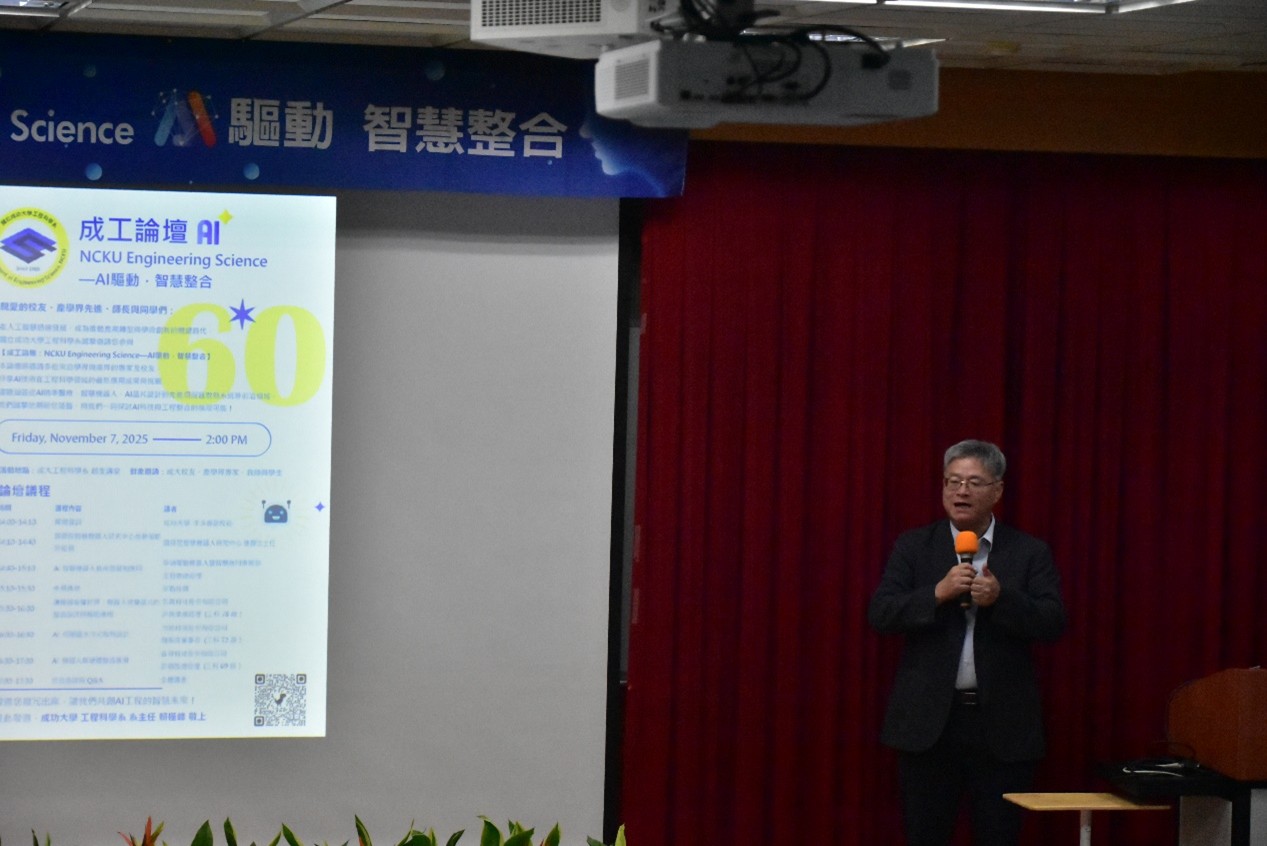
Vice President Yong-Chun Li delivered the opening remarks, encouraging faculty and students to seize the opportunities presented by AI and engineering integration to advance research and bridge it with practical applications.
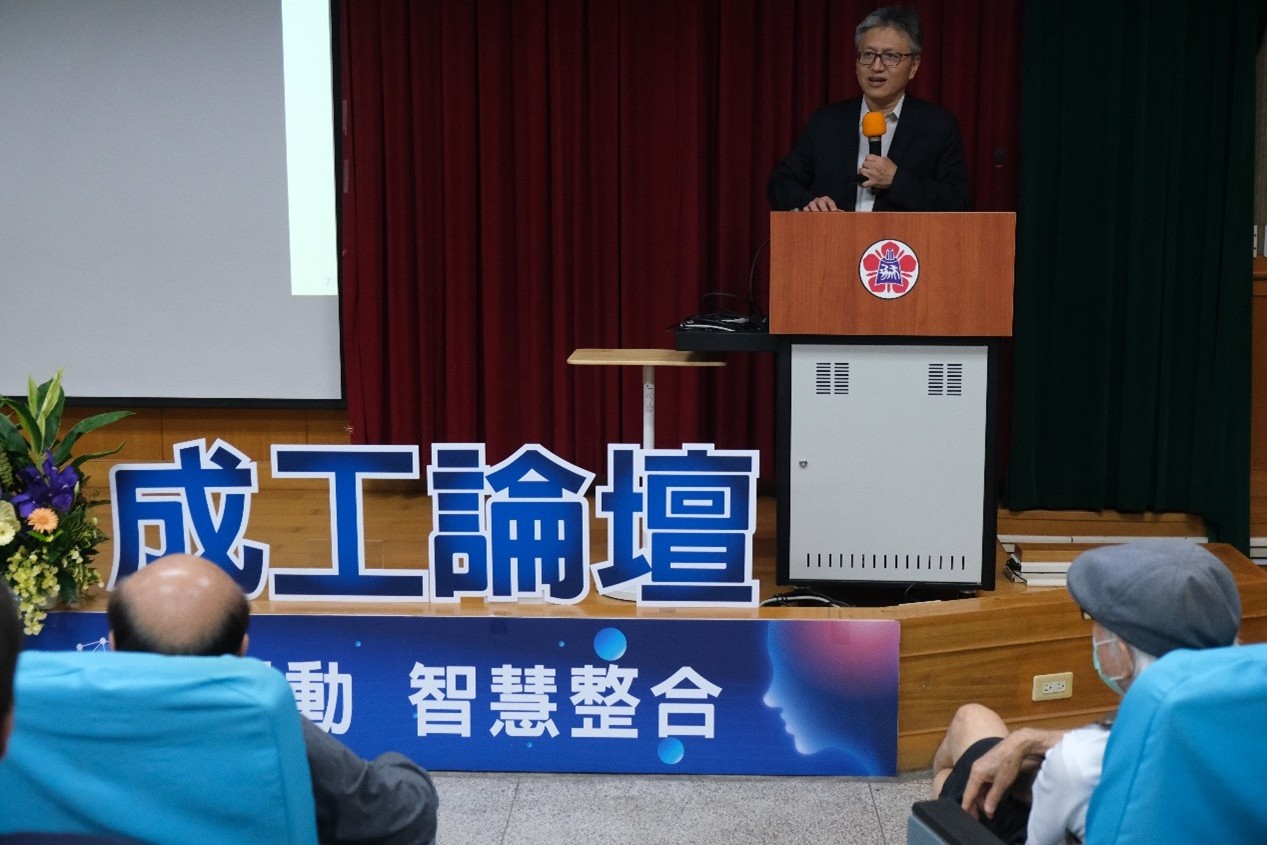
Zhen-Jie Lian, Director of the Intelligent Robotics Research Center at the National Applied Research Laboratories, shared insights on intelligent robotics research and promotion strategies, explaining how the platform connects academic research with industry needs.
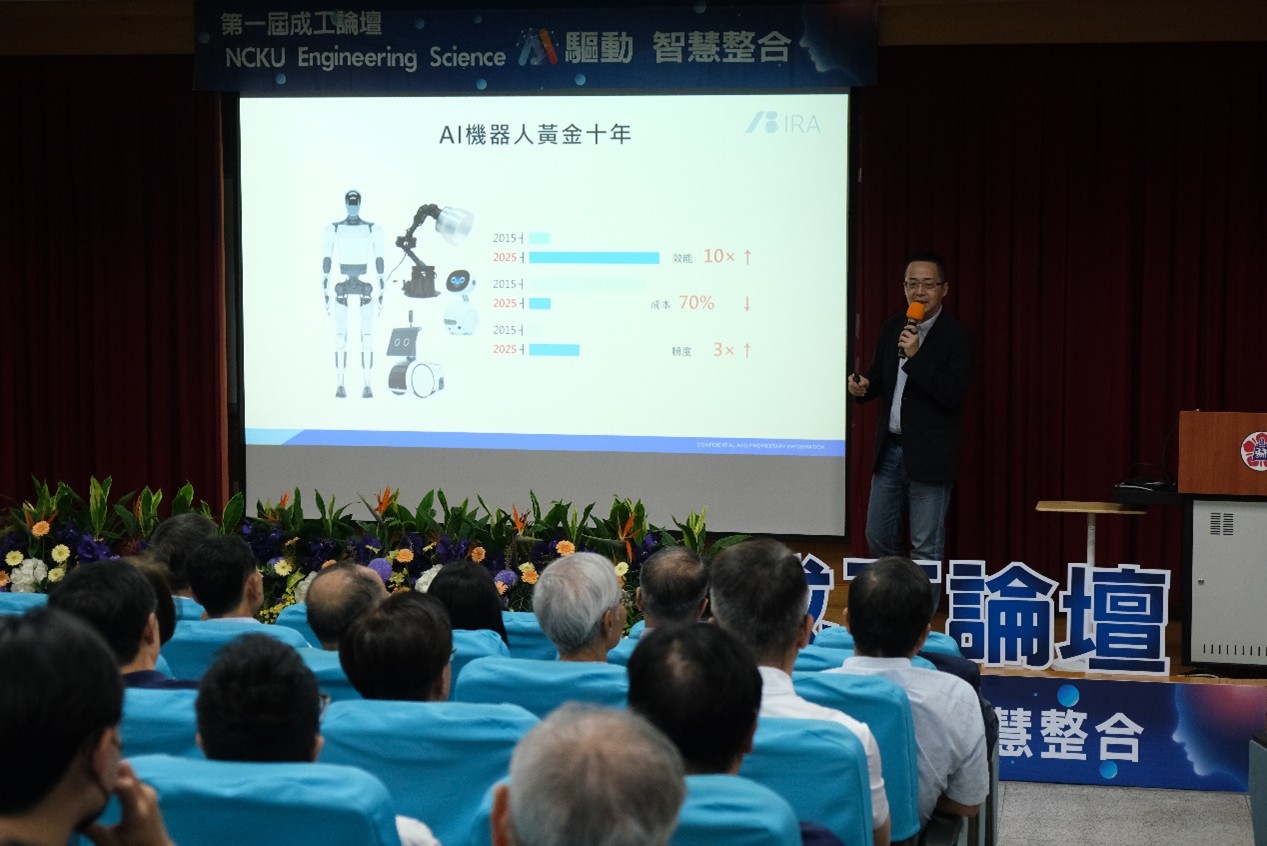
Heng-Cong Wang, General Manager of the Robotics and Smart Healthcare Business Unit at ASUS, analyzed AI intelligent robotics technology development and application trends through practical field cases.
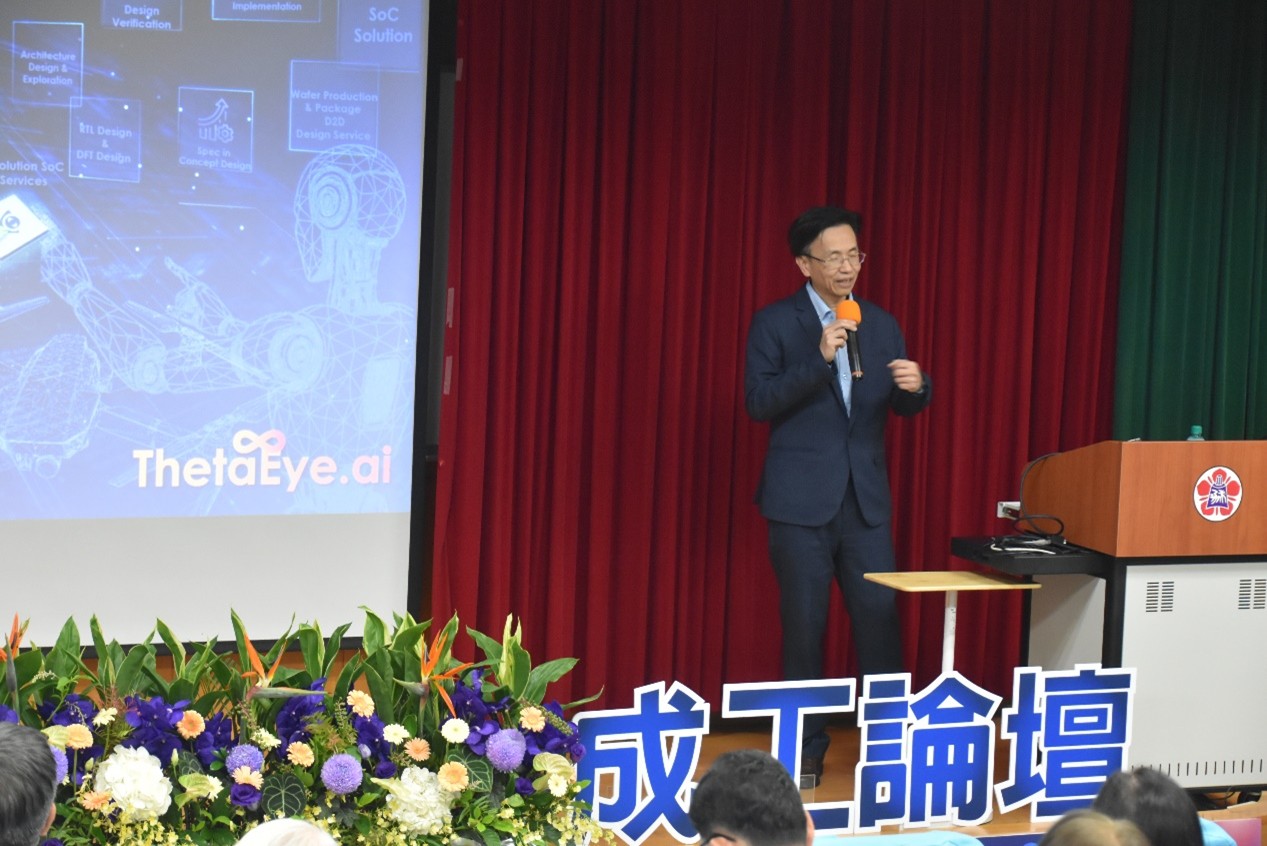
Ying-Jie Hsu, General Manager of iCatch Technology, Inc., explained the integrated design and intelligent applications of vision chips for robotics, demonstrating the core capabilities of “Enabling Machines to Understand the World.”
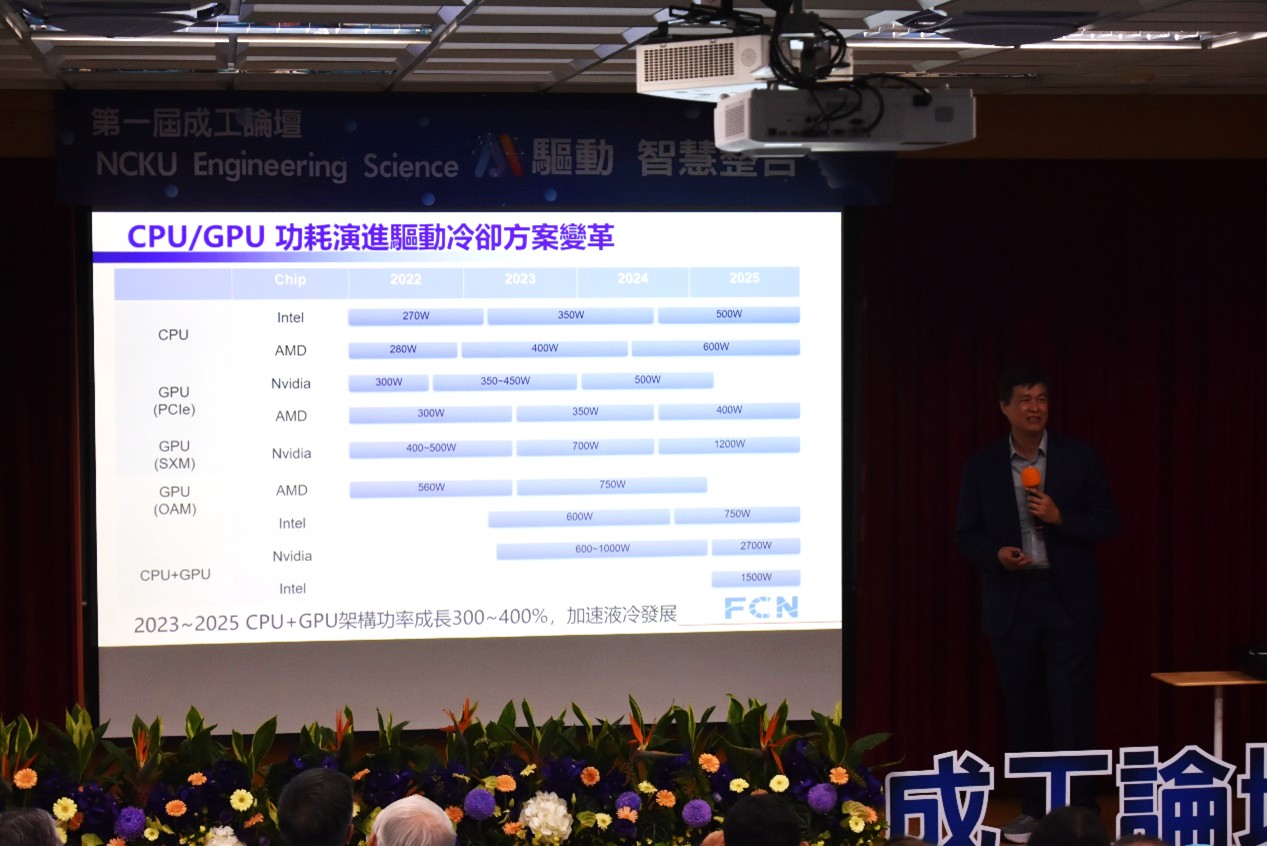
Zhen-Qi Rao, Chairman of Forcecon Technology Co., Ltd., presented advanced cooling and thermal design for AI servers from a thermal management perspective, enhancing system reliability for high-performance computing.
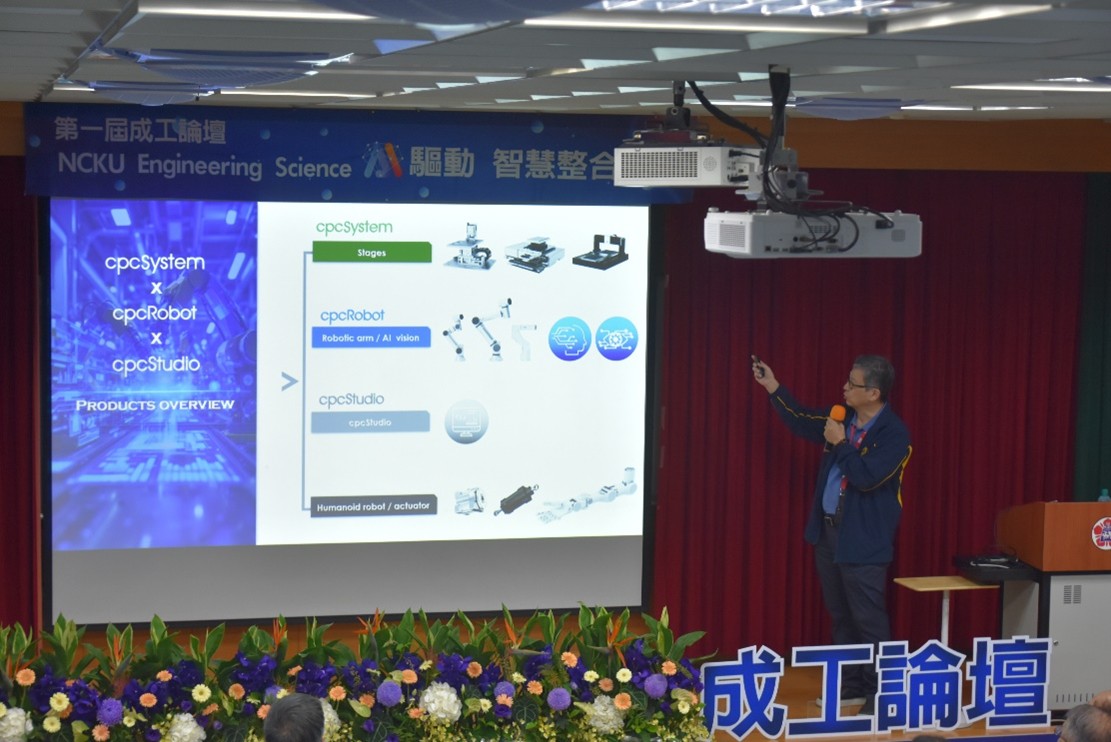
Ming-Che Hsu, General Manager of Chieftek Precision Co., Ltd., shared on system-level implementation of AI robotics hardware and software integration, focusing on practical deployment in manufacturing and service environments.
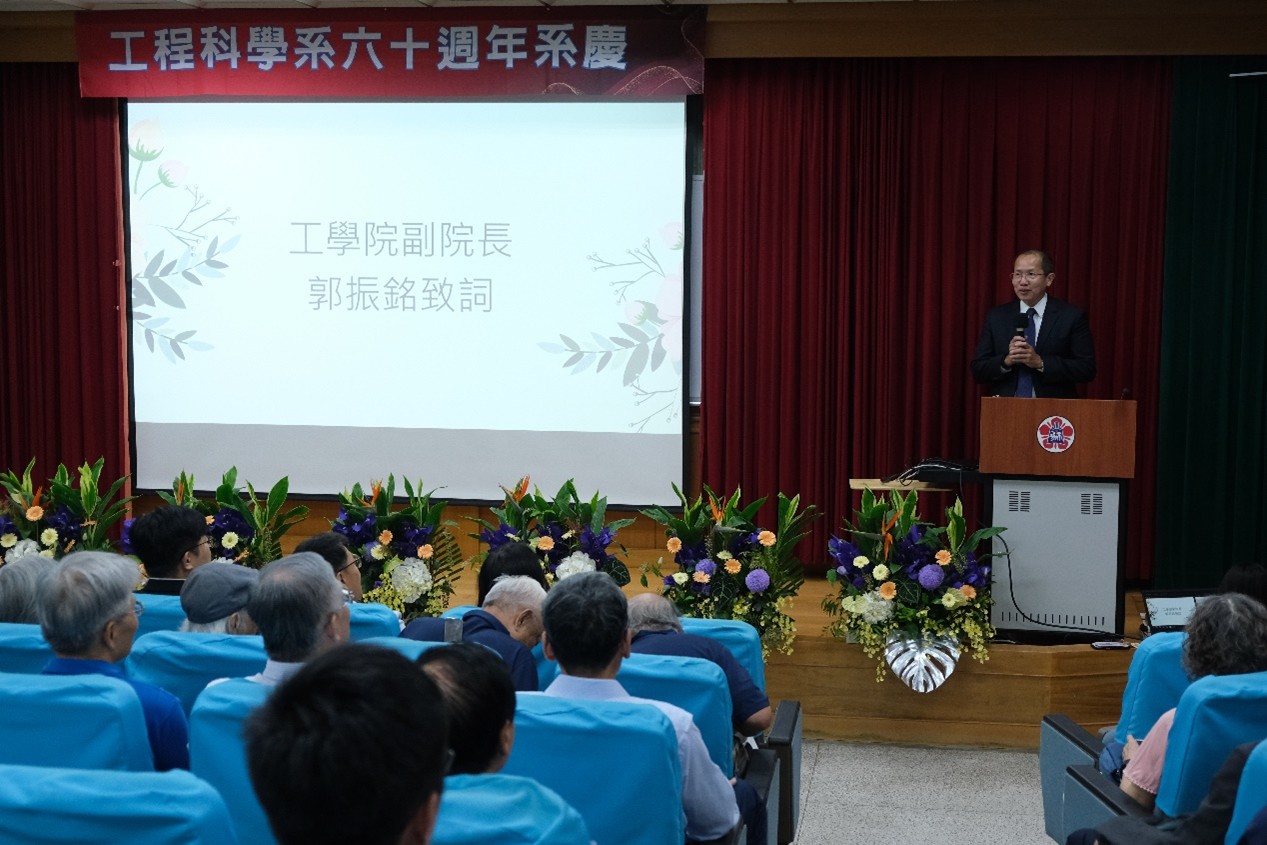
Zhen-Ming Guo, Deputy Dean of the College of Engineering, delivered remarks acknowledging the Department of Engineering Science’s strong foundation and its impact on industry–academia collaboration in mechanical engineering, electrical engineering, information science, and systems integration since its establishment.
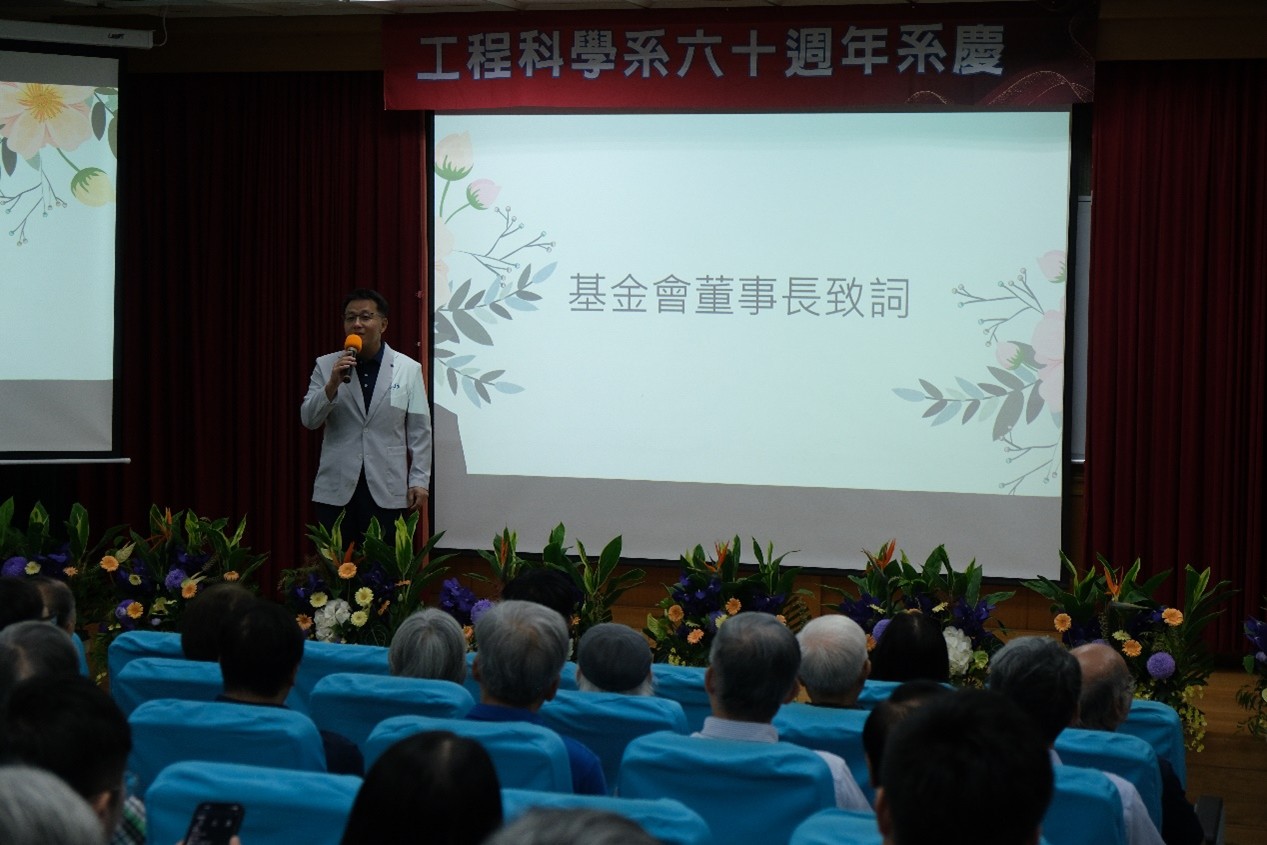
Ming-Tsung Chen, Chairman of the Foundation, welcomed alumni back to their alma mater.
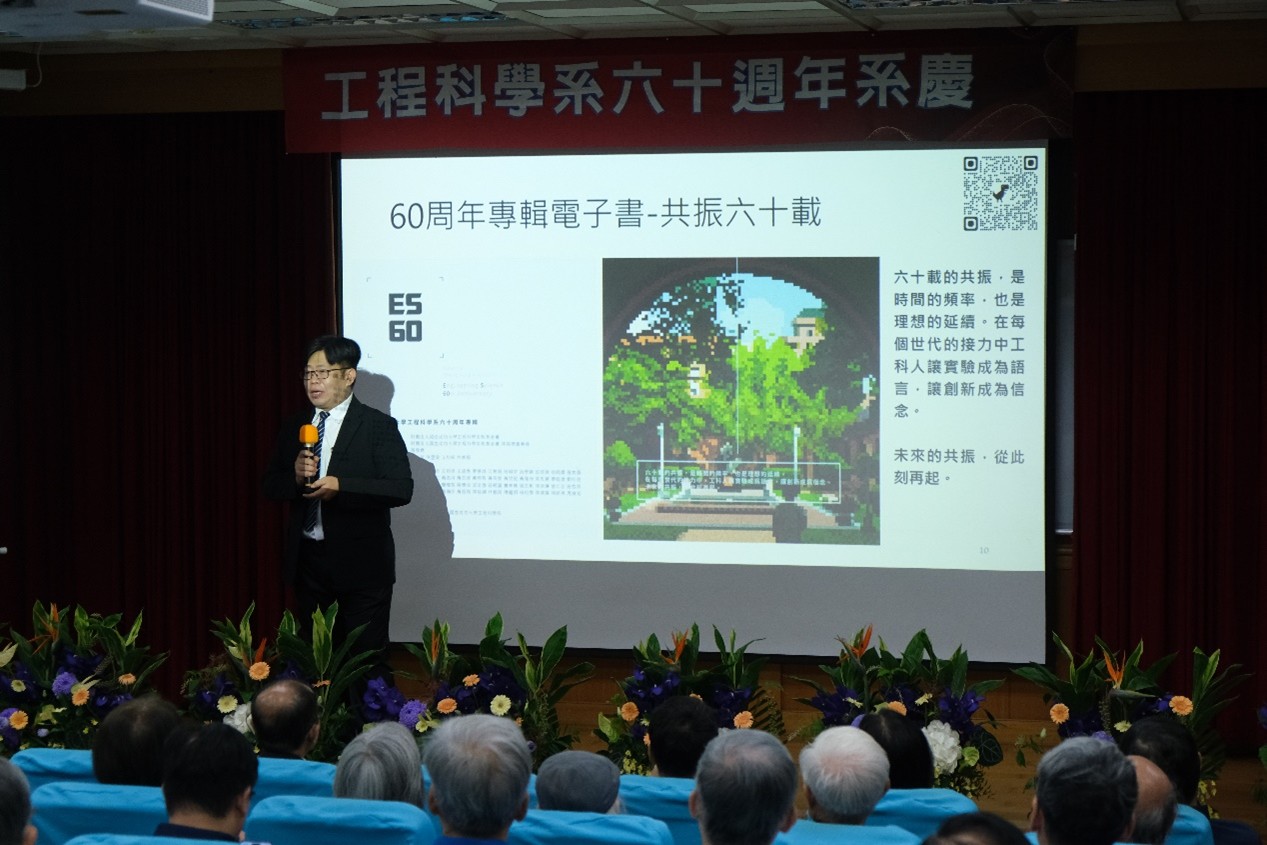
Premiere of the “Sixty Years of Engineering Science” digital book, with the department team presenting the future R&D directions and field plans of Engineering Science.
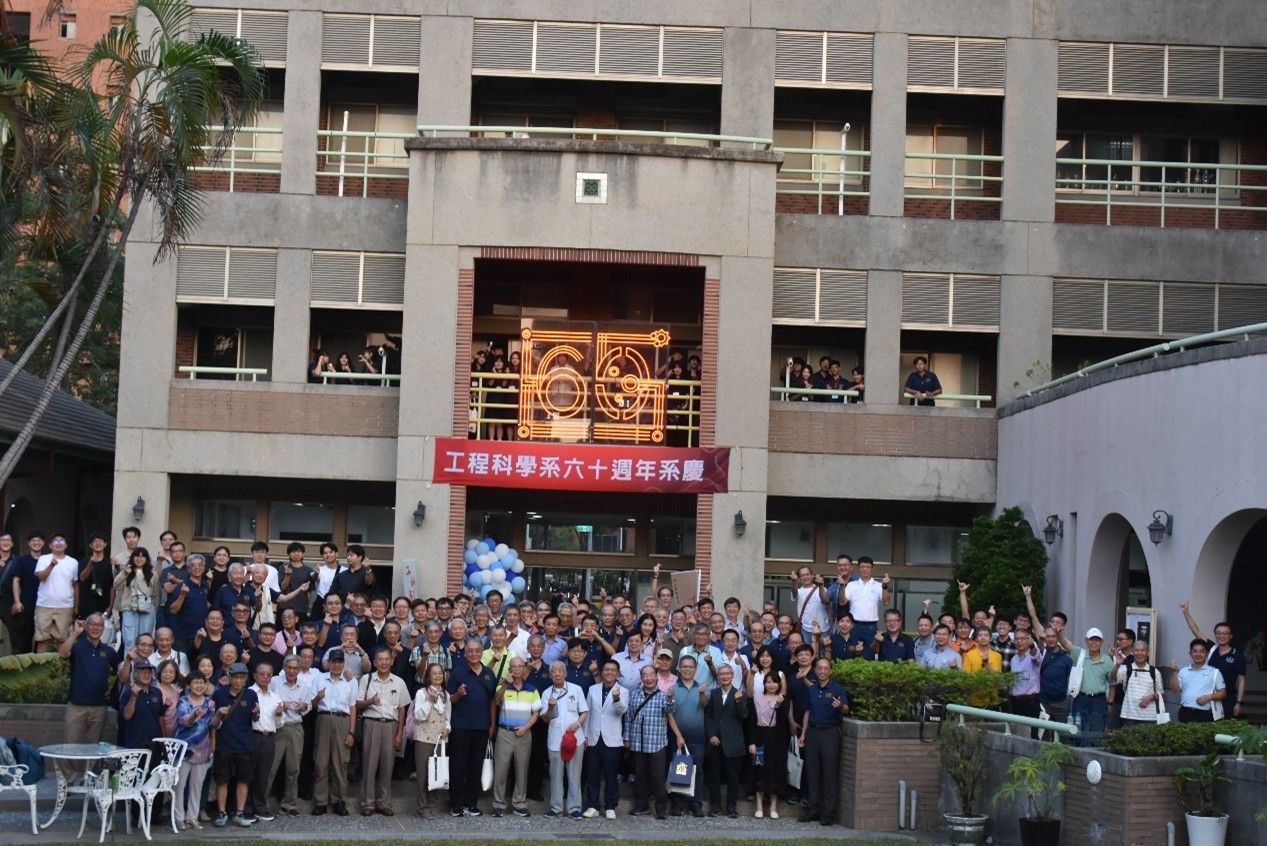
A guided tour of the department building’s exhibition areas, facilitating interactions between senior and junior students.
SDG9NCKU Mechanical Engineering Project Exhibition 2024 Kicks Off — Parents Amazed by the Intricacy of Student-Built Robots
View more
SDG9NCKU Team Develops Next-Generation Network Topology Surpassing Supercomputer Technologies in US, China, and Japan
View more