



SDG14
Experts Convene at Tainan Black-Faced Spoonbill Conservation Forum to Forge a New Cross-Sector Paradigm for Wetland Governance
The international forum “Intertidal Coexistence: Future Wetland Actions through the Lens of Black-Faced Spoonbill Conservation,” co-hosted by SAVE International and the Water Sustainability Lab at National Cheng Kung University (NCKU), was held on December 2 at NCKU’s Future Venue on the Sheng-Li Campus. The event brought together more than 150 experts from government agencies, academia, industry, and civil society. Grounded in Tainan, a region deeply interwoven with wetlands, the ocean, and cultural landscapes, the forum examined future action pathways for Taiwan’s coastal wetlands from scientific, policy, and community governance perspectives.
This year, the number of Black-Faced Spoonbills overwintering in Taiwan reached 7,008. From fewer than 300 individuals in the 1990s to becoming the world’s most important wintering population today, Taiwan’s wetland governance achievements have gained global attention. Across three decades, Taiwan’s wetland conservation efforts have stretched from opposing the Bin-nan Industrial Zone and the Cigu International Airport to establishing the National Park Act, the Coastal Zone Management Act, and the Wetland Conservation Act. This history is not only about species recovery but also a shared narrative shaped by communities, civil society, international partners, and government. At the forum, SAVE International founder Randy Hester emphasized that although Taiwan has made significant progress, restoring fragmented habitat corridors remains essential. Confronted with sea level rise and other climate challenges, he underscored the urgency of proactive long-term planning for inland wetland migration, including designating future wetland spaces and realigning local aquaculture such as oyster farming to ensure both nature and livelihoods can persist under new environmental conditions.
The forum opened with remarks from NCKU Associate Vice President Ping-Sheng Wu (吳秉聲), SAVE International Chair Derek Schubert, and UC Berkeley Professor Emerita and SAVE International Co-founder Marcia MacNally. Associate Vice President Wu expressed special appreciation for Professor Hsiao-Wen Wang (王筱雯)’s pivotal leadership in driving long-standing research and action across the Chianan Coast. By integrating hydrology and wetland ecology with participatory planning and community-based initiatives, she has helped build a long-term collaborative platform bridging science, policy, and society. Her work has illuminated shifts in critical habitats and governance needs while facilitating consensus-building among national ministries, local governments, and communities. As a result, wetland governance has moved from isolated advocacy to cross-scalar integration. Strategies for the rehabilitation of the Budai Wetlands, governance frameworks for the Cigu habitats, and climate adaptation blueprints for the Chianan Coast are all grounded in her sustained local engagement. Several speakers noted that Taiwan’s wetlands are not only vital to the migratory route of the Black-Faced Spoonbill but have also become important global case studies. Yu Yat-tung, Director of the Hong Kong Bird Watching Society, presented international data showing that Taiwan’s central role in global spoonbill wintering populations is a direct result of stable and transparent governance.
Forum discussions highlighted the diverse dimensions of wetland governance in Taiwan. For Budai, known as a “wetland granary,” participants examined pathways for ecological regeneration and local industry transition, with Taiwanese and international experts exploring models for aligning wise wetland use with local economic co-benefits. On climate adaptation, Professor Wang emphasized that wetlands have become the frontline for managing climate risks across Taiwan’s southwest coast. She argued that nature-based solutions for climate adaptation and resilience must be integrated with community knowledge and policy coordination to form implementable governance frameworks. She introduced the concept of “Working Wetlands” as a potential governance model. Although mitigation and adaptation often involve trade-offs in resource allocation and policy priorities, both can generate synergistic benefits. The key is enabling these synergies effectively, particularly through nature-based and ecosystem-based approaches that allow mitigation and adaptation to mutually reinforce each other within a unified governance structure.
Senior officials from several central ministries echoed these perspectives, including the Director-General of the National Park Service (Ministry of the Interior) Cheng-Ji Wang (王成機), Director-General of the Climate Change Administration (Ministry of Environment) Ling-Yi Tsai (蔡玲儀), Director-General of the Ocean Conservation Administration Hsiao-Yun Lu (陸曉筠), Director-General of the National Property Administration Kuo-Chi Tseng (曾國基), Deputy Director-General of the Forestry and Conservation Agency (Ministry of Agriculture) Tai Chang (張岱), Chiayi Branch Director Ting-Chung Lee (李定忠), and Director-General of the Water Resources Planning Division (Ministry of Economic Affairs) Kuang-Chih Chang (張廣智). They collectively affirmed that wetlands should play a more central role in national climate adaptation policy. Former Minister of Transportation and Communications Chen-Tan Ho (賀陳旦) and former Tainan County Magistrate Huan-Chih Su (蘇煥智) also attended and participated actively in discussions.
The forum spotlighted three iconic grassroots cases: Kaohsiung Cieding, Chiayi Budai, and Tainan Cigu. These communities have evolved from early environmental movements resisting destructive development to stable, institutionalized governance structures with long-term community engagement. Their trajectories illustrate the persistence and resilience of Taiwan’s civic forces. Representatives from organizations including the Taiwan Black-Faced Spoonbill Conservation Association (台灣黑面琵鷺保育學會), Taiwan Wild Bird Federation (中華鳥會), Tainan Wild Bird Society (台南市野鳥學會), Taiwan Environment and Planning Association (台灣環境規劃協會), Wetlands Taiwan (台灣濕地保護聯盟), The Society of Wilderness Tainan Branch (荒野保護協會台南分會), the Cigu-Jiangjun Salt Pan Wetland Rehabilitation Alliance (七股將軍鹽灘濕地復育聯盟), Kaohsiung Wild Bird Society (高雄市野鳥學會), Kaohsiung Fishermen’s Point Association (高雄市漁夫角協會), and Chunghwa Telecom (中華電信) shared how public-private collaboration is advancing wetland stewardship. MacNally praised the autonomy and long-term commitment of Taiwan’s community actors and emphasized that Taiwan’s grassroots strength now serves as a leading global model for wetland conservation.
In the closing session, academia, government, industry, and community representatives jointly proposed future action directions and signed an action declaration. They outlined priorities including policy coherence, inter-ministerial coordination, accountability mechanisms, and strategies that extend beyond electoral cycles. They further emphasized the importance of local communities, businesses, and cross-sector collaboration, aligning wetland governance with ESG, TNFD, and natural capital frameworks to shape Taiwan’s next-phase wetland roadmap.
Field visits to Budai and Cigu on December 3 and 4 enabled domestic and international participants to experience the on-the-ground dynamics of Taiwan’s wetland governance. In Budai, attendees observed outcomes in multifunctional saltpan use, long-term community participation, and ecological education, with international scholars noting that Budai’s emerging “migratory bird economy” is one of the most successful examples integrating daily life, production, and ecology. In Cigu, participants witnessed a complete ecological governance chain spanning estuaries, wetlands, and saltpans. The success of Cigu lies not only in hosting the world’s most iconic overwintering population of Black-Faced Spoonbills but also in its mature governance network characterized by cross-sector collaboration, public-private partnership, community engagement, and scientific monitoring. Several international experts remarked that the depth of coastal governance in Tainan could serve as a global textbook for wetland conservation.
Across three days of forums and fieldwork, participants engaged with policy frameworks, practical implementation, international perspectives, and local narratives. The discussions demonstrated both the depth and breadth of Taiwan’s wetland governance and highlighted society’s proactive response and collective commitment in the face of climate and environmental challenges. As Black-Faced Spoonbills traverse national borders, effective wetland governance transcends sectors and disciplines. Amid climate change and biodiversity crises, wetlands remain pivotal in connecting nature and society. Taiwan continues to stand at the forefront of global action, using practice, experience, and cross-sector collaboration to build models of wetland governance that are increasingly resilient and forward-looking.
This year, the number of Black-Faced Spoonbills overwintering in Taiwan reached 7,008. From fewer than 300 individuals in the 1990s to becoming the world’s most important wintering population today, Taiwan’s wetland governance achievements have gained global attention. Across three decades, Taiwan’s wetland conservation efforts have stretched from opposing the Bin-nan Industrial Zone and the Cigu International Airport to establishing the National Park Act, the Coastal Zone Management Act, and the Wetland Conservation Act. This history is not only about species recovery but also a shared narrative shaped by communities, civil society, international partners, and government. At the forum, SAVE International founder Randy Hester emphasized that although Taiwan has made significant progress, restoring fragmented habitat corridors remains essential. Confronted with sea level rise and other climate challenges, he underscored the urgency of proactive long-term planning for inland wetland migration, including designating future wetland spaces and realigning local aquaculture such as oyster farming to ensure both nature and livelihoods can persist under new environmental conditions.
The forum opened with remarks from NCKU Associate Vice President Ping-Sheng Wu (吳秉聲), SAVE International Chair Derek Schubert, and UC Berkeley Professor Emerita and SAVE International Co-founder Marcia MacNally. Associate Vice President Wu expressed special appreciation for Professor Hsiao-Wen Wang (王筱雯)’s pivotal leadership in driving long-standing research and action across the Chianan Coast. By integrating hydrology and wetland ecology with participatory planning and community-based initiatives, she has helped build a long-term collaborative platform bridging science, policy, and society. Her work has illuminated shifts in critical habitats and governance needs while facilitating consensus-building among national ministries, local governments, and communities. As a result, wetland governance has moved from isolated advocacy to cross-scalar integration. Strategies for the rehabilitation of the Budai Wetlands, governance frameworks for the Cigu habitats, and climate adaptation blueprints for the Chianan Coast are all grounded in her sustained local engagement. Several speakers noted that Taiwan’s wetlands are not only vital to the migratory route of the Black-Faced Spoonbill but have also become important global case studies. Yu Yat-tung, Director of the Hong Kong Bird Watching Society, presented international data showing that Taiwan’s central role in global spoonbill wintering populations is a direct result of stable and transparent governance.
Forum discussions highlighted the diverse dimensions of wetland governance in Taiwan. For Budai, known as a “wetland granary,” participants examined pathways for ecological regeneration and local industry transition, with Taiwanese and international experts exploring models for aligning wise wetland use with local economic co-benefits. On climate adaptation, Professor Wang emphasized that wetlands have become the frontline for managing climate risks across Taiwan’s southwest coast. She argued that nature-based solutions for climate adaptation and resilience must be integrated with community knowledge and policy coordination to form implementable governance frameworks. She introduced the concept of “Working Wetlands” as a potential governance model. Although mitigation and adaptation often involve trade-offs in resource allocation and policy priorities, both can generate synergistic benefits. The key is enabling these synergies effectively, particularly through nature-based and ecosystem-based approaches that allow mitigation and adaptation to mutually reinforce each other within a unified governance structure.
Senior officials from several central ministries echoed these perspectives, including the Director-General of the National Park Service (Ministry of the Interior) Cheng-Ji Wang (王成機), Director-General of the Climate Change Administration (Ministry of Environment) Ling-Yi Tsai (蔡玲儀), Director-General of the Ocean Conservation Administration Hsiao-Yun Lu (陸曉筠), Director-General of the National Property Administration Kuo-Chi Tseng (曾國基), Deputy Director-General of the Forestry and Conservation Agency (Ministry of Agriculture) Tai Chang (張岱), Chiayi Branch Director Ting-Chung Lee (李定忠), and Director-General of the Water Resources Planning Division (Ministry of Economic Affairs) Kuang-Chih Chang (張廣智). They collectively affirmed that wetlands should play a more central role in national climate adaptation policy. Former Minister of Transportation and Communications Chen-Tan Ho (賀陳旦) and former Tainan County Magistrate Huan-Chih Su (蘇煥智) also attended and participated actively in discussions.
The forum spotlighted three iconic grassroots cases: Kaohsiung Cieding, Chiayi Budai, and Tainan Cigu. These communities have evolved from early environmental movements resisting destructive development to stable, institutionalized governance structures with long-term community engagement. Their trajectories illustrate the persistence and resilience of Taiwan’s civic forces. Representatives from organizations including the Taiwan Black-Faced Spoonbill Conservation Association (台灣黑面琵鷺保育學會), Taiwan Wild Bird Federation (中華鳥會), Tainan Wild Bird Society (台南市野鳥學會), Taiwan Environment and Planning Association (台灣環境規劃協會), Wetlands Taiwan (台灣濕地保護聯盟), The Society of Wilderness Tainan Branch (荒野保護協會台南分會), the Cigu-Jiangjun Salt Pan Wetland Rehabilitation Alliance (七股將軍鹽灘濕地復育聯盟), Kaohsiung Wild Bird Society (高雄市野鳥學會), Kaohsiung Fishermen’s Point Association (高雄市漁夫角協會), and Chunghwa Telecom (中華電信) shared how public-private collaboration is advancing wetland stewardship. MacNally praised the autonomy and long-term commitment of Taiwan’s community actors and emphasized that Taiwan’s grassroots strength now serves as a leading global model for wetland conservation.
In the closing session, academia, government, industry, and community representatives jointly proposed future action directions and signed an action declaration. They outlined priorities including policy coherence, inter-ministerial coordination, accountability mechanisms, and strategies that extend beyond electoral cycles. They further emphasized the importance of local communities, businesses, and cross-sector collaboration, aligning wetland governance with ESG, TNFD, and natural capital frameworks to shape Taiwan’s next-phase wetland roadmap.
Field visits to Budai and Cigu on December 3 and 4 enabled domestic and international participants to experience the on-the-ground dynamics of Taiwan’s wetland governance. In Budai, attendees observed outcomes in multifunctional saltpan use, long-term community participation, and ecological education, with international scholars noting that Budai’s emerging “migratory bird economy” is one of the most successful examples integrating daily life, production, and ecology. In Cigu, participants witnessed a complete ecological governance chain spanning estuaries, wetlands, and saltpans. The success of Cigu lies not only in hosting the world’s most iconic overwintering population of Black-Faced Spoonbills but also in its mature governance network characterized by cross-sector collaboration, public-private partnership, community engagement, and scientific monitoring. Several international experts remarked that the depth of coastal governance in Tainan could serve as a global textbook for wetland conservation.
Across three days of forums and fieldwork, participants engaged with policy frameworks, practical implementation, international perspectives, and local narratives. The discussions demonstrated both the depth and breadth of Taiwan’s wetland governance and highlighted society’s proactive response and collective commitment in the face of climate and environmental challenges. As Black-Faced Spoonbills traverse national borders, effective wetland governance transcends sectors and disciplines. Amid climate change and biodiversity crises, wetlands remain pivotal in connecting nature and society. Taiwan continues to stand at the forefront of global action, using practice, experience, and cross-sector collaboration to build models of wetland governance that are increasingly resilient and forward-looking.
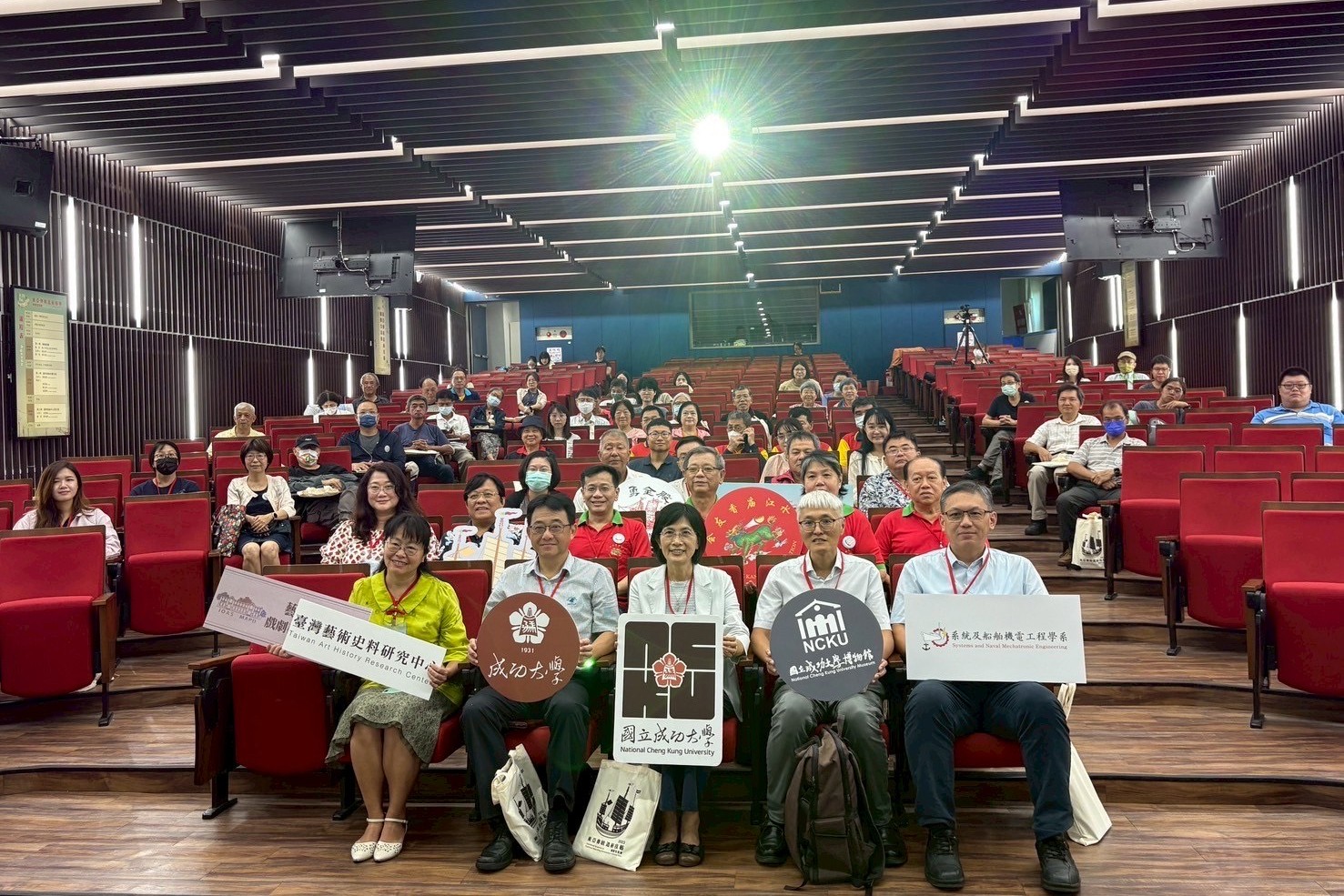
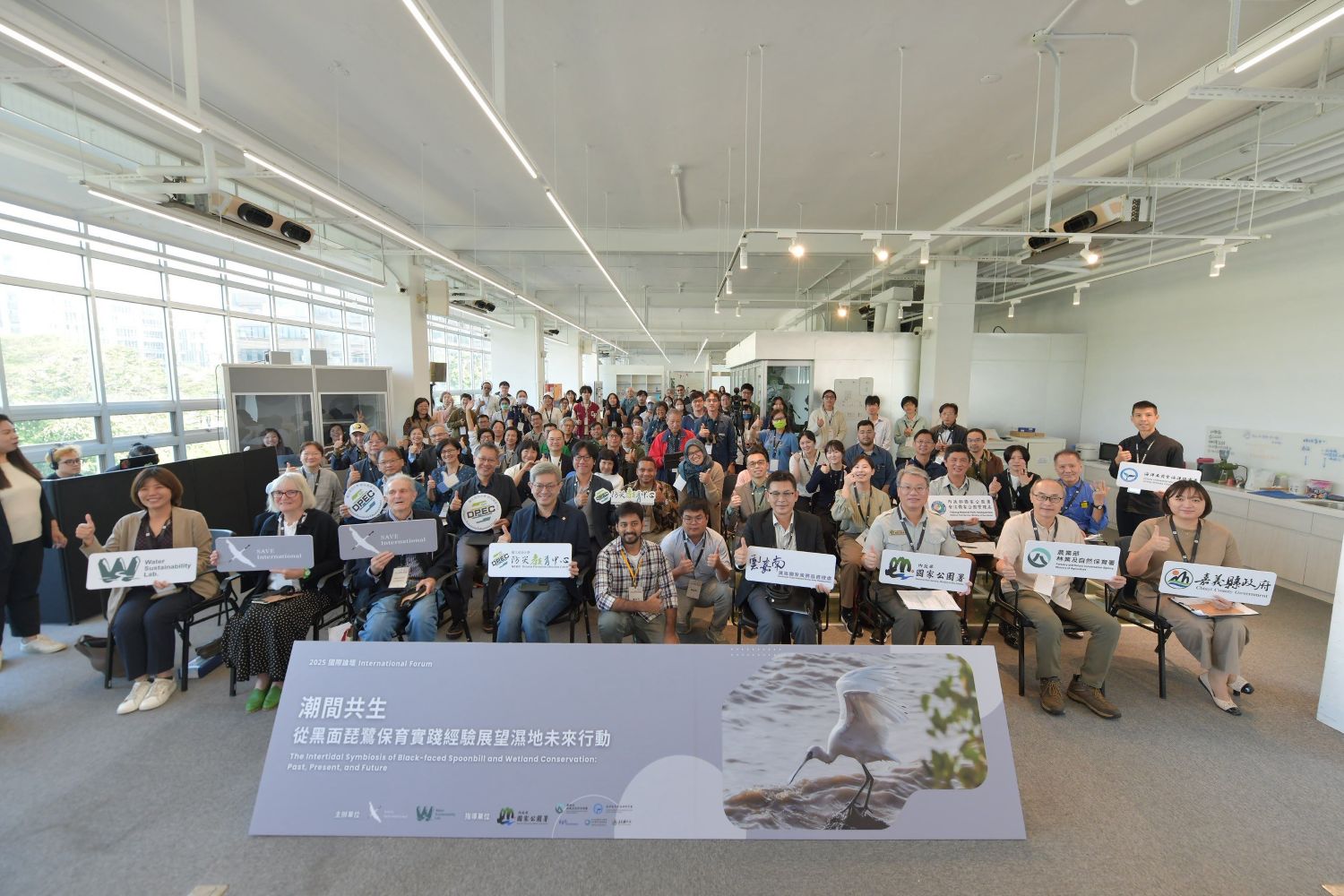
Group photo of participants at the international forum “Intertidal Coexistence: Future Wetland Actions through the Lens of Black-Faced Spoonbill Conservation.”
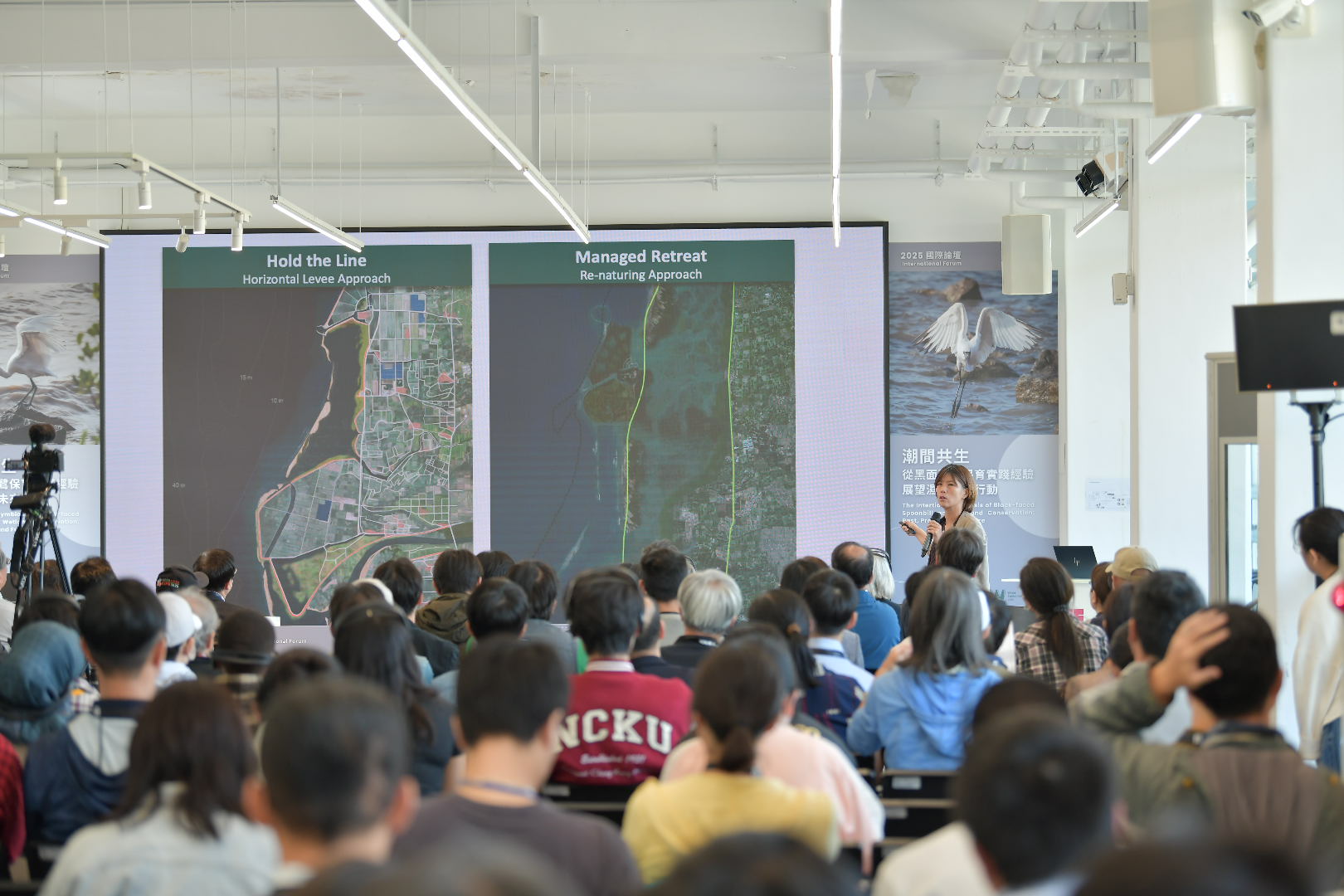
Professor Hsiao-Wen Wang stated that wetlands have become the frontline for managing climate risks along Taiwan’s southwest coast.
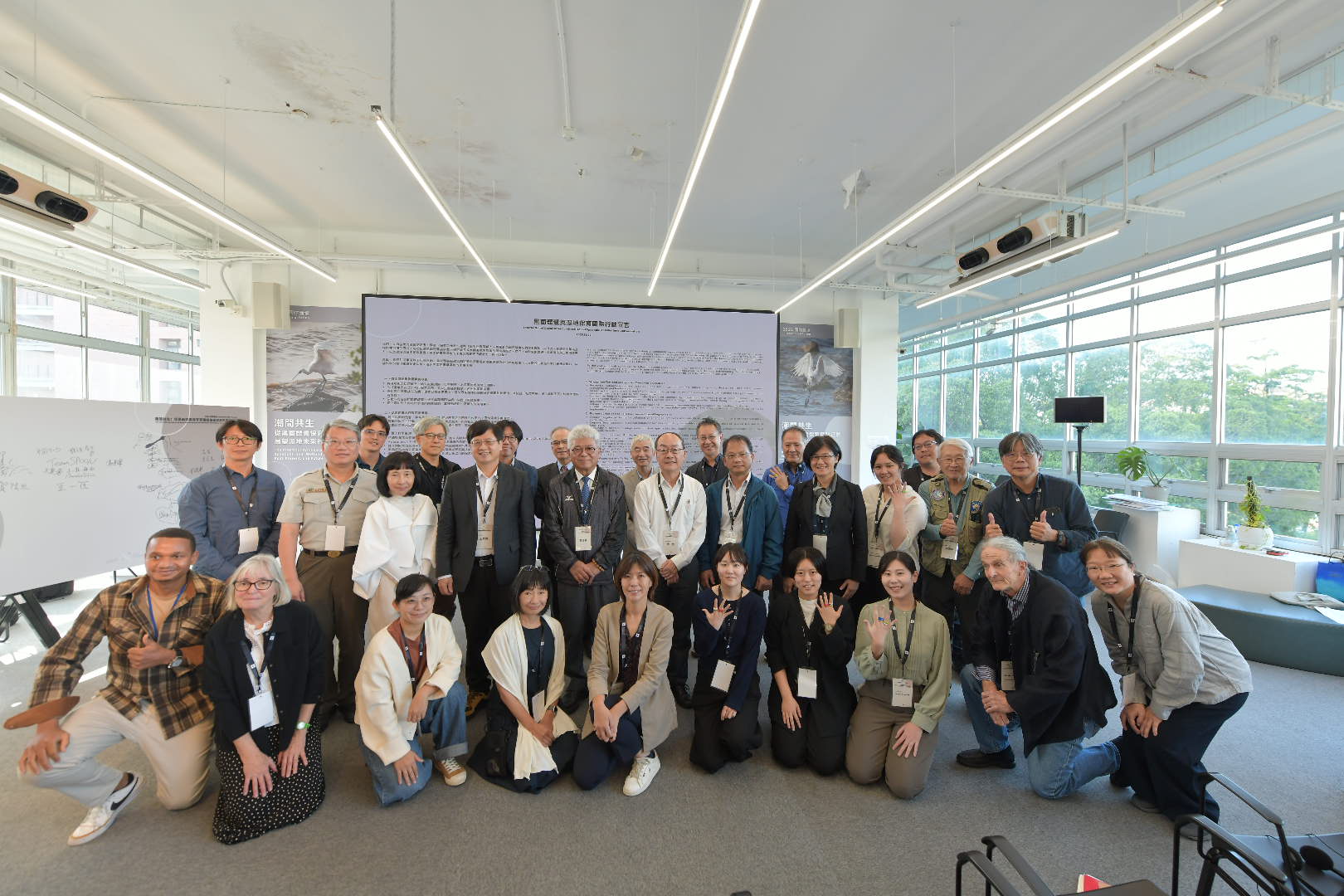
International and Local Experts Convene at the “Intertidal Coexistence: Future Wetland Actions through the Lens of Black-Faced Spoonbill Conservation” International Forum.