



SDG17
Cathay Financial Holdings’ 2025 Impact Investing Roadshow Arrives at NCKU to Explore Youth Influence and Sustainable Action
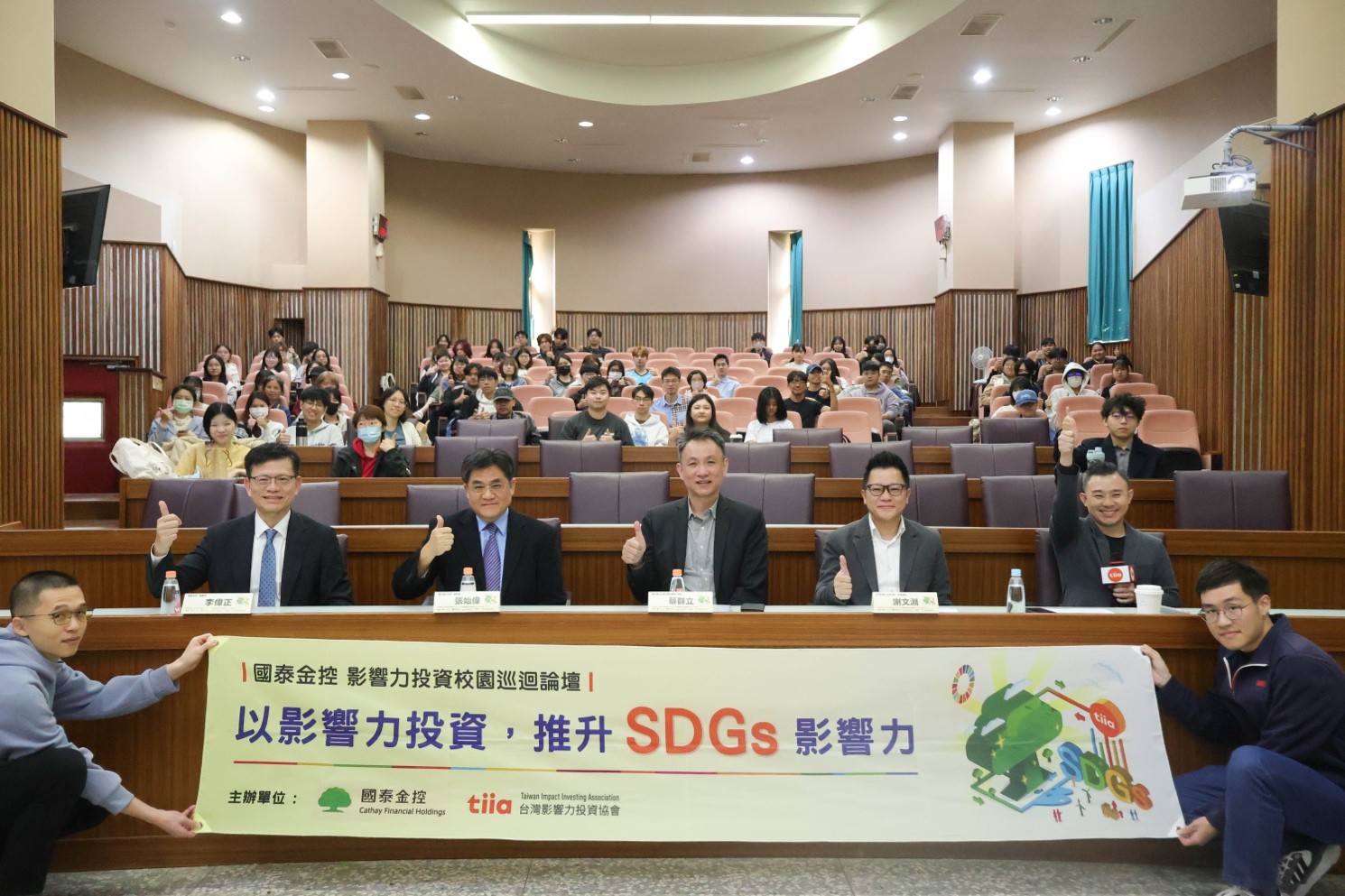
The “Cathay Financial Holdings 2025 Impact Investing Campus Roadshow – NCKU Session,” jointly organized by the College of Social Sciences at National Cheng Kung University (NCKU), Cathay Financial Holdings, and the Taiwan Impact Investing Association, was held on November 28 at the Large Lecture Hall on the 3rd floor of the North Wing of the College of Social Sciences. The event attracted more than one hundred faculty members and students. The forum centered on global and Taiwanese trends in impact investing, local practices, and future talent development, underscoring that the choices and actions of younger generations will be the driving force of a sustainable future.
NCKU Vice President Shih-Wei Chang (張始偉) opened the forum by expressing gratitude to the guests, speakers, and students for their participation. He noted that NCKU is honored to serve as a key platform for advancing impact investing and sustainability, providing an opportunity for interdisciplinary perspectives to converge on campus and generate positive momentum. Such exchanges help expand cycles of good while mitigating negative externalities, ultimately contributing to a more valuable future for society. Vice President Chang emphasized that the world today faces numerous social, environmental, and economic challenges, but “as long as we believe change is possible, we can become a force for change.” He affirmed that impact investing is not only a financial strategy but also a mindset combining ideals with responsibility. He encouraged young people to adopt a sustainability-driven approach to their future, take action to generate positive impact, and integrate financial literacy with social purpose to become a vital force moving the world forward.
Cathay SITE Chairman and NCKU Transportation Management alumnus (Class of ROC 76) Wei-Cheng Lee (李偉正) drew on more than 30 years of investment experience to reflect on the evolution of investment philosophy. He noted that the investment community has shifted from maximizing shareholder returns toward embracing corporate social responsibility, ESG, and impact investing. Chairman Li framed human progress as a continuous process of confronting problems and seeking solutions. He highlighted that global capital is increasingly concentrating in three transformative sectors: AI, quantum computing, and new energy, each set to shape the long-term future. The essence of impact investing, he stressed, is to amplify positive effects and mitigate negative ones, rather than pursuing personal gain alone. He called on young people to approach the future through a sustainability lens and to direct capital toward solving societal challenges.
Taiwan Impact Investing Association Executive Director Wen-Yuan Hsieh (謝文淵), whose career spans electronics, mathematics, finance, and social innovation, described his personal transition from pursuing individual achievement to creating social value through impact investing. He emphasized that genuine impact investing requires a willingness to relinquish part of one’s financial returns in exchange for greater social and environmental benefit. By presenting international and domestic cases, he illustrated how impact investing integrates business models with social missions to generate scalable impact. He encouraged students and future decision-makers to recognize that “impact investing is not merely a financial tool but a way of thinking and choosing what kind of legacy you want to leave for the world.”
A panel discussion, moderated by Executive Director Hsieh, featured Chairman Lee and NCKU College of Social Sciences Dean Chun-Li Tsai (蔡群立), who explored impact investing practice, measurement, and cross-sector collaboration.
Chairman Lee first outlined Cathay Financial Holdings’ initiatives in green finance since 2010, including support for Taiwan’s early solar and offshore wind energy projects and efforts to bolster corporate ESG capabilities. He underscored two core competencies required of future talent: continuous learning and cross-disciplinary integration.
Dean Tsai encouraged students to recognize their personal impact and stressed that “consumption is also a form of investment.” He noted that young people can promote sustainability through choices such as low-carbon building materials and green products. He urged students to participate in University Social Responsibility (USR) programs to cultivate empathy and social awareness and advocated for creating more supportive work and living environments. Dean Tsai also underscored the importance of interdisciplinary skills and global perspective, noting that even the most powerful AI must ultimately address human issues. Students should therefore develop AI literacy and basic programming as tools for cross-disciplinary communication, while also strengthening foreign language skills and understanding global geopolitics and sustainability governance.
In closing, the three speakers offered career advice for young people. Chairman Lee encouraged students to develop rapid learning ability, financial literacy, and proficiency in leveraging AI as an efficiency tool to meet future challenges. Dean Tsai emphasized the importance of self-directed learning and interpersonal engagement, advising students to treat supervisors, colleagues, and subordinates with empathy as a key ingredient of success beyond technical expertise. Executive Director Hsieh urged students to embrace risk, seize opportunities others may see as threats, and channel their expertise and judgment into careers that generate positive impact.
NCKU Vice President Shih-Wei Chang (張始偉) opened the forum by expressing gratitude to the guests, speakers, and students for their participation. He noted that NCKU is honored to serve as a key platform for advancing impact investing and sustainability, providing an opportunity for interdisciplinary perspectives to converge on campus and generate positive momentum. Such exchanges help expand cycles of good while mitigating negative externalities, ultimately contributing to a more valuable future for society. Vice President Chang emphasized that the world today faces numerous social, environmental, and economic challenges, but “as long as we believe change is possible, we can become a force for change.” He affirmed that impact investing is not only a financial strategy but also a mindset combining ideals with responsibility. He encouraged young people to adopt a sustainability-driven approach to their future, take action to generate positive impact, and integrate financial literacy with social purpose to become a vital force moving the world forward.
Cathay SITE Chairman and NCKU Transportation Management alumnus (Class of ROC 76) Wei-Cheng Lee (李偉正) drew on more than 30 years of investment experience to reflect on the evolution of investment philosophy. He noted that the investment community has shifted from maximizing shareholder returns toward embracing corporate social responsibility, ESG, and impact investing. Chairman Li framed human progress as a continuous process of confronting problems and seeking solutions. He highlighted that global capital is increasingly concentrating in three transformative sectors: AI, quantum computing, and new energy, each set to shape the long-term future. The essence of impact investing, he stressed, is to amplify positive effects and mitigate negative ones, rather than pursuing personal gain alone. He called on young people to approach the future through a sustainability lens and to direct capital toward solving societal challenges.
Taiwan Impact Investing Association Executive Director Wen-Yuan Hsieh (謝文淵), whose career spans electronics, mathematics, finance, and social innovation, described his personal transition from pursuing individual achievement to creating social value through impact investing. He emphasized that genuine impact investing requires a willingness to relinquish part of one’s financial returns in exchange for greater social and environmental benefit. By presenting international and domestic cases, he illustrated how impact investing integrates business models with social missions to generate scalable impact. He encouraged students and future decision-makers to recognize that “impact investing is not merely a financial tool but a way of thinking and choosing what kind of legacy you want to leave for the world.”
A panel discussion, moderated by Executive Director Hsieh, featured Chairman Lee and NCKU College of Social Sciences Dean Chun-Li Tsai (蔡群立), who explored impact investing practice, measurement, and cross-sector collaboration.
Chairman Lee first outlined Cathay Financial Holdings’ initiatives in green finance since 2010, including support for Taiwan’s early solar and offshore wind energy projects and efforts to bolster corporate ESG capabilities. He underscored two core competencies required of future talent: continuous learning and cross-disciplinary integration.
Dean Tsai encouraged students to recognize their personal impact and stressed that “consumption is also a form of investment.” He noted that young people can promote sustainability through choices such as low-carbon building materials and green products. He urged students to participate in University Social Responsibility (USR) programs to cultivate empathy and social awareness and advocated for creating more supportive work and living environments. Dean Tsai also underscored the importance of interdisciplinary skills and global perspective, noting that even the most powerful AI must ultimately address human issues. Students should therefore develop AI literacy and basic programming as tools for cross-disciplinary communication, while also strengthening foreign language skills and understanding global geopolitics and sustainability governance.
In closing, the three speakers offered career advice for young people. Chairman Lee encouraged students to develop rapid learning ability, financial literacy, and proficiency in leveraging AI as an efficiency tool to meet future challenges. Dean Tsai emphasized the importance of self-directed learning and interpersonal engagement, advising students to treat supervisors, colleagues, and subordinates with empathy as a key ingredient of success beyond technical expertise. Executive Director Hsieh urged students to embrace risk, seize opportunities others may see as threats, and channel their expertise and judgment into careers that generate positive impact.
The 2025 Impact Investing Campus Tour Forum at NCKU attracted over 100 faculty members and students.
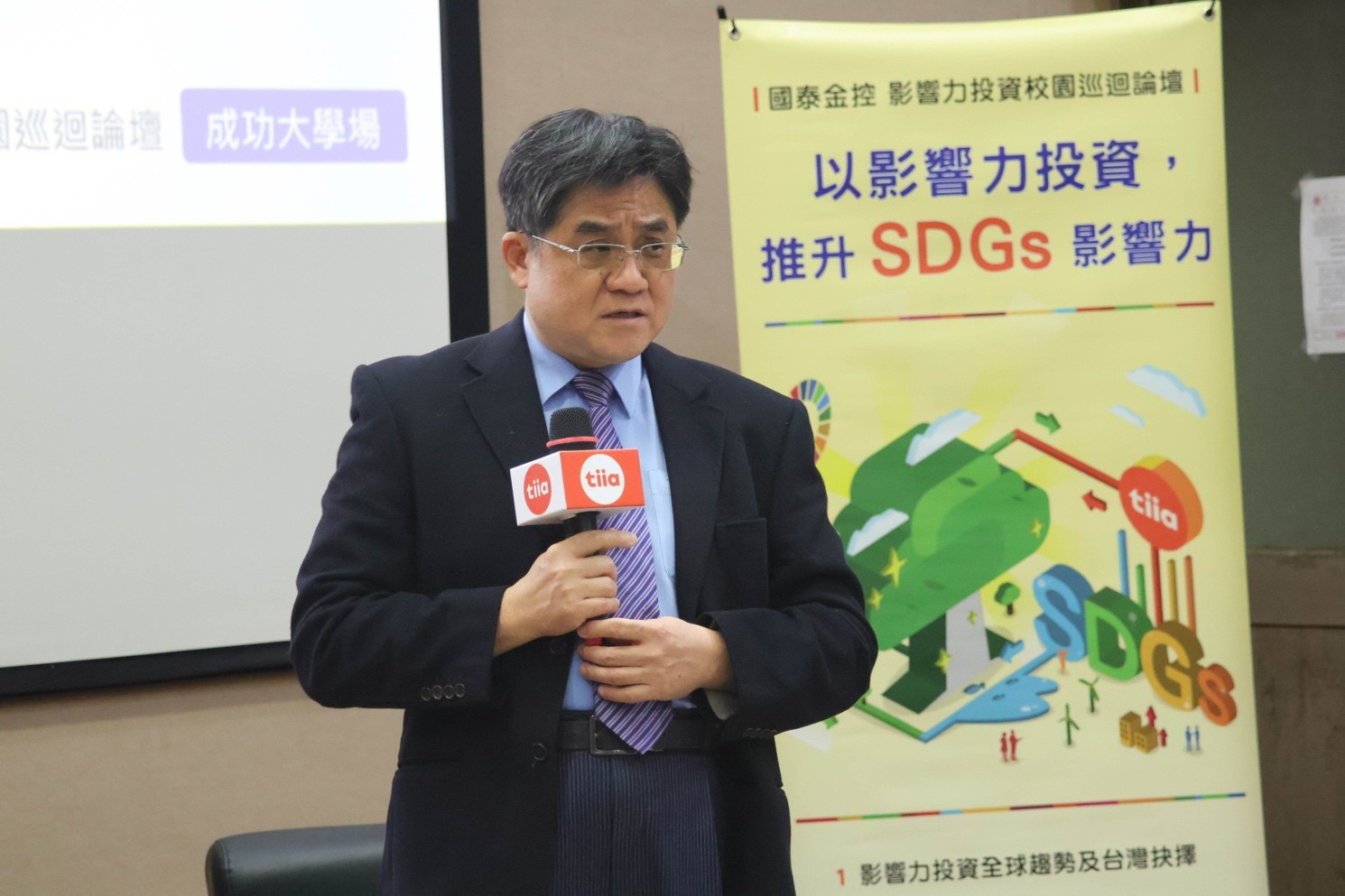
Vice President Shih-Wei Chang encouraged the younger generation to approach the future with a “sustainable mindset” and to take action to create a positive impact.
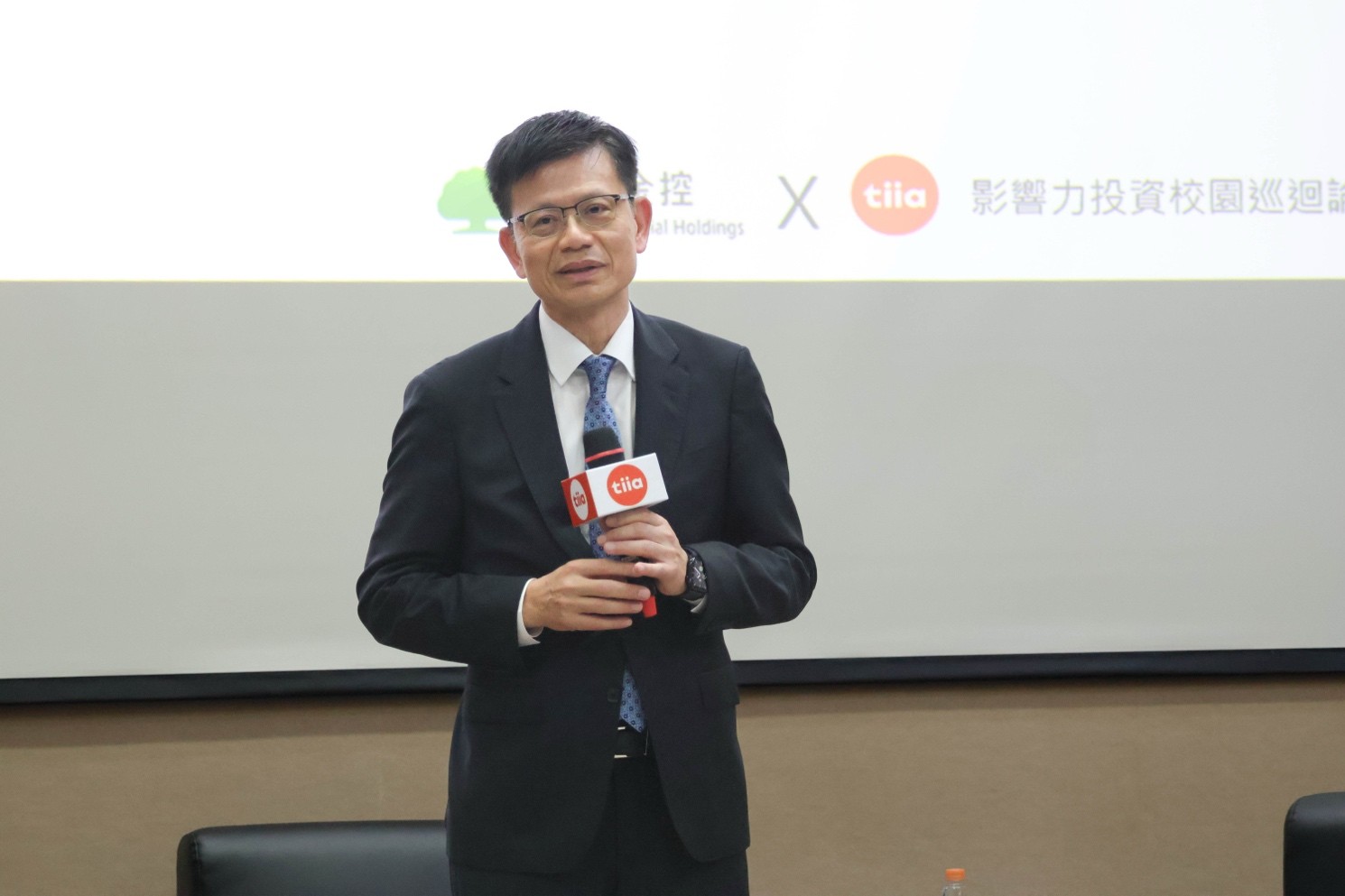
Wei-Cheng Lee, Chairman of Cathay Securities Investment Trust, noted that the core of impact investing lies in amplifying positive forces and mitigating negative impacts, rather than merely pursuing the maximization of personal gains.
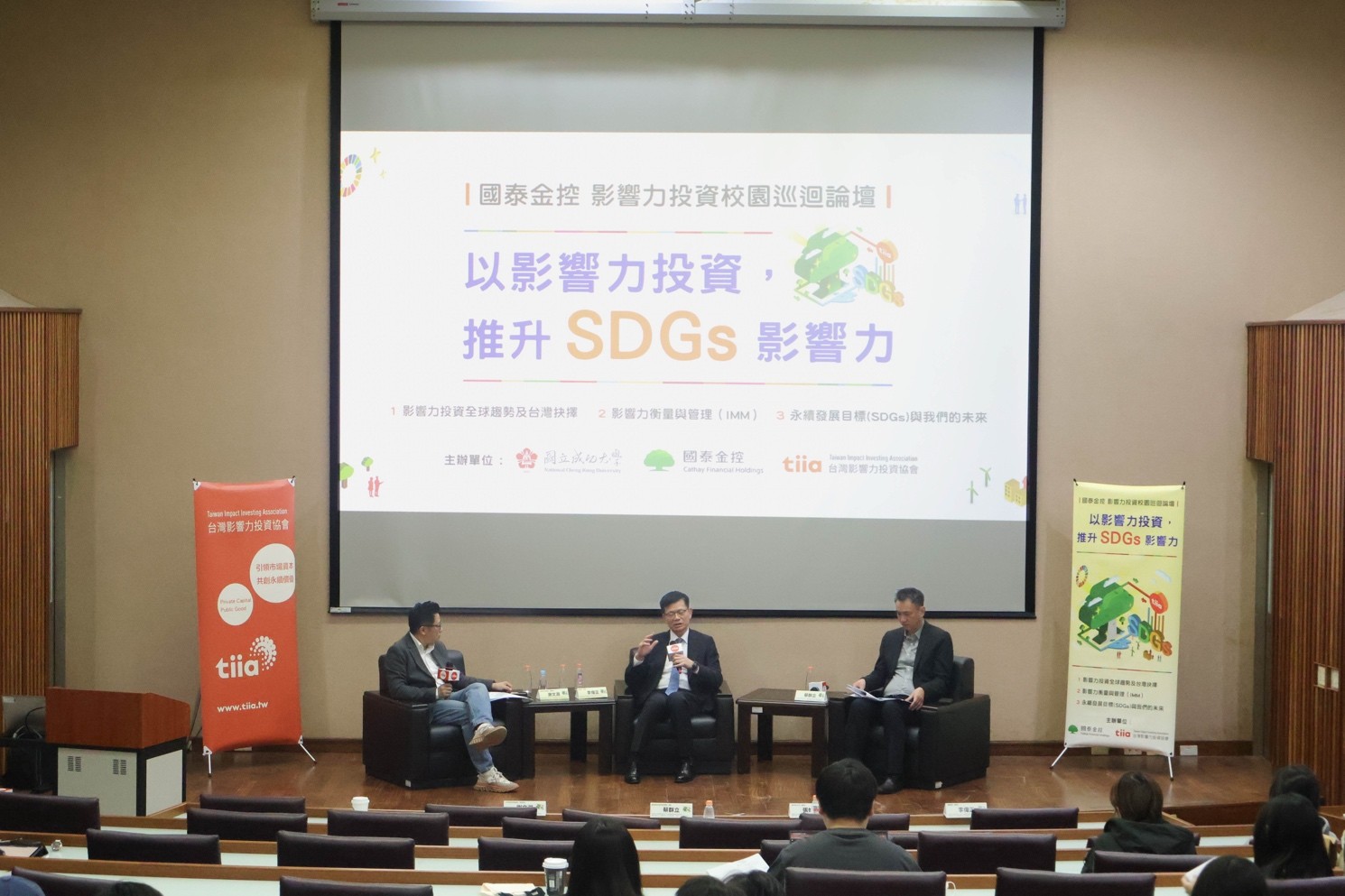
The panel concluded with speakers encouraging the audience, emphasizing that professional competence, interdisciplinary learning, interpersonal intelligence, and courage are all indispensable.