



SDG11
From Classroom to Stage: NCKU Theatre Curation Course Exhibition Gently Portrays Family Memories
The National Cheng Kung University (NCKU) College of Liberal Arts continues to advance the Higher Education Deep Cultivation Program through its Interdisciplinary Drama Credit Program. Under the project titled “Research on Diverse and Sustainable Teaching Practices in Performing Arts and Humanities (表演藝術跨域暨人文場域之多元永續教學實踐研究)”, the program, jointly organized by the Graduate Institute of Arts Research and the Master’s Program in Theatre Studies “Theatre Curation and Arts Administration”, presented the Semester 1, 114th Academic Year Course Exhibition, titled “Along the Doors of Memory — Gathering Three Generations of Love (沿著記憶門扉—拾起三代情)”. The physical exhibition ran from December 17 to 18, with a performance showcase held on December 18 (Thursday) from 10:30 a.m. to 12:00 p.m. at the Phoenix Tree Theatre, Kuang-Fu Campus. A virtual exhibition is also available online for viewing.
Titled “Along the Doors of Memory — Gathering Three Generations of Love”, the exhibition integrated dance, music, and curatorial aesthetics, inviting audiences to gently open the doors of family memory and experience emotions spanning three generations. It sought to convey the power of art as it flows slowly and tenderly between eras and within familial contexts.
The event was attended by distinguished guests from both on- and off-campus, including NCKU College of Liberal Arts Dean Wen-Song Chen (陳文松), College of Social Sciences Dean Chun-Li Tsai (蔡群立), Arts Research Institute Professor Fang-Hui Chu (朱芳慧), and representatives from industry and academic programs such as Yi-Ming Yang (楊益銘), Associate Manager of Dacheng Great Wall Co., Ltd., Yu-Chen Shu (舒宇宸), Director of NCKU Master’s Program in Intelligent Computing, and Chi-Chang Chen (陳志昌), Executive Director of Exploring Tainan Office, along with several students’ family members, all witnessing the students’ achievements.
Dean Wen-Song Chen emphasized that the exhibition centered on the integration of theory and practice. Through both digital and physical curatorial approaches, students were guided to intertwine curatorial thinking, performance practice, and creative reflection, gradually accumulating their own growth trajectories as creators. The works, starting from reflections on family memories, are imbued with profound emotion and humanistic depth, fully demonstrating NCKU’s long-term commitment to sustainable teaching practices in the humanities and arts.
The exhibition, with a creative focus on “family memory,” involved curatorial members Yi-Hsuan Hong (洪苡軒), Ying-Chi Huang (黃映綺), Kuo-Lun Huang (黃國倫), Yi-Chen Yang (楊宜真), Si-Yu Lu (盧思羽), Tzu-Chia Peng (彭姿嘉), Li-Rong Kuo (郭俐瑢), Si-Ting Chen (陳思婷), Pei-Chen Tsai (蔡佩蓁), Chin-Yu Tsai (蔡瑾瑜), Yu-Ching Lan (籃昱晴), Chi-En Cheng (鄭奇恩), Wan-Yi Chang (張琬旖), and Hong-Yu Yang (楊宏裕). The works drew from the most tender fragments of personal life, transforming images and emotions emerging from the gaps of time into shared experiences for the audience. They also served as an important process for students to reflect on themselves and engage in dialogue with their families.
Professor Fang-Hui Chu of the Arts Research Institute noted that students combined meticulous arts administration planning, practical theatre performance skills, deep curatorial thinking, and contemporary digital media expression, allowing curatorial and performance elements to flow naturally on stage. The overall performance demonstrated high coordination between front- and backstage efforts, leading audiences on a cross-disciplinary journey integrating theatre, musical rhythm, dance, and curatorial aesthetics, evoking fleeting moments of light and warmth in one’s life.
The exhibition featured 15 selected works, combining physical curation and digital translation to transform “family memory” into perceptible, resonant artistic experiences. Instructor Wei-Chien Ma (馬薇茜) explained that the works included live music and dance performances alongside visual media, allowing the audience to traverse between virtual and real, and to experience being gently embraced by the life stories of others. The exhibition showcased the new generation of creators responding to life experiences and social emotions through art.
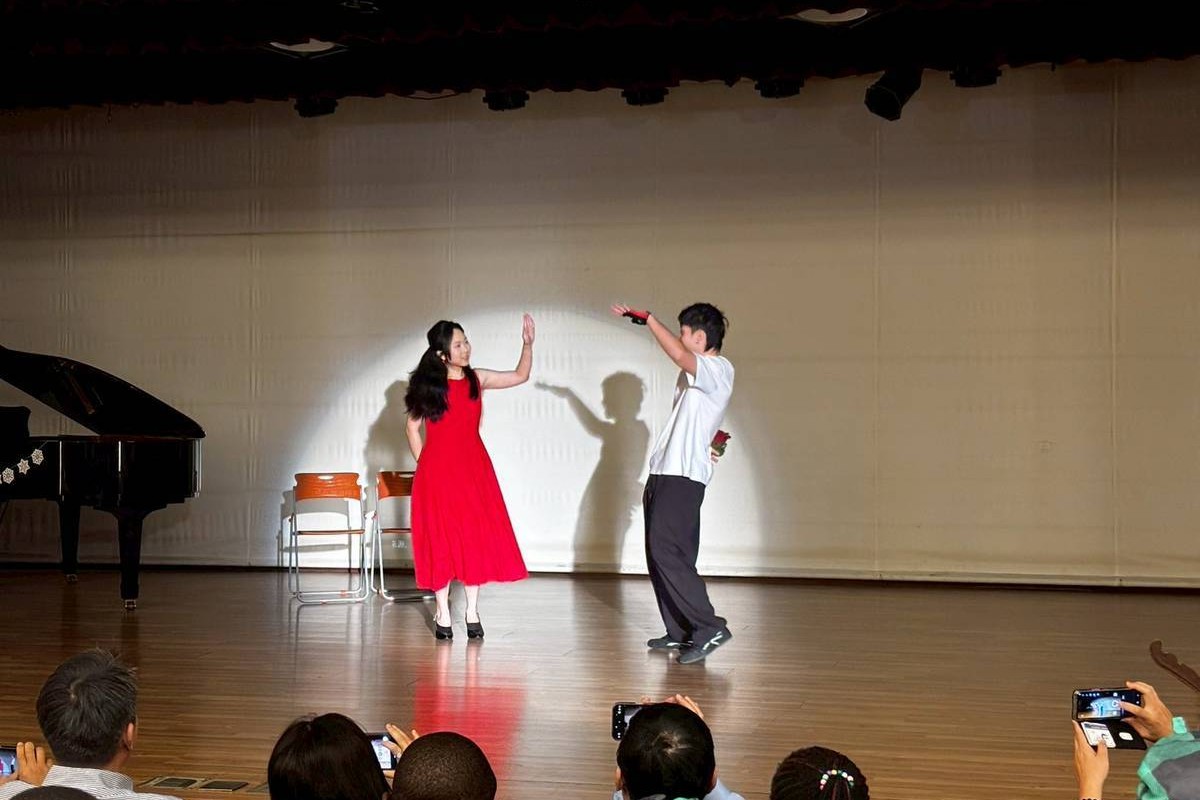
A highlight of the exhibition was the dance drama “The Gaze Behind (身後的目光)”. Using bodily expression, students posed the question: “If life is an irreversible solo dance, have we ever looked back at the gaze behind us?” The piece used four distinct dance styles to link four life stages of the protagonist, from youth to maturity. In the pursuit of dreams, the mother embodies gentle care, while the father’s strictness becomes an inescapable norm; in moments of romantic failure or professional uncertainty, the gaze from home can be both a restraining shackle and a guiding lighthouse. This work is a physical dialogue about growth, rebellion, and reconciliation, dedicated to every audience member on their journey or preparing to return home.
Additionally, the exhibition collaborated with NCKU’s College of Social Sciences, inviting children from Lesotho, Africa, to attend and experience the performance. Dean Chun-Li Tsai of the College of Social Sciences stated that art performances promote cross-cultural exchange and understanding, allowing the theatre to serve as a bridge connecting the world while concretely implementing the university’s social responsibility.
Titled “Along the Doors of Memory — Gathering Three Generations of Love”, the exhibition integrated dance, music, and curatorial aesthetics, inviting audiences to gently open the doors of family memory and experience emotions spanning three generations. It sought to convey the power of art as it flows slowly and tenderly between eras and within familial contexts.
The event was attended by distinguished guests from both on- and off-campus, including NCKU College of Liberal Arts Dean Wen-Song Chen (陳文松), College of Social Sciences Dean Chun-Li Tsai (蔡群立), Arts Research Institute Professor Fang-Hui Chu (朱芳慧), and representatives from industry and academic programs such as Yi-Ming Yang (楊益銘), Associate Manager of Dacheng Great Wall Co., Ltd., Yu-Chen Shu (舒宇宸), Director of NCKU Master’s Program in Intelligent Computing, and Chi-Chang Chen (陳志昌), Executive Director of Exploring Tainan Office, along with several students’ family members, all witnessing the students’ achievements.
Dean Wen-Song Chen emphasized that the exhibition centered on the integration of theory and practice. Through both digital and physical curatorial approaches, students were guided to intertwine curatorial thinking, performance practice, and creative reflection, gradually accumulating their own growth trajectories as creators. The works, starting from reflections on family memories, are imbued with profound emotion and humanistic depth, fully demonstrating NCKU’s long-term commitment to sustainable teaching practices in the humanities and arts.
The exhibition, with a creative focus on “family memory,” involved curatorial members Yi-Hsuan Hong (洪苡軒), Ying-Chi Huang (黃映綺), Kuo-Lun Huang (黃國倫), Yi-Chen Yang (楊宜真), Si-Yu Lu (盧思羽), Tzu-Chia Peng (彭姿嘉), Li-Rong Kuo (郭俐瑢), Si-Ting Chen (陳思婷), Pei-Chen Tsai (蔡佩蓁), Chin-Yu Tsai (蔡瑾瑜), Yu-Ching Lan (籃昱晴), Chi-En Cheng (鄭奇恩), Wan-Yi Chang (張琬旖), and Hong-Yu Yang (楊宏裕). The works drew from the most tender fragments of personal life, transforming images and emotions emerging from the gaps of time into shared experiences for the audience. They also served as an important process for students to reflect on themselves and engage in dialogue with their families.
Professor Fang-Hui Chu of the Arts Research Institute noted that students combined meticulous arts administration planning, practical theatre performance skills, deep curatorial thinking, and contemporary digital media expression, allowing curatorial and performance elements to flow naturally on stage. The overall performance demonstrated high coordination between front- and backstage efforts, leading audiences on a cross-disciplinary journey integrating theatre, musical rhythm, dance, and curatorial aesthetics, evoking fleeting moments of light and warmth in one’s life.
The exhibition featured 15 selected works, combining physical curation and digital translation to transform “family memory” into perceptible, resonant artistic experiences. Instructor Wei-Chien Ma (馬薇茜) explained that the works included live music and dance performances alongside visual media, allowing the audience to traverse between virtual and real, and to experience being gently embraced by the life stories of others. The exhibition showcased the new generation of creators responding to life experiences and social emotions through art.
A highlight of the exhibition was the dance drama “The Gaze Behind (身後的目光)”. Using bodily expression, students posed the question: “If life is an irreversible solo dance, have we ever looked back at the gaze behind us?” The piece used four distinct dance styles to link four life stages of the protagonist, from youth to maturity. In the pursuit of dreams, the mother embodies gentle care, while the father’s strictness becomes an inescapable norm; in moments of romantic failure or professional uncertainty, the gaze from home can be both a restraining shackle and a guiding lighthouse. This work is a physical dialogue about growth, rebellion, and reconciliation, dedicated to every audience member on their journey or preparing to return home.
Additionally, the exhibition collaborated with NCKU’s College of Social Sciences, inviting children from Lesotho, Africa, to attend and experience the performance. Dean Chun-Li Tsai of the College of Social Sciences stated that art performances promote cross-cultural exchange and understanding, allowing the theatre to serve as a bridge connecting the world while concretely implementing the university’s social responsibility.
The NCKU “Theater Curation and Arts Administration” course showcased its student works under the theme Along the Doors of Memory — Picking Up Three Generations of Affection, inviting the audience to gently open the doors of family memories alongside the creators and experience the tender power of art flowing between eras and family life.
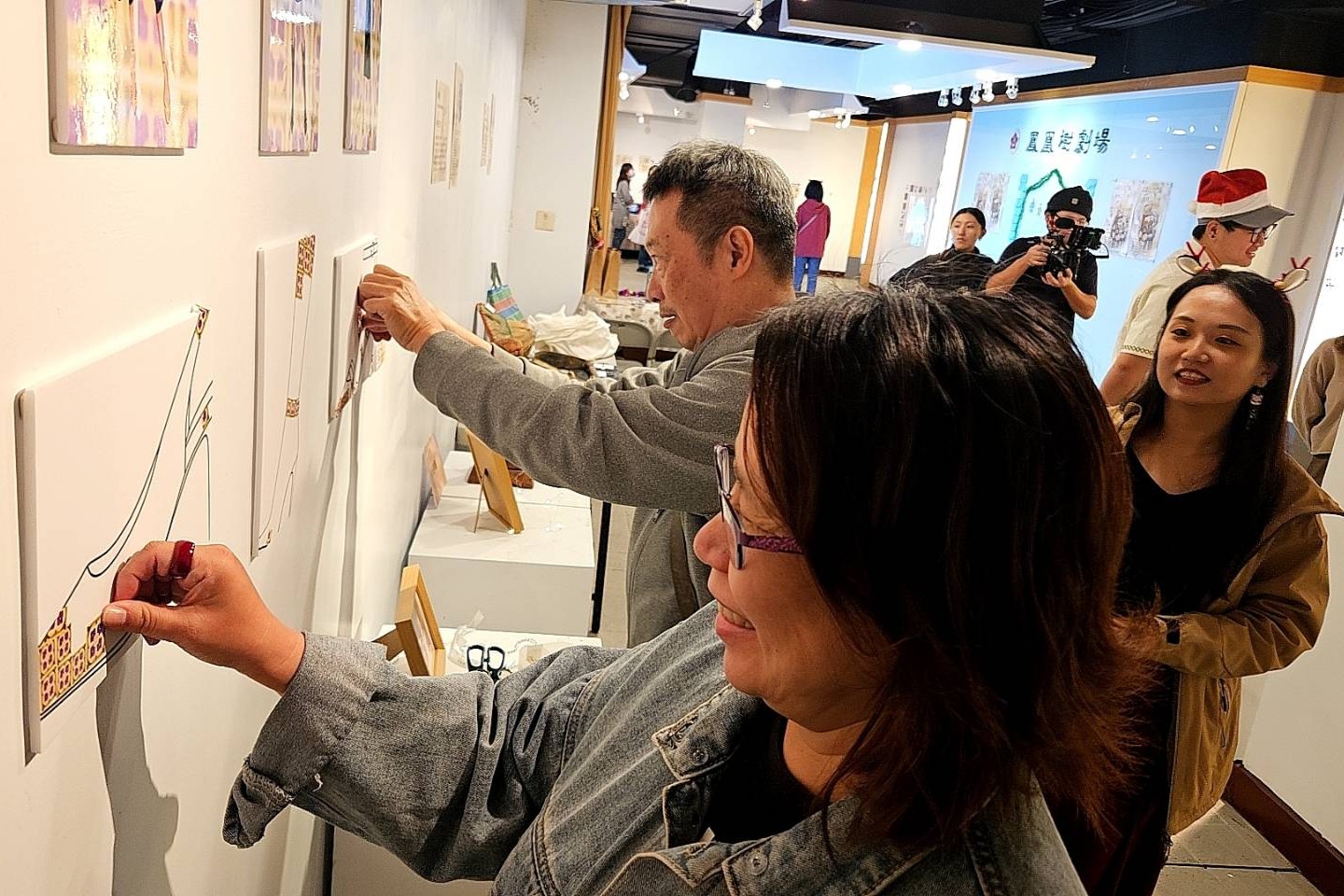
The exhibition integrated dance, music, and curatorial aesthetics, attracting numerous distinguished guests from both on and off campus; many students’ family members also attended to witness the students’ learning achievements.
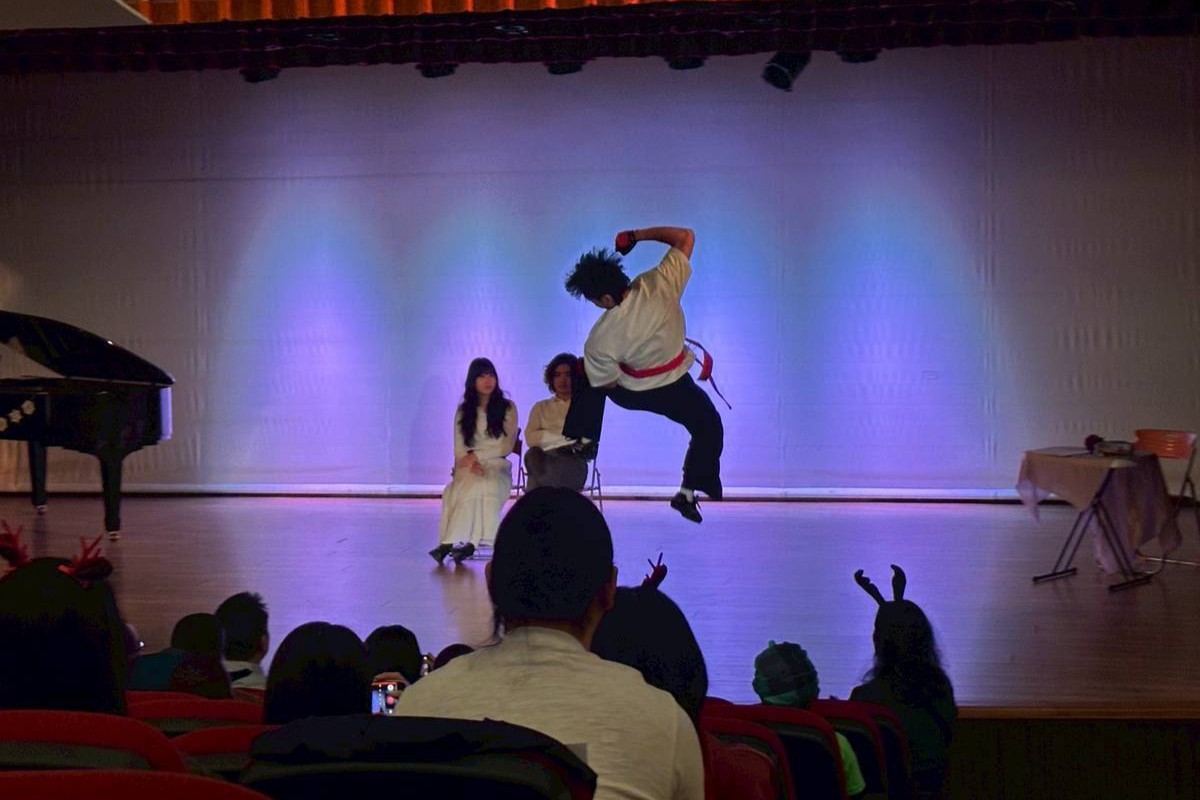
The overall exhibition performance showcased high-level coordination between the front stage and backstage, earning praise from faculty and instructors.
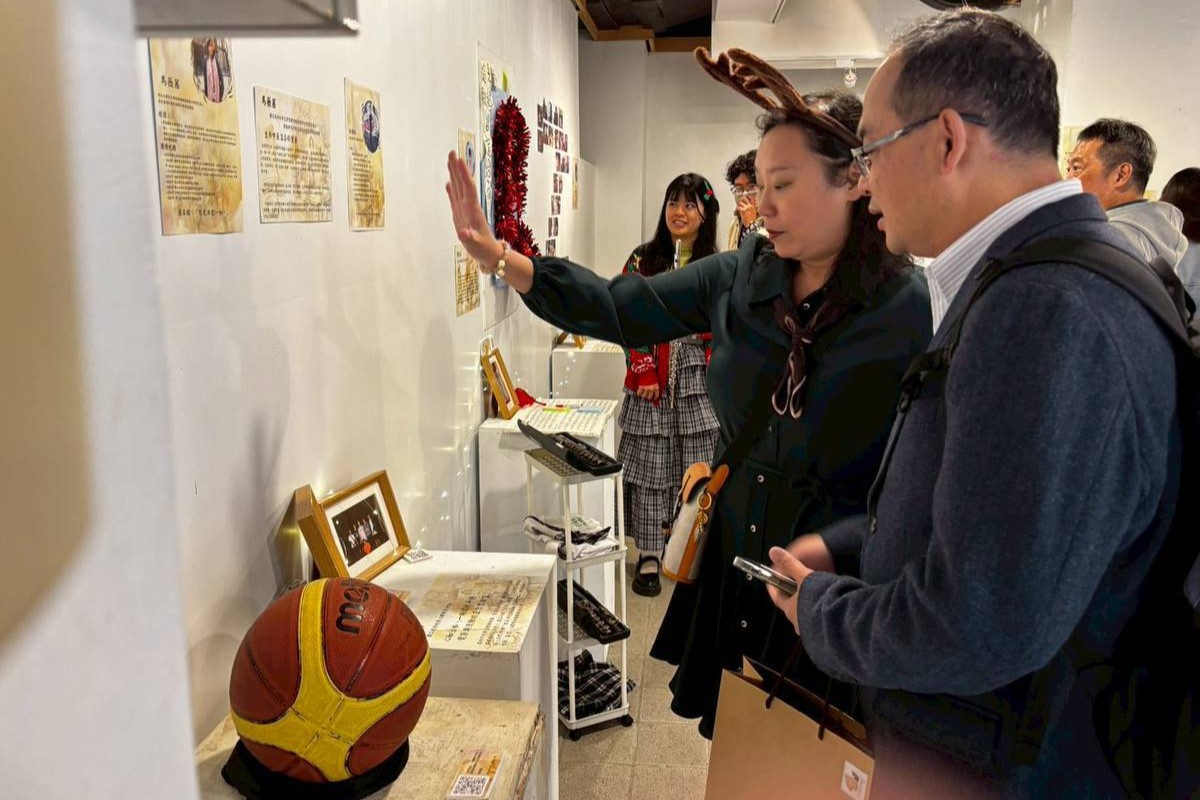
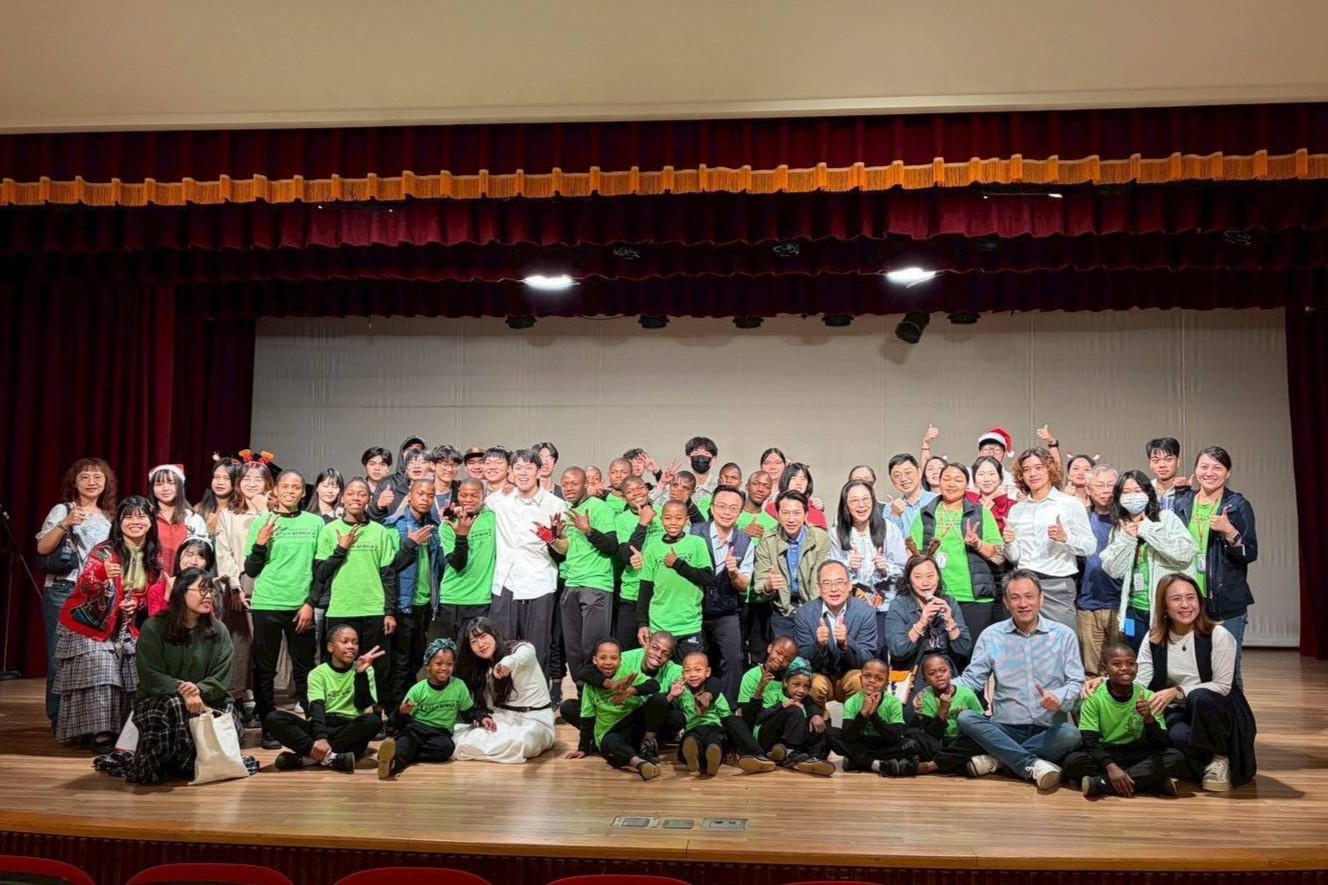
This exhibition also collaborated with NCKU’s College of Social Sciences, specially inviting 30 children from Lesotho, Africa, to attend and experience the theater performance.
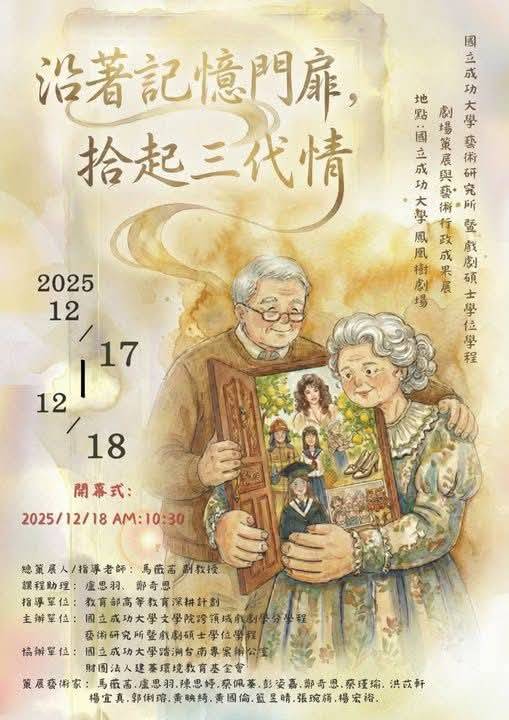
Exhibition Poster
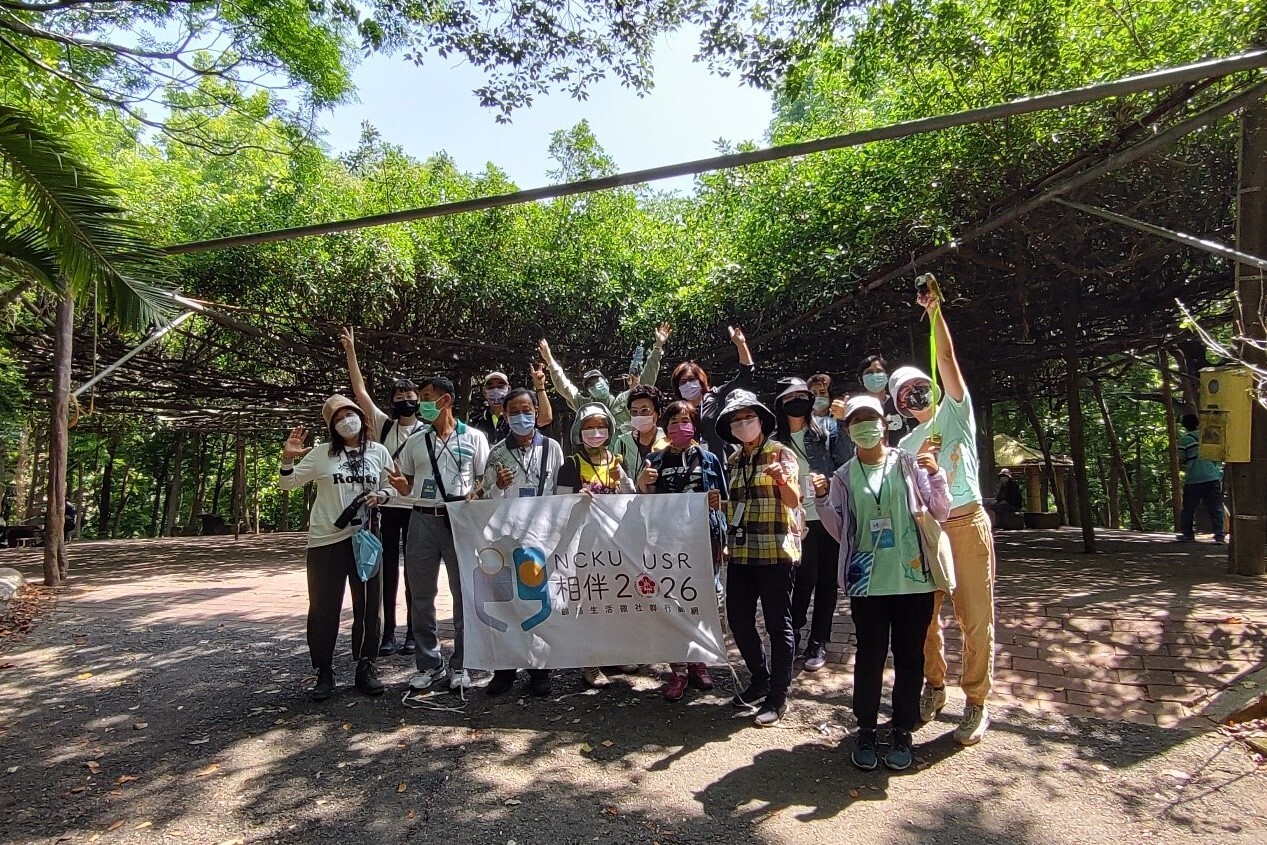
SDG11NCKU's Four Projects Approved in the Ministry of Education's Third Phase (2023-2024) USR Implementation Plan.
View more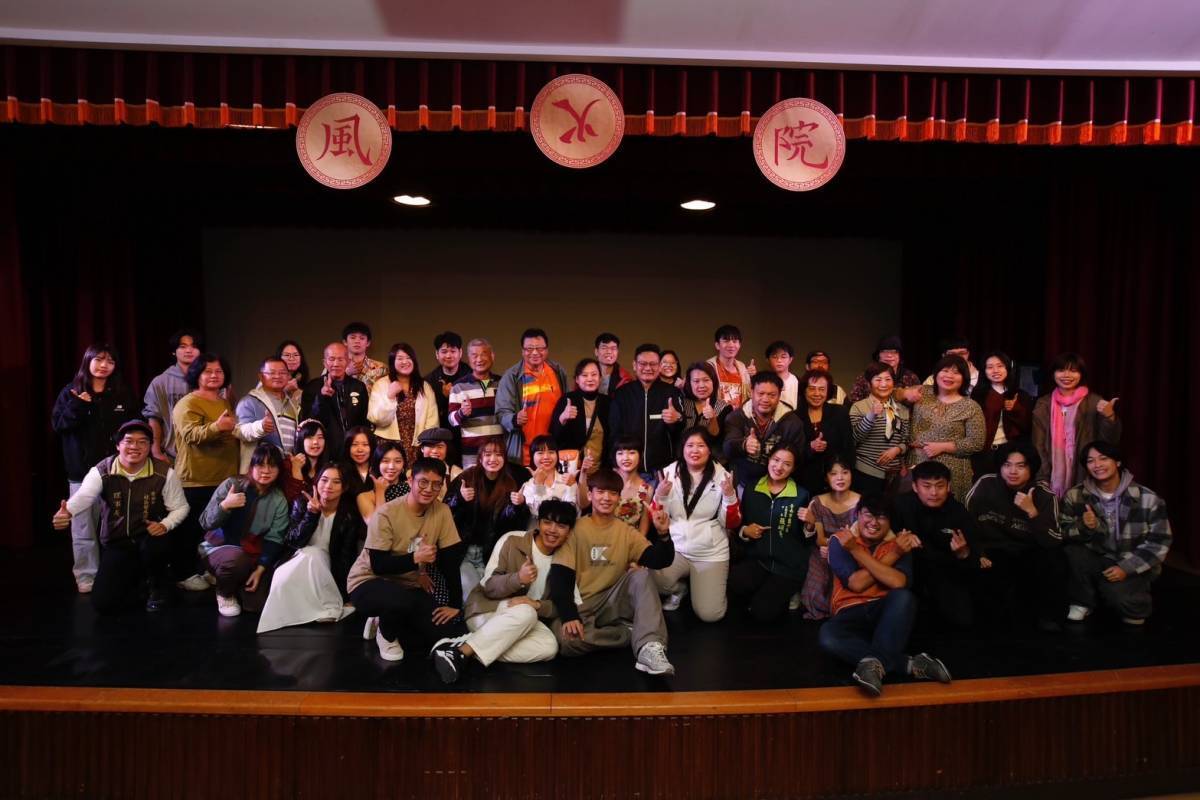
SDG11"Eternal Vitality": NCKU's Interdisciplinary Musical Showcases Social Responsibility, Preserves Art, and Promotes Sustainability
View more