



SDG13
NCKU Leads Global Satellite–Ground Integration Project to Build a Biodiversity Carbon Credit Verification System
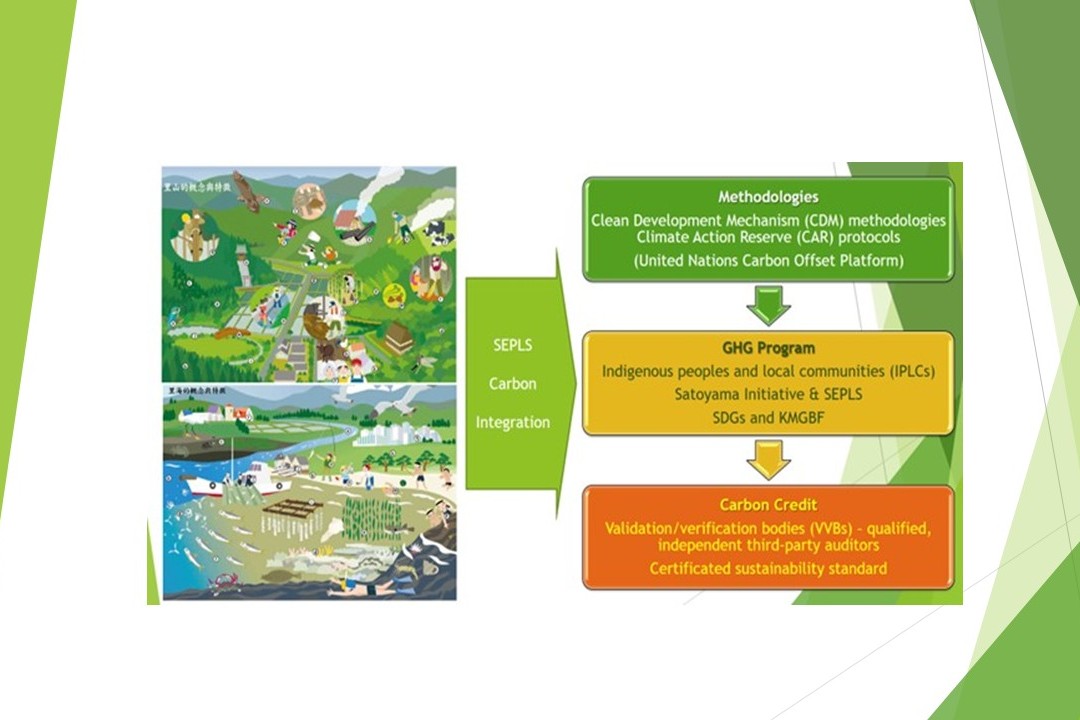
The “System-of-Systems Carbon Emissions Management and Certification Scheme,” led by Professor Yen-Hsun Su (蘇彥勳教授) of the Department of Materials Science and Engineering at National Cheng Kung University (NCKU), has officially been launched. At its core, the scheme integrates satellite–terrestrial (space-ground) monitoring with artificial intelligence to establish a biodiversity carbon credit verification system. The verified carbon credits generated through this system have been listed on the Singapore carbon exchanges. Originating from Taiwan, this verification model demonstrates the integration of space technology and sustainable governance, providing a verifiable and equitable pathway for global climate action.
Traditional monitoring of natural carbon sinks has long been constrained by high labor costs, insufficient sampling density, and difficulty in conducting long-term tracking. The NCKU-led System-of-Systems scheme enables precise monitoring of soil carbon sinks from space. Using satellite remote sensing imagery provided by Taiwan’s National Space Organization (NSPO), combined with AI and machine-learning models developed by NCKU and Academia Sinica, as well as molecular spectroscopy simulations contributed by Professor George C. Schatz of Northwestern University (USA), the team can accurately estimate the status of the terrestrial organic carbon cycle. This approach significantly reduces the need for dense on-site sampling and lowers monitoring costs, while enabling large-scale measurement, long-term tracking, methodological transparency, and publicly verifiable data.
Dr. Shu-Mei Wang (王淑美副教授), Associate Professor in the Department of Bio-Industry Communication and Development at National Taiwan University and a member of the research team, noted that satellite–ground integration allows natural carbon sinks to overcome technical barriers to entering international markets through lower costs and transparent data.
Professor Su further explained that the scheme has received formal authorization from the International Partnership for the Satoyama Initiative (IPSI) Committee under the United Nations University Institute for the Advanced Study of Sustainability (UNU-IAS), giving it strong international credibility. The biodiversity carbon credits certified under the scheme have been officially listed and are now traded on the AirCarbon Exchange (ACX) and Climate Impact X (CIX) in Singapore.
In practical field implementation, NCKU has partnered with Dr. Cheng-Piao Yen (顏正標博士) of the Tainan New Agriculture Cooperative’s (台南新農業合作社) Crop Carbon Sink Innovation Service Station to conduct sampling and analysis. The NSPO Education Office and imaging teams also collaborated to verify the feasibility of integrating satellite remote sensing with ground data in rural and Satoyama landscapes.
Carbon credits verified through this system are no longer merely instruments for corporate emissions offsetting; instead, they are designed to deliver tangible benefits to farmers and Indigenous communities who steward the land. Space technology thus becomes a key bridge for sustainable governance. This model represents a practical example of the kind of climate action tool emphasized by the United Nations Framework Convention on Climate Change (UNFCCC) — one that simultaneously advances efficiency, equity, and credibility.
Traditional monitoring of natural carbon sinks has long been constrained by high labor costs, insufficient sampling density, and difficulty in conducting long-term tracking. The NCKU-led System-of-Systems scheme enables precise monitoring of soil carbon sinks from space. Using satellite remote sensing imagery provided by Taiwan’s National Space Organization (NSPO), combined with AI and machine-learning models developed by NCKU and Academia Sinica, as well as molecular spectroscopy simulations contributed by Professor George C. Schatz of Northwestern University (USA), the team can accurately estimate the status of the terrestrial organic carbon cycle. This approach significantly reduces the need for dense on-site sampling and lowers monitoring costs, while enabling large-scale measurement, long-term tracking, methodological transparency, and publicly verifiable data.
Dr. Shu-Mei Wang (王淑美副教授), Associate Professor in the Department of Bio-Industry Communication and Development at National Taiwan University and a member of the research team, noted that satellite–ground integration allows natural carbon sinks to overcome technical barriers to entering international markets through lower costs and transparent data.
Professor Su further explained that the scheme has received formal authorization from the International Partnership for the Satoyama Initiative (IPSI) Committee under the United Nations University Institute for the Advanced Study of Sustainability (UNU-IAS), giving it strong international credibility. The biodiversity carbon credits certified under the scheme have been officially listed and are now traded on the AirCarbon Exchange (ACX) and Climate Impact X (CIX) in Singapore.
In practical field implementation, NCKU has partnered with Dr. Cheng-Piao Yen (顏正標博士) of the Tainan New Agriculture Cooperative’s (台南新農業合作社) Crop Carbon Sink Innovation Service Station to conduct sampling and analysis. The NSPO Education Office and imaging teams also collaborated to verify the feasibility of integrating satellite remote sensing with ground data in rural and Satoyama landscapes.
Carbon credits verified through this system are no longer merely instruments for corporate emissions offsetting; instead, they are designed to deliver tangible benefits to farmers and Indigenous communities who steward the land. Space technology thus becomes a key bridge for sustainable governance. This model represents a practical example of the kind of climate action tool emphasized by the United Nations Framework Convention on Climate Change (UNFCCC) — one that simultaneously advances efficiency, equity, and credibility.
The System-of-Systems framework sets a new model for mutual benefits among Indigenous communities, ecosystems, and carbon credits, aligning with the United Nations Satoyama Initiative concept.
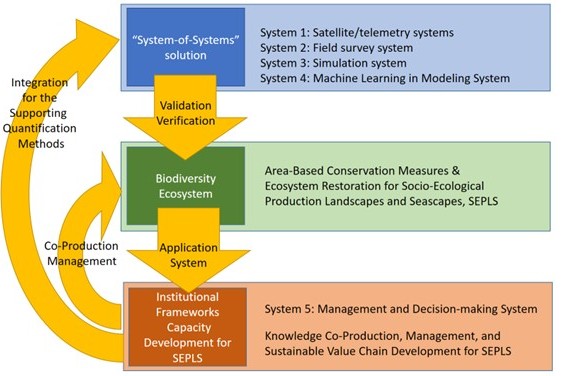
The System-of-Systems framework sets a new model for mutual benefits among Indigenous communities, ecosystems, and carbon credits, aligning with the United Nations Satoyama Initiative concept.