



SDG13
NCKU’s “Satoyama Mace Initiative” Develops the World’s First SEPLS-Based Biodiversity Carbon Sink Methodology
National Cheng Kung University (NCKU) continues to deepen its academic and practical influence in the fields of global sustainability and climate action. Led by Professor Yen-Hsun Su, the NCKU research team officially received authorization in 2024 from the United Nations University Institute for the Advanced Study of Sustainability (UNU-IAS) under the International Partnership for the Satoyama Initiative (IPSI) to launch the Satoyama Mace Initiative (SMI). The initiative is currently one of the very few UN-supported international collaborative projects worldwide that simultaneously integrates biodiversity conservation, Socio-Ecological Production Landscapes and Seascapes (SEPLS), and high-integrity carbon sink mechanisms. Anchored in the Satoyama–Satoumi philosophy, SMI seeks to build a bridge between local governance and global sustainability.
Rooted in the sustainable development principles of the Satoyama–Satoumi landscape systems, the “Mace” symbolizes local communities’ knowledge sovereignty, governance capacity, and cultural dignity. The initiative is committed to integrating nature-based carbon sinks, biodiversity conservation, land culture, and community economies into a unified platform for sustainable practice and carbon credit systems that are locally grounded yet aligned with international standards. In doing so, SMI responds directly to the core objectives of the Paris Agreement and the Kunming–Montreal Global Biodiversity Framework (KMGBF).
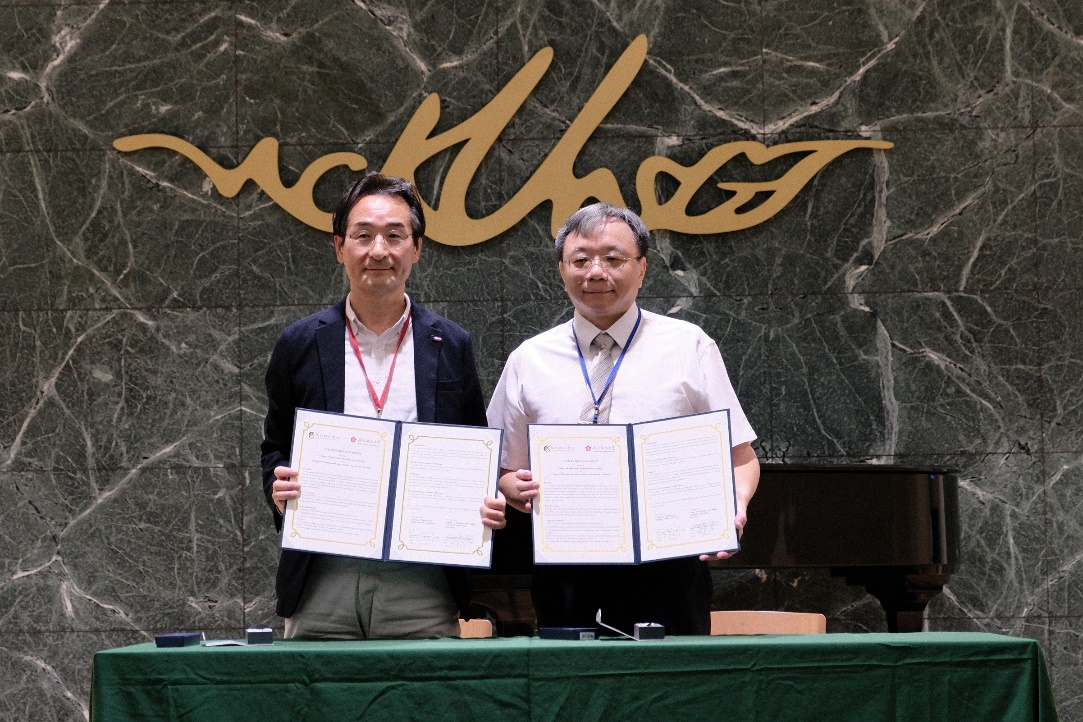
The initiative is led by NCKU and formally authorized by UNU-IAS/IPSI, making it one of the pioneering cases within the UN system that institutionalizes the linkage between SEPLS and carbon market mechanisms, while also complying with UNFCCC climate action frameworks and multilateral participation principles. In February 2025, NCKU officially launched the Satoyama Mace Initiative Platform, with representatives from UNU-IAS and the Institute for Global Environmental Strategies (IGES), Japan, presiding over the inauguration ceremony in Taiwan. This milestone marked Taiwan’s pivotal role in SEPLS-based carbon sink practices and international cooperation, as well as the completion of the first batch of SEPLS carbon methodologies.
Under this platform, the NCKU team collaborated with UN system agencies including UNFCCC, UNEP, and UNDP, along with academic and field experts from nine countries, to complete the world’s first reviews and approvals of biodiversity-based carbon sink methodologies centered on SEPLS. These methodologies comply with international standards such as ISO 14064-2 and ISO 14065, and incorporate the principles of CDM and CAR methodologies. They establish a highly scientific, transparent, and scalable MRV (Monitoring, Reporting, and Verification) framework.
The first approved methodologies cover key areas such as organic agricultural resource cycling, biochar applications, crop carbon sequestration, rotational landscape systems, wetland and seagrass restoration, and green hydrogen transition. Supported by a modular MRV system, they ensure cross-project integration and avoid double counting, laying a critical technical foundation for implementing carbon credit systems across SEPLS landscapes globally.
To further enhance MRV credibility, NCKU has partnered with the Taiwan Space Agency (TASA), integrating satellite remote sensing, geospatial analytics, ground measurements, and system modeling to develop carbon sink monitoring frameworks suitable for agricultural and natural landscapes. These technologies can be widely applied to terraced fields, wetlands, forest-understory economies, and coastal ecosystems, strengthening the international credibility of carbon MRV through space-based and remote sensing technologies. Through the UNU-IAS platform, these results will be promoted internationally, highlighting Taiwan’s key contributions to high-integrity carbon sink technologies.
In terms of institutional and market integration, carbon credits generated under the Satoyama Mace Initiative have now been officially recognized and listed on major international carbon trading platforms, including AirCarbon Exchange (ACX) and Climate Impact X (CIX) in Singapore. These credits are now tradable on the global voluntary carbon market as internationally recognized sustainability-grade assets. This milestone signifies that biodiversity-based, landscape-oriented climate action has successfully entered market-based climate finance systems—balancing ecological integrity, social equity, and Indigenous and local community revitalization. Taiwan’s landscape-based carbon sinks have officially gone global.
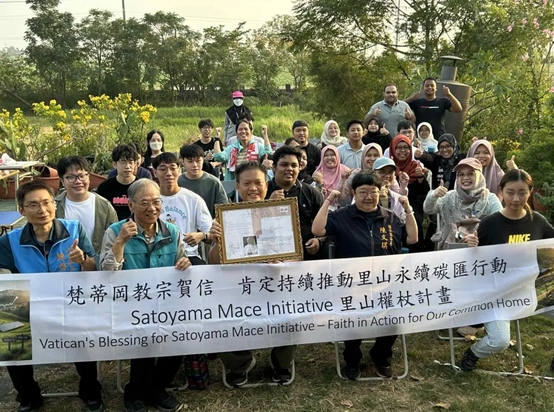
Notably, the Satoyama Mace Initiative has recently received high-level recognition from the Vatican. After the NCKU team submitted documentation of the initiative’s results, Pope Leo XIV conveyed his appreciation and blessings through the Secretariat of State, affirming the team’s efforts in sustainable carbon sinks and the long-term development of Indigenous and local communities. Archbishop Edgar Peña Parra, Substitute for General Affairs of the Secretariat of State, also expressed that the Pope would keep the team’s work in his prayers. This response is widely regarded as a profound moral and humanistic endorsement of SMI’s core values of ecological justice, care for the poor, and respect for local dignity.
Furthermore, the Satoyama Mace Initiative was awarded the Silver Award in the CSR (Corporate Social Responsibility) category of the 2025 MUSE Creative Awards, one of the world’s most influential international honors in creativity and sustainability. The award recognizes SMI for successfully reinterpreting climate action as a global model of ecological restoration, community dignity, and hope-building—rooted in the Satoyama philosophy of harmonious coexistence between humanity and nature.
This international recognition particularly highlights SMI’s innovative approach to addressing environmental and economic inequalities by integrating carbon sinks, biodiversity, and community development, thereby creating healing, dignified, and resilient pathways for populations and regions most affected by climate change.
The NCKU team emphasized that the Satoyama Mace Initiative is not merely a set of carbon methodologies or a market mechanism—it is a comprehensive sustainability governance platform integrating science, policy, culture, and ethics. Moving forward, the initiative will continue to collaborate with UN systems and international partners to support the Global South, island nations, and local communities in building dignified and sustainable carbon economies, allowing Taiwan’s scientific capacity and values to become a key driving force in global sustainability transitions.
Rooted in the sustainable development principles of the Satoyama–Satoumi landscape systems, the “Mace” symbolizes local communities’ knowledge sovereignty, governance capacity, and cultural dignity. The initiative is committed to integrating nature-based carbon sinks, biodiversity conservation, land culture, and community economies into a unified platform for sustainable practice and carbon credit systems that are locally grounded yet aligned with international standards. In doing so, SMI responds directly to the core objectives of the Paris Agreement and the Kunming–Montreal Global Biodiversity Framework (KMGBF).
The initiative is led by NCKU and formally authorized by UNU-IAS/IPSI, making it one of the pioneering cases within the UN system that institutionalizes the linkage between SEPLS and carbon market mechanisms, while also complying with UNFCCC climate action frameworks and multilateral participation principles. In February 2025, NCKU officially launched the Satoyama Mace Initiative Platform, with representatives from UNU-IAS and the Institute for Global Environmental Strategies (IGES), Japan, presiding over the inauguration ceremony in Taiwan. This milestone marked Taiwan’s pivotal role in SEPLS-based carbon sink practices and international cooperation, as well as the completion of the first batch of SEPLS carbon methodologies.
Under this platform, the NCKU team collaborated with UN system agencies including UNFCCC, UNEP, and UNDP, along with academic and field experts from nine countries, to complete the world’s first reviews and approvals of biodiversity-based carbon sink methodologies centered on SEPLS. These methodologies comply with international standards such as ISO 14064-2 and ISO 14065, and incorporate the principles of CDM and CAR methodologies. They establish a highly scientific, transparent, and scalable MRV (Monitoring, Reporting, and Verification) framework.
The first approved methodologies cover key areas such as organic agricultural resource cycling, biochar applications, crop carbon sequestration, rotational landscape systems, wetland and seagrass restoration, and green hydrogen transition. Supported by a modular MRV system, they ensure cross-project integration and avoid double counting, laying a critical technical foundation for implementing carbon credit systems across SEPLS landscapes globally.
To further enhance MRV credibility, NCKU has partnered with the Taiwan Space Agency (TASA), integrating satellite remote sensing, geospatial analytics, ground measurements, and system modeling to develop carbon sink monitoring frameworks suitable for agricultural and natural landscapes. These technologies can be widely applied to terraced fields, wetlands, forest-understory economies, and coastal ecosystems, strengthening the international credibility of carbon MRV through space-based and remote sensing technologies. Through the UNU-IAS platform, these results will be promoted internationally, highlighting Taiwan’s key contributions to high-integrity carbon sink technologies.
In terms of institutional and market integration, carbon credits generated under the Satoyama Mace Initiative have now been officially recognized and listed on major international carbon trading platforms, including AirCarbon Exchange (ACX) and Climate Impact X (CIX) in Singapore. These credits are now tradable on the global voluntary carbon market as internationally recognized sustainability-grade assets. This milestone signifies that biodiversity-based, landscape-oriented climate action has successfully entered market-based climate finance systems—balancing ecological integrity, social equity, and Indigenous and local community revitalization. Taiwan’s landscape-based carbon sinks have officially gone global.
Notably, the Satoyama Mace Initiative has recently received high-level recognition from the Vatican. After the NCKU team submitted documentation of the initiative’s results, Pope Leo XIV conveyed his appreciation and blessings through the Secretariat of State, affirming the team’s efforts in sustainable carbon sinks and the long-term development of Indigenous and local communities. Archbishop Edgar Peña Parra, Substitute for General Affairs of the Secretariat of State, also expressed that the Pope would keep the team’s work in his prayers. This response is widely regarded as a profound moral and humanistic endorsement of SMI’s core values of ecological justice, care for the poor, and respect for local dignity.
Furthermore, the Satoyama Mace Initiative was awarded the Silver Award in the CSR (Corporate Social Responsibility) category of the 2025 MUSE Creative Awards, one of the world’s most influential international honors in creativity and sustainability. The award recognizes SMI for successfully reinterpreting climate action as a global model of ecological restoration, community dignity, and hope-building—rooted in the Satoyama philosophy of harmonious coexistence between humanity and nature.
This international recognition particularly highlights SMI’s innovative approach to addressing environmental and economic inequalities by integrating carbon sinks, biodiversity, and community development, thereby creating healing, dignified, and resilient pathways for populations and regions most affected by climate change.
The NCKU team emphasized that the Satoyama Mace Initiative is not merely a set of carbon methodologies or a market mechanism—it is a comprehensive sustainability governance platform integrating science, policy, culture, and ethics. Moving forward, the initiative will continue to collaborate with UN systems and international partners to support the Global South, island nations, and local communities in building dignified and sustainable carbon economies, allowing Taiwan’s scientific capacity and values to become a key driving force in global sustainability transitions.
NCKU’s Satoyama Mace Initiative Develops the World’s First SEPLS-Based Biodiversity Carbon Sink Methodologies, Aligns with the UN System and Global Carbon Markets, and Receives Papal Blessing
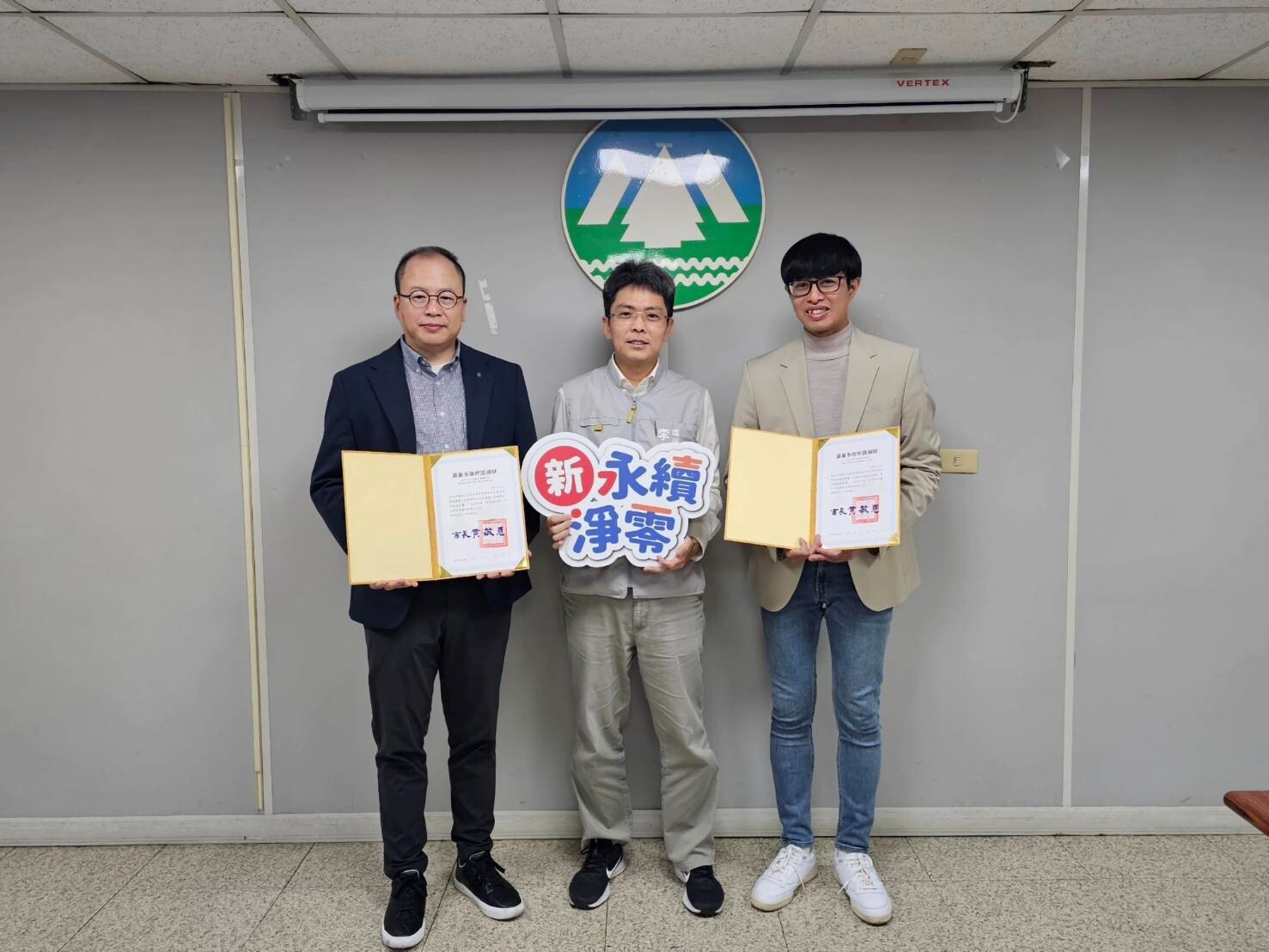
SDG13NCKU Professor Wu and Hsu received recognition with the 2024 National Sustainable Development Award
View more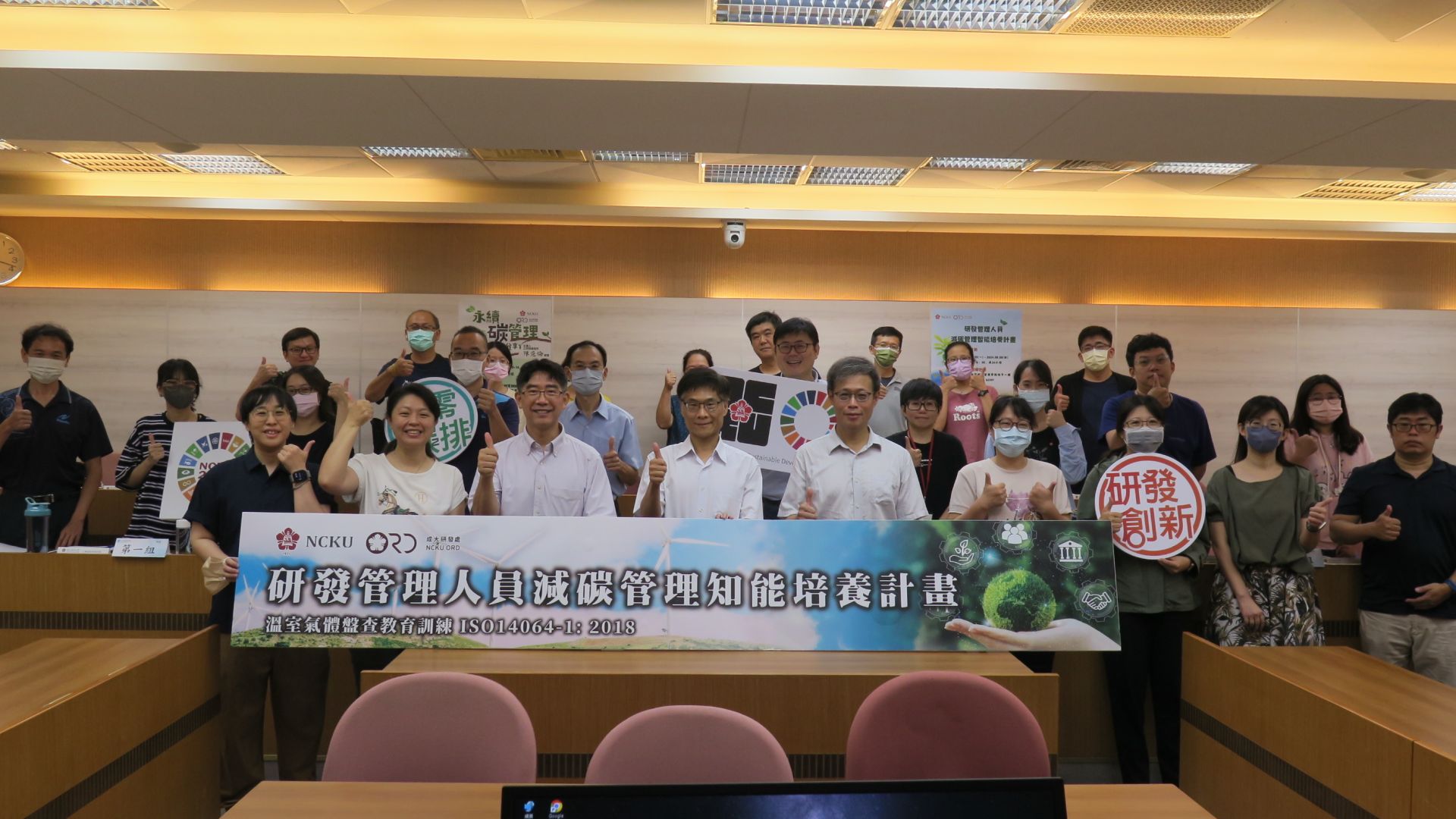
SDG13Promoting sustainable carbon reduction, NCKU organized the "Carbon Reduction Management Knowledge Training for R&D Personnel"
View more