




SDG17
NCKU Department of Urban Planning Visits the National University of Singapore Through the UAAT Program
To actively connect with global trends in higher education development and strengthen teaching and research capacity, the Department of Urban Planning at National Cheng Kung University (NCKU), through the Ministry of Education’s University Academic Alliance in Taiwan (UAAT) Innovative Curriculum and Talent Development Program, visited the National University of Singapore (NUS), ranked eighth in the 2026 QS World University Rankings, for academic exchange on April 20–21. Led by Department Chair Professor Tai-Shan Hu, the delegation visited several academic units at NUS, including the Department of Urban Planning, the Department of Architecture, the Department of the Built Environment, and the Department of Real Estate. The NCKU delegation also included Professor Tzu-Yuan Chao, Associate Professor Hsiu-Tzu Chang, Associate Professor Hao-Teng Cheng, and student Yi-Fan Hsuan. Through multifaceted academic interactions, both institutions further deepened collaboration in curriculum development and spatial planning and design.
The exchange was structured around the UAAT program’s “4R” framework for curriculum reform and enhancement—Review, Reach Out, Restructure, and Reform. Prior to the visit, the delegation conducted an analysis of curriculum changes implemented by benchmark universities in Singapore. Through on-site visits and interviews, the team gained insights into the motivations behind these reforms and their practical impacts. During the exchange, both sides engaged in systematic discussions on topics including credit system design, interdisciplinary curriculum integration, industry-academia collaboration, practice-oriented teaching models, and future talent cultivation mechanisms. In response to the ongoing trend of digital transformation, NUS also shared its strategies and platforms for integrating artificial intelligence (AI) into curriculum systems, providing valuable references for NCKU’s future curriculum reform initiatives.
In addition, in alignment with the program’s theme of “Resilient Territory,” the delegation participated in exchanges and site visits related to net-zero carbon emissions and campus planning. They observed how NUS integrates green building design, energy management systems, and ecological landscape planning into its campus development to create a low-carbon, high-efficiency, and resilient campus environment. Amid growing global emphasis on resilience and net-zero transformation, NUS’s use of the campus as a “Living Lab” that connects teaching, research, and practical implementation vividly demonstrates the critical role and exemplary value of higher education institutions in building resilient environments.
Professor Tai-Shan Hu noted that the visit not only initiated dialogue between the two universities on academic development and educational systems, but also enabled faculty members and students to gain firsthand understanding of emerging trends in future education and spatial development through field observation and professional exchange. Moving forward, the department will continue incorporating the experiences gained from this exchange into curriculum design and teaching innovation, while strengthening interdisciplinary integration capabilities to cultivate professionals with global perspectives and sustainability-oriented thinking.
The outcomes of this exchange will serve as an important foundation for NCKU’s continued efforts in curriculum enhancement, international collaboration, and the advancement of teaching quality and research capacity, further consolidating the university’s connections and forward-looking positioning within the global academic network.
The exchange was structured around the UAAT program’s “4R” framework for curriculum reform and enhancement—Review, Reach Out, Restructure, and Reform. Prior to the visit, the delegation conducted an analysis of curriculum changes implemented by benchmark universities in Singapore. Through on-site visits and interviews, the team gained insights into the motivations behind these reforms and their practical impacts. During the exchange, both sides engaged in systematic discussions on topics including credit system design, interdisciplinary curriculum integration, industry-academia collaboration, practice-oriented teaching models, and future talent cultivation mechanisms. In response to the ongoing trend of digital transformation, NUS also shared its strategies and platforms for integrating artificial intelligence (AI) into curriculum systems, providing valuable references for NCKU’s future curriculum reform initiatives.
In addition, in alignment with the program’s theme of “Resilient Territory,” the delegation participated in exchanges and site visits related to net-zero carbon emissions and campus planning. They observed how NUS integrates green building design, energy management systems, and ecological landscape planning into its campus development to create a low-carbon, high-efficiency, and resilient campus environment. Amid growing global emphasis on resilience and net-zero transformation, NUS’s use of the campus as a “Living Lab” that connects teaching, research, and practical implementation vividly demonstrates the critical role and exemplary value of higher education institutions in building resilient environments.
Professor Tai-Shan Hu noted that the visit not only initiated dialogue between the two universities on academic development and educational systems, but also enabled faculty members and students to gain firsthand understanding of emerging trends in future education and spatial development through field observation and professional exchange. Moving forward, the department will continue incorporating the experiences gained from this exchange into curriculum design and teaching innovation, while strengthening interdisciplinary integration capabilities to cultivate professionals with global perspectives and sustainability-oriented thinking.
The outcomes of this exchange will serve as an important foundation for NCKU’s continued efforts in curriculum enhancement, international collaboration, and the advancement of teaching quality and research capacity, further consolidating the university’s connections and forward-looking positioning within the global academic network.
The NCKU Department of Urban Planning delegation visited the National University of Singapore and took a group photo in the courtyard of a net-zero building featuring reforestation design.
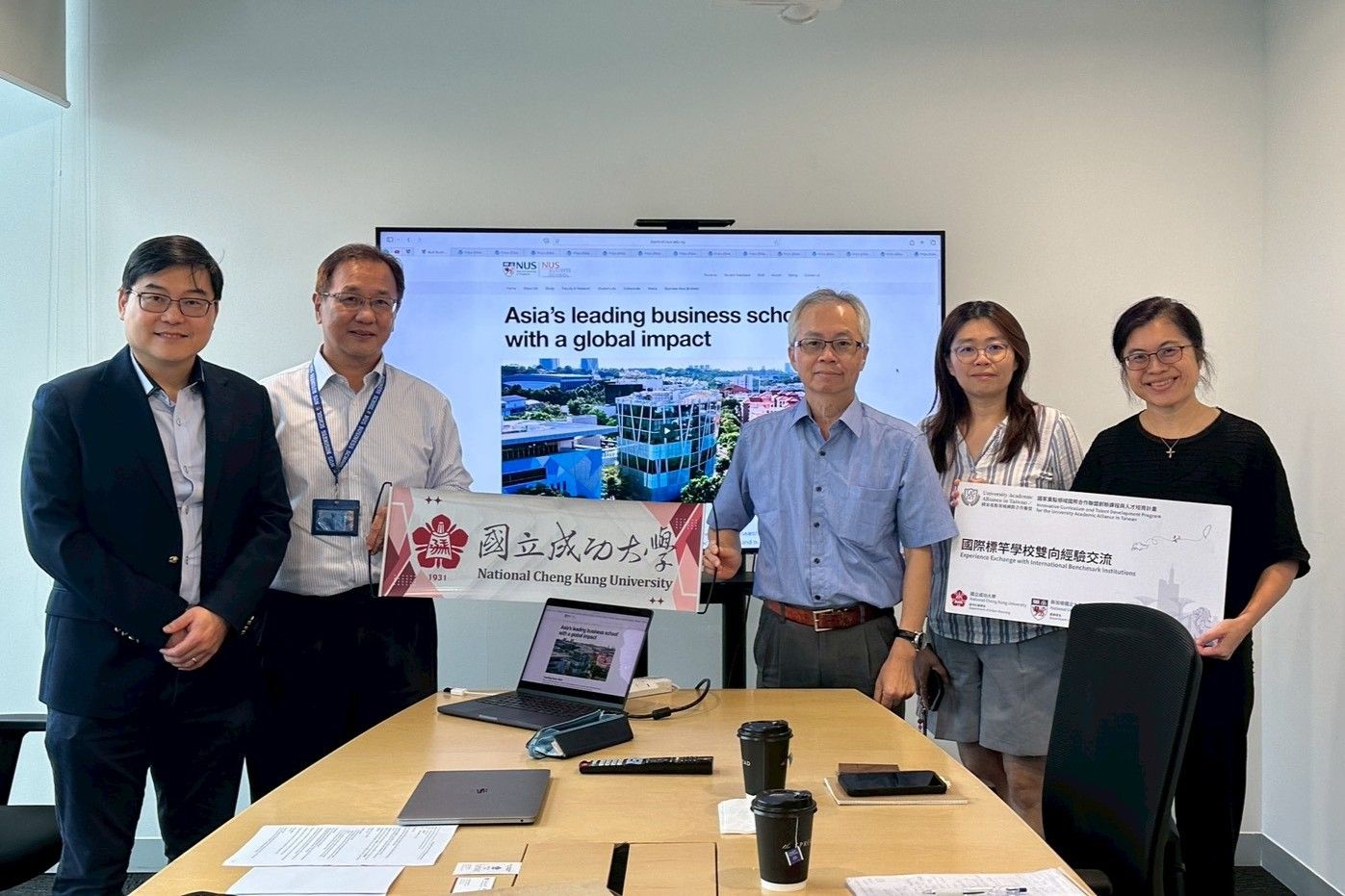
Visiting the Department of Real Estate, where both sides discussed the development trend of integrating the department into the business school.
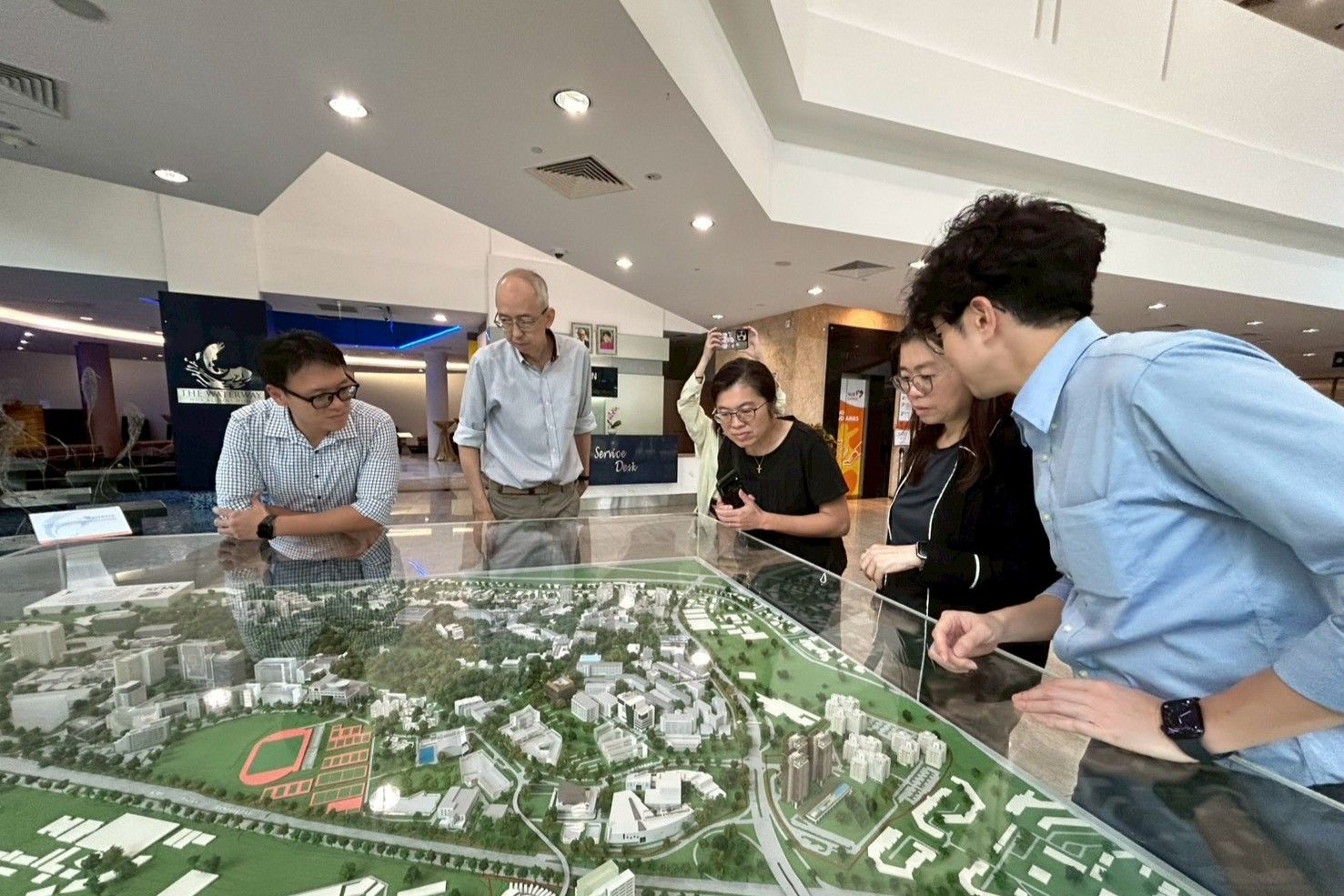
The NCKU delegation gained insight into the campus planning of the National University of Singapore through model demonstrations.
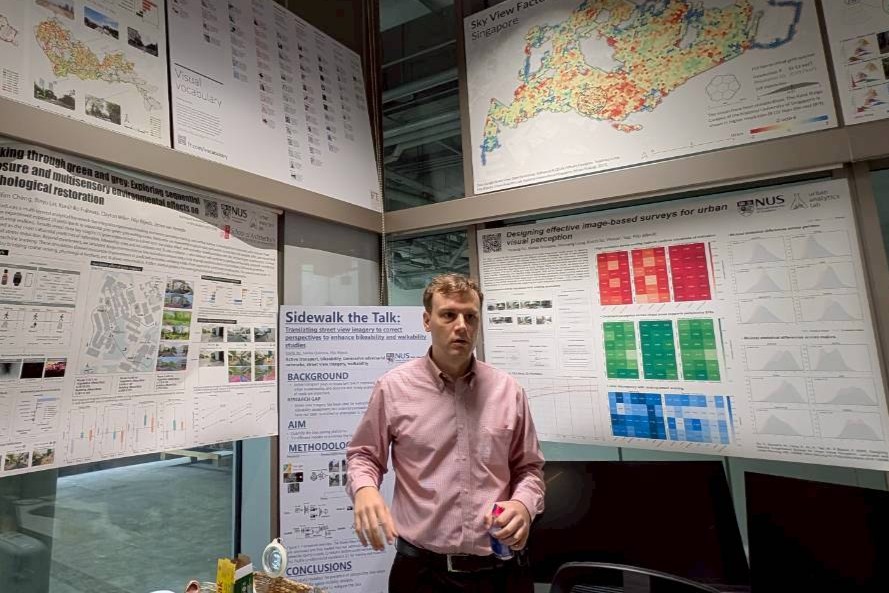
Visiting the Urban Analytics Lab of the Department of Urban Planning to explore the diverse applications generated through urban analytics research.