



SDG4
“2026 Taiwan Sound and Image” Midterm Exhibition Runs Through June 18, Showcasing Humanistic Tech Across Real and Virtual Spaces
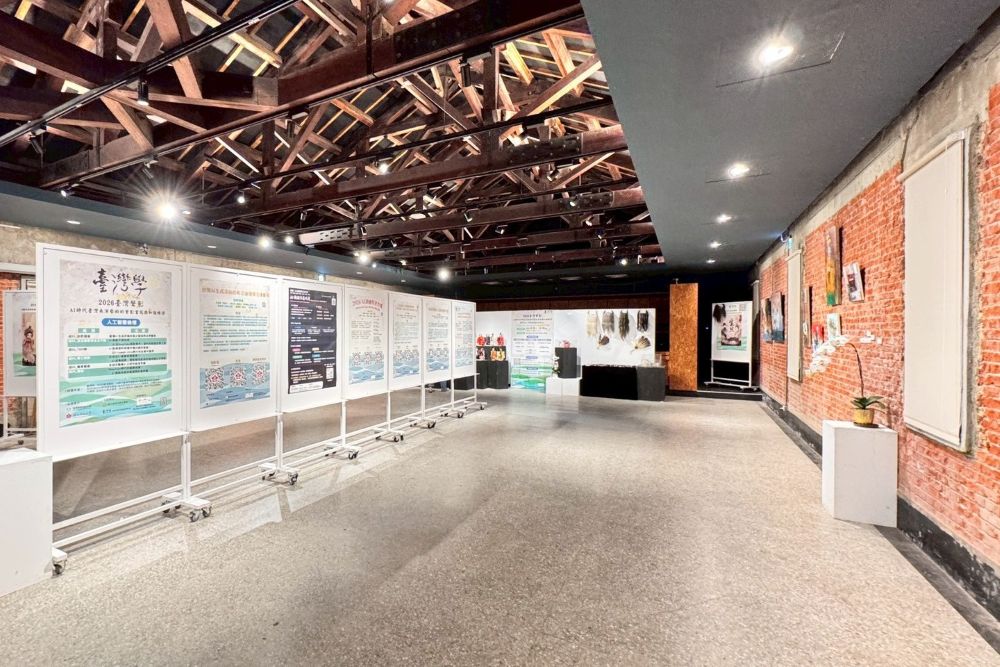
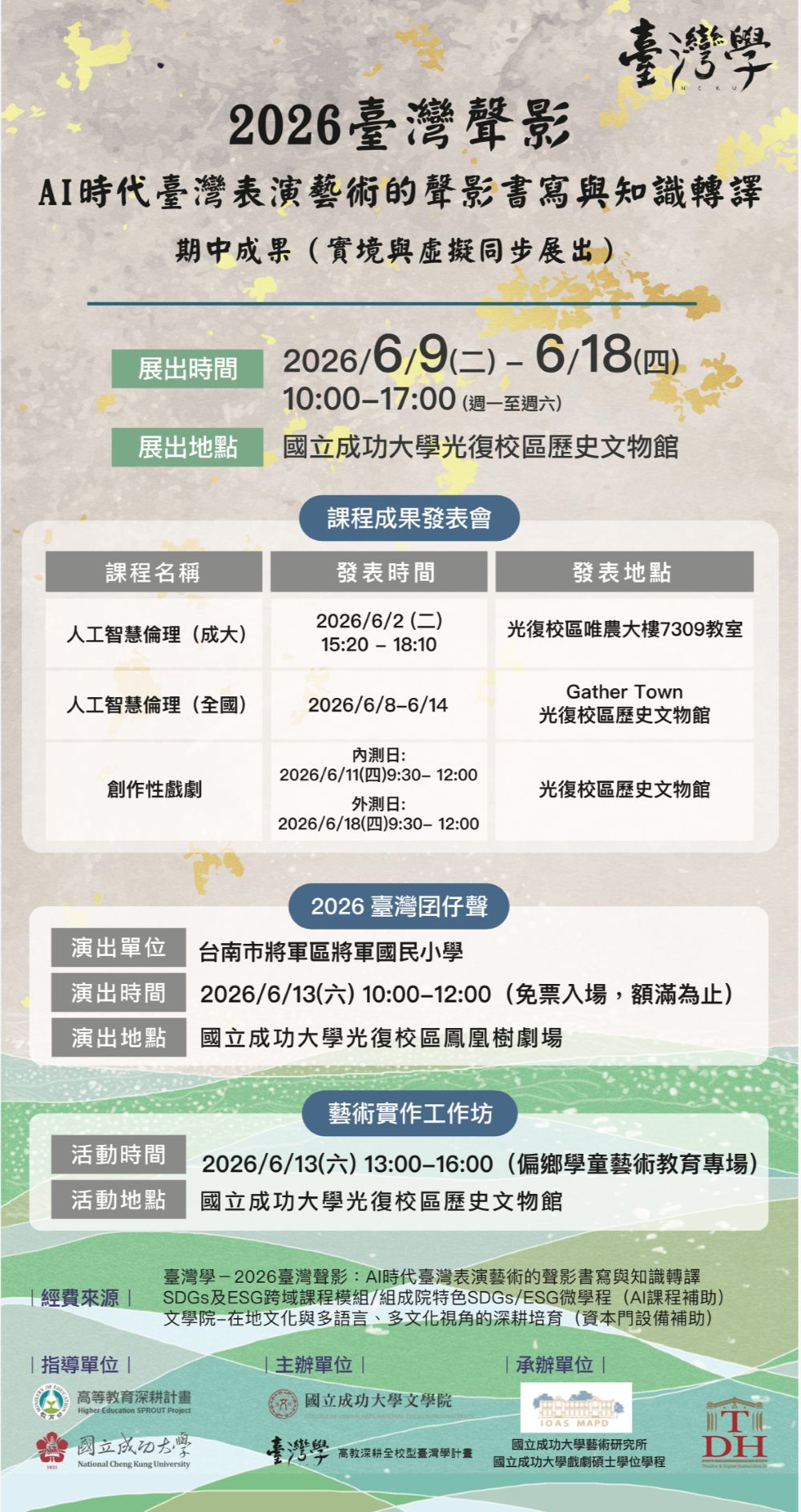
As artificial intelligence rapidly transforms knowledge production, cultural dissemination, and artistic creation, how will Taiwanese performing arts leave their own voice and image in the digital age? Organized under National Cheng Kung University’s (NCKU) “Taiwan Studies Project (臺灣學計畫),” the midterm exhibition “2026 Taiwan Sound and Image: Audio-Visual Writing and Knowledge Translation of Taiwanese Performing Arts in the Age of AI” is being held grandly from June 9 to 18 at the History Museum of NCKU’s Kuang-Fu Campus. The exhibition integrates physical and virtual spaces in an innovative format, presenting fruitful outcomes of interdisciplinary integration among AI, humanities research, and performing arts.
This exhibition is one of the key outcomes of NCKU’s Higher Education Sprout Project “Taiwan Studies” series. It also incorporates the SDGs and ESG interdisciplinary curriculum modules, AI course subsidies, and the College of Liberal Arts’ cultivation programs focusing on local culture and multilingual, multicultural perspectives. By connecting AI ethics, creative drama, digital humanities, and arts education, the exhibition demonstrates new possibilities for cultural preservation, knowledge translation, and innovative pedagogy in the AI era.
One of the highlights of “2026 Taiwan Sound and Image: Audio-Visual Writing and Knowledge Translation of Taiwanese Performing Arts in the Age of AI” is the presentation of outcomes from the “Artificial Intelligence Ethics” course offered under the Taiwan Artificial Intelligence College Alliance (TAICA) in a blended mirror-teaching format. Facing the ethical and societal challenges brought by the rapid development of generative AI, students from different departments formed interdisciplinary teams to conduct in-depth research based on real-world cases in Taiwan. Featured topics include “Ethical and Legal Reflections on AI-Generated Deepfakes in Taiwan,” “AI Face Swapping Is Not a Joke: The deepfake face-swapping scandal involving Taiwanese influencer "Xiao Yu,” and “The Sharp Collision Between AI Training Data and Copyright: The Case of FineWeb-zhTW and CNA.” Through legal analysis, social observation, and ethical reflection, students examined issues from multiple perspectives, including technology governance, human rights protection, intellectual property, medical applications, and media sustainability. These outcomes not only demonstrate the younger generation’s keen insight into technological issues but also reflect NCKU’s commitment to balancing AI literacy education with humanistic values. By publicly showcasing course results, the exhibition aims to foster broader public understanding and dialogue on AI ethics.
In addition to AI ethics outcomes, student creative works explore new approaches to knowledge translation and cultural communication through the integration of performing arts, digital media, and interactive storytelling. On June 11 and June 18, in-school and off-campus presentations of “Creative Drama” will be held, showcasing students’ learning achievements through theatrical creation and performance practice. A parallel virtual exhibition has also been developed, allowing audiences to transcend spatial and temporal limitations and experience the fusion of physical and virtual exhibition environments. Through audience participation and interactive feedback, the project evaluates the narrative effectiveness and educational value of artistic creation in digital contexts.
Furthermore, on the morning of June 13 at the Phoenix Tree Theater, students from Jiangjun Elementary School in Jiangjun District, Tainan City, will perform “2026 Taiwan Children’s Voices.” Students from kindergarten to senior grades will participate in programs including movement performances, ocarina ensembles, English reader’s theater, and storytelling presentations. The repertoire includes “Backpacker” and “SWIND-DANCE,” showcasing students’ achievements in arts, music, and language expression. In particular, the English reader’s theater integrates role-play and oral expression training, demonstrating students’ cross-linguistic communication abilities, while the ocarina performance reflects the deepening roots of arts education. This event not only allows children to perform on a professional stage at NCKU with confidence and creativity, but also highlights the achievements of rural and remote arts education.
In the afternoon of June 13, the History Museum will also host an “Arts Practice Workshop – Special Session on Arts Education for Rural School Children.” Through professional instruction and hands-on learning experiences, the workshop introduces children to diverse forms of artistic expression, enhancing cultural participation opportunities and artistic literacy. Associate Professor Chia-Pin Chen of the Graduate Institute of Art Studies at NCKU and Director of Arts Planning at the Arts Center stated that the event not only showcases teaching outcomes but also aims to leverage university resources to support local education, embodying educational equity and social engagement, and fulfilling the university’s social responsibility.
Chia-Pin Chen, project co-director of the “Taiwan Studies” initiative, noted that “2026 Taiwan Sound and Image” is not merely an exhibition, but also an experiment and dialogue on the future of cultural development. As artificial intelligence becomes an increasingly important tool for knowledge production and cultural creation, key questions include how to preserve Taiwan’s cultural memory, translate the value of performing arts, and build new connections between technology and the humanities. Through exhibitions, course presentations, artistic performances, and educational workshops, NCKU hopes to encourage public engagement with AI, humanities, and the arts, and to collectively explore future possibilities for cultural sustainability and knowledge innovation in the technological era.
【Exhibition Information】
Exhibition Title: 2026 Taiwan Sound and Image – Audio-Visual Writing and Knowledge Translation of Taiwanese Performing Arts in the Age of AI (Midterm Exhibition)
Exhibition Dates: June 9 – June 18, 2026
Opening Hours: 10:00–17:00 (Monday to Saturday)
Venue: History Museum, Kuang-Fu Campus, NCKU
Organizer: “Taiwan Studies” Project, College of Liberal Arts, NCKU
Executive Organizer: Graduate Institute of Art Studies and Master’s Program in Drama, NCKU
Supervising Authority: Higher Education Sprout Project, Ministry of Education
This exhibition is one of the key outcomes of NCKU’s Higher Education Sprout Project “Taiwan Studies” series. It also incorporates the SDGs and ESG interdisciplinary curriculum modules, AI course subsidies, and the College of Liberal Arts’ cultivation programs focusing on local culture and multilingual, multicultural perspectives. By connecting AI ethics, creative drama, digital humanities, and arts education, the exhibition demonstrates new possibilities for cultural preservation, knowledge translation, and innovative pedagogy in the AI era.
One of the highlights of “2026 Taiwan Sound and Image: Audio-Visual Writing and Knowledge Translation of Taiwanese Performing Arts in the Age of AI” is the presentation of outcomes from the “Artificial Intelligence Ethics” course offered under the Taiwan Artificial Intelligence College Alliance (TAICA) in a blended mirror-teaching format. Facing the ethical and societal challenges brought by the rapid development of generative AI, students from different departments formed interdisciplinary teams to conduct in-depth research based on real-world cases in Taiwan. Featured topics include “Ethical and Legal Reflections on AI-Generated Deepfakes in Taiwan,” “AI Face Swapping Is Not a Joke: The deepfake face-swapping scandal involving Taiwanese influencer "Xiao Yu,” and “The Sharp Collision Between AI Training Data and Copyright: The Case of FineWeb-zhTW and CNA.” Through legal analysis, social observation, and ethical reflection, students examined issues from multiple perspectives, including technology governance, human rights protection, intellectual property, medical applications, and media sustainability. These outcomes not only demonstrate the younger generation’s keen insight into technological issues but also reflect NCKU’s commitment to balancing AI literacy education with humanistic values. By publicly showcasing course results, the exhibition aims to foster broader public understanding and dialogue on AI ethics.
In addition to AI ethics outcomes, student creative works explore new approaches to knowledge translation and cultural communication through the integration of performing arts, digital media, and interactive storytelling. On June 11 and June 18, in-school and off-campus presentations of “Creative Drama” will be held, showcasing students’ learning achievements through theatrical creation and performance practice. A parallel virtual exhibition has also been developed, allowing audiences to transcend spatial and temporal limitations and experience the fusion of physical and virtual exhibition environments. Through audience participation and interactive feedback, the project evaluates the narrative effectiveness and educational value of artistic creation in digital contexts.
Furthermore, on the morning of June 13 at the Phoenix Tree Theater, students from Jiangjun Elementary School in Jiangjun District, Tainan City, will perform “2026 Taiwan Children’s Voices.” Students from kindergarten to senior grades will participate in programs including movement performances, ocarina ensembles, English reader’s theater, and storytelling presentations. The repertoire includes “Backpacker” and “SWIND-DANCE,” showcasing students’ achievements in arts, music, and language expression. In particular, the English reader’s theater integrates role-play and oral expression training, demonstrating students’ cross-linguistic communication abilities, while the ocarina performance reflects the deepening roots of arts education. This event not only allows children to perform on a professional stage at NCKU with confidence and creativity, but also highlights the achievements of rural and remote arts education.
In the afternoon of June 13, the History Museum will also host an “Arts Practice Workshop – Special Session on Arts Education for Rural School Children.” Through professional instruction and hands-on learning experiences, the workshop introduces children to diverse forms of artistic expression, enhancing cultural participation opportunities and artistic literacy. Associate Professor Chia-Pin Chen of the Graduate Institute of Art Studies at NCKU and Director of Arts Planning at the Arts Center stated that the event not only showcases teaching outcomes but also aims to leverage university resources to support local education, embodying educational equity and social engagement, and fulfilling the university’s social responsibility.
Chia-Pin Chen, project co-director of the “Taiwan Studies” initiative, noted that “2026 Taiwan Sound and Image” is not merely an exhibition, but also an experiment and dialogue on the future of cultural development. As artificial intelligence becomes an increasingly important tool for knowledge production and cultural creation, key questions include how to preserve Taiwan’s cultural memory, translate the value of performing arts, and build new connections between technology and the humanities. Through exhibitions, course presentations, artistic performances, and educational workshops, NCKU hopes to encourage public engagement with AI, humanities, and the arts, and to collectively explore future possibilities for cultural sustainability and knowledge innovation in the technological era.
【Exhibition Information】
Exhibition Title: 2026 Taiwan Sound and Image – Audio-Visual Writing and Knowledge Translation of Taiwanese Performing Arts in the Age of AI (Midterm Exhibition)
Exhibition Dates: June 9 – June 18, 2026
Opening Hours: 10:00–17:00 (Monday to Saturday)
Venue: History Museum, Kuang-Fu Campus, NCKU
Organizer: “Taiwan Studies” Project, College of Liberal Arts, NCKU
Executive Organizer: Graduate Institute of Art Studies and Master’s Program in Drama, NCKU
Supervising Authority: Higher Education Sprout Project, Ministry of Education
“2026 Taiwan Sound and Image” Midterm Exhibition Runs Through June 18, Showcasing Humanistic Tech Across Real and Virtual Spaces

“2026 Taiwan Sound and Image” Midterm Exhibition Runs Through June 18, Showcasing Humanistic Tech Across Real and Virtual Spaces
SDG4NCKU Social Sciences Promotes Interdisciplinary Projects: High Schoolers Showcase 108 Curriculum Achievements
View more
SDG4Eight Cross-Disciplinary Elites Join NCKU’s Interdisciplinary Program, Demonstrating Sustainable Innovation
View more