



SDG9
Applied Materials President Ting-Lu Yu Invited to Deliver Industry Master Lecture on How Materials Innovation Enables the AI Era

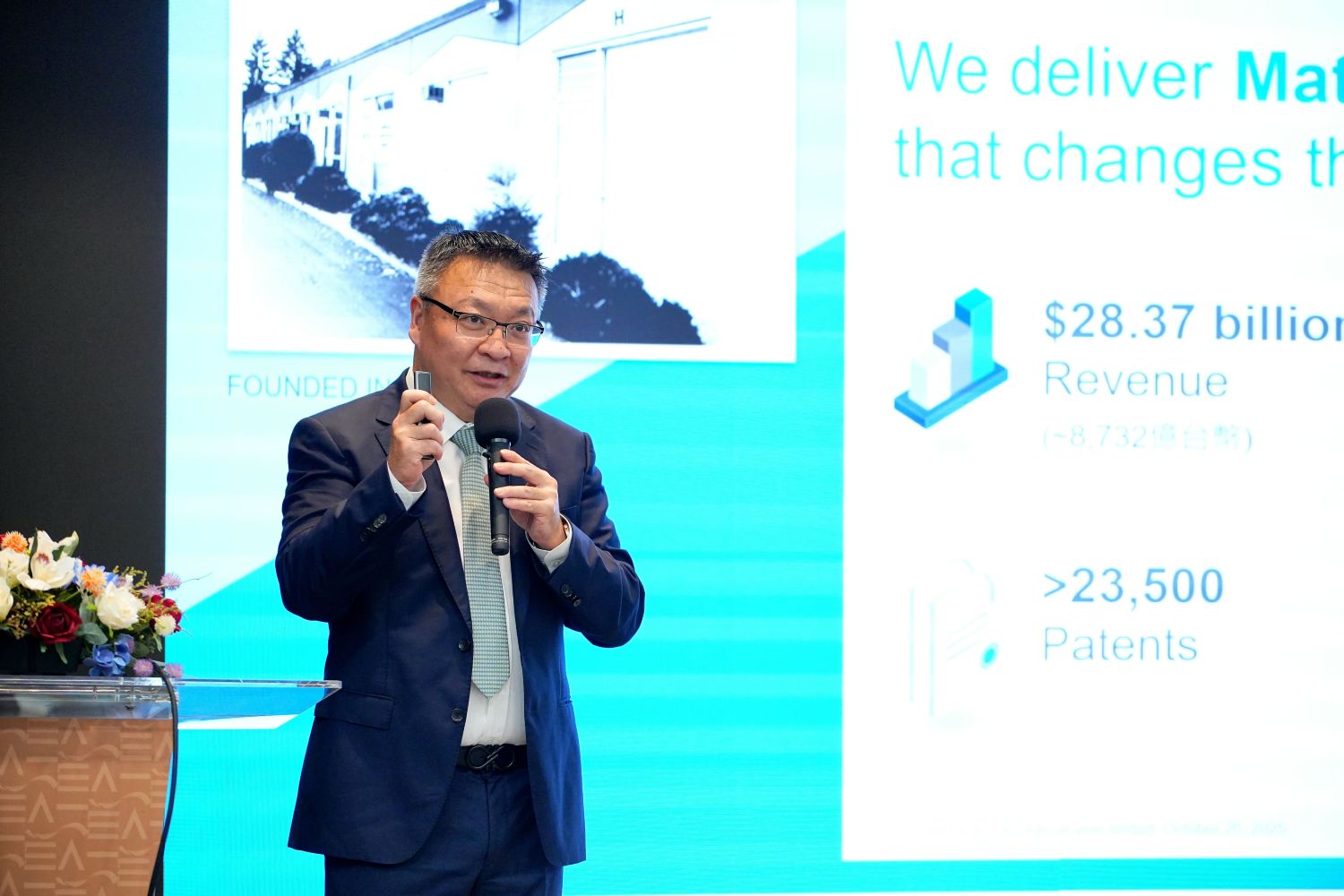
On June 12, the College of Intelligent Semiconductor and Sustainable Manufacturing at National Cheng Kung University (NCKU) hosted an Industry Master Lecture, inviting President Ting-Lu Yu of Applied Materials Taiwan to deliver a keynote speech titled “Material Innovation Shaping the AI Future.” The lecture examined development trends in the semiconductor industry under the AI era, as well as the critical role of materials innovation in enabling advanced process technologies, high-performance computing (HPC), and advanced packaging. The event attracted strong participation from students and faculty across the university.
Dean of the College, Professor Wei-Chou Hsu, welcomed President Yu on behalf of the faculty and students. In his remarks, Professor Hsu noted that President Yu is an Outstanding Alumni Award recipient of NCKU. Since joining Applied Materials in 1993, he has accumulated over 33 years of industry experience, progressing from a foundational engineer to a key decision-making executive. President Yu possesses extensive expertise in advanced process technologies and artificial intelligence-related fields and has actively driven global industrial innovation. Professor Hsu expressed confidence that the lecture would help students better understand emerging technological trends and industry needs. Following the speech, the College presented President Yu with an Industry-Academia Innovation Lecture recognition in appreciation of his contribution.
With the rapid advancement of generative AI, global demand for computing power and data processing efficiency continues to surge, driving a new wave of technological transformation in the semiconductor industry. In response to the massive computational requirements of AI applications, how to enhance chip performance and energy efficiency through innovation in materials, equipment, and process technologies has become a key industry challenge. President Yu emphasized that AI represents one of the most decisive technological turning points of our time, rapidly accelerating global demand for computing and driving semiconductor industry growth. As generative AI, large language models, and data centers continue to expand, demand for computing performance and data processing capabilities keeps rising, presenting unprecedented challenges and opportunities for innovation in the semiconductor sector.
President Yu further stressed that to sustainably scale AI and data center deployment, the industry must improve Energy Efficient Performance (EEP) through full-stack collaboration and innovation across system architecture, software, logic, memory, packaging, and process technologies. In the AI era, energy efficiency will be the decisive factor, and breakthroughs require coordinated efforts across the entire ecosystem. He noted that with the rapid growth of AI, HPC, and data center applications, advanced process and advanced packaging technologies are becoming increasingly critical, while breakthroughs in materials engineering serve as a core driver of continued semiconductor advancement. Applied Materials focuses on high-value materials engineering solutions required for innovative technologies, helping customers advance their technology roadmaps. Its broad, interconnected, and differentiated product portfolio and materials innovation capabilities will continue to support key industry transitions and accelerate AI chip performance.
At the conclusion of the lecture, President Yu introduced Applied Materials’ Equipment and Process Innovation and Commercialization (EPIC) Center in Silicon Valley, a USD 5 billion investment representing the largest-scale advanced semiconductor equipment R&D investment in the United States to date. Scheduled to officially open this year, the center is designed from the outset to significantly shorten the commercialization timeline from early-stage research to full-scale production of breakthrough technologies. For chip manufacturers, the EPIC Center will enable earlier access to Applied Materials’ R&D portfolio, accelerate learning cycles, and speed up the transition of next-generation technologies into production. In addition, through EPIC’s co-innovation programs, Applied Materials will gain broader multi-node technological visibility to guide R&D investment, improve R&D productivity, and promote value sharing.
Following the lecture, students actively engaged in a lively Q&A session with President Yu, discussing topics such as AI development, the future of the semiconductor industry, and career planning. As an NCKU alumnus, he interacted closely with students, creating a highly engaging and enthusiastic atmosphere.
The College of Intelligent Semiconductor and Sustainable Manufacturing stated that it has long been committed to cultivating talent with semiconductor expertise and interdisciplinary integration capabilities, while actively connecting with domestic and international industry resources. Through industry master lectures, corporate exchanges, and industry-academia collaborations, the College strengthens students’ understanding of real-world industrial practices and forward-looking technologies. Inviting industry leaders to campus not only broadens students’ global perspectives but also fosters stronger linkages between academic research and industrial needs.
Looking ahead, the College will continue to invite leading industry experts and scholars from Taiwan and abroad to share insights on technological developments and industry trends, building a learning environment closely aligned with industry needs and cultivating semiconductor professionals with both innovation capability and practical experience to embrace new opportunities in the AI era.
Dean of the College, Professor Wei-Chou Hsu, welcomed President Yu on behalf of the faculty and students. In his remarks, Professor Hsu noted that President Yu is an Outstanding Alumni Award recipient of NCKU. Since joining Applied Materials in 1993, he has accumulated over 33 years of industry experience, progressing from a foundational engineer to a key decision-making executive. President Yu possesses extensive expertise in advanced process technologies and artificial intelligence-related fields and has actively driven global industrial innovation. Professor Hsu expressed confidence that the lecture would help students better understand emerging technological trends and industry needs. Following the speech, the College presented President Yu with an Industry-Academia Innovation Lecture recognition in appreciation of his contribution.
With the rapid advancement of generative AI, global demand for computing power and data processing efficiency continues to surge, driving a new wave of technological transformation in the semiconductor industry. In response to the massive computational requirements of AI applications, how to enhance chip performance and energy efficiency through innovation in materials, equipment, and process technologies has become a key industry challenge. President Yu emphasized that AI represents one of the most decisive technological turning points of our time, rapidly accelerating global demand for computing and driving semiconductor industry growth. As generative AI, large language models, and data centers continue to expand, demand for computing performance and data processing capabilities keeps rising, presenting unprecedented challenges and opportunities for innovation in the semiconductor sector.
President Yu further stressed that to sustainably scale AI and data center deployment, the industry must improve Energy Efficient Performance (EEP) through full-stack collaboration and innovation across system architecture, software, logic, memory, packaging, and process technologies. In the AI era, energy efficiency will be the decisive factor, and breakthroughs require coordinated efforts across the entire ecosystem. He noted that with the rapid growth of AI, HPC, and data center applications, advanced process and advanced packaging technologies are becoming increasingly critical, while breakthroughs in materials engineering serve as a core driver of continued semiconductor advancement. Applied Materials focuses on high-value materials engineering solutions required for innovative technologies, helping customers advance their technology roadmaps. Its broad, interconnected, and differentiated product portfolio and materials innovation capabilities will continue to support key industry transitions and accelerate AI chip performance.
At the conclusion of the lecture, President Yu introduced Applied Materials’ Equipment and Process Innovation and Commercialization (EPIC) Center in Silicon Valley, a USD 5 billion investment representing the largest-scale advanced semiconductor equipment R&D investment in the United States to date. Scheduled to officially open this year, the center is designed from the outset to significantly shorten the commercialization timeline from early-stage research to full-scale production of breakthrough technologies. For chip manufacturers, the EPIC Center will enable earlier access to Applied Materials’ R&D portfolio, accelerate learning cycles, and speed up the transition of next-generation technologies into production. In addition, through EPIC’s co-innovation programs, Applied Materials will gain broader multi-node technological visibility to guide R&D investment, improve R&D productivity, and promote value sharing.
Following the lecture, students actively engaged in a lively Q&A session with President Yu, discussing topics such as AI development, the future of the semiconductor industry, and career planning. As an NCKU alumnus, he interacted closely with students, creating a highly engaging and enthusiastic atmosphere.
The College of Intelligent Semiconductor and Sustainable Manufacturing stated that it has long been committed to cultivating talent with semiconductor expertise and interdisciplinary integration capabilities, while actively connecting with domestic and international industry resources. Through industry master lectures, corporate exchanges, and industry-academia collaborations, the College strengthens students’ understanding of real-world industrial practices and forward-looking technologies. Inviting industry leaders to campus not only broadens students’ global perspectives but also fosters stronger linkages between academic research and industrial needs.
Looking ahead, the College will continue to invite leading industry experts and scholars from Taiwan and abroad to share insights on technological developments and industry trends, building a learning environment closely aligned with industry needs and cultivating semiconductor professionals with both innovation capability and practical experience to embrace new opportunities in the AI era.
Applied Materials President Yu Ting-Lu was invited to deliver an Industry Master Lecture, sharing with faculty and students on “Material Innovation Shaping the Future of Artificial Intelligence.”
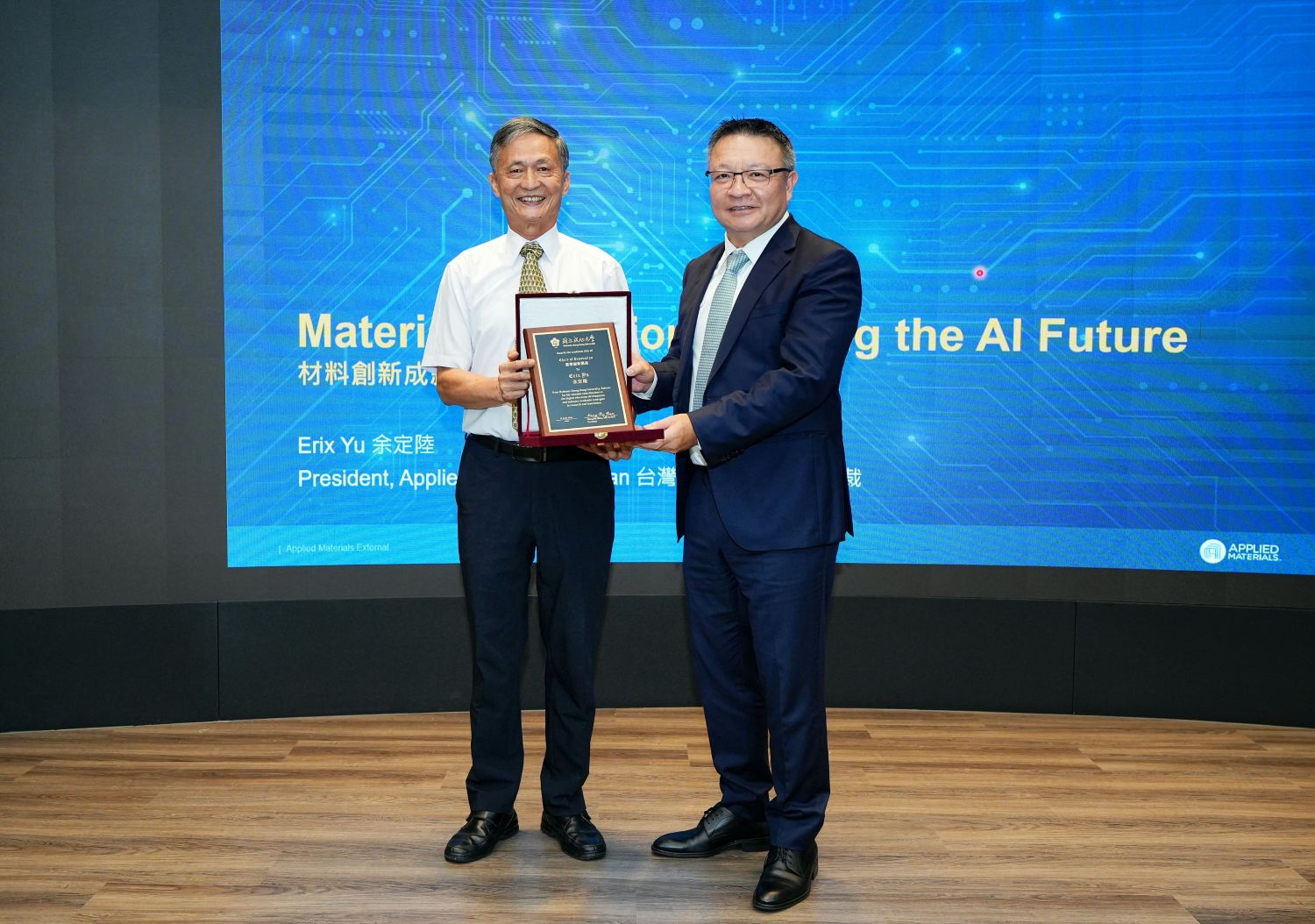
Dean Wei-Chou Hsu (left) presents the Industry-Academia Innovation Lecture award to President Ting-Lu Yu (right) on behalf of the college.
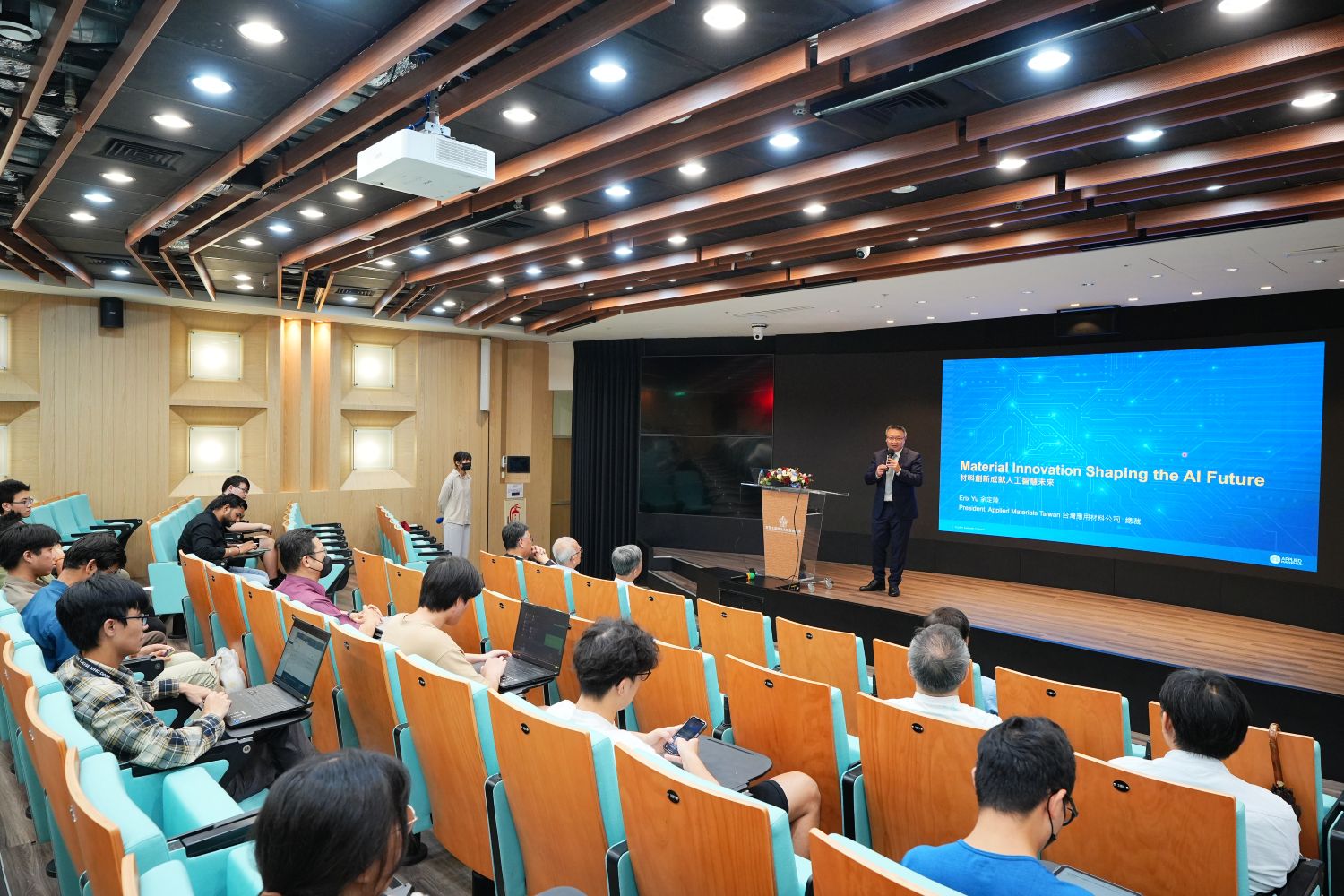
President Ting-Lu Yu stated that AI is the most decisive technological turning point of our time, rapidly driving global demand for computing power and accelerating the growth of the semiconductor industry.
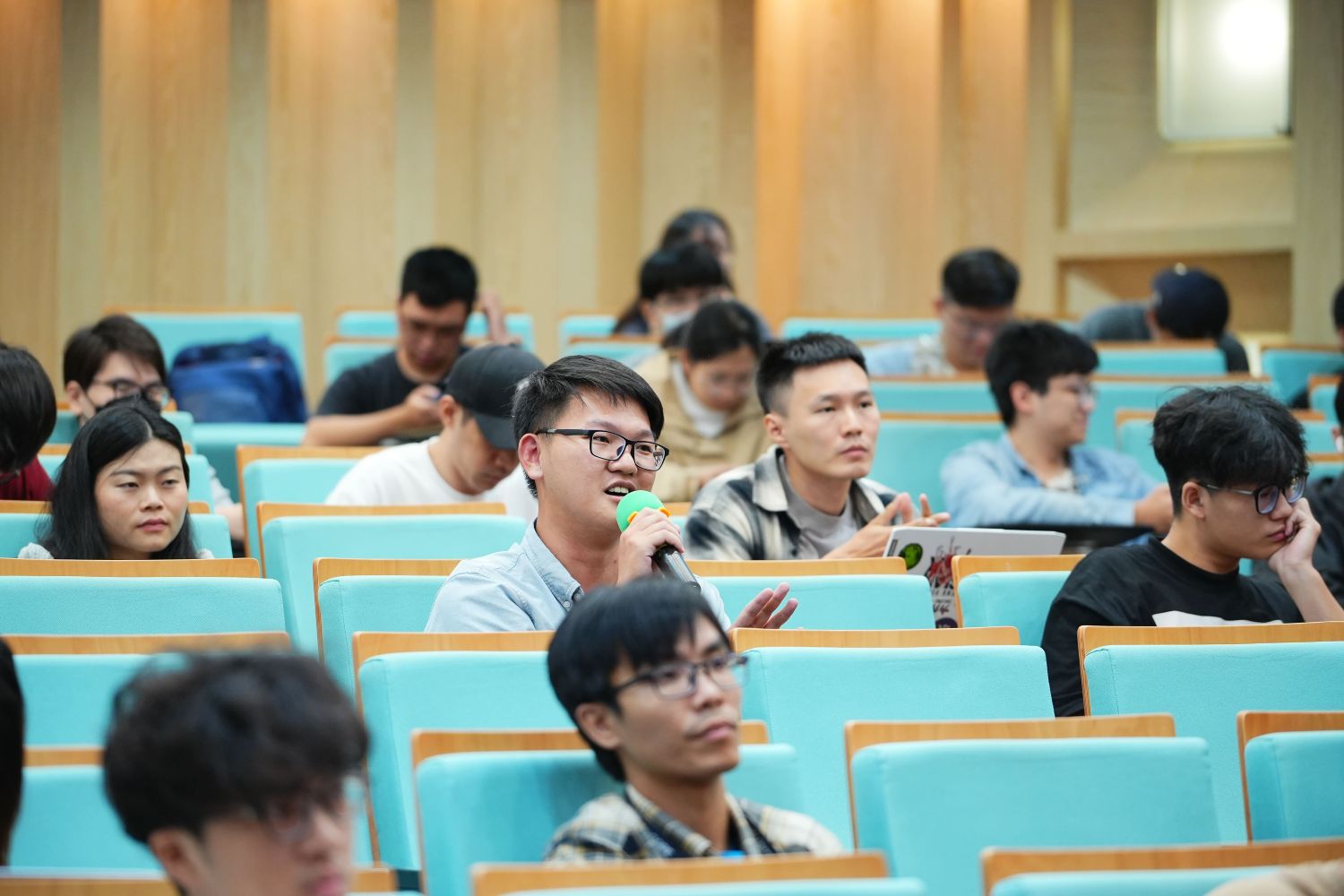
Students took the opportunity to interact with NCKU alumnus President Yu Ting-Lu, engaging in lively discussions and exchanges on-site.
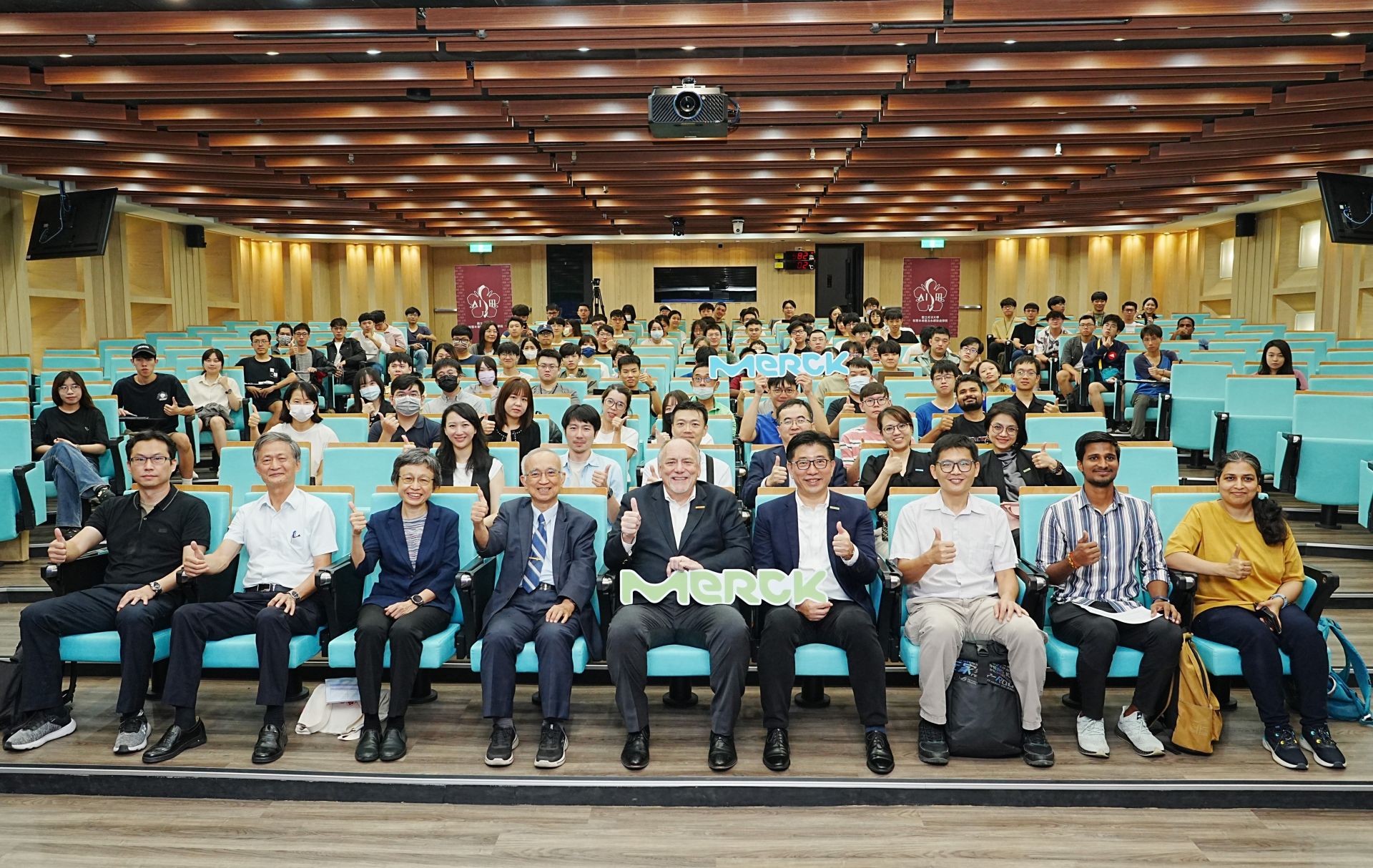
SDG9The "Merck Lecture Hall" at NCKU delves into the crucial role of material intelligence in advancing semiconductor technology.
View more
SDG9NCKU and University of Technology Sydney (UTS) Hold Cross-University Brain-Computer Interface Workshop
View more