



SDG6
NCKU Launches International Water Security Research with UK, US, and German Partners
In the face of escalating global climate change challenges, ensuring water resource security has become a critical issue for countries worldwide. Professor Hsin-Fu Yeh from the Department of Resources Engineering at National Cheng Kung University (NCKU) is participating in a four-year international collaborative project jointly supported by the UK Natural Environment Research Council (NERC) and the U.S. National Science Foundation (NSF-GEO), titled “Delving Deep into the Mountain Block for Future Water Security.” The project focuses on investigating deep mountain groundwater recharge mechanisms to enhance future water security.
The Taiwan research team includes NCKU, Sinotech Engineering Consultants, and the Industrial Technology Research Institute (ITRI), while international partners comprise the British Geological Survey (BGS), the UK Centre for Ecology & Hydrology (UKCEH), the New Mexico Institute of Mining and Technology, The Ohio State University, and Eawag (Swiss Federal Institute of Aquatic Science and Technology), among other leading institutions.
The international research team visited Taiwan for exchanges and workshops from May 11 to 15, 2026. On the first day, Professor Yeh led visiting scholars to the Department of Bioenvironmental Systems Engineering at National Taiwan University for academic exchanges with groundwater experts in Taiwan. In the afternoon, the delegation visited the Geological Survey and Mining Management Agency under Taiwan’s Ministry of Economic Affairs for discussions on future collaboration opportunities and directions in groundwater research between Taiwan, the UK, and the United States.
On the following day, a key workshop was held at Sinotech Engineering Consultants, bringing together domestic and international partners and experts to discuss the project’s phased objectives, interdisciplinary resource integration, and risk management strategies. The workshop helped outline a clearer implementation roadmap while strengthening cross-team collaboration. Professor Yeh emphasized that the core value of this international collaboration lies in breaking away from traditional research frameworks to produce outcomes with both academic and practical impact. Accordingly, a primary goal of the workshop was to establish a shared understanding among partners regarding what constitutes “success” at different stages of the project, thereby enhancing its long-term value.
To improve execution efficiency, the workshop systematically examined the interdependencies among various work packages. Through horizontal integration and transparent communication, the team aligned research methodologies, data-sharing mechanisms, and underlying assumptions, effectively reducing information gaps common in interdisciplinary collaborations. In addition, the workshop placed strong emphasis on stakeholder needs and leveraged participants’ practical experience to comprehensively identify potential risks and uncertainties, thereby developing a more flexible and resilient response framework. By the end of the workshop, consensus was reached on task allocation, priority actions, and next steps.
With the successful conclusion of the exchange, the Taiwan and international teams have established a clear collaborative roadmap and achieved a high level of integration in data sharing, research methods, and implementation strategies. Through this deep cross-national and interdisciplinary collaboration with partners from Taiwan, the UK, the US, and Switzerland, Professor Yeh’s team, together with domestic partners such as Sinotech Engineering Consultants and ITRI, has demonstrated strong capabilities in integration and risk management, while injecting critical momentum into future research. Moving forward, each work package will proceed according to its defined priorities, with the shared goal of translating research outcomes into tangible and far-reaching societal and industrial impacts.
The Taiwan research team includes NCKU, Sinotech Engineering Consultants, and the Industrial Technology Research Institute (ITRI), while international partners comprise the British Geological Survey (BGS), the UK Centre for Ecology & Hydrology (UKCEH), the New Mexico Institute of Mining and Technology, The Ohio State University, and Eawag (Swiss Federal Institute of Aquatic Science and Technology), among other leading institutions.
The international research team visited Taiwan for exchanges and workshops from May 11 to 15, 2026. On the first day, Professor Yeh led visiting scholars to the Department of Bioenvironmental Systems Engineering at National Taiwan University for academic exchanges with groundwater experts in Taiwan. In the afternoon, the delegation visited the Geological Survey and Mining Management Agency under Taiwan’s Ministry of Economic Affairs for discussions on future collaboration opportunities and directions in groundwater research between Taiwan, the UK, and the United States.
On the following day, a key workshop was held at Sinotech Engineering Consultants, bringing together domestic and international partners and experts to discuss the project’s phased objectives, interdisciplinary resource integration, and risk management strategies. The workshop helped outline a clearer implementation roadmap while strengthening cross-team collaboration. Professor Yeh emphasized that the core value of this international collaboration lies in breaking away from traditional research frameworks to produce outcomes with both academic and practical impact. Accordingly, a primary goal of the workshop was to establish a shared understanding among partners regarding what constitutes “success” at different stages of the project, thereby enhancing its long-term value.
To improve execution efficiency, the workshop systematically examined the interdependencies among various work packages. Through horizontal integration and transparent communication, the team aligned research methodologies, data-sharing mechanisms, and underlying assumptions, effectively reducing information gaps common in interdisciplinary collaborations. In addition, the workshop placed strong emphasis on stakeholder needs and leveraged participants’ practical experience to comprehensively identify potential risks and uncertainties, thereby developing a more flexible and resilient response framework. By the end of the workshop, consensus was reached on task allocation, priority actions, and next steps.
With the successful conclusion of the exchange, the Taiwan and international teams have established a clear collaborative roadmap and achieved a high level of integration in data sharing, research methods, and implementation strategies. Through this deep cross-national and interdisciplinary collaboration with partners from Taiwan, the UK, the US, and Switzerland, Professor Yeh’s team, together with domestic partners such as Sinotech Engineering Consultants and ITRI, has demonstrated strong capabilities in integration and risk management, while injecting critical momentum into future research. Moving forward, each work package will proceed according to its defined priorities, with the shared goal of translating research outcomes into tangible and far-reaching societal and industrial impacts.

The team held a discussion with the Geological Survey and Mining Management Agency of the Ministry of Economic Affairs to jointly explore future directions for collaboration on groundwater investigations.
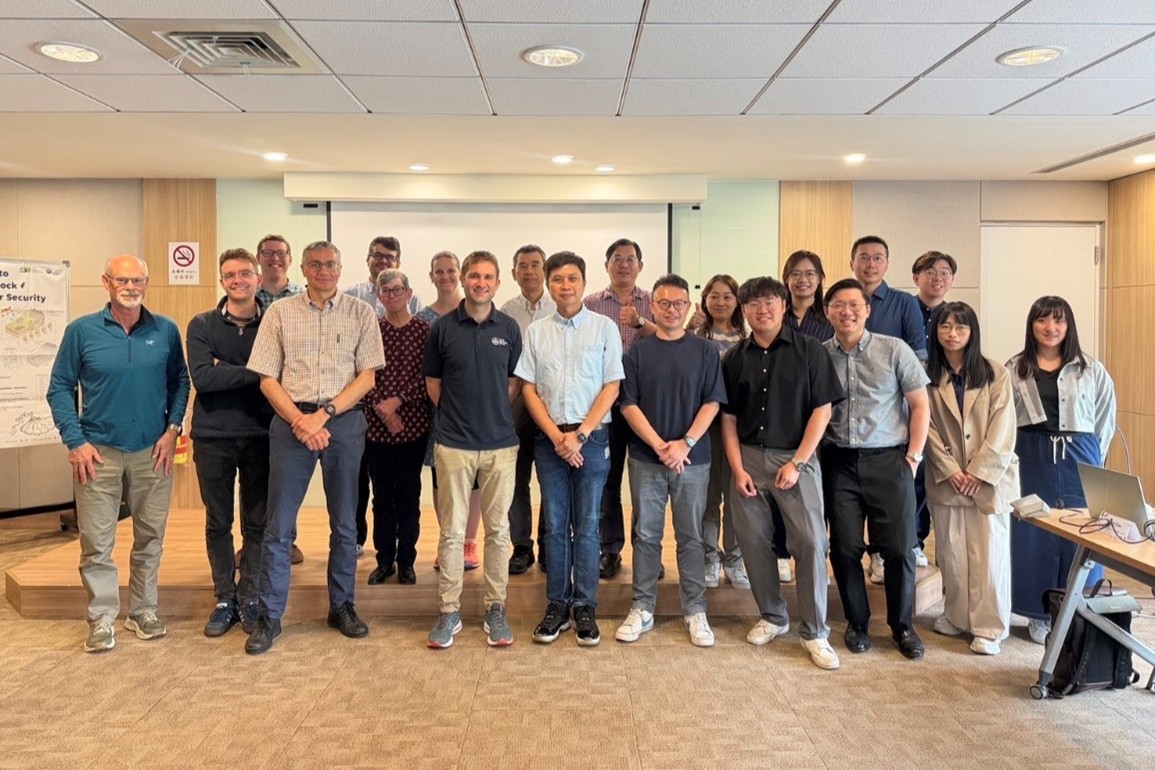
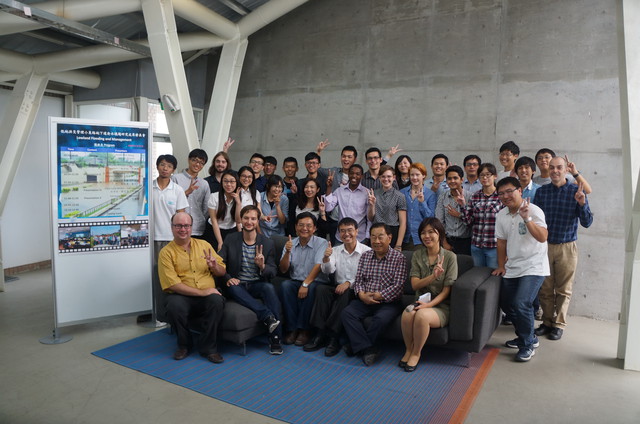
Group photo of the project team at the “Key Progress Workshop” held at Sinotech Engineering Consultants.
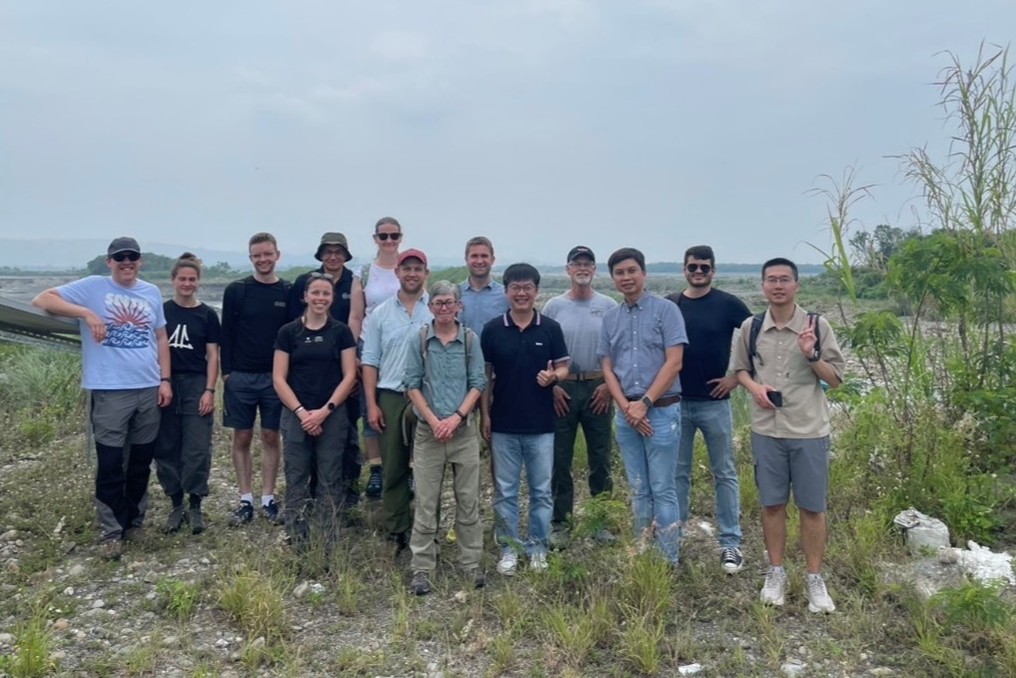
The project team conducted on-site field investigations of geology and hydrological recharge.