



SDG9
TCUS Integrates Cross-Institutional Resources to Advance Sustainable Research in Response to SDGs




Since 2023, TCUS has promoted the Cross-Institutional Sustainable Development Research Program with the United Nations Sustainable Development Goals (SDGs) as its main axis. By consolidating the R&D capabilities of four universities, TCUS jointly nurtures internationally competitive sustainable scientific teams and deepens sustainable research strengths to offer diverse innovative solutions for national, societal, and global sustainable development. In 2026, a total of 34 applications were submitted, with 10 projects approved.
Brief introductions to the 2 approved NCKU research projects:
A Study on Optical Refrigeration of Bulk and Two-Dimensional Halide Perovskites
This research project is a joint collaboration between Prof. Hsu-Cheng Hsu from the Department of Photonics at NCKU and Assistant Prof. Sheng-Chan Wu from the Department of Electro-Optical Engineering at NSYSU.
As modern information technology computing capabilities continuously advance, heat dissipation and temperature control have become crucial keys affecting performance and energy consumption. Optical refrigeration is an emerging technology that utilizes interactions between light and materials to remove thermal energy, regarded as an important development direction for high-efficiency localized heat dissipation. The research focuses on halide perovskite materials, exploring the impacts of different dimensions and structures on optical refrigeration performance.
Through high-resolution spectral analysis, variable-temperature optical measurements, and theoretical model construction, the research team will deeply analyze energy conversion mechanisms within the materials and clarify the role played by phonon interactions. The goal is to establish a predictive physical model, laying a foundation for future optical refrigeration material design and component development.
Future results are expected to be applied in local temperature control and heat dissipation technologies for key areas in micro-laser systems, optical communication equipment, high-precision sensors, and quantum components. This will enhance component stability, extend service lifespan, and reduce energy consumption, while echoing core concepts of clean energy, industry innovation, and sustainable infrastructure in the United Nations Sustainable Development Goals (SDGs).
Nanoimprinted Zinc Oxide Photodetectors with Flexible, Self-Powered, Broadband Photosensing, and Durable Characteristics: A Study Integrating Advanced Packaging and Deep Learning for Light Source Identification
This project represents a cross-institutional collaboration between Prof. Chun-Hung Lin from the Department of Photonics at NCKU and Assistant Prof. Ming-Hsien Li from the Department of Materials and Optoelectronic Science at NSYSU.
With the rapid development of wearable devices, electronic skin, and smart cities, the demand for high-performance, low-power-consumption sensing technology is growing daily. Combining advanced optoelectronic materials with artificial intelligence technology, this study develops smart sensing chips capable of accurately identifying light sources, applicable to light pollution monitoring, environmental quality management, and smart IoT systems to assist in promoting environmental protection, ESG sustainable governance, and smart city construction.
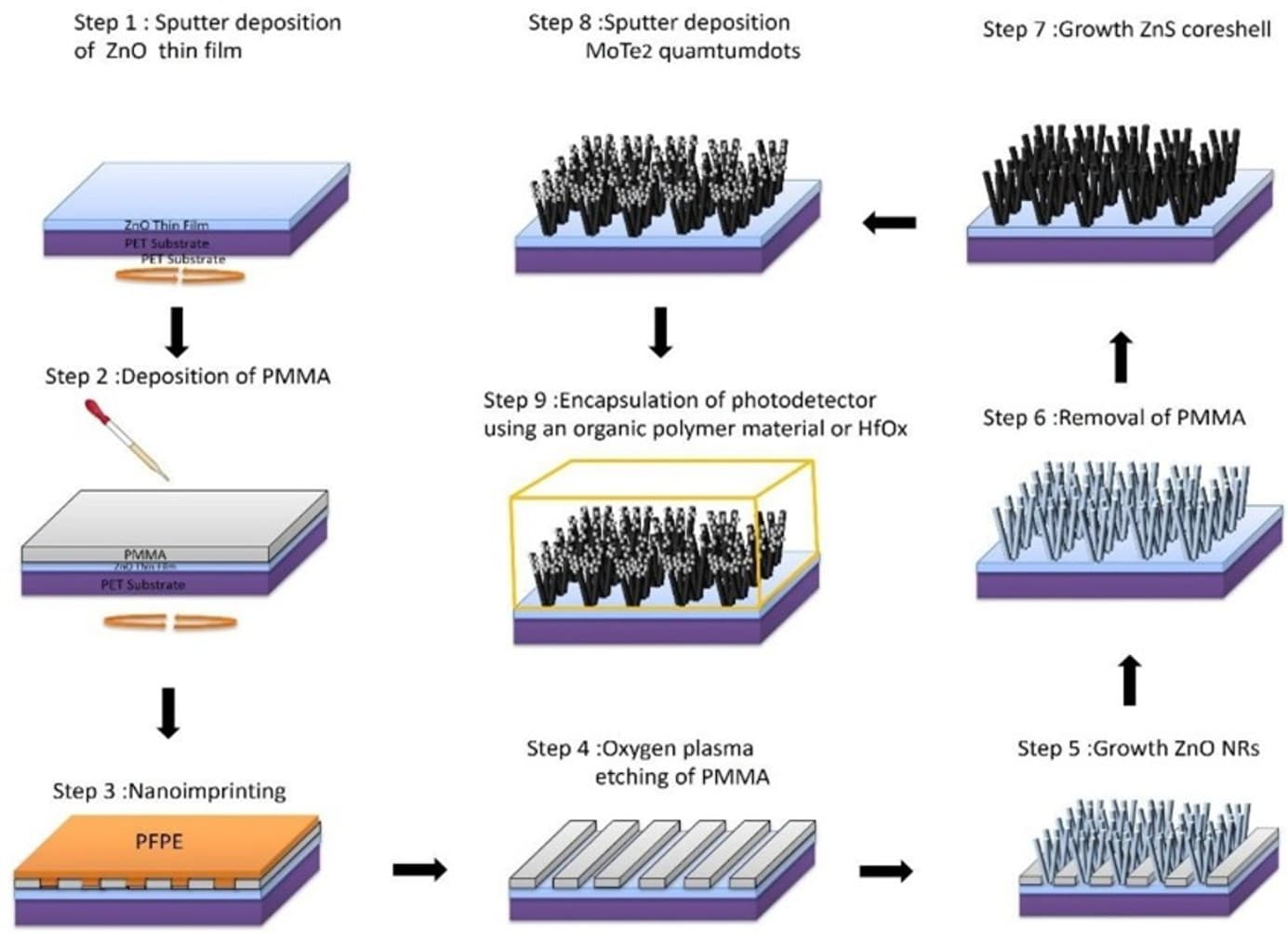
Furthermore, applying nanoimprint lithography to construct zinc oxide nanorod periodic structures, combined with deep learning algorithms, quantum dot materials, and advanced packaging technologies, the team expects to develop flexible photosensing chips featuring high sensitivity, broadband photoresponse, self-powering, and high environmental stability. Simultaneously, through innovative material design and packaging technology, it breaks through traditional sensing component limitations in flexibility, visible light sensing capability, and environmental stability, laying a critical foundation for technological innovation.
The research team plans to develop self-powered flexible sensors capable of operating without an external power source, improving battery life for green IoT devices. Combined with deep learning models, it achieves filter-free smart light source identification technology to significantly reduce system volume and cost. The technology can be applied to smart wearables, industrial safety monitoring, environmental light pollution detection, and smart city sensing networks, possessing high industrialization and commercialization potential.
The "TCUS Cross-Institutional Sustainable Development Research Program" serves as a key initiative of TCUS and an important support mechanism for promoting collaborative research. By subsidizing cross-institutional research teams, it discovers and cultivates high-potential seed teams, continuously enriching sustainable research energy, enhancing the collective ability to compete for major domestic and international research projects and resources, and focusing on national development needs to practice university social responsibility.
Schematic concept diagram of the research implementation methodology for this project. Photo source: Taken from this research project.
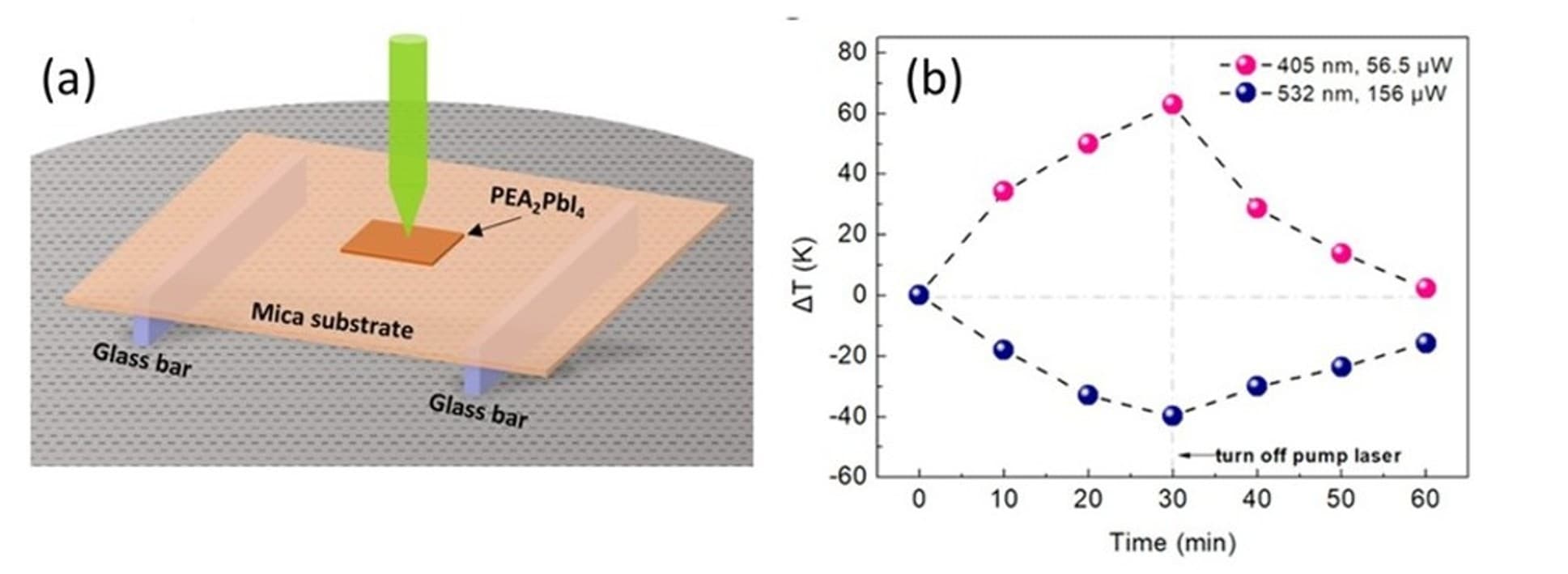
(a) Schematic diagram of the optical refrigeration experimental setup. A mechanically exfoliated 2D perovskite flake is placed on a mica substrate, suspended and supported by a glass beam to enhance thermal isolation. (b) When the excitation wavelength switches from 405 nm to 532 nm, the sample transitions from photothermal heating to laser cooling, demonstrating that appropriate excitation energy can effectively drive the anti-Stokes laser cooling mechanism of 2D perovskites. Photo source: Provided by Prof. Hsu-Cheng Hsu, Department of Photonics.
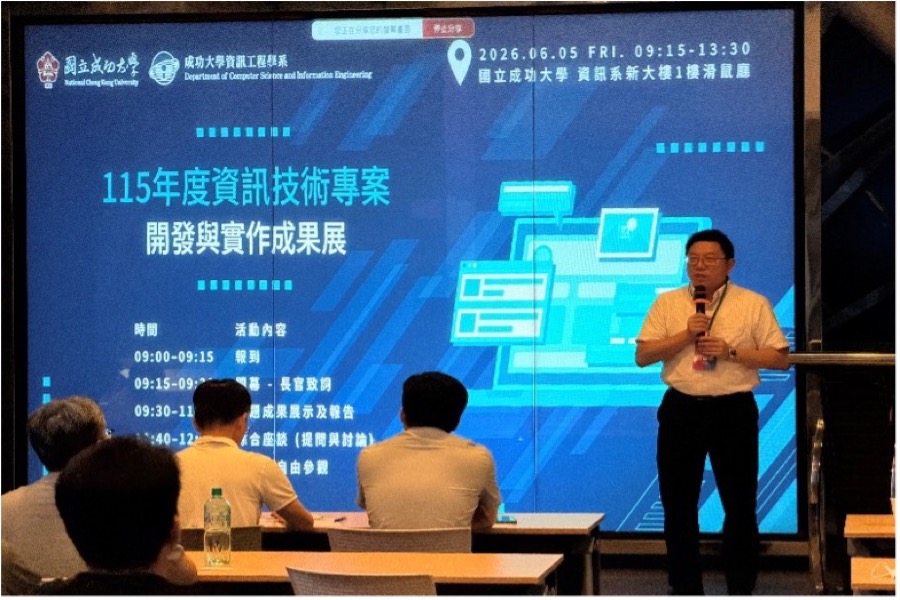
SDG9NCKU CSIE “114 Academic Year IT Project Development & Implementation Exhibition” Successfully Held
View more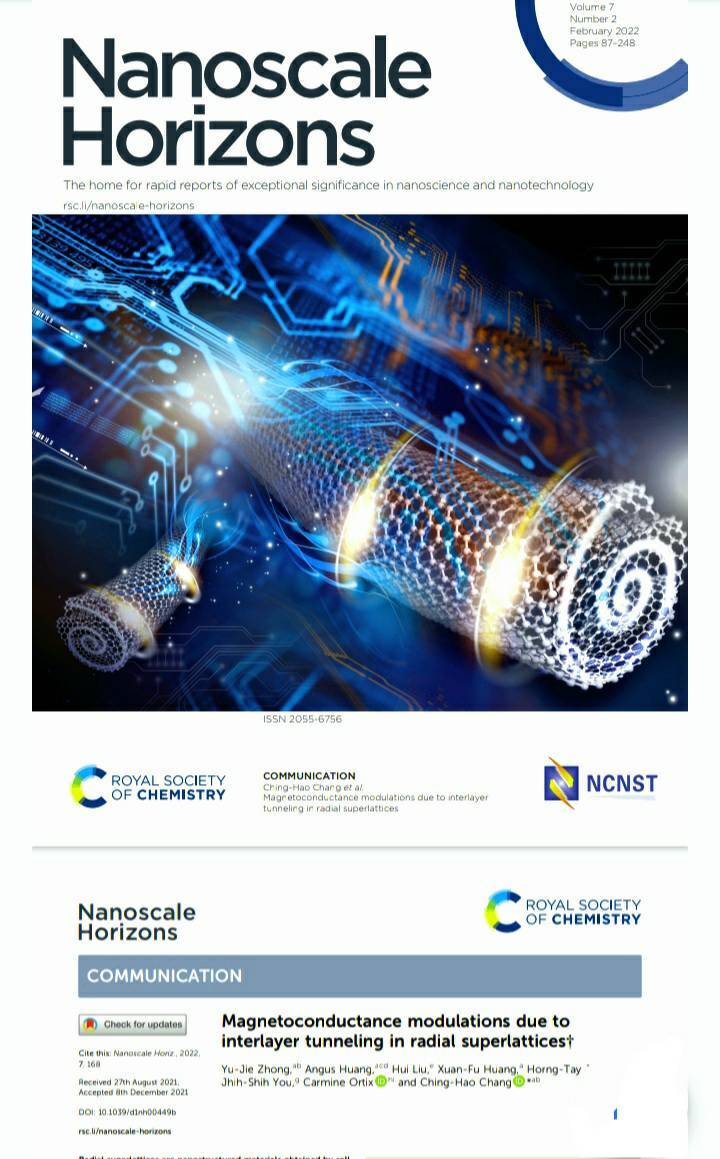
SDG9Next Generation Light and Flexible Chip Team of Ching Hao Chang Find the Key Point of Flexible Nanotechnology
View more