



SDG17
French Delegation Visits NCKU to Deepen Taiwan-France Tech and Talent Cooperation
During his welcoming speech, Vice President Shi-Wei Chang warmly welcomed Dr. Pauline Ravinet, Attaché for Academic and Scientific Cooperation; Mr. Airy Quilleré, Academic Cooperation Officer; Ms. Clémence Gasquet, Innovation and Technology Attaché; and Ms. Sasha Ting, Science and Higher Education Officer from the French Office in Taipei. The Vice President stated that Taiwan-France exchanges have yielded fruitful results in recent years. NCKU has established a deep partnership with its key French collaborator, Université Grenoble Alpes (UGA), and is actively promoting dual master's and doctoral degree programs as well as the Cluster-to-Cluster collaboration model. He specifically highlighted that with its long-standing strengths in the technology supply chain and biomedical field, NCKU serves as an indispensable key hub for industry-academia-research cooperation. NCKU assists international partner universities in precisely connecting with Taiwan's cutting-edge industrial resources to build a win-win international industry-academia innovation ecosystem. Looking ahead, NCKU hopes to expand this cooperation framework from inter-university partnerships to national research institutions and industry partners in both Taiwan and France.
In response to the welcoming remarks, Dr. Pauline Ravinet expressed deep alignment and gratitude. She pointed out that the momentum of cooperation between NCKU and France, as well as between the French Office in Taipei and Southern Taiwan, is exceptionally strong. She noted that even though the French Office in Taipei is located in Taipei, they can deeply feel and hear the vibrant technology pulse in Southern Taiwan, which is undoubtedly a crucial center driving current scientific and industrial development. She expressed high expectations for deepening cooperation between NCKU and top French universities like UGA. Mr. Airy Quilleré added that as the demand for cooperation between Taiwan and France in higher education, scientific research, and technology expands, the French Office in Taipei has specially expanded its service team by establishing dedicated roles to actively interface with French university resources and promote student mobility and academic cooperation projects. In the future, the team will fully support the development of bilateral cooperation, build upon the solid foundation, and work alongside NCKU to elevate Taiwan-France industry-academia and technology cooperation to new heights.
Rooting in Scientific Research Mechanisms and Industry-Academia Transformation to Build a Comprehensive Taiwan-France International Engagement Platform
During the university-level briefing session, various units of NCKU demonstrated well-established international cooperation mechanisms. First, Dean of International Affairs Wen-Tai Chiu reviewed the rich outcomes of joint paper publications, student exchanges, and academic research between NCKU and French partners. He previewed that future efforts will focus on opening new frontiers in key fields such as computational health, energy, cybersecurity, and semiconductors, laying the cornerstone for multi-domain bilateral cooperation. Subsequently, Executive Director Hsing-Fen Su of the Office of International Affairs presented and led discussions on the "2028 Taiwan-France Science and Technology Conference" (STC) proposal scheduled for Spring 2028, aiming to foster deep dialogue through field forums and industry visits. Director Liang-Ming Hwang of the Center for Industry-Academia Innovation presented the one-stop IP transformation and "NCKU-Enterprise Joint Research Center" mechanisms, emphasizing that they will provide strong industrialization links and commercial application backings for prospective Taiwan-France scientific research achievements.
Complementing Strengths Focused on Smart Healthcare and Silicon Photonics to Jointly Break Bottlenecks in Next-Generation Chips and Advanced Technologies
In terms of advanced scientific research cooperation across various fields, Vice Superintendent Peng-Chhan Lin of National Cheng Kung University Hospital pointed out that NCKU possesses comprehensive clinical medical resources and precision medicine applications, making it the best verification field for smart healthcare. In the future, NCKU looks forward to aligning with national programs in Taiwan and France to develop smart medical technologies while continuing to promote rare disease research and clinical applications. Connecting with semiconductor industry advantages, Vice Dean Chen-Su Chen of the Academy of Innovative Semiconductor and Sustainable Manufacturing emphasized that NCKU is located at the core of Taiwan's Great South Semiconductor Technology Corridor, possessing advantages in compound semiconductors and packaging design. In the future, NCKU hopes to combine France's basic science strengths to jointly break through optoelectronic interconnection and thermal management bottlenecks in AI and high-performance computing, while co-cultivating international talent.
Cultivating Trustworthy AI and Climate-Resilient Aquaculture to Showcase NCKU's Research Momentum and Global Sustainability Impact
In cybersecurity and advanced AI technology, Dean Shih-Chun Wu of the College of Electrical Engineering and Computer Science demonstrated NCKU's profound hardware-software integration strength in cybersecurity and smart campus testbeds. Plans are underway to collaborate with French academic institutions and industries to develop secure AI models, with in-depth research focused on edge AI privacy protection, anti-disinformation, and trustworthy AI. Lastly, in climate resilience and biotech aquaculture, Distinguished Professor Han-Ching Wang of the Department of Biotechnology and Bioindustry Sciences (and Director of the International Center of Excellence for Shrimp Research) presented NCKU's advantages with two World Organisation for Animal Health (WOAH) Reference Laboratories for shrimp diseases and Specific Pathogen Free (SPF) tiger shrimp breeding. In the future, NCKU will collaborate internationally with French academic and industry partners to promote climate-resistant tiger shrimp genetic breeding, antibiotic-free insect protein feed, and AI smart recirculating aquaculture system (RAS), injecting new momentum into global food security and sustainable development.
As the first university-level meeting drew to a close, the delegation from the French Office in Taipei and academic experts from various fields at NCKU engaged in warm and constructively substantive exchanges. Both sides agreed that Taiwan-France academic cooperation has officially entered a stage of comprehensive deepening marked by precise alignment and practical implementation. Moving forward, beyond deepening innovation incubator platform integration and talent mobility, both sides will also demonstrate the social and environmental impact of academic research through lectures and workshops, expecting to showcase fruitful Taiwan-France cross-national scientific research and industry-academia cooperation achievements over the next two years.
Breaking Away from Single-Point Academic Connections to Build a Mission-Oriented Bilateral Cross-Domain Ecosystem
Following the main meeting, NCKU arranged parallel sessions gathering scholars from various fields to map out cooperation blueprints for four strategic academic research clusters. First, Associate Dean Ching-Long Yang of the Office of International Affairs explained the concrete cooperation progress in dual master's and doctoral degree programs and academic research clusters recently promoted between NCKU and UGA. This initiative will further refine the international mobility and scientific research cooperation mechanisms between the two universities, establishing a solid foundation for a long-term sustainable partnership. Speaking on the macro-level international cooperation layout, Associate Vice President for Research and Development Chia-Yi Wang introduced NCKU's newly promoted Cluster-to-Cluster international collaboration framework. Associate Vice President Wang stated that this model breaks away from past single-point academic connections, striving to build a mission-oriented bilateral ecosystem that fully leverages the complementary advantages of both universities. Plans are set to extend this model to corporations, research institutes, and government sectors to promote cross-domain linkages, guiding teams to secure long-term external resources to achieve sustainability goals.
Vice Superintendent Peng-Chhan Lin of NCKU Hospital presented on computational health and AI medicine, aiming to combine UGA's physiology research with NCKU's AI data technology, focusing on chronic disease prevention and precision medicine. Vice Dean Chen-Su Chen of the Academy of Innovative Semiconductor and Sustainable Manufacturing shared and integrated both universities' strengths in electronic ICs and photonic ICs, hoping to jointly develop high-efficiency thermal dissipation materials and next-generation chip technologies in the future. Dean Shih-Chun Wu of the EECS College explored privacy protection, legal regulations, and social impacts under AI technologies, looking forward to establishing a cross-national trustworthy technical framework and exchange. Finally, Director Hsi-Sheng Teng of the Research Center for Energy Technology and Strategy stated in his presentation that he hopes to combine UGA's cutting-edge scientific research and large-scale analytical facilities with NCKU's strengths in material development, system integration, and industry-academia verification, linking the complete innovation chain from basic science to industrial application to jointly accelerate the realization of 2050 net-zero carbon emissions and sustainable energy goals.
In a simultaneous parallel session, Vice President for Research and Development Chuan-Pu Liu focused on deep scientific research, proposing joint research calls and joint publications between NCKU and French academic institutions. He also proposed joint professorships, visiting scholar exchanges, and international collaborative research projects to further deepen the long-term sustainable partnership in higher education and frontier academics between Taiwan and France. Director Shu-Ying Wang of the International Education Division (Office of International Affairs) proposed enhancing existing student exchange programs and introducing joint master's/doctoral advisership mechanisms and dual degrees through research cooperation, hoping to initiate more programs with the French Office in Taipei to boost bilateral student mobility.
The discussions concluded successfully amidst warm exchanges and domain insights. Regarding cooperation with the French side, the French Office in Taipei expressed enthusiasm for further exchanges and collaboration between NCKU and more French academic/research institutions, committing to actively act as a bridge of communication to co-create a new chapter in Taiwan-France cooperation.
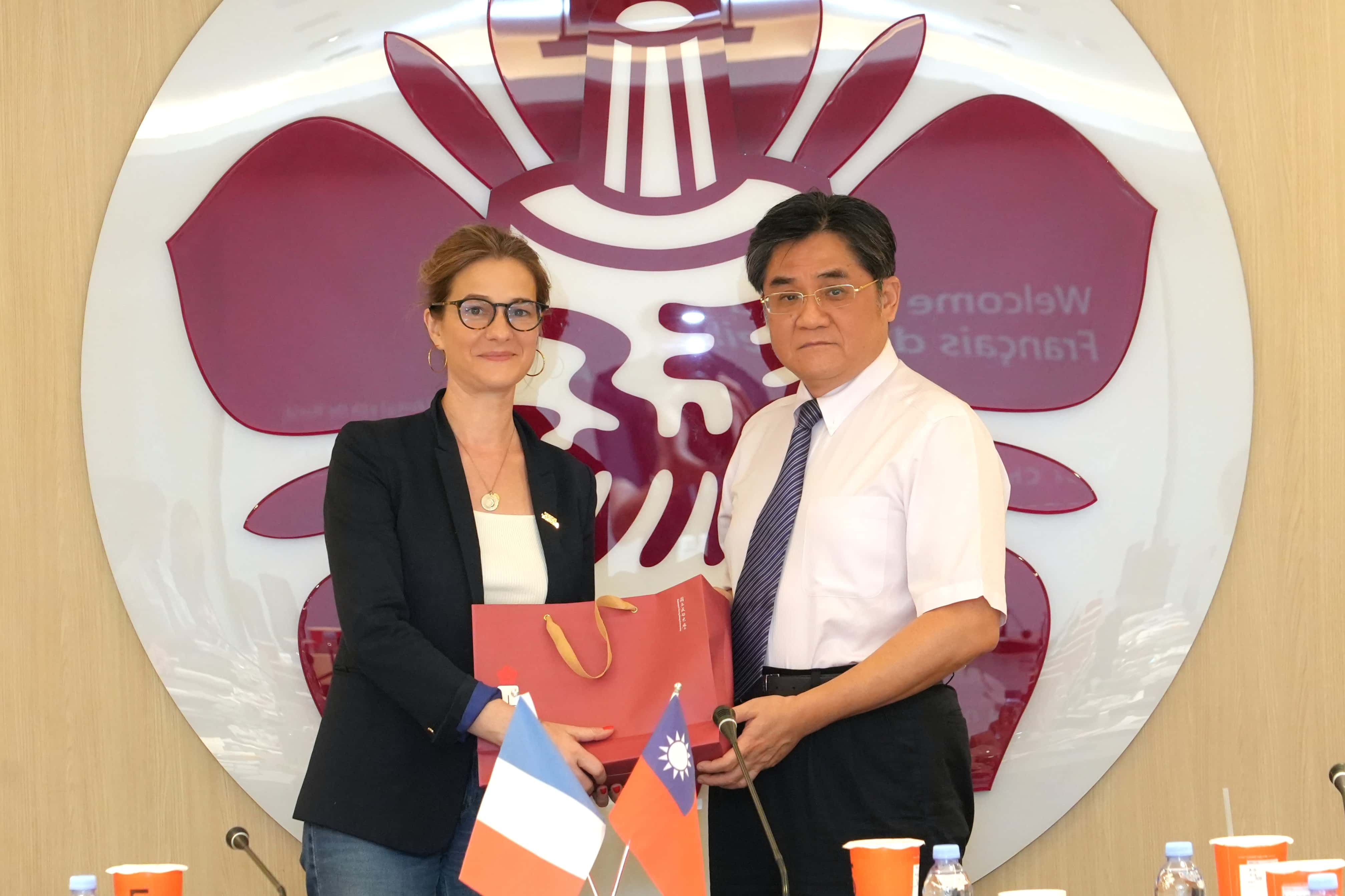
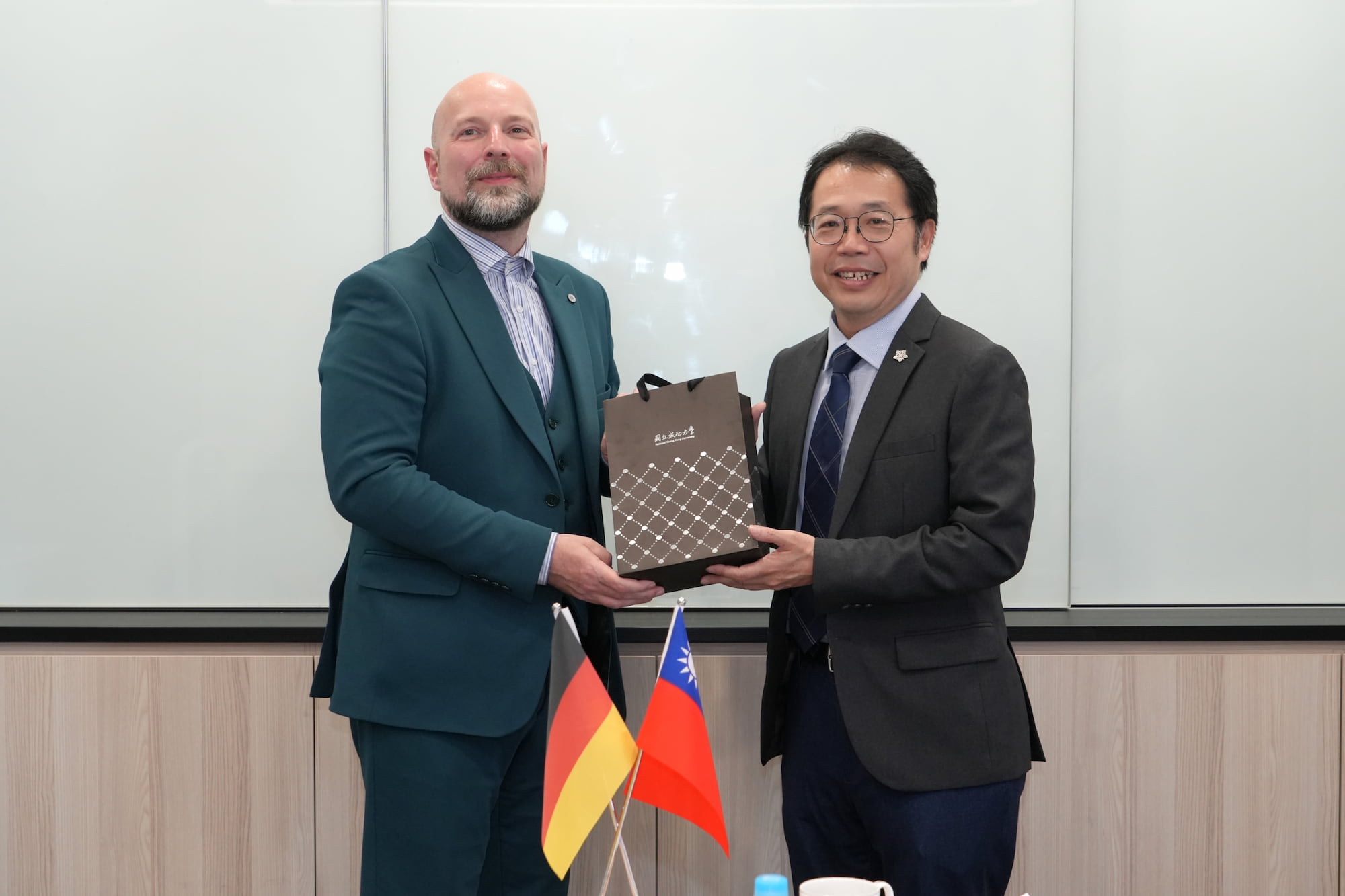
NCKU Executive Vice President Shi-Wei Chang (right) presents a gift to Dr. Pauline Ravinet, Attaché for Academic and Scientific Cooperation at the French Office in Taipei (left), symbolizing the deep friendship and academic ties between NCKU and France.

Vice Dean Chen-Su Chen of the Academy of Innovative Semiconductor and Sustainable Manufacturing at NCKU stated that NCKU hopes to combine the semiconductor and silicon photonics strengths of Taiwan and France to jointly break through AI computing bottlenecks and cultivate talent.
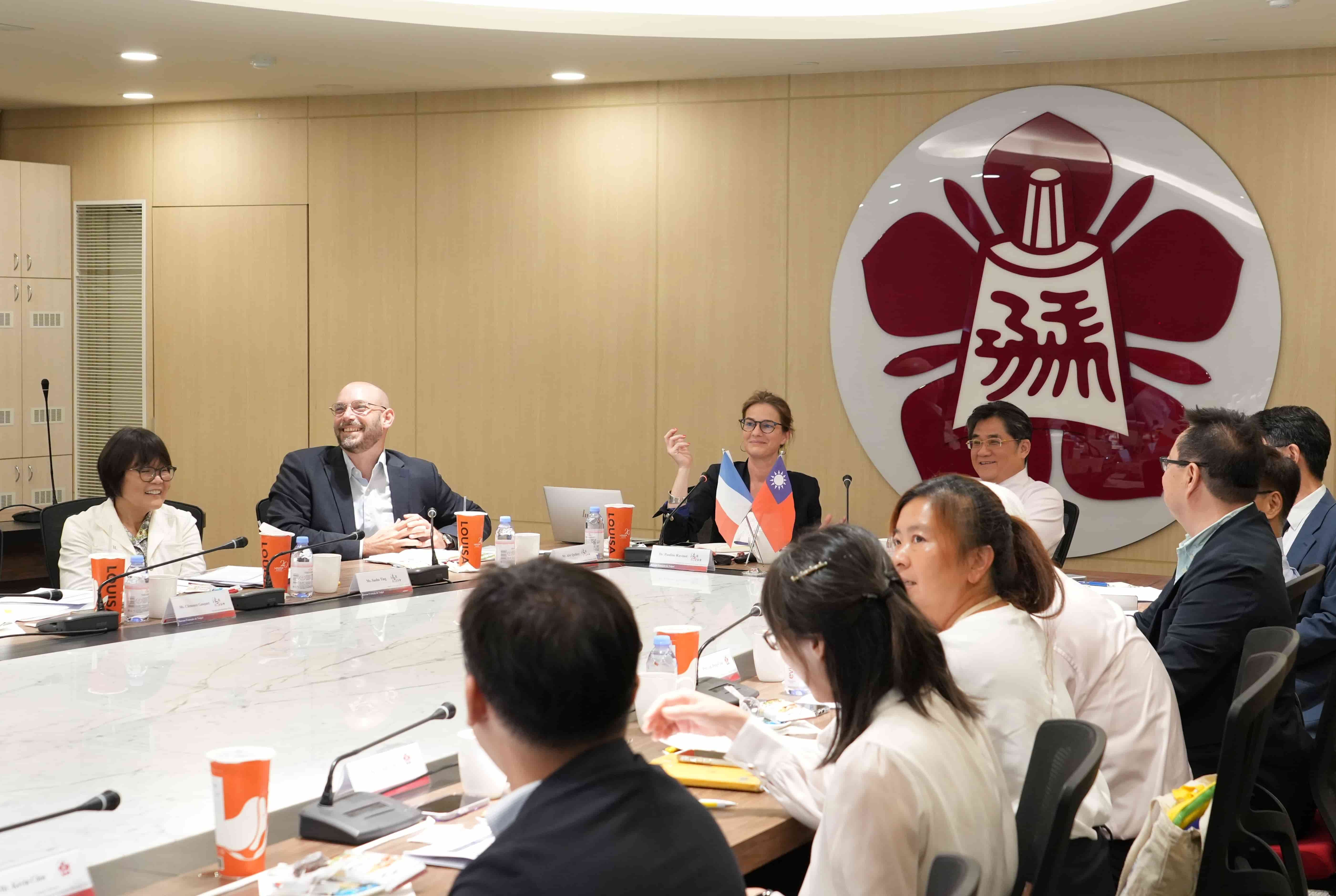
The delegation from the French Office in Taipei and the NCKU team engaged in in-depth exchanges during the meeting, covering cutting-edge semiconductors, cybersecurity, advanced healthcare, climate resilience, and energy transition. The vibrant interaction helped sketch a brand-new blueprint for cross-national technology cooperation.
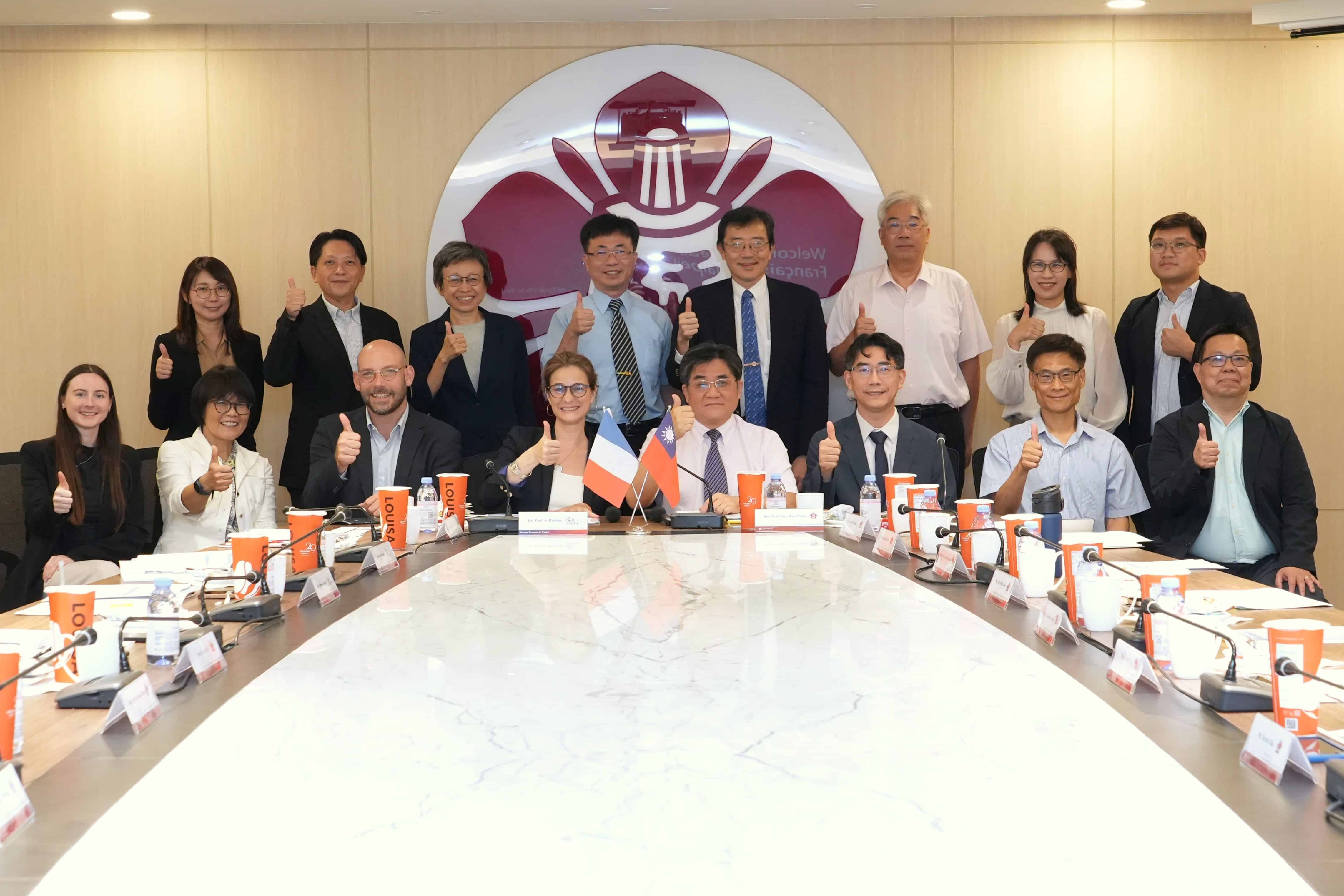
National Cheng Kung University (NCKU) and the delegation from the French Office in Taipei (Bureau Français de Taipei, BFT) engaged in in-depth exchanges on Taiwan-France cooperation initiatives and took a group photo prior to the meeting. Front row guests from left to right: Ms. Clémence Gasquet, Innovation and Technology Attaché; Ms. Sasha Ting, Science and Higher Education Officer; Mr. Airy Quilleré, Academic Cooperation Officer; and Dr. Pauline Ravinet, Attaché for Academic and Scientific Cooperation.