



SDG9
NCKU Professor Fei-Yi Hung’s Team Develops Ultra-High-Power Al-Clad Cu Wire to Boost EV and AI Development
With the rapid advancements in artificial intelligence and electric vehicles, demand for high-power and high-current transmission solutions continues to surge. A research team led by Distinguished Professor Fei-Yi Hung from the Department of Materials Science and Engineering at National Cheng Kung University (NCKU) has successfully developed a 500 μm (micrometer) diameter aluminum-clad copper wire (Al-clad Cu wire, AC wire). The innovation significantly improves electrical power conductivity while addressing common drawbacks of the widely used 375 μm copper wires—such as oxidation, poor corrosion resistance, and electrical fatigue under long-term power delivery. Notably, the team employed an eco-friendly physical manufacturing process, perfectly aligning with current low-carbon and energy-saving trends to offer enormous application potential for high-power electronic components.
Professor Hung noted that standard 375 μm copper wires used in high-power components struggle under large electrical currents required by AI computing and EV charging systems, often overheating, discoloring, and shortening device lifespan due to insufficient wire thickness. To address this, the team first engineered a 500 μm copper wire to boost conductivity. Recognizing that wrapping the copper core with an aluminum layer could combine copper’s high conductivity with aluminum’s corrosion resistance and electrical stability, they embarked on developing the Al-clad Cu wire technology.
While electroplated aluminum-coated thin copper wires exist commercially, genuine aluminum-clad copper wires do not. Overcoming two major industry challenges—preventing thin aluminum sheets from tearing during cladding and ensuring tight interfacial bonding—the team utilized highly ductile columnar-grain thin aluminum sheets to wrap a micro-alloyed copper core (enhanced with trace amounts of gold, silver, palladium, and platinum). Using pure mechanical methods without chemical agents, they successfully achieved physical cladding. A subsequent two-stage uniform heat treatment formed aluminum-copper intermetallic compounds at the interface, securing the bond and vastly enhancing bending toughness, corrosion resistance, and long-term electrical stability over traditional 375 μm copper wires.
Supported by graduate students Hong-Ru Huang and Rui-Zhi Huang, the team established comprehensive mechanical and electrochemical testing datasets. The technology boasts six major highlights: a pioneer 500 μm wire diameter, lightweight and energy-saving properties, low-carbon physical cladding, exceptional corrosion resistance, high bending toughness, and superior electrical fatigue life under high currents.
Manufactured in collaboration with Tainan-based First Sharp Co., the technology has passed laboratory wire-bonding reliability certifications and secured an invention patent, offering a transformative solution for high-current substrate development.
Professor Hung noted that standard 375 μm copper wires used in high-power components struggle under large electrical currents required by AI computing and EV charging systems, often overheating, discoloring, and shortening device lifespan due to insufficient wire thickness. To address this, the team first engineered a 500 μm copper wire to boost conductivity. Recognizing that wrapping the copper core with an aluminum layer could combine copper’s high conductivity with aluminum’s corrosion resistance and electrical stability, they embarked on developing the Al-clad Cu wire technology.
While electroplated aluminum-coated thin copper wires exist commercially, genuine aluminum-clad copper wires do not. Overcoming two major industry challenges—preventing thin aluminum sheets from tearing during cladding and ensuring tight interfacial bonding—the team utilized highly ductile columnar-grain thin aluminum sheets to wrap a micro-alloyed copper core (enhanced with trace amounts of gold, silver, palladium, and platinum). Using pure mechanical methods without chemical agents, they successfully achieved physical cladding. A subsequent two-stage uniform heat treatment formed aluminum-copper intermetallic compounds at the interface, securing the bond and vastly enhancing bending toughness, corrosion resistance, and long-term electrical stability over traditional 375 μm copper wires.
Supported by graduate students Hong-Ru Huang and Rui-Zhi Huang, the team established comprehensive mechanical and electrochemical testing datasets. The technology boasts six major highlights: a pioneer 500 μm wire diameter, lightweight and energy-saving properties, low-carbon physical cladding, exceptional corrosion resistance, high bending toughness, and superior electrical fatigue life under high currents.
Manufactured in collaboration with Tainan-based First Sharp Co., the technology has passed laboratory wire-bonding reliability certifications and secured an invention patent, offering a transformative solution for high-current substrate development.
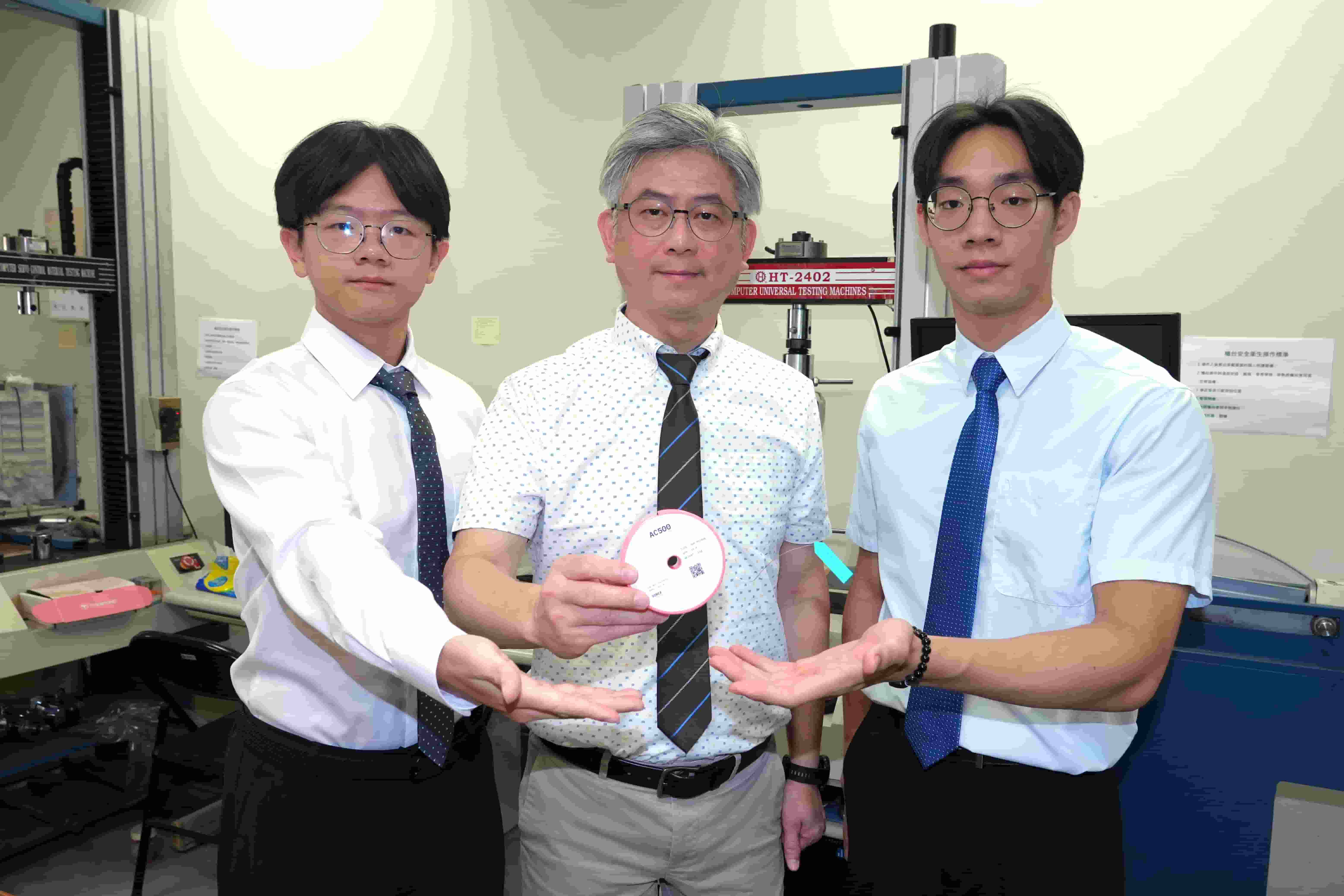
Group photo of the research team: (From left) Graduate student Hong-Ru Huang, Professor Fei-Yi Hung, and graduate student Rui-Zhi Huang.
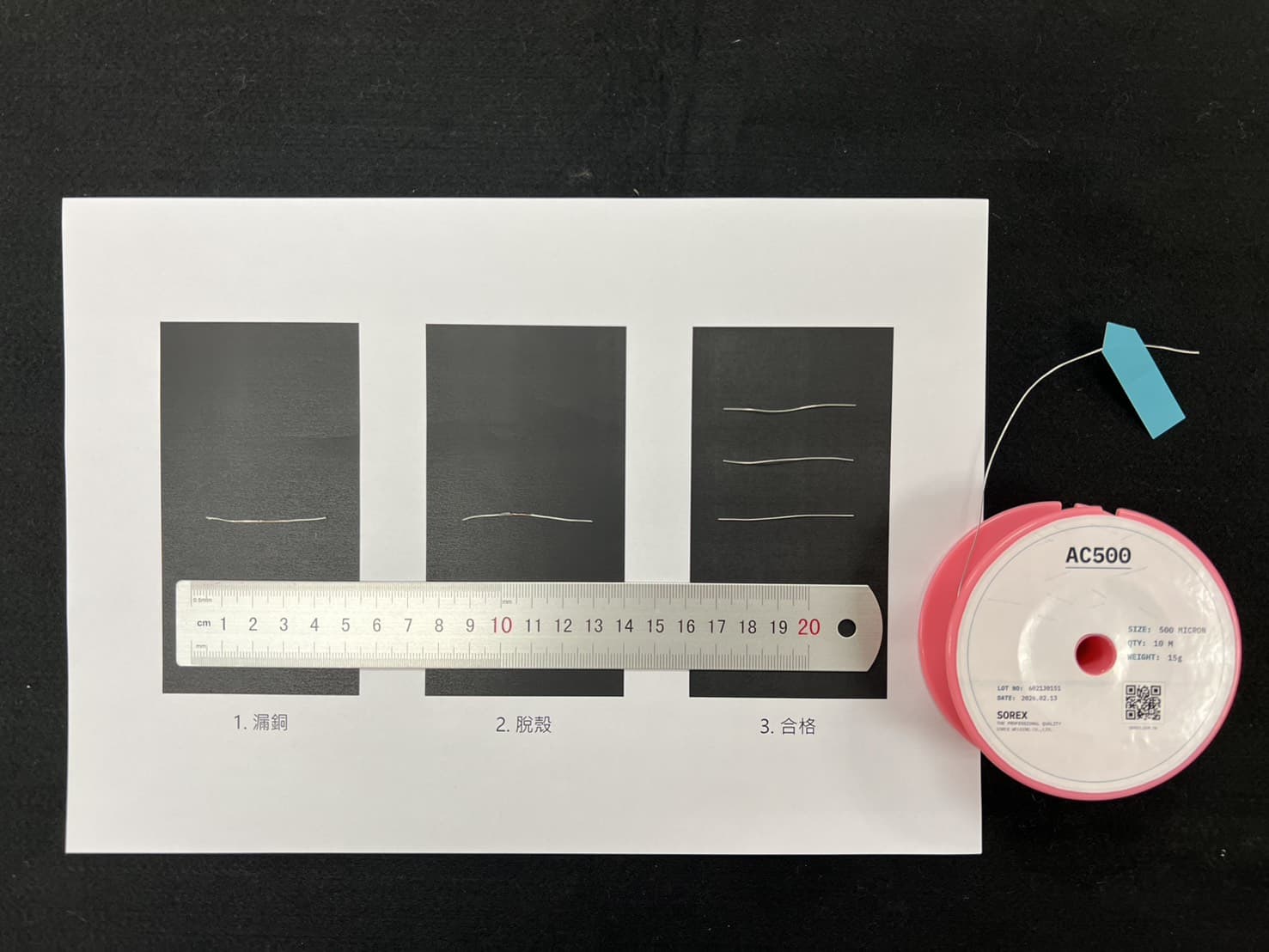
Wire comparison
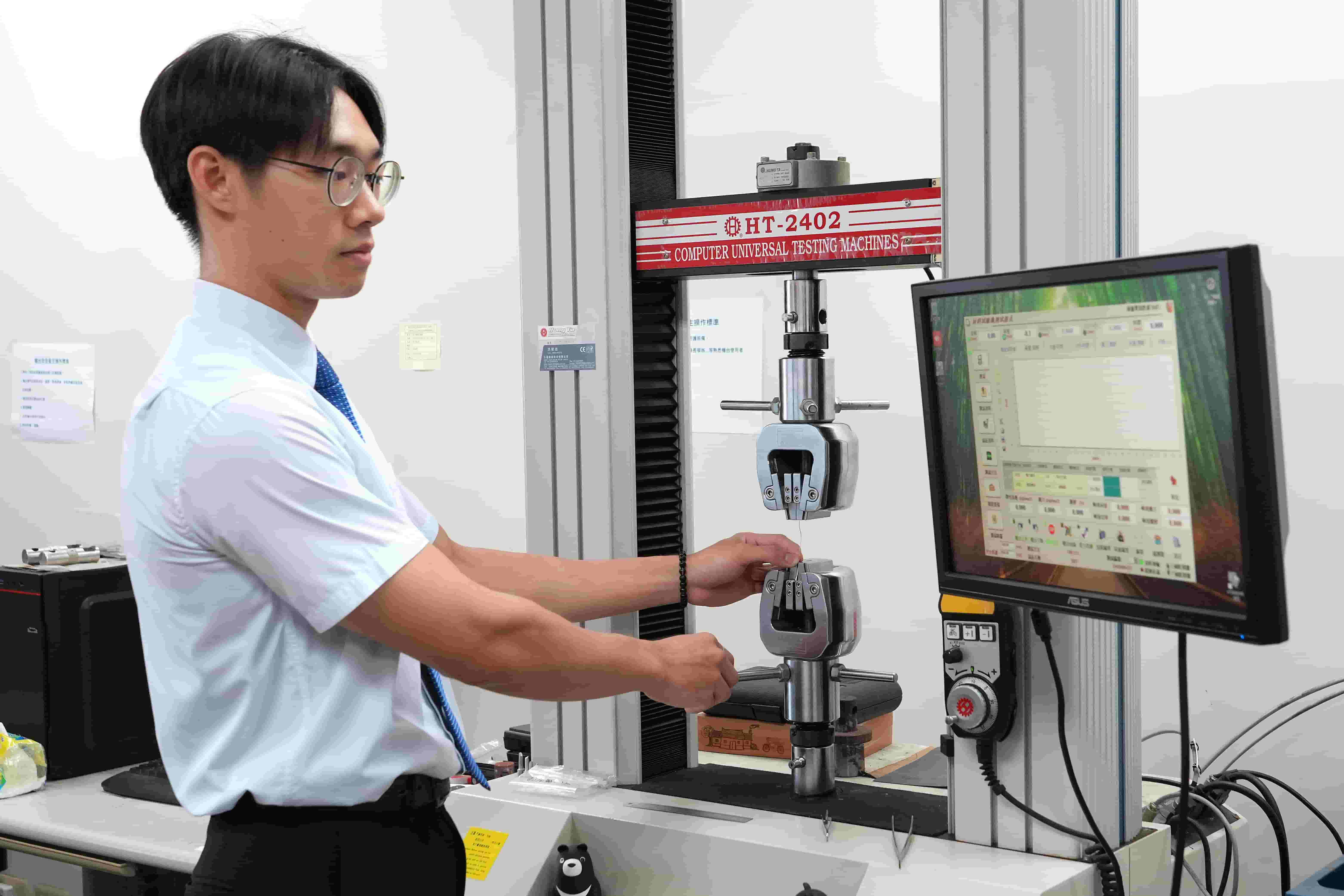
Bending toughness testing of the wire.
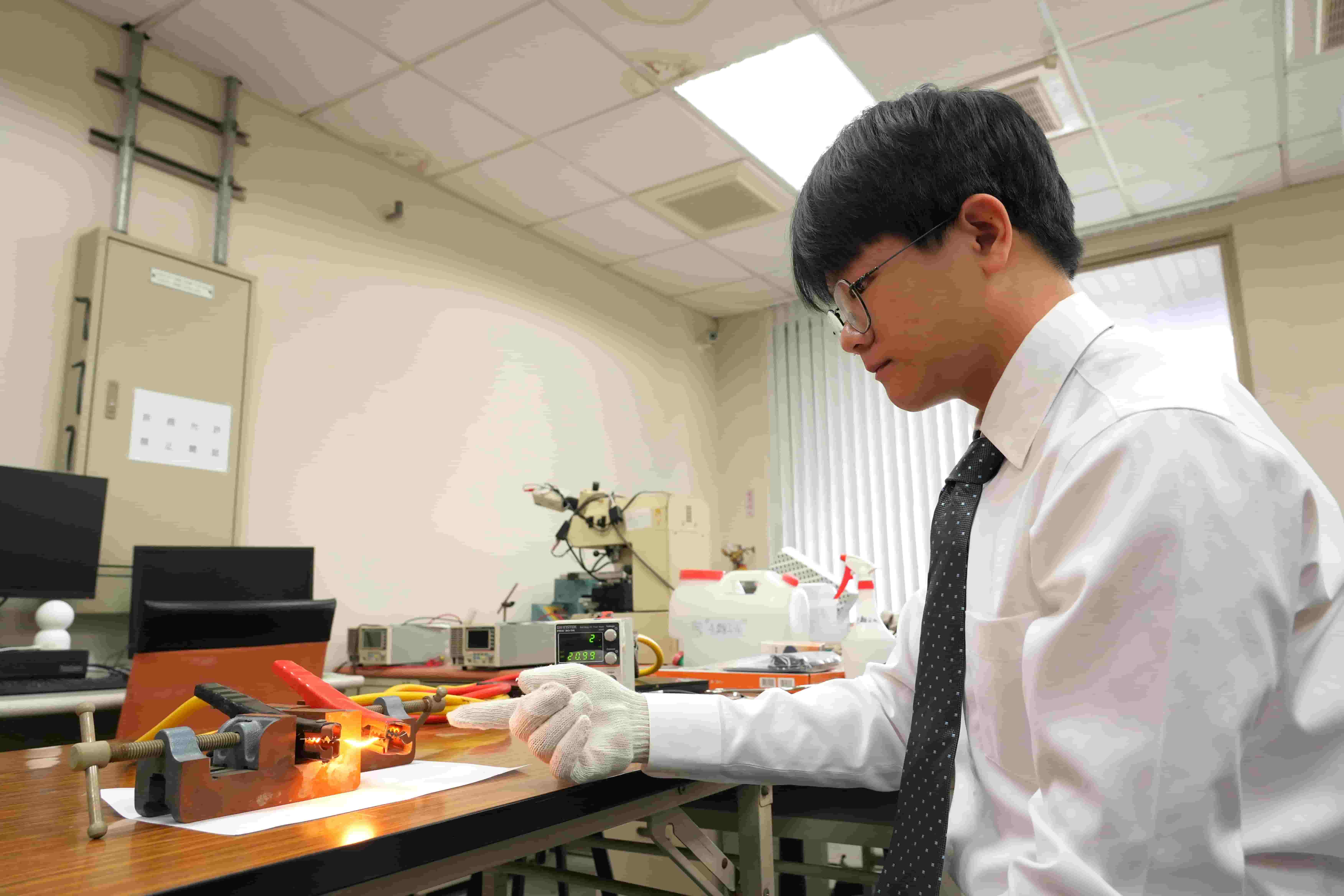
Electrical fatigue testing under high-current conditions.
![[2025 SMART+ Manufacturing Exhibition] NCKU Showcases AI Technologies to Boost Factory Cybersecurity and Digital Transformation](https://sdg.ncku.edu.tw/userfiles/images/20260526084740338.jpg)