



SDG4
NCKU Promotes Edge AI Robotics Education, Connecting Hands-On Resources Across Universities



As AI begins to drive the physical world, robots must not only complete actions but also perceive their environment, interpret information, and respond in real time. This technological evolution makes the seamless collaboration of sensing, computing, and control within a single system a key direction for deepening engineering education. Supported by the Ministry of Education's Smart Sensing Circuit Alliance, the Department of Electrical Engineering at National Cheng Kung University (NCKU) developed the "Edge AI for Robotics" course materials. On August 26, NCKU hosted a hands-on experience workshop and a MOU signing ceremony for industry-academia collaboration. The event attracted nearly 50 faculty members and students from 23 universities, allowing NCKU to gather valuable user feedback through curriculum introductions, live demonstrations, and exchange before the official course launch.
This course material is part of the robotics control curriculum developed under the MOE Smart Sensing Circuit Alliance. Created by Professor Chih-Hsien Huang's team in the NCKU Department of Electrical Engineering, it is scheduled to be integrated into the master's program in September 2026. The course centers around an automated pick-and-place task using a six-axis robotic arm. Students first identify objects and determine their positions, then handle robotic arm control, IMU inertial sensing, sensor fusion, and ROS integration. Completing this task requires various modules to work in sync, enabling students to analyze problems from actual outcomes and understand how sensor data is computed and translated into robotic motion. The goal is for this curriculum to serve not just for fixed operations, but as an extensible learning framework for independent projects, research, and diverse applications.
The development integrates technology and promotional resources from Analog Devices, Inc. (ADI), Macnica Anstek, and iStuNet. During the event, NCKU's Department of Electrical Engineering signed an industry-academia collaboration MOU with the three corporate partners. Moving forward, teaching experiences will be shared via the MOE Smart Sensing Circuit Alliance platform to foster ongoing dialogue with educators interested in adopting the curriculum. Professor Kwang-Wei Cheng, director of the alliance project, stated: "The workshop offers a valuable platform for universities to exchange ideas. NCKU shared its current curriculum, while also gaining insights into other educators' considerations regarding course structuring, equipment, and student capability, ensuring the materials better meet practical teaching needs."
Professor Chih-Hsien Huang noted: "Through a complete hands-on task, this curriculum allows students to connect machine learning, model training, MCU deployment, sensor data processing, and control methods, mastering the synergy between modules through direct practice. It also encourages students to use AI tools for coding and debugging, allowing them to dedicate more time to system design, validation, and practical application." Collaborating with AI tools is becoming a vital skill in engineering development, and the initiative aims to help students build continuous learning adaptability when facing new technologies and development environments.
The course materials will first be implemented in NCKU courses and refined based on feedback from faculty and students. From cross-disciplinary integration to AI collaboration, this initiative responds to robotics advancements while establishing an adaptable learning framework for a rapidly changing engineering landscape.
This course material is part of the robotics control curriculum developed under the MOE Smart Sensing Circuit Alliance. Created by Professor Chih-Hsien Huang's team in the NCKU Department of Electrical Engineering, it is scheduled to be integrated into the master's program in September 2026. The course centers around an automated pick-and-place task using a six-axis robotic arm. Students first identify objects and determine their positions, then handle robotic arm control, IMU inertial sensing, sensor fusion, and ROS integration. Completing this task requires various modules to work in sync, enabling students to analyze problems from actual outcomes and understand how sensor data is computed and translated into robotic motion. The goal is for this curriculum to serve not just for fixed operations, but as an extensible learning framework for independent projects, research, and diverse applications.
The development integrates technology and promotional resources from Analog Devices, Inc. (ADI), Macnica Anstek, and iStuNet. During the event, NCKU's Department of Electrical Engineering signed an industry-academia collaboration MOU with the three corporate partners. Moving forward, teaching experiences will be shared via the MOE Smart Sensing Circuit Alliance platform to foster ongoing dialogue with educators interested in adopting the curriculum. Professor Kwang-Wei Cheng, director of the alliance project, stated: "The workshop offers a valuable platform for universities to exchange ideas. NCKU shared its current curriculum, while also gaining insights into other educators' considerations regarding course structuring, equipment, and student capability, ensuring the materials better meet practical teaching needs."
Professor Chih-Hsien Huang noted: "Through a complete hands-on task, this curriculum allows students to connect machine learning, model training, MCU deployment, sensor data processing, and control methods, mastering the synergy between modules through direct practice. It also encourages students to use AI tools for coding and debugging, allowing them to dedicate more time to system design, validation, and practical application." Collaborating with AI tools is becoming a vital skill in engineering development, and the initiative aims to help students build continuous learning adaptability when facing new technologies and development environments.
The course materials will first be implemented in NCKU courses and refined based on feedback from faculty and students. From cross-disciplinary integration to AI collaboration, this initiative responds to robotics advancements while establishing an adaptable learning framework for a rapidly changing engineering landscape.

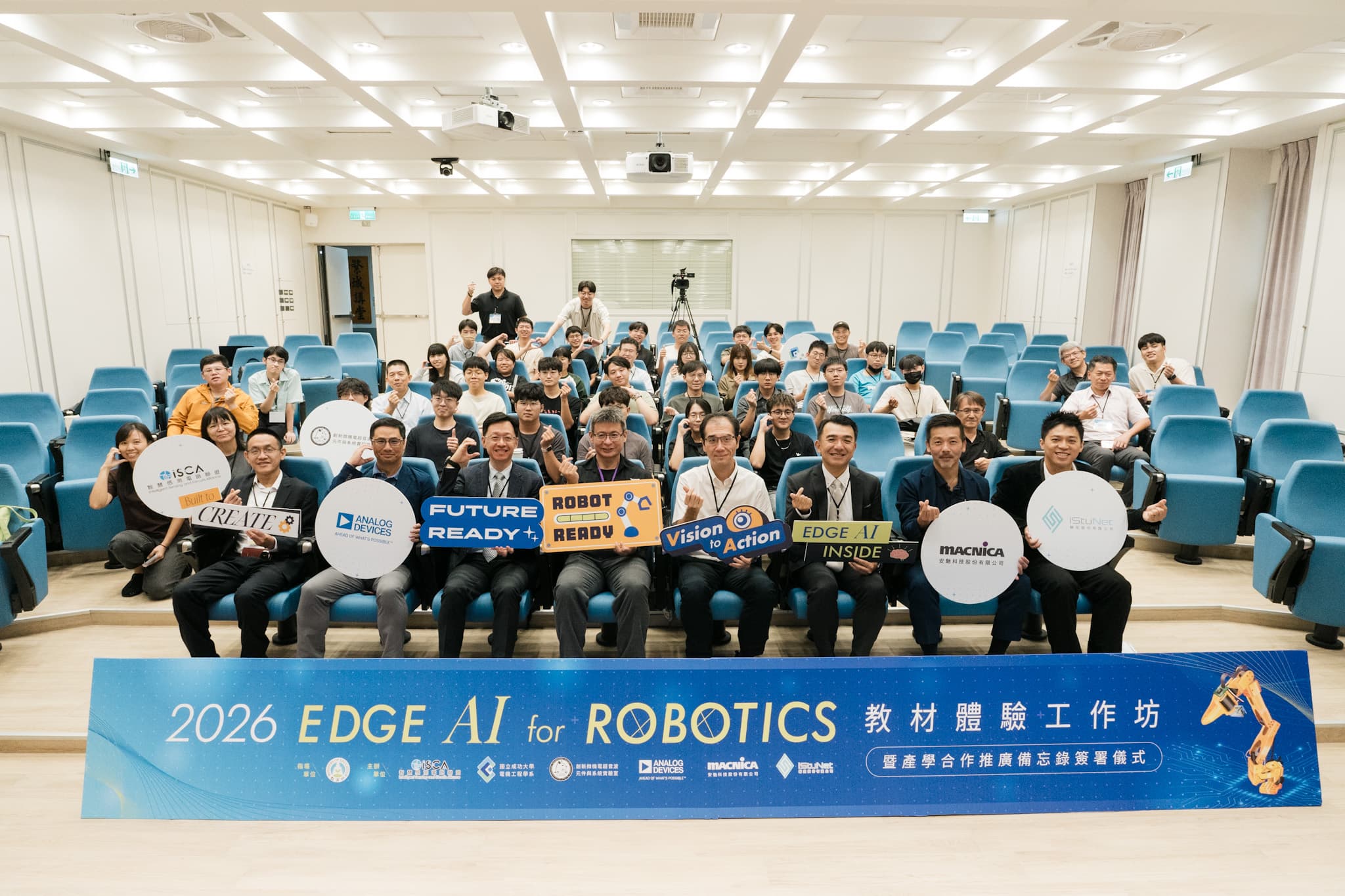
Participants engaging in the hands-on curriculum demonstration.
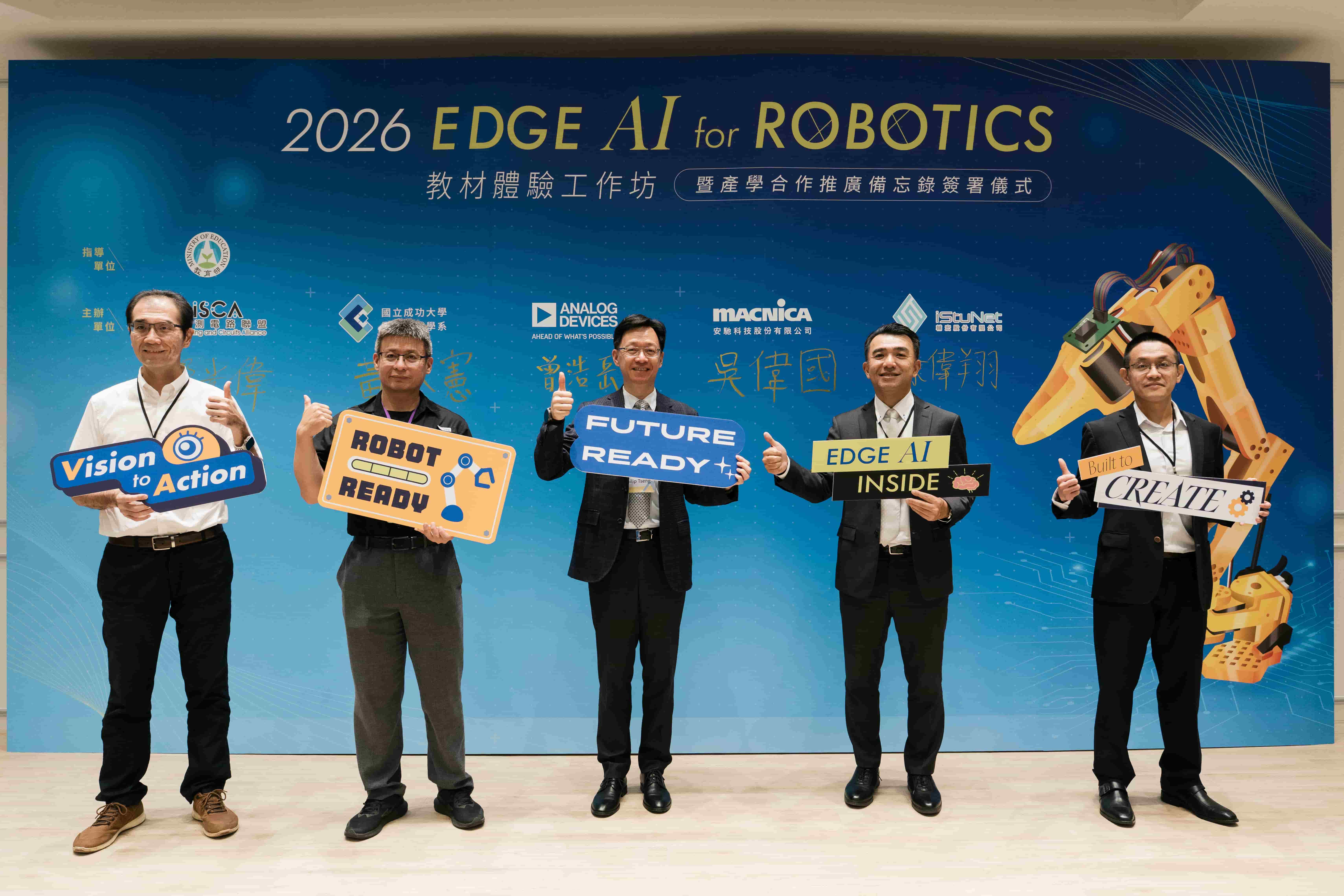
MOU signing ceremony (from left: Prof. Kwang-Wei Cheng, NCKU EE & MOE Alliance Director; Prof. Chih-Hsien Huang, NCKU EE; Philip Tseng, ADI South Asia Pacific Managing Director; Wu Wei-guo, Chairman of Macnica Anstek; Xu Wei-xiang, Chairman of iStuNet).
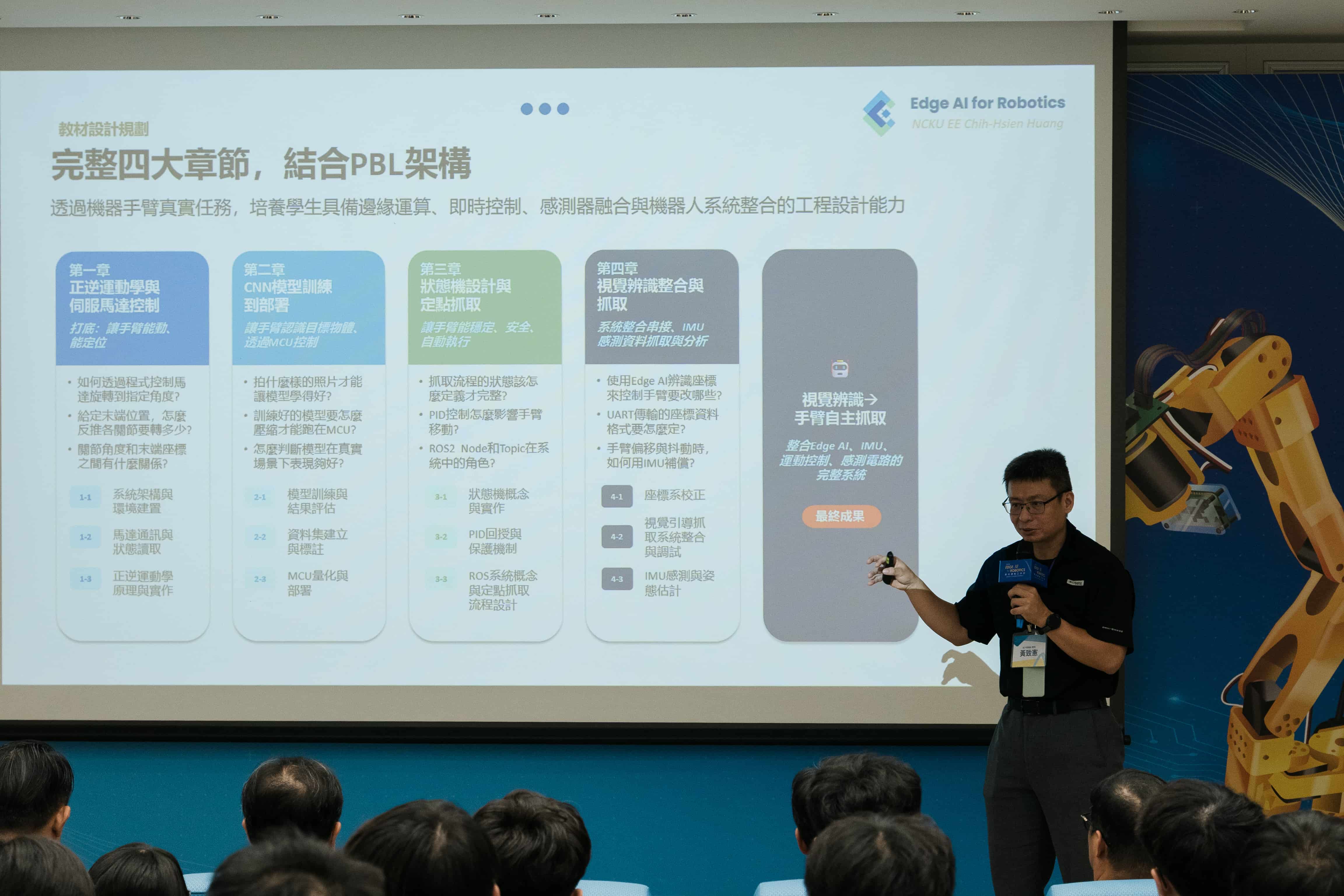
Introduction to the curriculum framework and design concepts.
Supported by the Ministry of Education's Smart Sensing Circuit Alliance, the Department of Electrical Engineering at National Cheng Kung University developed the "Edge AI for Robotics" curriculum, hosting a workshop and MOU signing ceremony on August 26.
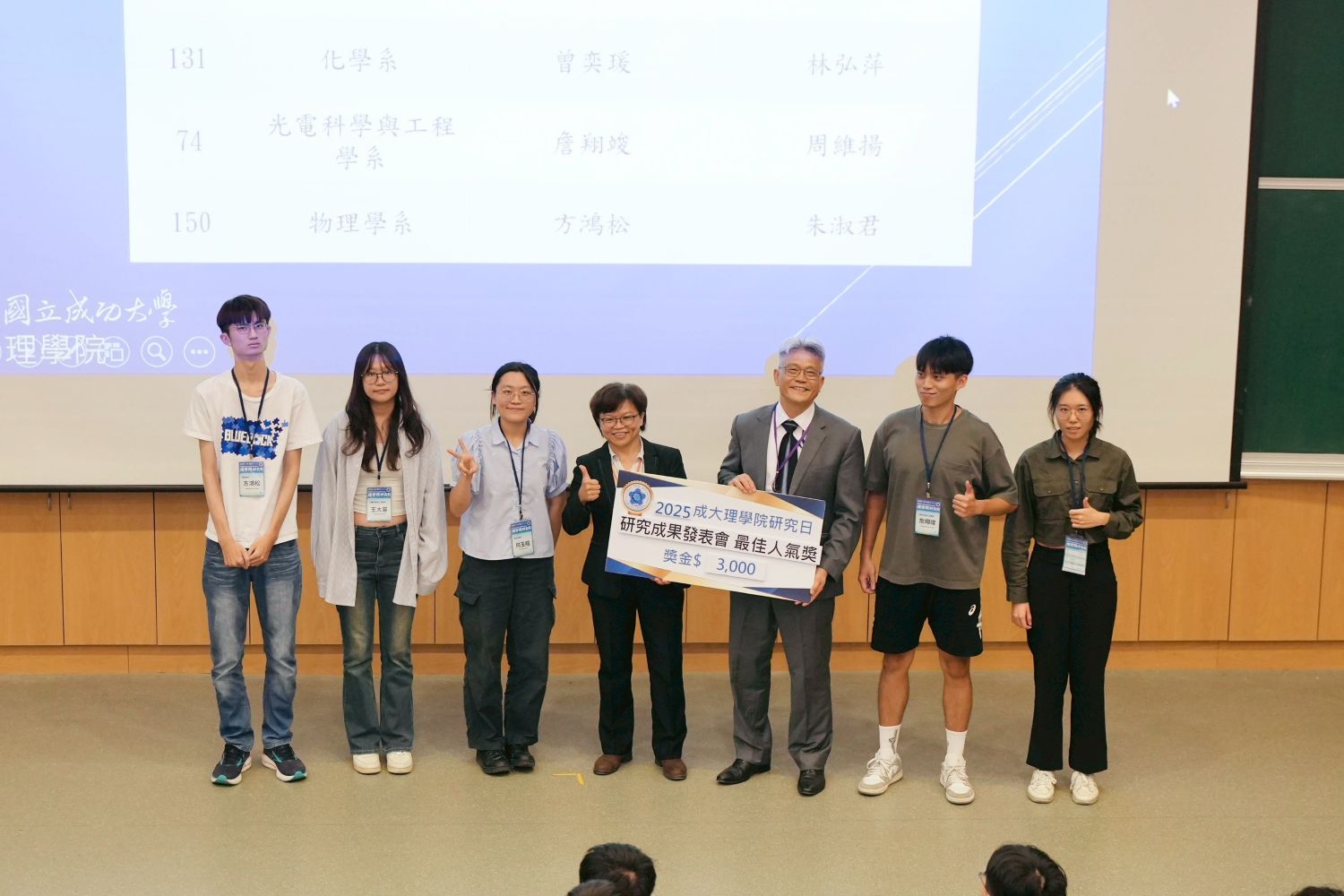
SDG42025 Grand Review, College of Science Research Day – Research Achievements Presentation
View more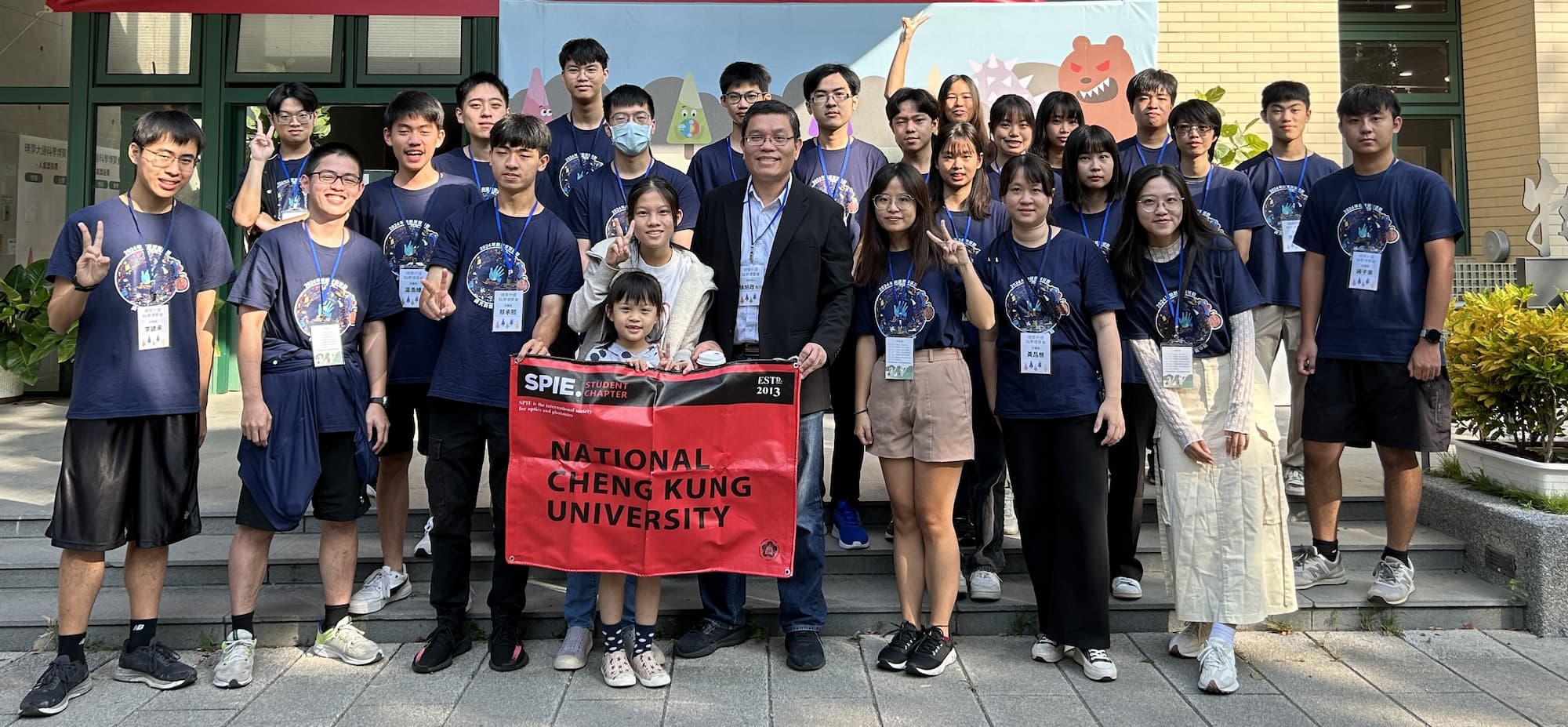
SDG4NCKU SPIE Student Chapter Wins 2025 Presidential Award for Outstanding Student Chapter — First in Asia
View more