



SDG9
NCKU and University of Technology Sydney (UTS) Hold Cross-University Brain-Computer Interface Workshop


To promote international academic exchange and deepen collaboration under the “NCKU AI International Linkage Program,” the NCKU Center for Digital Biotechnology and Medical Innovation, in collaboration with NCKU’s Department of Computer Science and the University of Technology Sydney (UTS), held the “NCKUxUTS-BCI Workshop” on December 16 at the Mouse Hall of the Department of Computer Science, NCKU Cheng Kung Campus. The workshop featured keynote lectures by UTS Associate Professor Yu-Kai Wang (王俞凱) and NCKU Department of Computer Science Professor Hui-Ling Jan (詹慧伶), focusing on brain-computer interface (BCI) and electroencephalography (EEG) technologies, attracting numerous faculty and students and receiving enthusiastic feedback.
The event specially invited Professor Sheng-Fu Liang (梁勝富), Director of NCKU’s Institute of Manufacturing Information and Systems, to serve as session chair, guiding participants in in-depth discussions and exchanges. The opening remarks were delivered by Dr. Shih-Hao Wang (王士豪), Chair of NCKU’s Department of Computer Science, who highlighted NCKU’s long-standing commitment to cultivating innovative talents with international perspectives and its substantial achievements across multiple research fields. Dr. Wang emphasized that this collaboration with UTS provides a rare opportunity to strengthen academic and research links between the two universities and offers students valuable cross-border, interdisciplinary learning experiences. He encouraged students to seize this opportunity to inspire their research potential and further advance academic and technological development.
Associate Professor Yu-Kai Wang began the event by introducing the strong historical ties between UTS and NCKU. He provided students with details on the application process and key points of the “NCKU–UTS Dual PhD Program,” encouraging them to leverage international research resources to broaden their global perspective.
As the supervising professor of UTS’s HAIL Laboratory, Associate Professor Wang reviewed the development and market trends of BCI in his lecture. He noted that although BCI research has achieved significant breakthroughs in recent years, key challenges remain, particularly that “success in the laboratory does not guarantee reliability in real-world environments.” He demonstrated the latest EEG headset devices, acknowledging ongoing challenges such as low signal-to-noise ratio (SNR), unstable signal quality, and individual variability, which the research team is actively working to overcome and optimize.
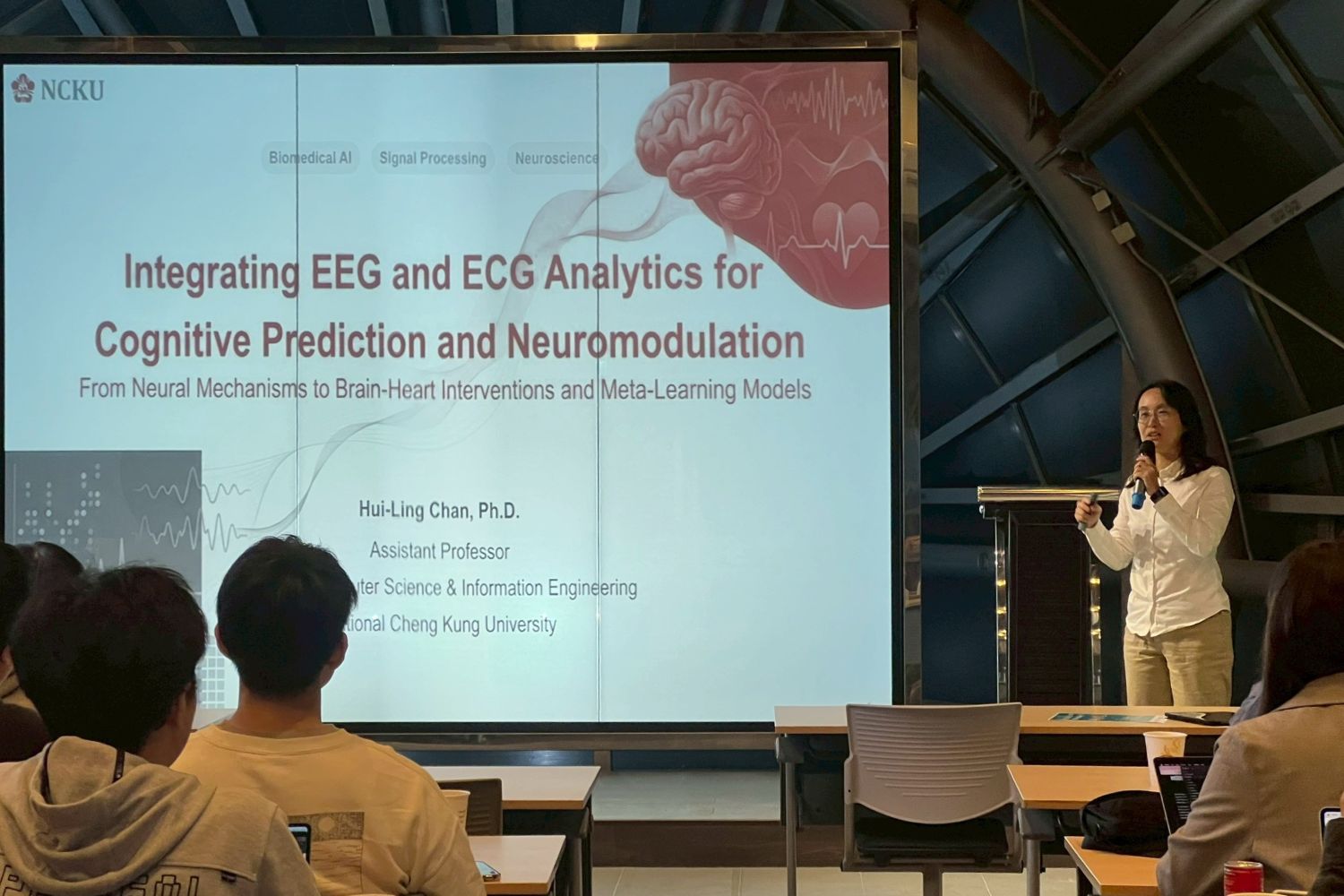
Professor Hui-Ling Jan of NCKU’s Department of Computer Science discussed EEG signal analysis, explaining how brainwave data can be used to characterize and predict human neural processing. She further explored the potential application of EEG in predicting post-operative cognitive performance, highlighting the critical value of brainwave analysis in clinical and smart healthcare contexts.
At the conclusion of the workshop, participating faculty and students actively engaged in Q&A sessions, asking detailed questions regarding data acquisition and international collaboration logistics, reflecting strong interest and enthusiasm. This workshop not only reinforced academic connections between NCKU and UTS but also deepened institutional partnerships, with the goal of nurturing international talents and jointly pursuing academic excellence and advancement.
The event specially invited Professor Sheng-Fu Liang (梁勝富), Director of NCKU’s Institute of Manufacturing Information and Systems, to serve as session chair, guiding participants in in-depth discussions and exchanges. The opening remarks were delivered by Dr. Shih-Hao Wang (王士豪), Chair of NCKU’s Department of Computer Science, who highlighted NCKU’s long-standing commitment to cultivating innovative talents with international perspectives and its substantial achievements across multiple research fields. Dr. Wang emphasized that this collaboration with UTS provides a rare opportunity to strengthen academic and research links between the two universities and offers students valuable cross-border, interdisciplinary learning experiences. He encouraged students to seize this opportunity to inspire their research potential and further advance academic and technological development.
Associate Professor Yu-Kai Wang began the event by introducing the strong historical ties between UTS and NCKU. He provided students with details on the application process and key points of the “NCKU–UTS Dual PhD Program,” encouraging them to leverage international research resources to broaden their global perspective.
As the supervising professor of UTS’s HAIL Laboratory, Associate Professor Wang reviewed the development and market trends of BCI in his lecture. He noted that although BCI research has achieved significant breakthroughs in recent years, key challenges remain, particularly that “success in the laboratory does not guarantee reliability in real-world environments.” He demonstrated the latest EEG headset devices, acknowledging ongoing challenges such as low signal-to-noise ratio (SNR), unstable signal quality, and individual variability, which the research team is actively working to overcome and optimize.
Professor Hui-Ling Jan of NCKU’s Department of Computer Science discussed EEG signal analysis, explaining how brainwave data can be used to characterize and predict human neural processing. She further explored the potential application of EEG in predicting post-operative cognitive performance, highlighting the critical value of brainwave analysis in clinical and smart healthcare contexts.
At the conclusion of the workshop, participating faculty and students actively engaged in Q&A sessions, asking detailed questions regarding data acquisition and international collaboration logistics, reflecting strong interest and enthusiasm. This workshop not only reinforced academic connections between NCKU and UTS but also deepened institutional partnerships, with the goal of nurturing international talents and jointly pursuing academic excellence and advancement.
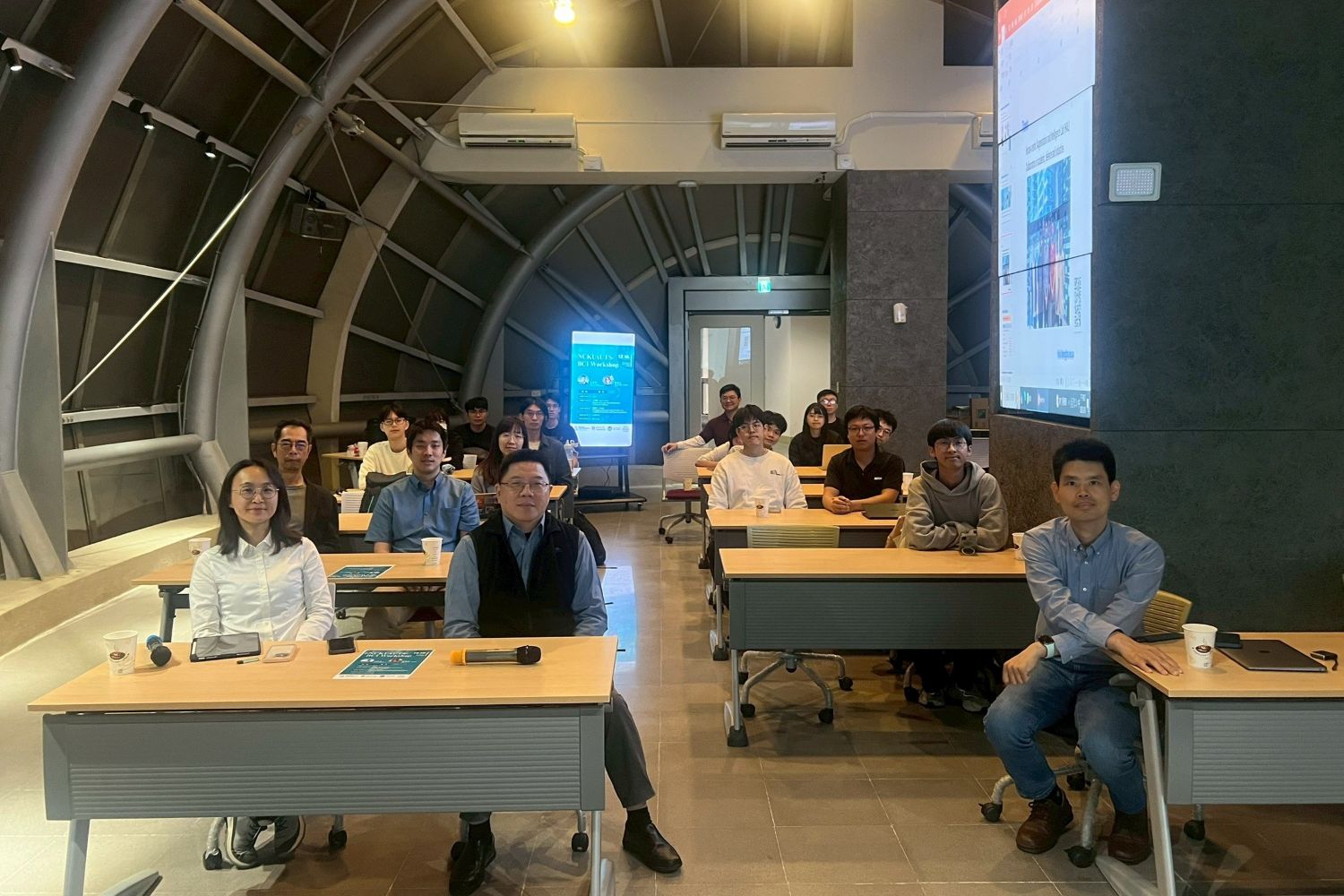
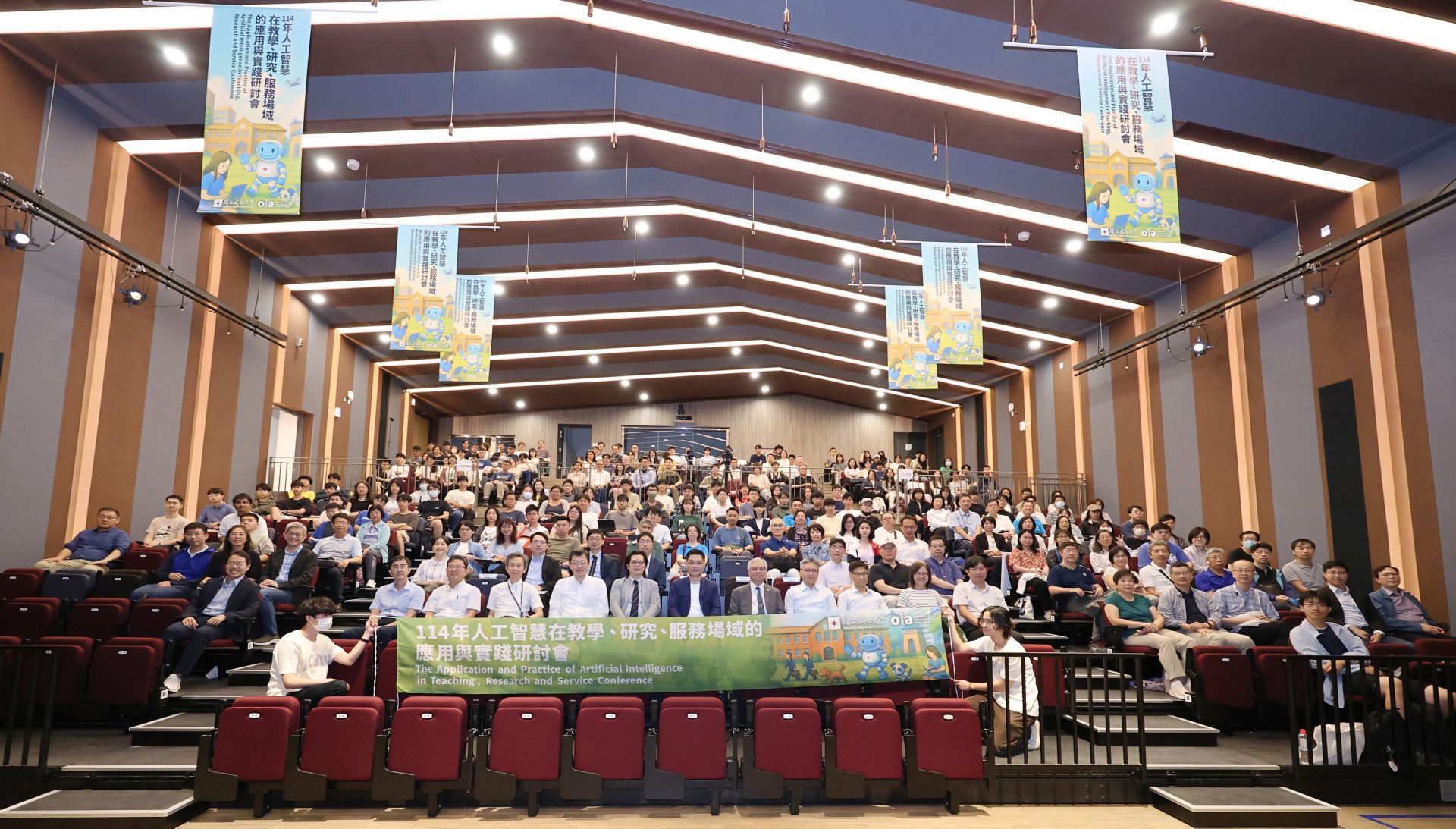
Group photo of participants at the “NCKUxUTS-BCI Workshop” cross-university collaboration workshop.
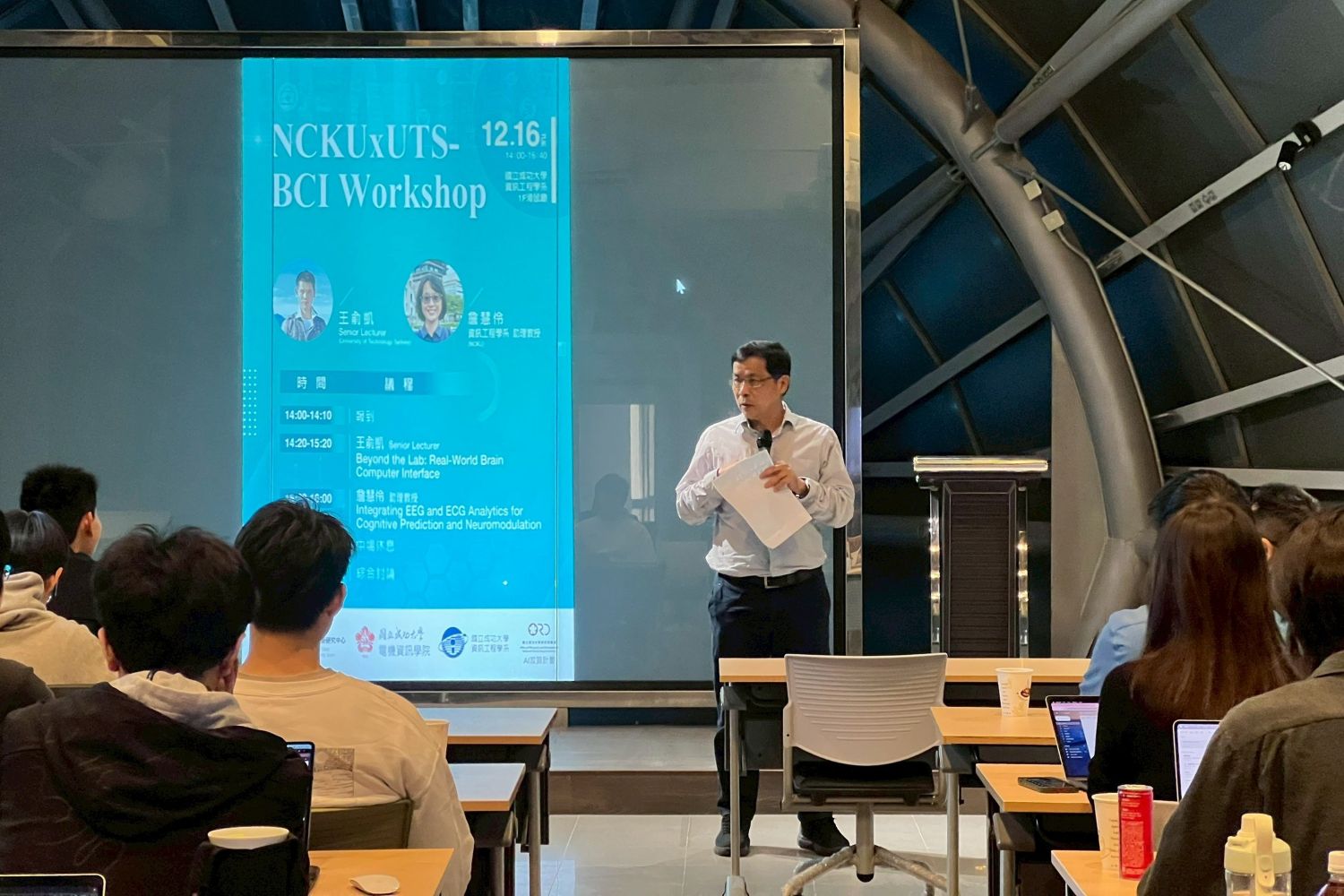
Dr. Shih-Hao Wang, Chair of the Department of Computer Science at NCKU, delivered the opening remarks.
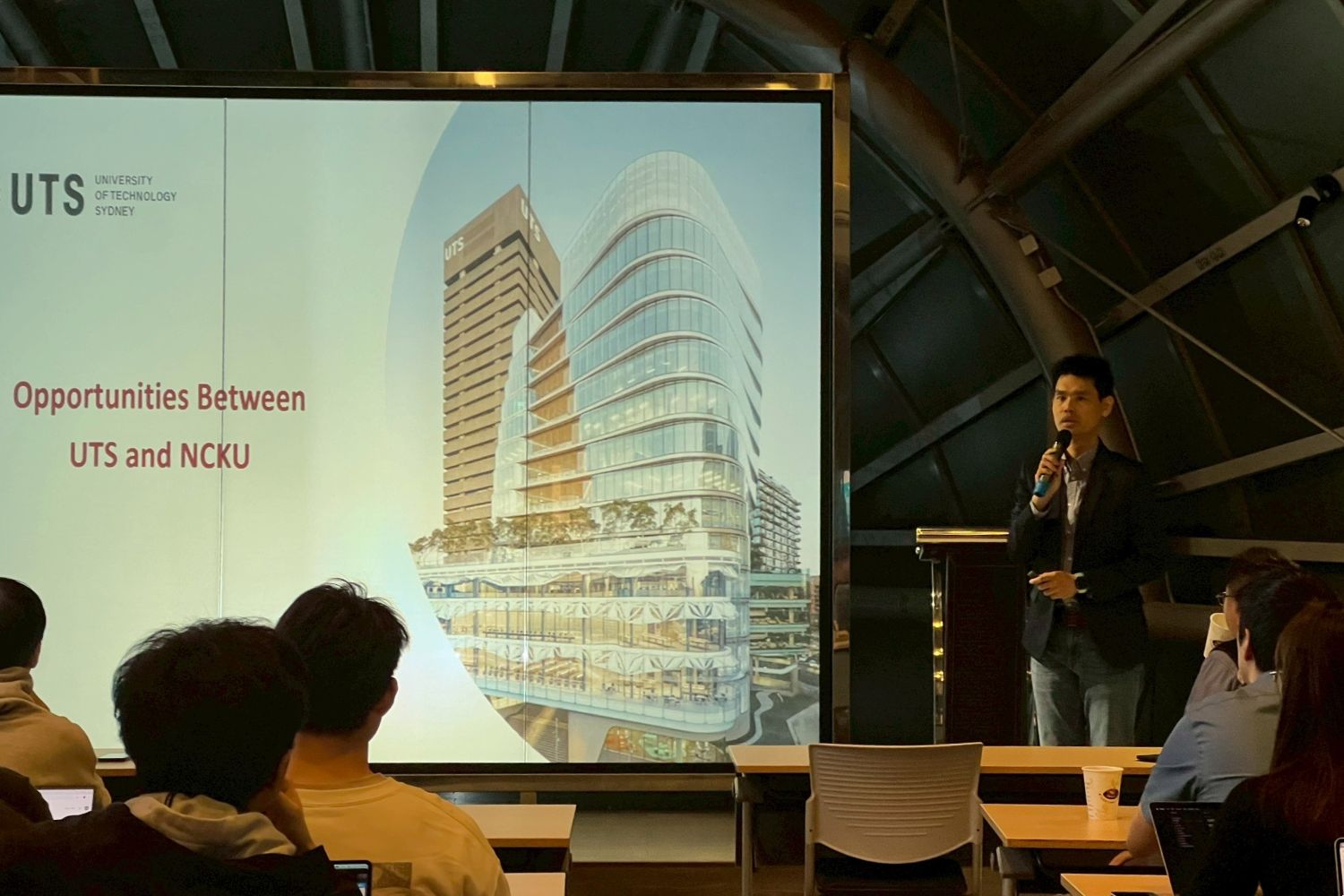
Associate Professor Yu-Kai Wang from the University of Technology Sydney (UTS) delivered a keynote lecture reviewing the development and market trends of brain-computer interfaces (BCI).
Professor Hui-Ling Jan from NCKU’s Department of Computer Science delivered a keynote lecture on electroencephalography (EEG) technologies.
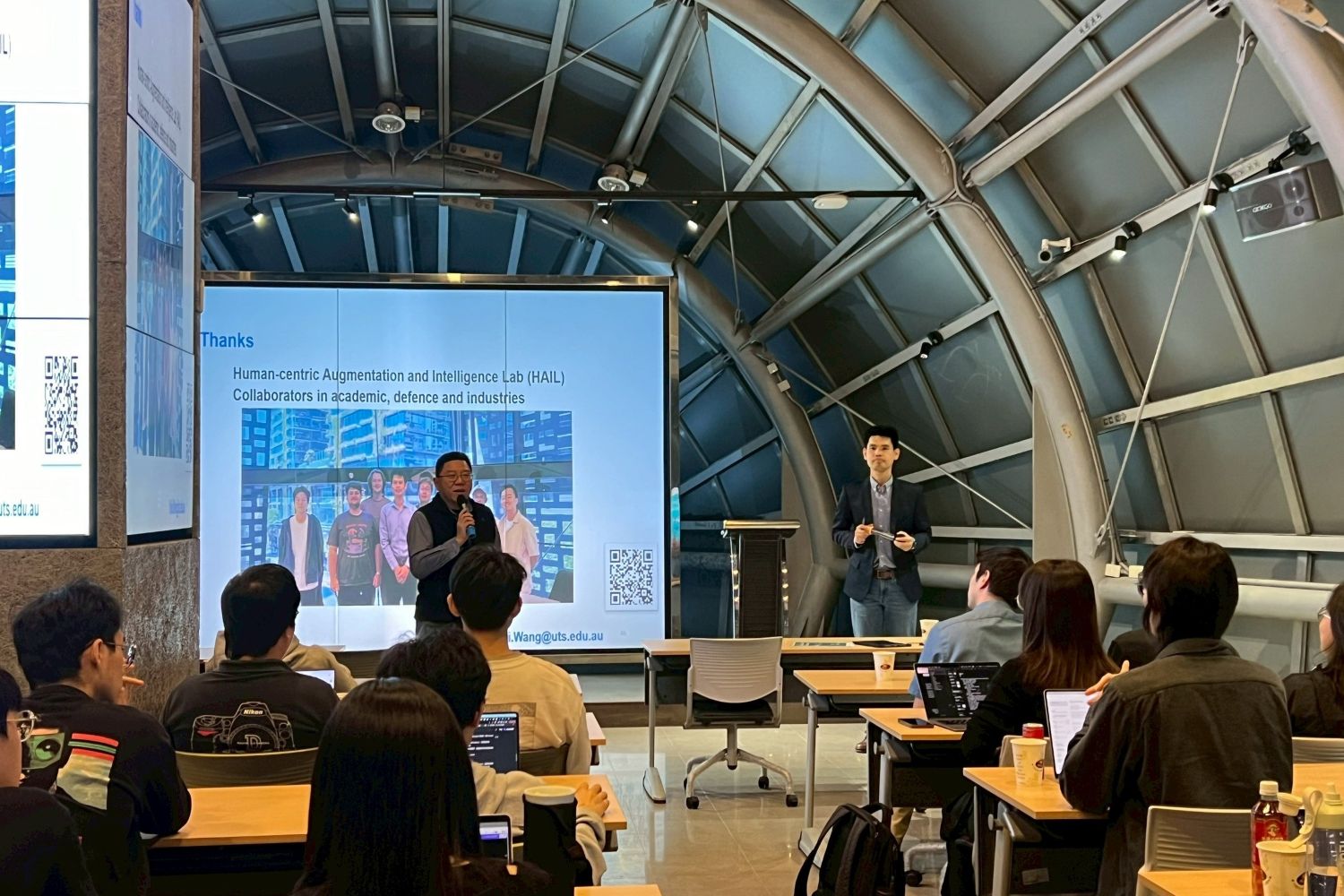
Professor Sheng-Fu Liang, Director of NCKU’s Institute of Manufacturing Information and Systems, expressed his hope to strengthen academic connections between the two universities, cultivate international talents, and jointly pursue academic excellence and advancement.
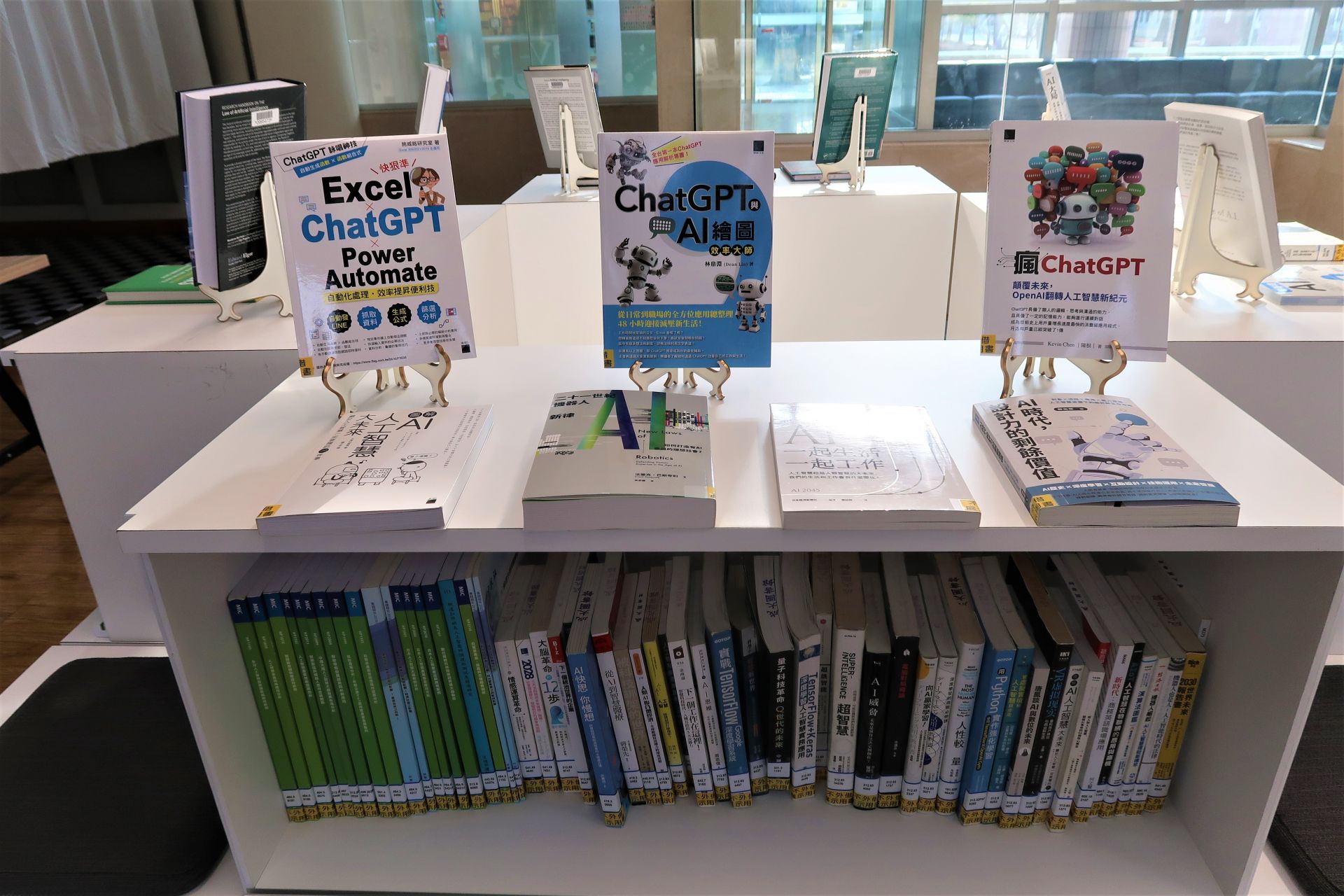
SDG9NCKU Library Held Series Lectures and Book Exhibition for Generative AI such as ChatGPT and MidJourney
View more
SDG9NCKU CIIS Signs Memoranda of Understanding with Multiple Companies to Promote Industrial Control Field Protection
View more