



SDG13
NCKU Unveils “Centennial Banyan Tree Digital Twin” Carbon Sink Achievement, Creating a Net-Zero Demonstration Campus
Written by NCKU Department of Geomatics . Image credit to NCKU News Center.
Today (20th), the Department of Geomatics at National Cheng Kung University held the “Centennial Banyan Tree Digital Twin Forest Carbon Sink Achievement Presentation” at the Engineering Design Building on the Kuang-Fu Campus. The event showcased the application of Geospatial Artificial Intelligence (Geo-AI) and Digital Twin technologies to develop an old-tree forest carbon sink assessment and management system, using NCKU’s century-old banyan tree as a demonstration site. Representatives from industry, government, and academia were invited to participate, and through panel discussions, the event focused on the integrated development of cultural heritage, natural carbon sinks, and sustainable urban governance.
Yu-Nu Chen, Vice President of National Cheng Kung University, welcomed distinguished guests in her opening remarks and stated that this event was not only a showcase of research achievements, but more importantly, a testament to how technology can build deep connections with campuses and cities.
Vice President Chen also expressed special gratitude to the National Science and Technology Council for its long-standing support, as well as to industry partners for their generous assistance. She noted that NCKU has always emphasized “industry-academia collaboration” and the practical implementation of research, hoping that scientific findings would not remain confined to laboratories, but instead truly enter society and solve real-world problems.
She added that today’s presentation marks another step toward greater intelligence and sustainability. Looking ahead, NCKU will continue to deepen interdisciplinary integration, enabling the university’s academic strengths to become an important driving force for national progress.
Director General Lai of the Department of Natural Sciences and Sustainable Development under the National Science and Technology Council remarked that measuring the invisible “carbon sink” through AI and geospatial information technologies (Geo-AI) is essential for advancing sustainable national land planning, as carbon sinks are inherently difficult to observe directly. He noted that NCKU plays a pivotal role in urban carbon sink research. In addition to its famous banyan trees, the NCKU campus is home to many other trees, all of which are valuable carbon sink resources.
Director General Lai added that this project represents one of the key achievements under the “Sustainable Land Planning” initiative. Looking ahead, he hopes that more research findings can be translated into practical applications and serve as important references for government policymaking. The joint participation of industry, government, and academia in witnessing the implementation of AI monitoring technologies in Tainan not only serves as a model for progressing toward the 2050 net-zero target, but also demonstrates the government’s determination to make effective use of resources and promote environmental governance through cross-sector collaboration.
Chi-Feng Wang, Chairman of Quan-Hua Land Surveying Co., Ltd. and an alumnus of NCKU, participated in the collaboration as an industry representative. He stated that, as an alumnus, he felt deeply honored to witness the team’s outstanding research achievements. He noted that these findings embody the core value of collaboration among industry, government, and academia, and serve as an important driving force for green energy and green transformation. He also expressed hope for continued and deeper cooperation with NCKU in the future to jointly build an interdisciplinary sustainability platform.
Professor Wu of the Department of Geomatics at National Cheng Kung University explained that this study is one of the university’s integrated sustainability projects. By applying geospatial information and artificial intelligence technologies, the team developed methods for quantifying natural carbon sinks, using the historically significant century-old banyan tree on campus as a demonstration site. Through the integration of satellite remote sensing, geographic information systems, and AI analytics, the researchers established a high-precision carbon sink quantification and visualization platform.
The team further employed drone-based aerial imaging technology to create a millimeter-level precision digital twin model, comprehensively recording the banyan tree’s three-dimensional structure and growth condition. The study successfully estimated the tree’s volume at 55.52 cubic meters and its carbon storage at 46.93 tons, highlighting the potential of spatial information technologies to expand from large-scale mapping applications to single-tree carbon sink estimation.
In addition, the research team proposed the concepts of “cultural carbon sinks” and “carbon sink co-benefits.” Professor Wu pointed out that many places with historical significance and cultural value—such as campuses, heritage sites, parks, and historic districts—often contain important old trees and green spaces. These environments not only preserve cultural memory, but also provide natural carbon sink functions. However, previous studies have largely focused on forests or large-scale carbon sinks, while the carbon sink value embedded in cultural spaces has long existed without being systematically quantified or sufficiently recognized.
Professor Wu further noted that through Geo-AI and Digital Twin technologies, old trees and green resources in cultural spaces can be analyzed with high precision for carbon sink quantification and visualization, allowing the relationship between cultural heritage and natural carbon sinks to be clearly demonstrated. This approach not only helps enhance public awareness of the natural carbon sink value of cultural sites, but also showcases the strong integration potential among cultural heritage, artificial intelligence, and geospatial information technologies, providing new scientific evidence for urban heritage conservation and net-zero sustainability policies.
The research team stated that this Digital Twin carbon sink system can be applied not only to campuses, but also extended to historic cultural parks, heritage conservation zones, and urban public spaces, assisting both government agencies and private organizations in carbon inventories and sustainable governance. At present, the team has already conducted surveys and analyses of old trees at several historic and cultural sites in Tainan. Moving forward, they will continue to promote interdisciplinary and international collaboration by integrating cultural heritage, geospatial information, and artificial intelligence technologies to establish a net-zero governance model that combines cultural value with carbon sink functions, while advancing sustainable urban development through Nature-based Solutions.
The panel discussion that followed was moderated by Hui-Ping Tsai of National Chung Hsing University. Participants included Jen-Yu Han, Hung-Chih Hung, Chien-Teng Chan, Hsueh-Tzu Lee, En-Yu Huang, and Chih-Da Wu. Drawing from their respective professional fields, they shared insights and practical experiences regarding natural carbon sinks, cultural carbon sinks, and sustainable governance.
The research team led by Chih-Da Wu has not only received multiple internal awards for research excellence at National Cheng Kung University, but has also continued to expand collaborations with local governments and earned numerous national awards related to sustainability and geospatial information.
In 2025, this project received support from the National Science and Technology Council and successfully secured funding under the “Taiwan Spatial Sustainability Planning Frontier Technology Research Program,” obtaining a 2+2 year multi-phase integrated project for NCKU. Centered on practical implementation, the project selected old trees as an important demonstration target for natural carbon sink research.
Provider: NCKU News Center
Date: 2026-04-21
Today (20th), the Department of Geomatics at National Cheng Kung University held the “Centennial Banyan Tree Digital Twin Forest Carbon Sink Achievement Presentation” at the Engineering Design Building on the Kuang-Fu Campus. The event showcased the application of Geospatial Artificial Intelligence (Geo-AI) and Digital Twin technologies to develop an old-tree forest carbon sink assessment and management system, using NCKU’s century-old banyan tree as a demonstration site. Representatives from industry, government, and academia were invited to participate, and through panel discussions, the event focused on the integrated development of cultural heritage, natural carbon sinks, and sustainable urban governance.
Yu-Nu Chen, Vice President of National Cheng Kung University, welcomed distinguished guests in her opening remarks and stated that this event was not only a showcase of research achievements, but more importantly, a testament to how technology can build deep connections with campuses and cities.
Vice President Chen also expressed special gratitude to the National Science and Technology Council for its long-standing support, as well as to industry partners for their generous assistance. She noted that NCKU has always emphasized “industry-academia collaboration” and the practical implementation of research, hoping that scientific findings would not remain confined to laboratories, but instead truly enter society and solve real-world problems.
She added that today’s presentation marks another step toward greater intelligence and sustainability. Looking ahead, NCKU will continue to deepen interdisciplinary integration, enabling the university’s academic strengths to become an important driving force for national progress.
Director General Lai of the Department of Natural Sciences and Sustainable Development under the National Science and Technology Council remarked that measuring the invisible “carbon sink” through AI and geospatial information technologies (Geo-AI) is essential for advancing sustainable national land planning, as carbon sinks are inherently difficult to observe directly. He noted that NCKU plays a pivotal role in urban carbon sink research. In addition to its famous banyan trees, the NCKU campus is home to many other trees, all of which are valuable carbon sink resources.
Director General Lai added that this project represents one of the key achievements under the “Sustainable Land Planning” initiative. Looking ahead, he hopes that more research findings can be translated into practical applications and serve as important references for government policymaking. The joint participation of industry, government, and academia in witnessing the implementation of AI monitoring technologies in Tainan not only serves as a model for progressing toward the 2050 net-zero target, but also demonstrates the government’s determination to make effective use of resources and promote environmental governance through cross-sector collaboration.
Chi-Feng Wang, Chairman of Quan-Hua Land Surveying Co., Ltd. and an alumnus of NCKU, participated in the collaboration as an industry representative. He stated that, as an alumnus, he felt deeply honored to witness the team’s outstanding research achievements. He noted that these findings embody the core value of collaboration among industry, government, and academia, and serve as an important driving force for green energy and green transformation. He also expressed hope for continued and deeper cooperation with NCKU in the future to jointly build an interdisciplinary sustainability platform.
Professor Wu of the Department of Geomatics at National Cheng Kung University explained that this study is one of the university’s integrated sustainability projects. By applying geospatial information and artificial intelligence technologies, the team developed methods for quantifying natural carbon sinks, using the historically significant century-old banyan tree on campus as a demonstration site. Through the integration of satellite remote sensing, geographic information systems, and AI analytics, the researchers established a high-precision carbon sink quantification and visualization platform.
The team further employed drone-based aerial imaging technology to create a millimeter-level precision digital twin model, comprehensively recording the banyan tree’s three-dimensional structure and growth condition. The study successfully estimated the tree’s volume at 55.52 cubic meters and its carbon storage at 46.93 tons, highlighting the potential of spatial information technologies to expand from large-scale mapping applications to single-tree carbon sink estimation.
In addition, the research team proposed the concepts of “cultural carbon sinks” and “carbon sink co-benefits.” Professor Wu pointed out that many places with historical significance and cultural value—such as campuses, heritage sites, parks, and historic districts—often contain important old trees and green spaces. These environments not only preserve cultural memory, but also provide natural carbon sink functions. However, previous studies have largely focused on forests or large-scale carbon sinks, while the carbon sink value embedded in cultural spaces has long existed without being systematically quantified or sufficiently recognized.
Professor Wu further noted that through Geo-AI and Digital Twin technologies, old trees and green resources in cultural spaces can be analyzed with high precision for carbon sink quantification and visualization, allowing the relationship between cultural heritage and natural carbon sinks to be clearly demonstrated. This approach not only helps enhance public awareness of the natural carbon sink value of cultural sites, but also showcases the strong integration potential among cultural heritage, artificial intelligence, and geospatial information technologies, providing new scientific evidence for urban heritage conservation and net-zero sustainability policies.
The research team stated that this Digital Twin carbon sink system can be applied not only to campuses, but also extended to historic cultural parks, heritage conservation zones, and urban public spaces, assisting both government agencies and private organizations in carbon inventories and sustainable governance. At present, the team has already conducted surveys and analyses of old trees at several historic and cultural sites in Tainan. Moving forward, they will continue to promote interdisciplinary and international collaboration by integrating cultural heritage, geospatial information, and artificial intelligence technologies to establish a net-zero governance model that combines cultural value with carbon sink functions, while advancing sustainable urban development through Nature-based Solutions.
The panel discussion that followed was moderated by Hui-Ping Tsai of National Chung Hsing University. Participants included Jen-Yu Han, Hung-Chih Hung, Chien-Teng Chan, Hsueh-Tzu Lee, En-Yu Huang, and Chih-Da Wu. Drawing from their respective professional fields, they shared insights and practical experiences regarding natural carbon sinks, cultural carbon sinks, and sustainable governance.
The research team led by Chih-Da Wu has not only received multiple internal awards for research excellence at National Cheng Kung University, but has also continued to expand collaborations with local governments and earned numerous national awards related to sustainability and geospatial information.
In 2025, this project received support from the National Science and Technology Council and successfully secured funding under the “Taiwan Spatial Sustainability Planning Frontier Technology Research Program,” obtaining a 2+2 year multi-phase integrated project for NCKU. Centered on practical implementation, the project selected old trees as an important demonstration target for natural carbon sink research.
Provider: NCKU News Center
Date: 2026-04-21
The “Centennial Banyan Tree Digital Twin” carbon sink achievement showcases the application of Geospatial Artificial Intelligence (Geo-AI) and Digital Twin technologies to develop an old-tree forest carbon sink assessment and management system, using the century-old banyan tree at National Cheng Kung University as a demonstration site.
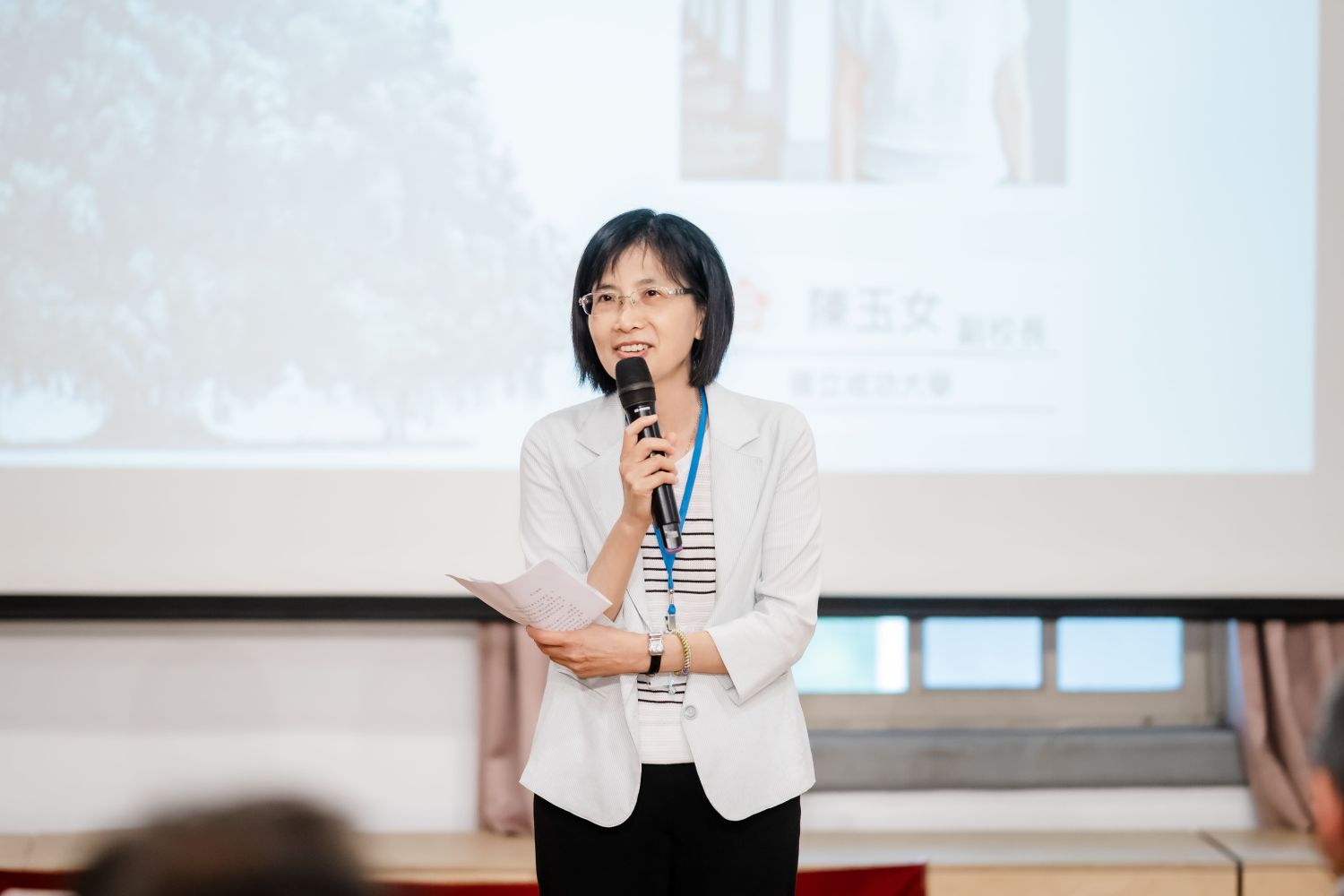
Yu-Nu Chen stated that the event was not only a showcase of research achievements, but more importantly, a testament to how technology can build deep connections with campuses and cities.
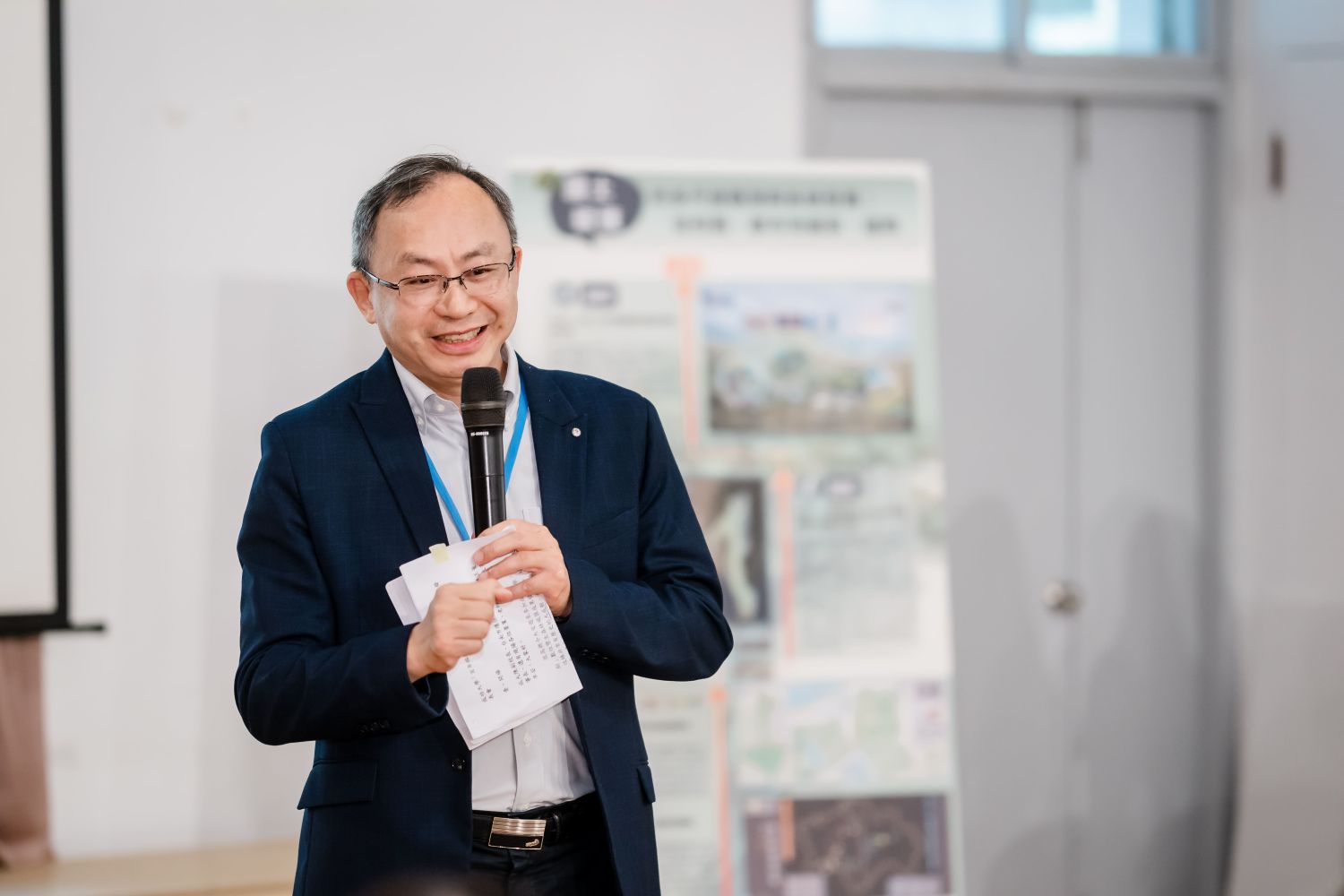
Ming-Chih Lai stated that National Cheng Kung University plays a key role in urban carbon sink research.
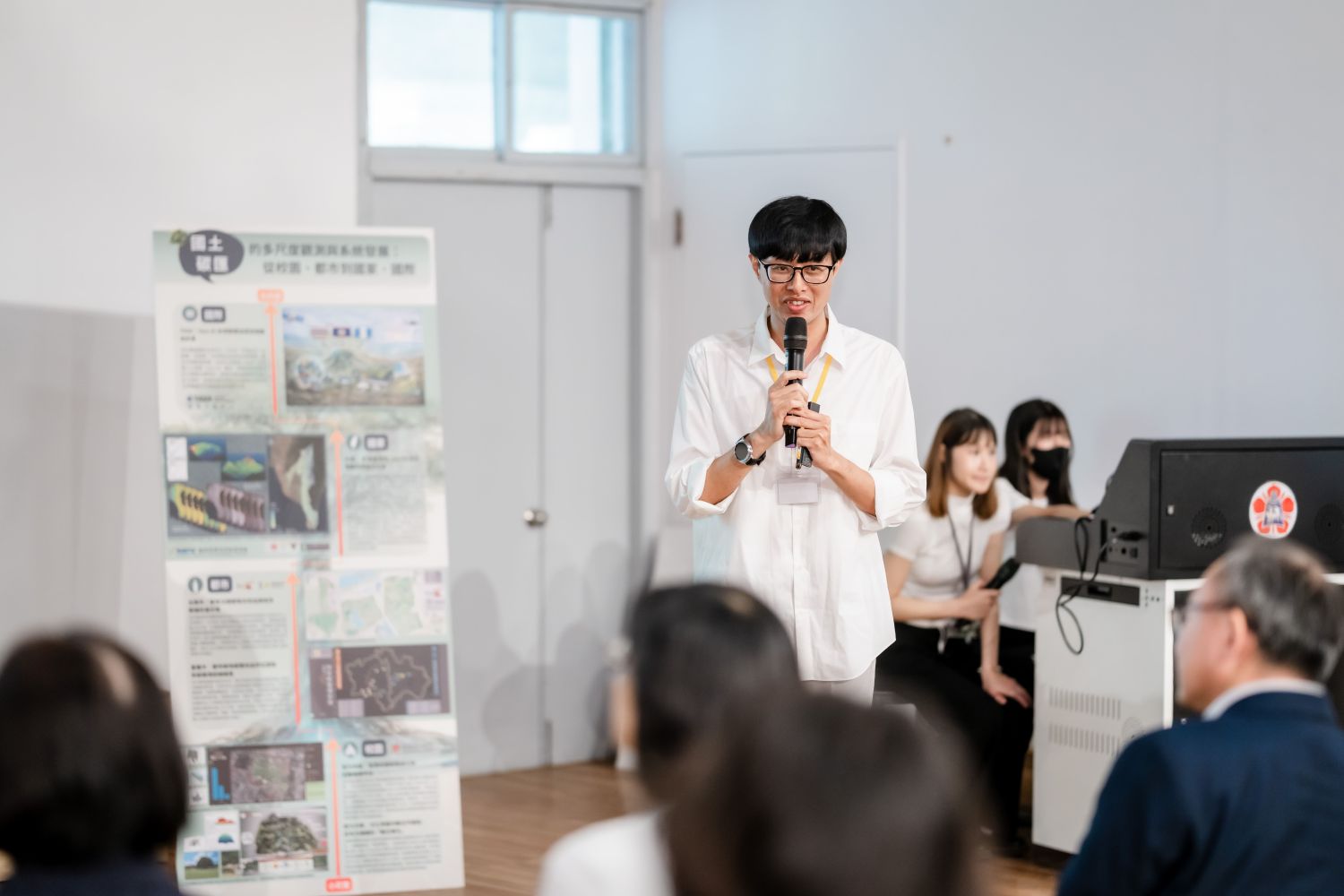
Chih-Da Wu, principal investigator of the project, stated that the research achievements demonstrate the potential of spatial information technologies to extend from large-scale map analysis to single-tree carbon sink estimation.
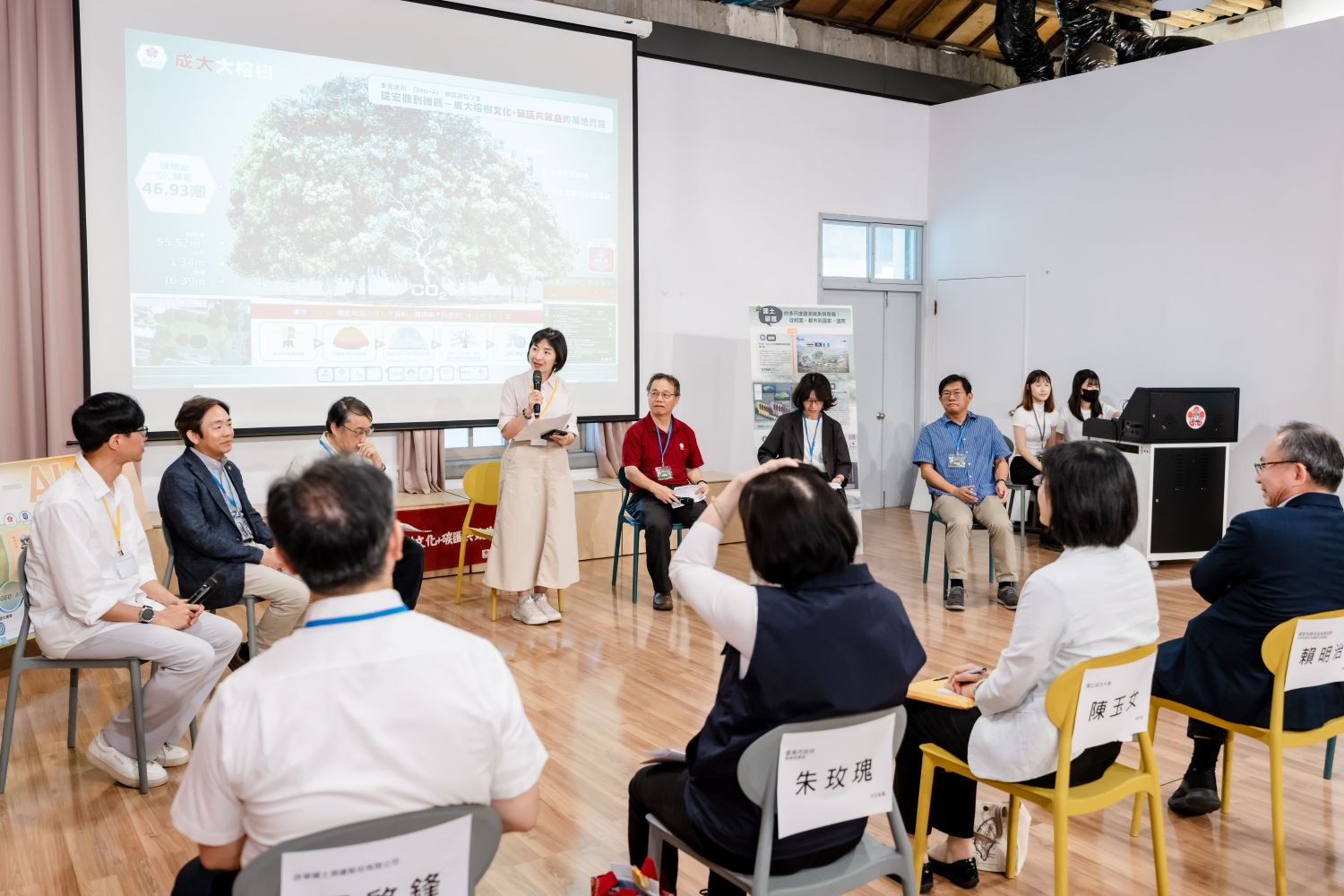
Representatives from industry, government, and academia participated in a panel discussion, sharing their perspectives and practical experiences on natural carbon sinks, cultural carbon sinks, and sustainable governance.
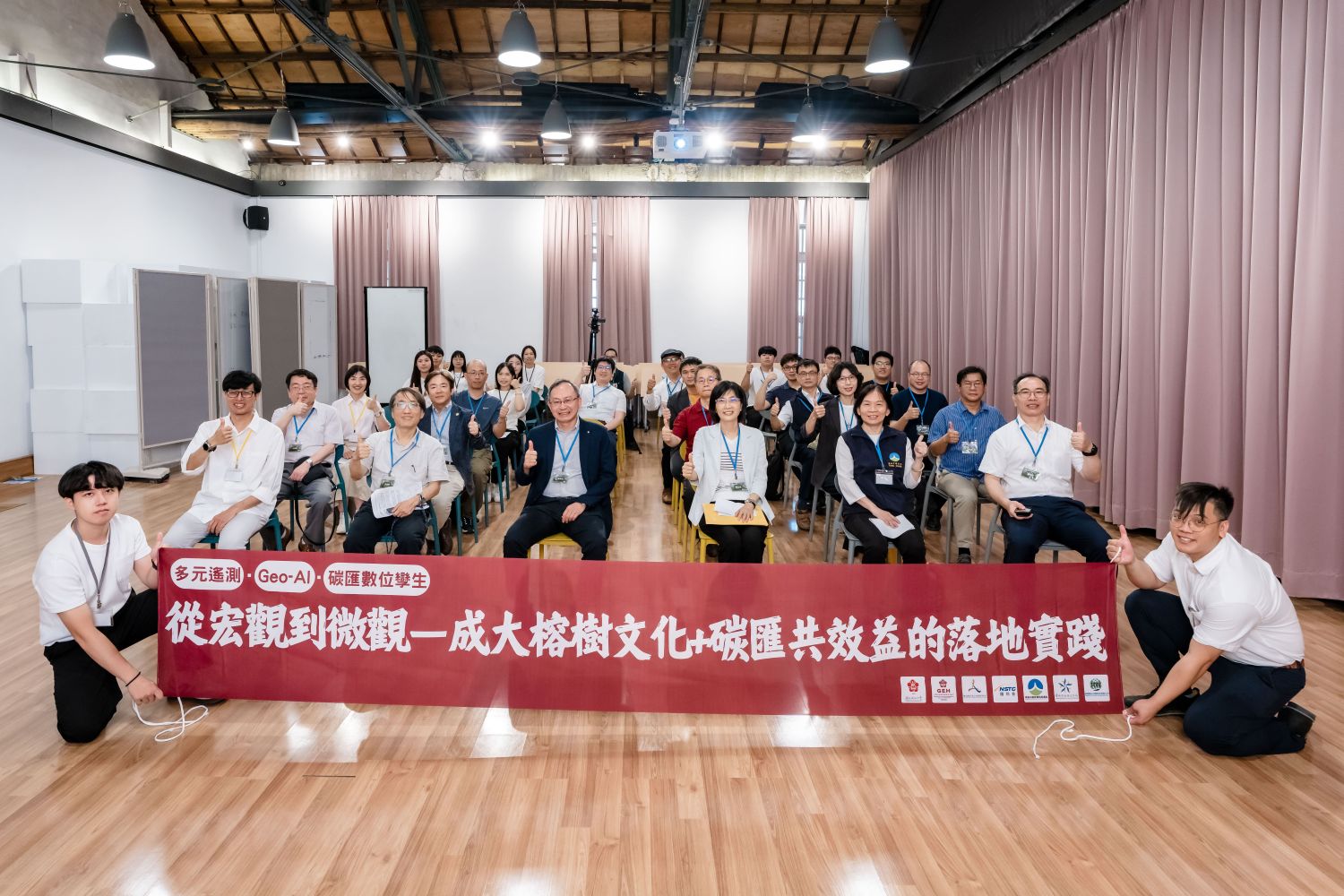
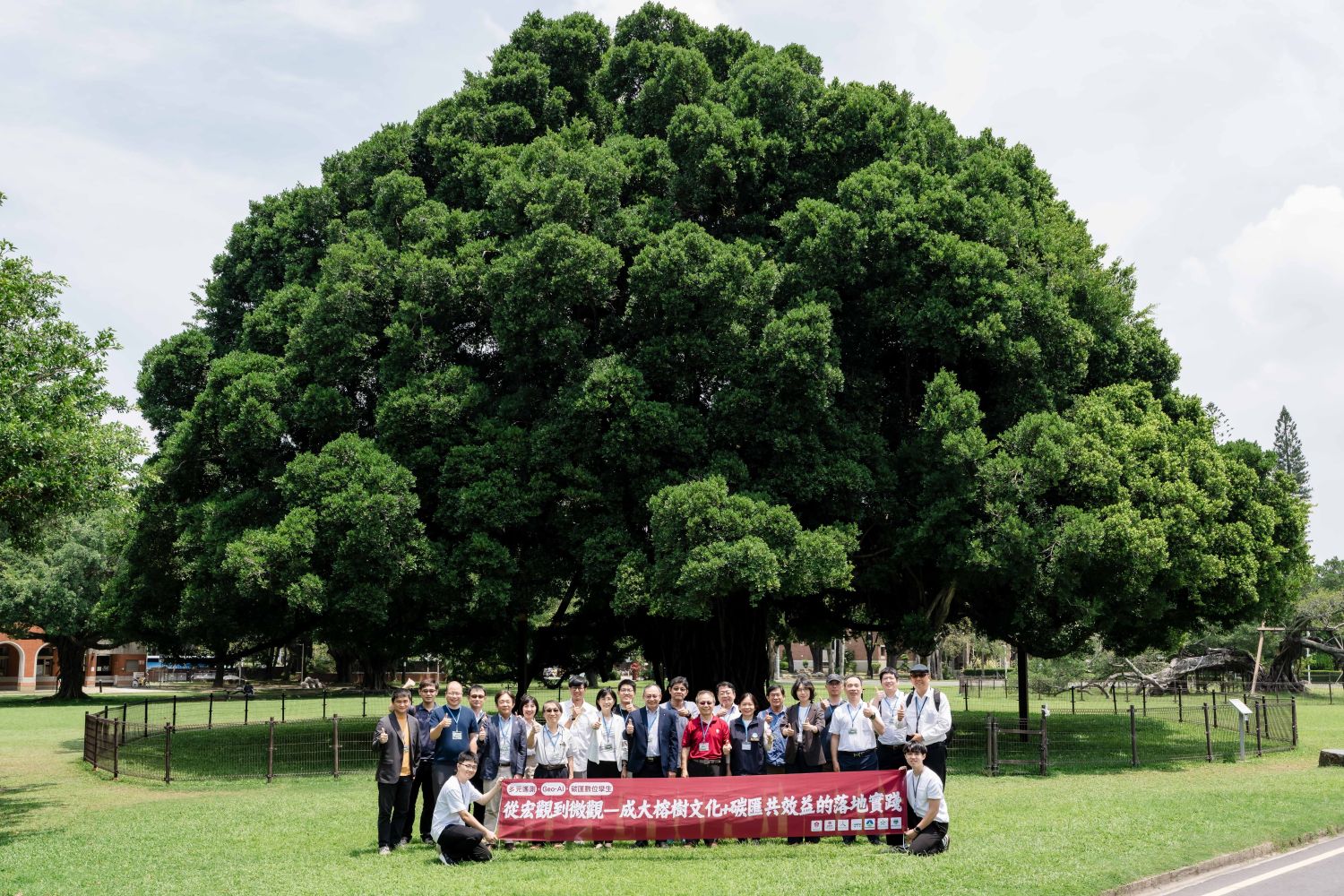
Group photo of all participants.

SDG13“Net Zero Technology Strategy × Industrial Sustainability Summit” Focuses on Climate Resilience and Carbon Reduction Actions
View more
SDG13NCKU Carbon Neutral Hub Unveiled: Partnering with Companies to Achieve ESG and Reach Net-Zero Emissions by 2050.
View more