



SDG9
NCKU Industrial Design Class of 115 Graduation Exhibition ‘M(?)RE’: Exploring More Possibilities Through Design
The Graduate Exhibition of the Class of 115 from the Department of Industrial Design at National Cheng Kung University (NCKU), titled “M(?)RE,” was held from April 16 to April 20 at the Future Venue on the Sheng-Li Campus, with the opening ceremony taking place on the afternoon of April 17. Centered on the concept of diversity, the theme “M(?)RE”—meaning more than—conveys that design goes beyond problem-solving to explore broader possibilities. Following its Tainan showcase, the exhibition will continue in Taipei from May 22 to May 25 at the Young Designers' Exhibition, held at Nangang Exhibition Center Hall 2—one of Taiwan’s leading platforms for emerging designers—where students will engage with peers and faculty from design schools nationwide.
This year’s exhibition features 13 projects created by 33 students, representing the culmination of four years of academic training. It also serves as an open platform inviting industry professionals and the public to engage, exchange ideas, and reflect on design practices. Integrating three core themes—diversity and inclusion, innovation, and sustainability—the exhibition translates these concepts into tangible design outcomes that respond to contemporary issues while encouraging new perspectives and future possibilities.
Department Chair Hsi-Jen Chen and Graduate Project Director Assistant Professor Jo-Yu Kuo attended the opening ceremony, commending students for their dedication and creative exploration. Chair Chen emphasized that exhibitions provide valuable opportunities to present work publicly and receive feedback, encouraging students to actively engage with industry experts during the Taipei exhibition—seizing every opportunity to ask questions, initiate conversations, and deepen their learning.
Assistant Professor Kuo noted that design has no absolute standard; what matters most is clearly communicating the ideas behind each project. She encouraged students to observe others’ work during the Taipei exhibition and reflect on their own, deepening their design perspectives through comparison and critical reflection while making the most of their final time on campus.
The 13 featured projects each present unique perspectives, demonstrating that design is not only a tool for solving problems but also a medium for exploring possibilities and shaping the future. The exhibition further enhances public understanding of design and aesthetics.
Among the works under the theme of diversity and inclusion, “PrepEase” aims to restore the joy of eating for elderly individuals with dental difficulties. Through an intuitive pressing and cutting mechanism, it ensures that food retains its visual appeal and warmth even after being softened—moving beyond the conventional practice of blending food into unappealing purées solely for ease of consumption.
Under the sustainability theme, “LIFTFLOAT Livestock Flood Rescue System” addresses the increasing impact of extreme weather and flooding on the livestock industry. The system incorporates AI-based water-level detection and automatically deploys floating platforms from a “rescue capsule” during critical conditions, allowing pigs to climb onto them. The design avoids altering existing infrastructure or requiring large-scale construction, while also reducing post-disaster labor and sanitation costs.
In response to the limitations of current immersive exhibition formats—which often rely heavily on projection and offer limited sensory dimensions—students developed the “neXus Interactive Exhibition System.” Integrating five sensory elements—sound, light, temperature, wind, and mist—the system is designed for rapid deployment across various exhibition setups. With remote software control, curators can dynamically simulate and adjust product environments in real time, overcoming hardware constraints and redefining immersive exhibition experiences through deeper interaction.
This year’s exhibition features 13 projects created by 33 students, representing the culmination of four years of academic training. It also serves as an open platform inviting industry professionals and the public to engage, exchange ideas, and reflect on design practices. Integrating three core themes—diversity and inclusion, innovation, and sustainability—the exhibition translates these concepts into tangible design outcomes that respond to contemporary issues while encouraging new perspectives and future possibilities.
Department Chair Hsi-Jen Chen and Graduate Project Director Assistant Professor Jo-Yu Kuo attended the opening ceremony, commending students for their dedication and creative exploration. Chair Chen emphasized that exhibitions provide valuable opportunities to present work publicly and receive feedback, encouraging students to actively engage with industry experts during the Taipei exhibition—seizing every opportunity to ask questions, initiate conversations, and deepen their learning.
Assistant Professor Kuo noted that design has no absolute standard; what matters most is clearly communicating the ideas behind each project. She encouraged students to observe others’ work during the Taipei exhibition and reflect on their own, deepening their design perspectives through comparison and critical reflection while making the most of their final time on campus.
The 13 featured projects each present unique perspectives, demonstrating that design is not only a tool for solving problems but also a medium for exploring possibilities and shaping the future. The exhibition further enhances public understanding of design and aesthetics.
Among the works under the theme of diversity and inclusion, “PrepEase” aims to restore the joy of eating for elderly individuals with dental difficulties. Through an intuitive pressing and cutting mechanism, it ensures that food retains its visual appeal and warmth even after being softened—moving beyond the conventional practice of blending food into unappealing purées solely for ease of consumption.
Under the sustainability theme, “LIFTFLOAT Livestock Flood Rescue System” addresses the increasing impact of extreme weather and flooding on the livestock industry. The system incorporates AI-based water-level detection and automatically deploys floating platforms from a “rescue capsule” during critical conditions, allowing pigs to climb onto them. The design avoids altering existing infrastructure or requiring large-scale construction, while also reducing post-disaster labor and sanitation costs.
In response to the limitations of current immersive exhibition formats—which often rely heavily on projection and offer limited sensory dimensions—students developed the “neXus Interactive Exhibition System.” Integrating five sensory elements—sound, light, temperature, wind, and mist—the system is designed for rapid deployment across various exhibition setups. With remote software control, curators can dynamically simulate and adjust product environments in real time, overcoming hardware constraints and redefining immersive exhibition experiences through deeper interaction.
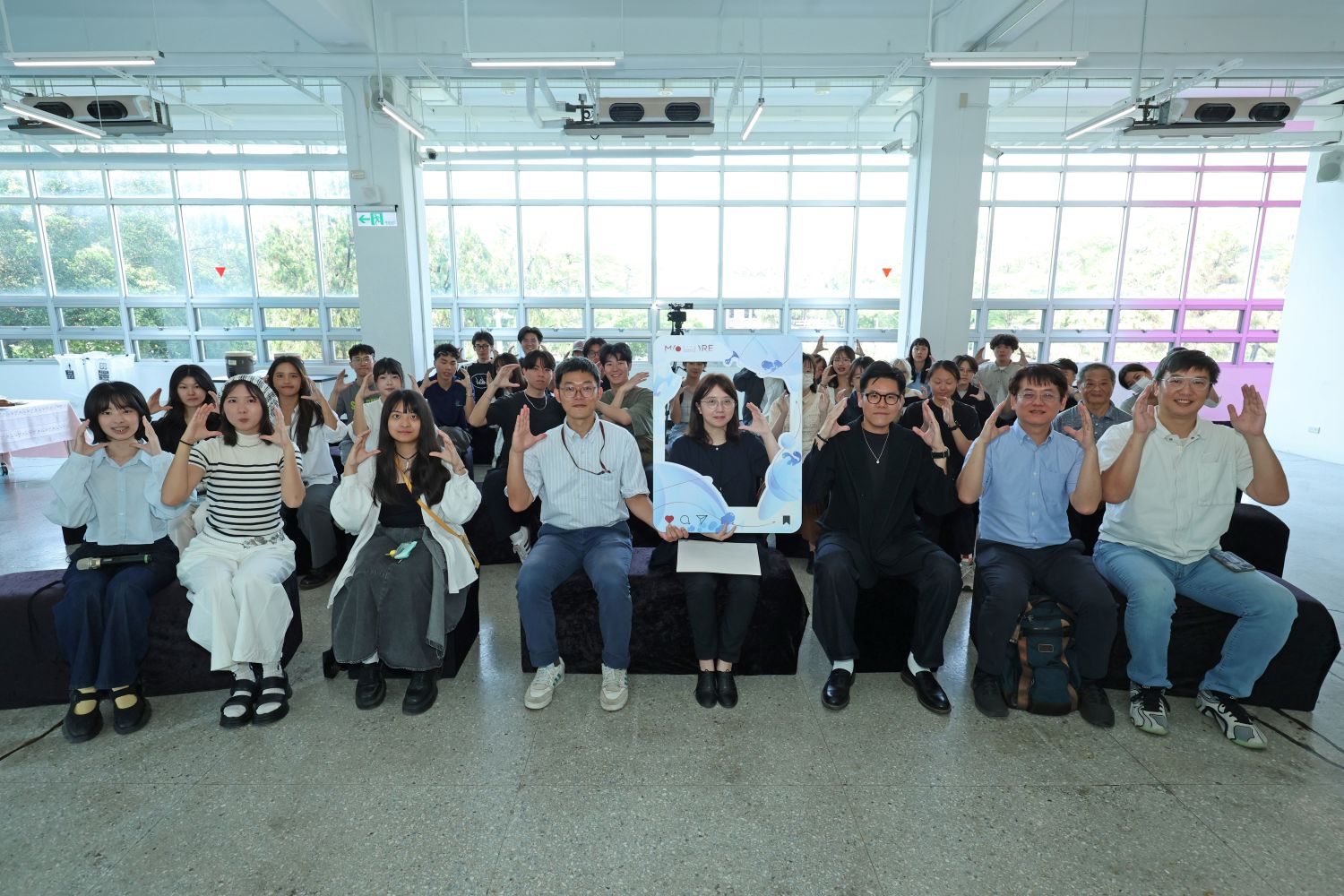
Opening of the Class of 2026 Graduation Exhibition “M(?)RE” of the Department of Industrial Design (Tainan Exhibition)
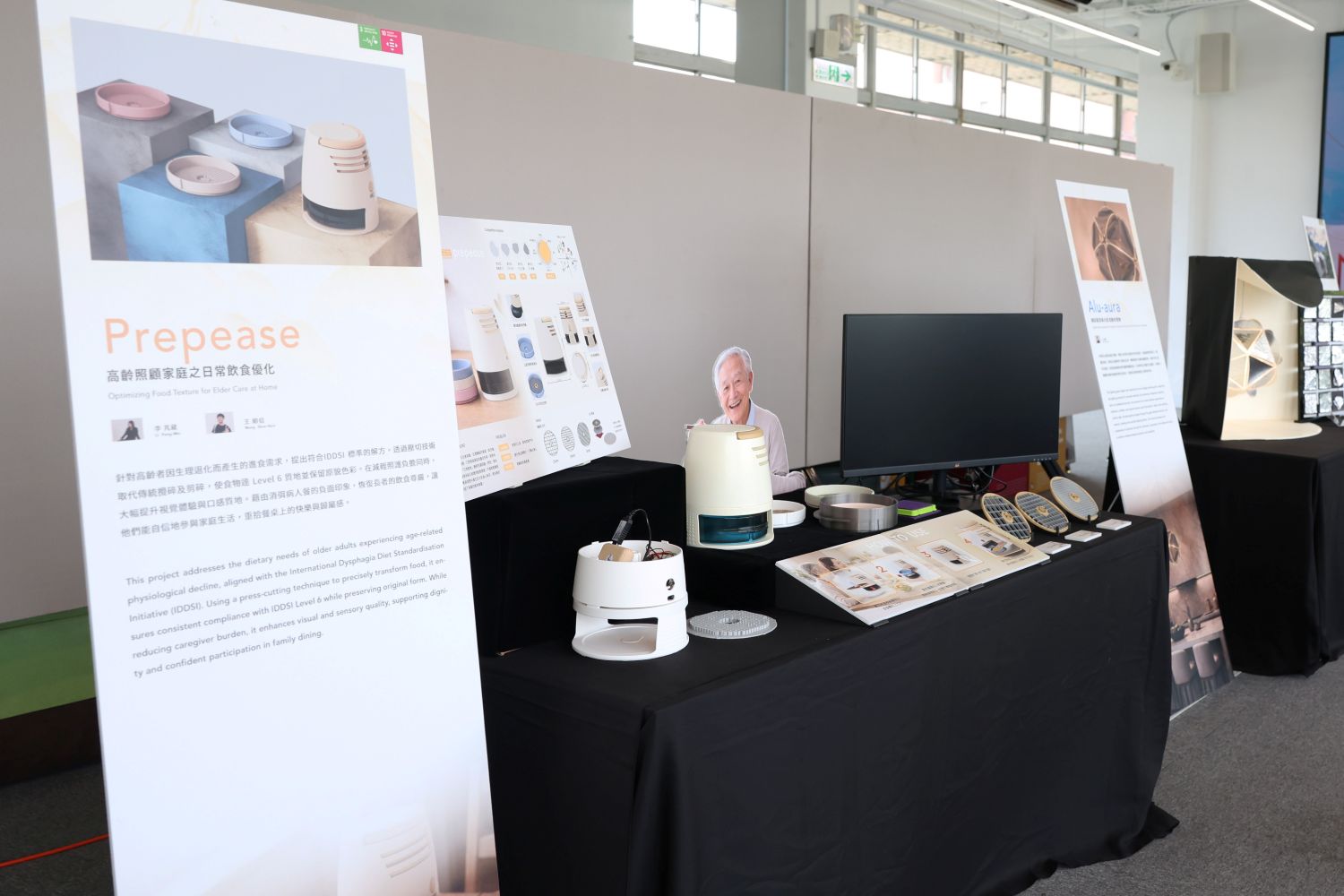
“PrepEase” is designed to restore a sense of anticipation and warmth in dining for elderly individuals with dental difficulties.
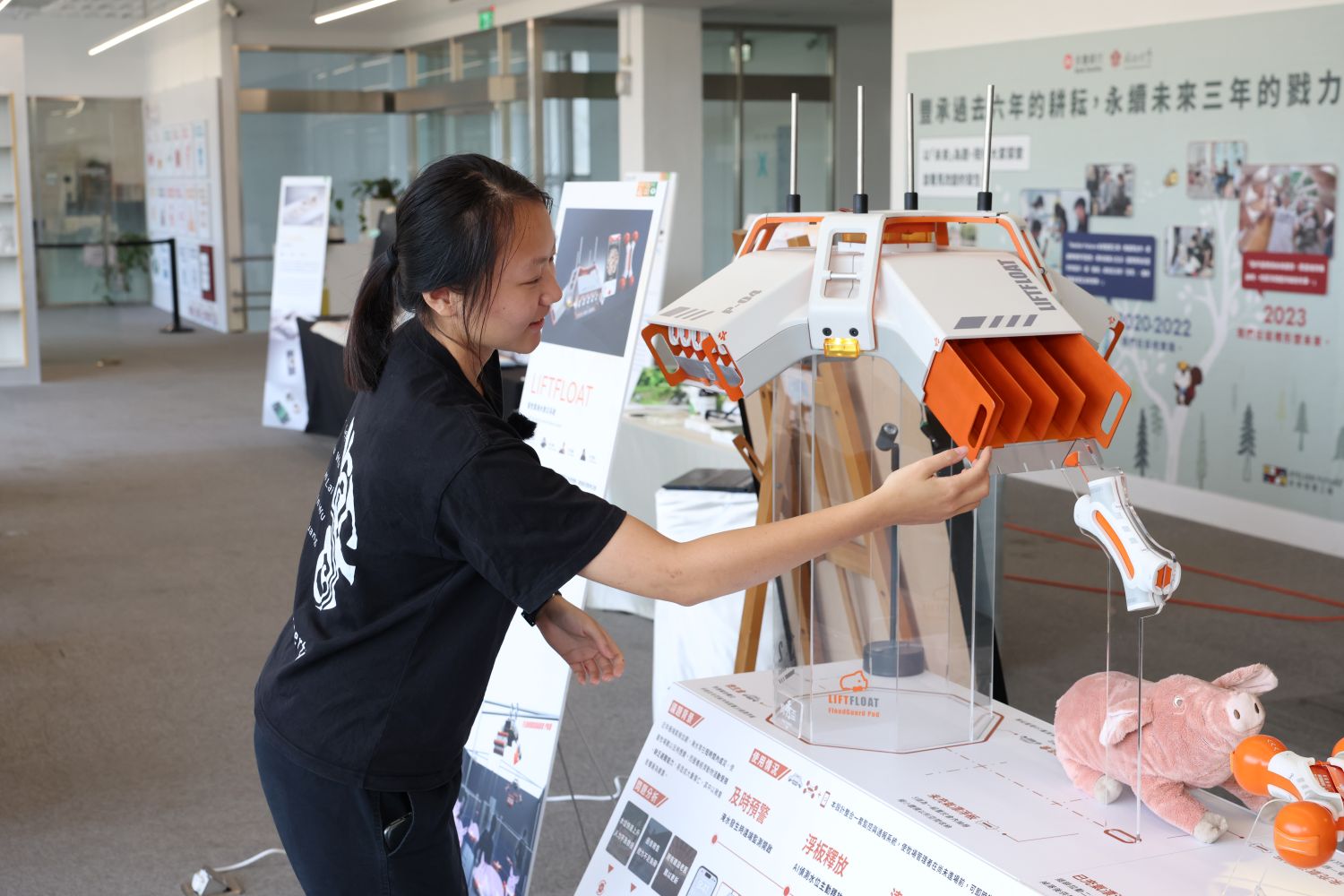
LIFTFLOAT Livestock Flood Disaster Rescue System
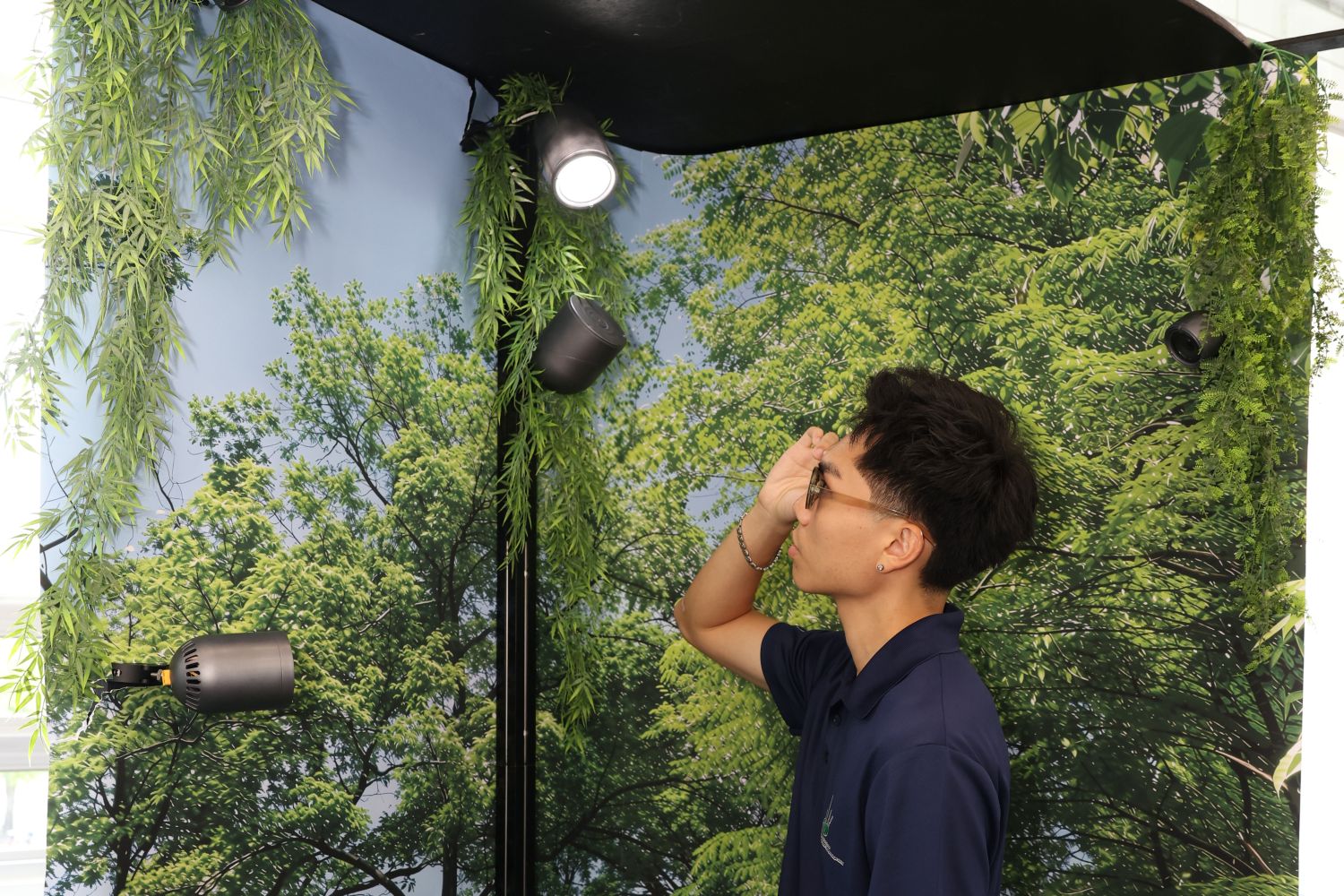
neXus Interactive Exhibition Experience System for Commercial Exhibitions