



SDG16
Deepening East Asian Digital Constitutionalism: Taiwan–Japan Cooperation on AI Sovereignty and Democratic Governance



Amid the rapid advancement of artificial intelligence (AI) and intensifying global competition among governance models, National Cheng Kung University (NCKU) held the “Digital Constitutionalism in East Asia” international conference on May 5, 2026. Building on last year’s Taiwan–Japan collaboration, the conference further focused on core issues such as AI sovereignty, legal institutions, and platform governance, deepening institutional responses within East Asian democratic societies in the digital era.
The conference was jointly organized by the Department of Political Science at NCKU and the XDiginity Center at Keio University, Japan, with co-organization by the Graduate Institute of Financial and Economic Law at Southern Taiwan University of Science and Technology. Through collaboration among academic institutions, the event continued to advance Taiwan–Japan dialogue on AI legal frameworks and digital governance. Expanding from last year’s discussions on “digital constitutionalism” and AI regulatory models, this year’s conference further examined East Asia’s institutional positioning and potential cooperation in global technological competition from the perspectives of international politics and industrial supply chains.
The conference was structured into three sessions, building a comprehensive analytical framework for AI governance from macro-level strategy to institutional practice.
The first session, “AI Sovereignty and Democratic Governance: Strategic Positioning of Taiwan and Japan,” focused on the critical role of AI in international politics and technological competition, with in-depth discussions on the concept of AI sovereignty and its institutional implications.
This session further analyzed how AI sovereignty intersects with global supply chain restructuring from an international political economy perspective, with particular attention to Taiwan and Japan’s strategic roles in semiconductor and technology industries. It also explored how both sides can strengthen convergence in digital sovereignty discourse and strategic deployment through policy and institutional coordination under the framework of U.S.–China technological competition.
The session was chaired by Vice President Hsing-Hao Wu of the Department of Financial and Economic Law at National University of Kaohsiung. Presenters included Professor Tatsuhiko Yamamoto from Keio University Graduate School of Law and Associate Professor and Director Jung-Jin Kuo of the Graduate Institute of Financial and Economic Law at Southern Taiwan University of Science and Technology. Discussants included Associate Professor and Director Hung-Min Yao of the Graduate Institute of International Security at National Defense University and Associate Professor Hsin-Hsuan Lin from the Department of Political Science at NCKU. Together, the session highlighted Taiwan–Japan cooperation in developing forward-looking perspectives on technology governance and industrial coordination within the broader framework of international political economy and digital sovereignty, strengthening institutional resilience and strategic autonomy amid global supply chain restructuring and AI competition, while contributing to regional security and economic stability.
The second session, “AI Governance and Legal Systems: Taiwan–Japan Comparative Perspectives and Cooperation,” adopted a comparative legal approach to analyze differences and trends in AI policy and legal development between Taiwan and Japan.
This session further examined Japan’s AI governance policies and legal frameworks as well as Taiwan’s institutional evolution in AI policy and regulation. Through cross-national comparison, it explored how East Asian countries balance innovation and risk management. Scholars also discussed potential directions for future Taiwan–Japan cooperation in AI legal systems, including institutional alignment, policy coordination, and the formation of shared regulatory standards.
The session was chaired by Professor Cheng-Tsung Lo of National Kaohsiung University of Science and Technology. Presenters included Associate Professor Kento Yamamoto from the Faculty of Sociology at Kansai University and Research Fellow Bonno Irii of the KGRI Institute at Keio University. Discussants included Director and Associate Professor Jin-Li Wang of the Science and Technology Law Institute at the Institute for Information Industry and Associate Research Fellow Chih-Hsing Ho from the Institute of European and American Studies at Academia Sinica, who provided responses from comparative and practical institutional perspectives.
The third session, “Ideals and Realities of Platform Content Moderation Mechanisms,” shifted focus to platform governance in the digital public sphere, examining institutional balances among content moderation, information flow, and privacy protection.
This session analyzed the operational practices and differences in content moderation mechanisms of major online platforms in Taiwan and Japan, and discussed institutional approaches to privacy protection in both jurisdictions. Participants noted that as platform power continues to expand, balancing freedom of expression with public interest and user rights has become a central challenge of democratic governance in the digital age.
The session was chaired by Professor and Director Chin-Fu Liao of National Kaohsiung University of Science and Technology. Presenters included Associate Professor Eijiro Mizutani from the Graduate School of Media and Communications at Keio University and Assistant Professor Yuta Ishihara from the Faculty of Law at Hakuoh University. Discussants included Director Mu-Huan Wang of the Telecommunications Technologies Center and Associate Professor Ming-Jheng Cheng from National Chin-Yi University of Technology, who addressed challenges and limitations in real-world platform governance from both institutional design and practical perspectives.
The organizers stated that AI governance has evolved from a domestic policy issue into a complex challenge involving national sovereignty, industrial development, and international regulatory competition. In this context, East Asian countries have the opportunity to develop governance models distinct from those of Europe and the United States, while enhancing institutional influence through regional cooperation.
The College of Social Sciences at NCKU emphasized that the conference not only continued the achievements of Taiwan–Japan academic collaboration but also embodied the practice of “academic diplomacy.” Through sustained cross-border dialogue and interdisciplinary research, the conference aimed to contribute concrete and actionable institutional imaginaries for democratic governance and digital constitutional development in the AI era.
The conference concluded successfully. Through in-depth exchanges, participating scholars collectively advanced research capacity in East Asian digital governance and laid an important foundation for future developments in AI legal systems and policy.
The conference was jointly organized by the Department of Political Science at NCKU and the XDiginity Center at Keio University, Japan, with co-organization by the Graduate Institute of Financial and Economic Law at Southern Taiwan University of Science and Technology. Through collaboration among academic institutions, the event continued to advance Taiwan–Japan dialogue on AI legal frameworks and digital governance. Expanding from last year’s discussions on “digital constitutionalism” and AI regulatory models, this year’s conference further examined East Asia’s institutional positioning and potential cooperation in global technological competition from the perspectives of international politics and industrial supply chains.
The conference was structured into three sessions, building a comprehensive analytical framework for AI governance from macro-level strategy to institutional practice.
The first session, “AI Sovereignty and Democratic Governance: Strategic Positioning of Taiwan and Japan,” focused on the critical role of AI in international politics and technological competition, with in-depth discussions on the concept of AI sovereignty and its institutional implications.
This session further analyzed how AI sovereignty intersects with global supply chain restructuring from an international political economy perspective, with particular attention to Taiwan and Japan’s strategic roles in semiconductor and technology industries. It also explored how both sides can strengthen convergence in digital sovereignty discourse and strategic deployment through policy and institutional coordination under the framework of U.S.–China technological competition.
The session was chaired by Vice President Hsing-Hao Wu of the Department of Financial and Economic Law at National University of Kaohsiung. Presenters included Professor Tatsuhiko Yamamoto from Keio University Graduate School of Law and Associate Professor and Director Jung-Jin Kuo of the Graduate Institute of Financial and Economic Law at Southern Taiwan University of Science and Technology. Discussants included Associate Professor and Director Hung-Min Yao of the Graduate Institute of International Security at National Defense University and Associate Professor Hsin-Hsuan Lin from the Department of Political Science at NCKU. Together, the session highlighted Taiwan–Japan cooperation in developing forward-looking perspectives on technology governance and industrial coordination within the broader framework of international political economy and digital sovereignty, strengthening institutional resilience and strategic autonomy amid global supply chain restructuring and AI competition, while contributing to regional security and economic stability.
The second session, “AI Governance and Legal Systems: Taiwan–Japan Comparative Perspectives and Cooperation,” adopted a comparative legal approach to analyze differences and trends in AI policy and legal development between Taiwan and Japan.
This session further examined Japan’s AI governance policies and legal frameworks as well as Taiwan’s institutional evolution in AI policy and regulation. Through cross-national comparison, it explored how East Asian countries balance innovation and risk management. Scholars also discussed potential directions for future Taiwan–Japan cooperation in AI legal systems, including institutional alignment, policy coordination, and the formation of shared regulatory standards.
The session was chaired by Professor Cheng-Tsung Lo of National Kaohsiung University of Science and Technology. Presenters included Associate Professor Kento Yamamoto from the Faculty of Sociology at Kansai University and Research Fellow Bonno Irii of the KGRI Institute at Keio University. Discussants included Director and Associate Professor Jin-Li Wang of the Science and Technology Law Institute at the Institute for Information Industry and Associate Research Fellow Chih-Hsing Ho from the Institute of European and American Studies at Academia Sinica, who provided responses from comparative and practical institutional perspectives.
The third session, “Ideals and Realities of Platform Content Moderation Mechanisms,” shifted focus to platform governance in the digital public sphere, examining institutional balances among content moderation, information flow, and privacy protection.
This session analyzed the operational practices and differences in content moderation mechanisms of major online platforms in Taiwan and Japan, and discussed institutional approaches to privacy protection in both jurisdictions. Participants noted that as platform power continues to expand, balancing freedom of expression with public interest and user rights has become a central challenge of democratic governance in the digital age.
The session was chaired by Professor and Director Chin-Fu Liao of National Kaohsiung University of Science and Technology. Presenters included Associate Professor Eijiro Mizutani from the Graduate School of Media and Communications at Keio University and Assistant Professor Yuta Ishihara from the Faculty of Law at Hakuoh University. Discussants included Director Mu-Huan Wang of the Telecommunications Technologies Center and Associate Professor Ming-Jheng Cheng from National Chin-Yi University of Technology, who addressed challenges and limitations in real-world platform governance from both institutional design and practical perspectives.
The organizers stated that AI governance has evolved from a domestic policy issue into a complex challenge involving national sovereignty, industrial development, and international regulatory competition. In this context, East Asian countries have the opportunity to develop governance models distinct from those of Europe and the United States, while enhancing institutional influence through regional cooperation.
The College of Social Sciences at NCKU emphasized that the conference not only continued the achievements of Taiwan–Japan academic collaboration but also embodied the practice of “academic diplomacy.” Through sustained cross-border dialogue and interdisciplinary research, the conference aimed to contribute concrete and actionable institutional imaginaries for democratic governance and digital constitutional development in the AI era.
The conference concluded successfully. Through in-depth exchanges, participating scholars collectively advanced research capacity in East Asian digital governance and laid an important foundation for future developments in AI legal systems and policy.
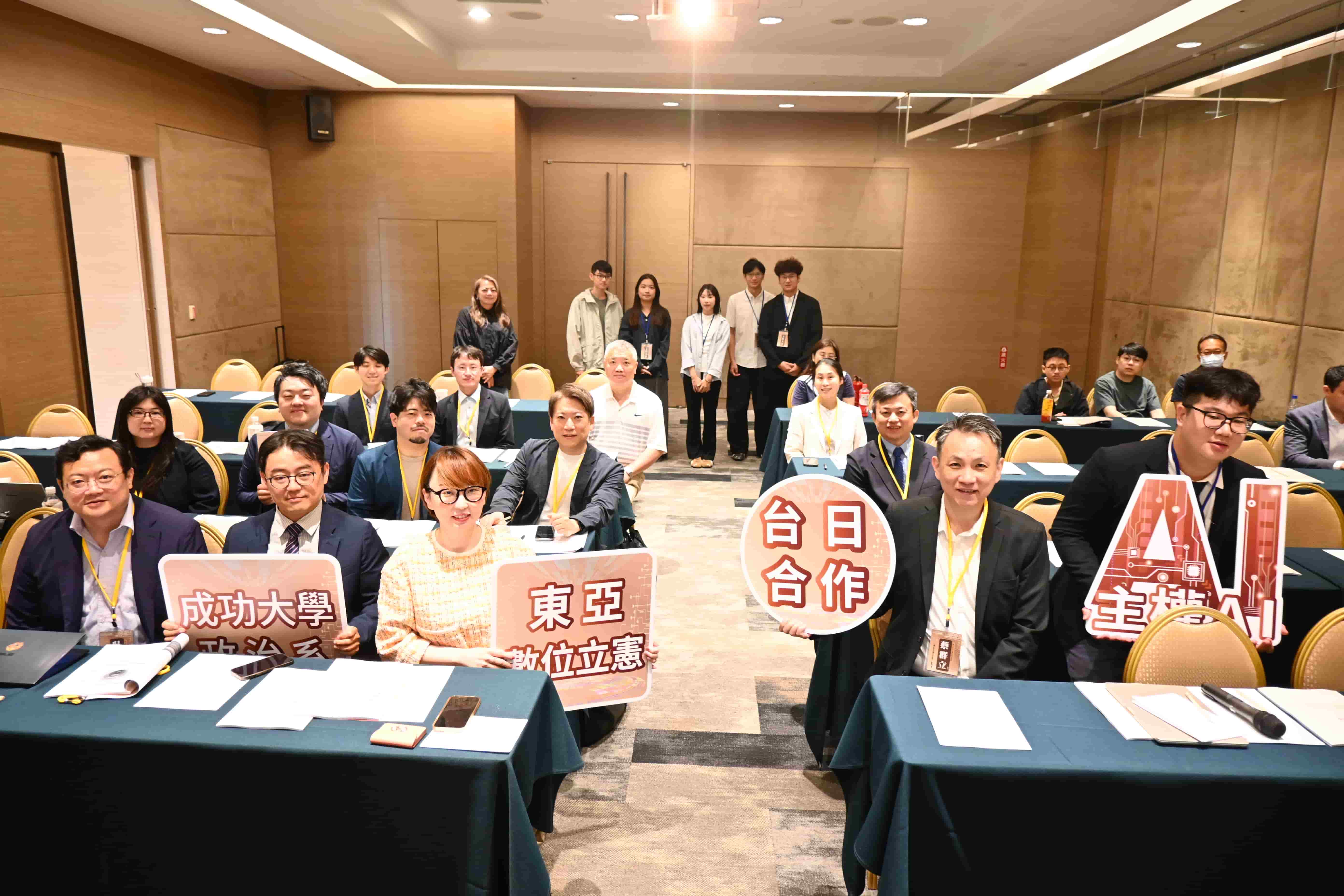
Group photo of the opening session, from left to right: Associate Professor Eijiro Mizutani of the Graduate School of Media and Communications, Keio University; Associate Professor and Director Chrong-Jin Kuo of the Graduate Institute of Financial and Economic Law, Southern Taiwan University of Science and Technology; Associate Professor Hsin-Hsuan Lin of the Department of Political Science, National Cheng Kung University; Professor Chyuan-Li Tsai, Dean of the College of Social Sciences, National Cheng Kung University; and participating students.
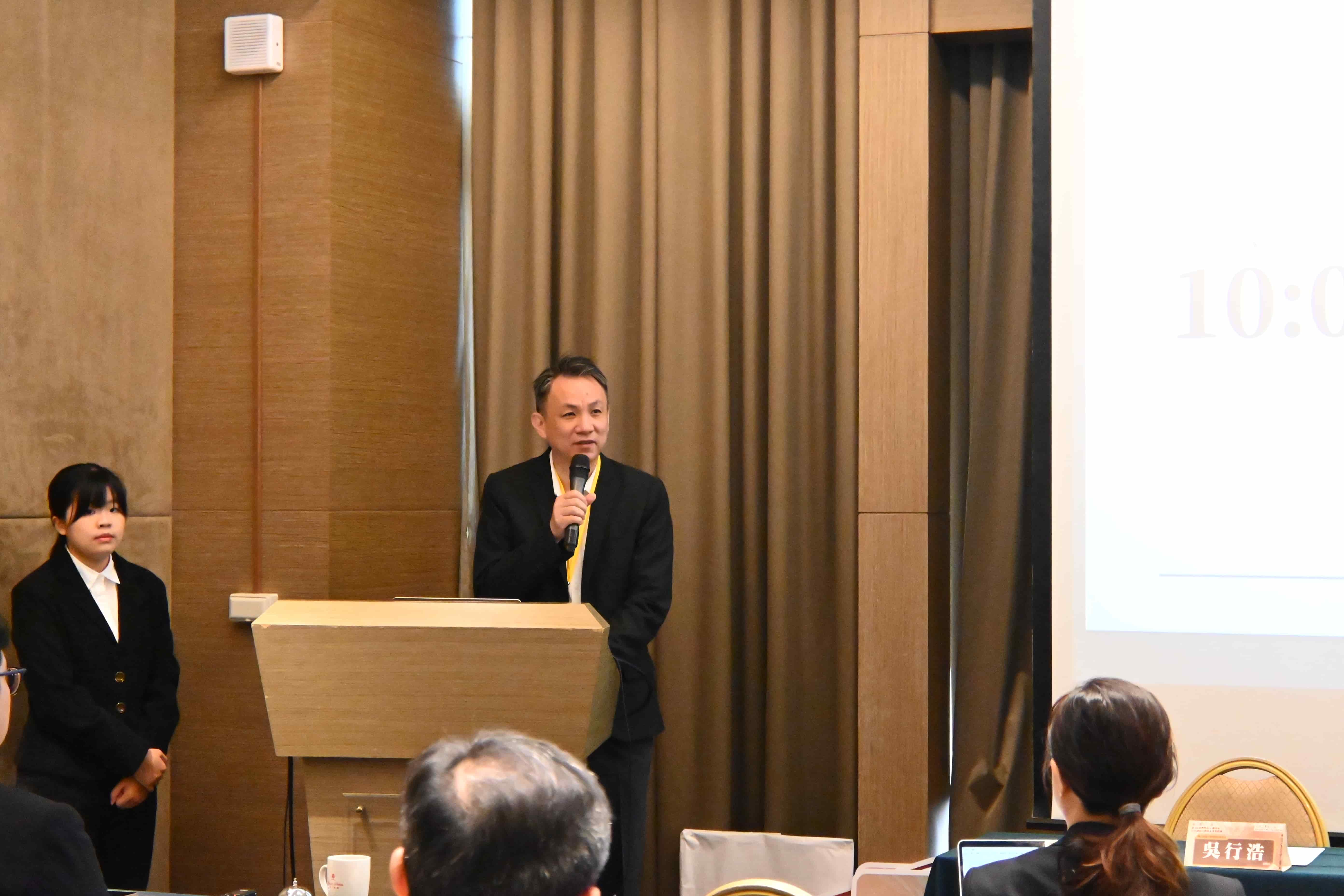
Professor Chyuan-Li Tsai, Dean of the College of Social Sciences, National Cheng Kung University, delivered the opening remarks.
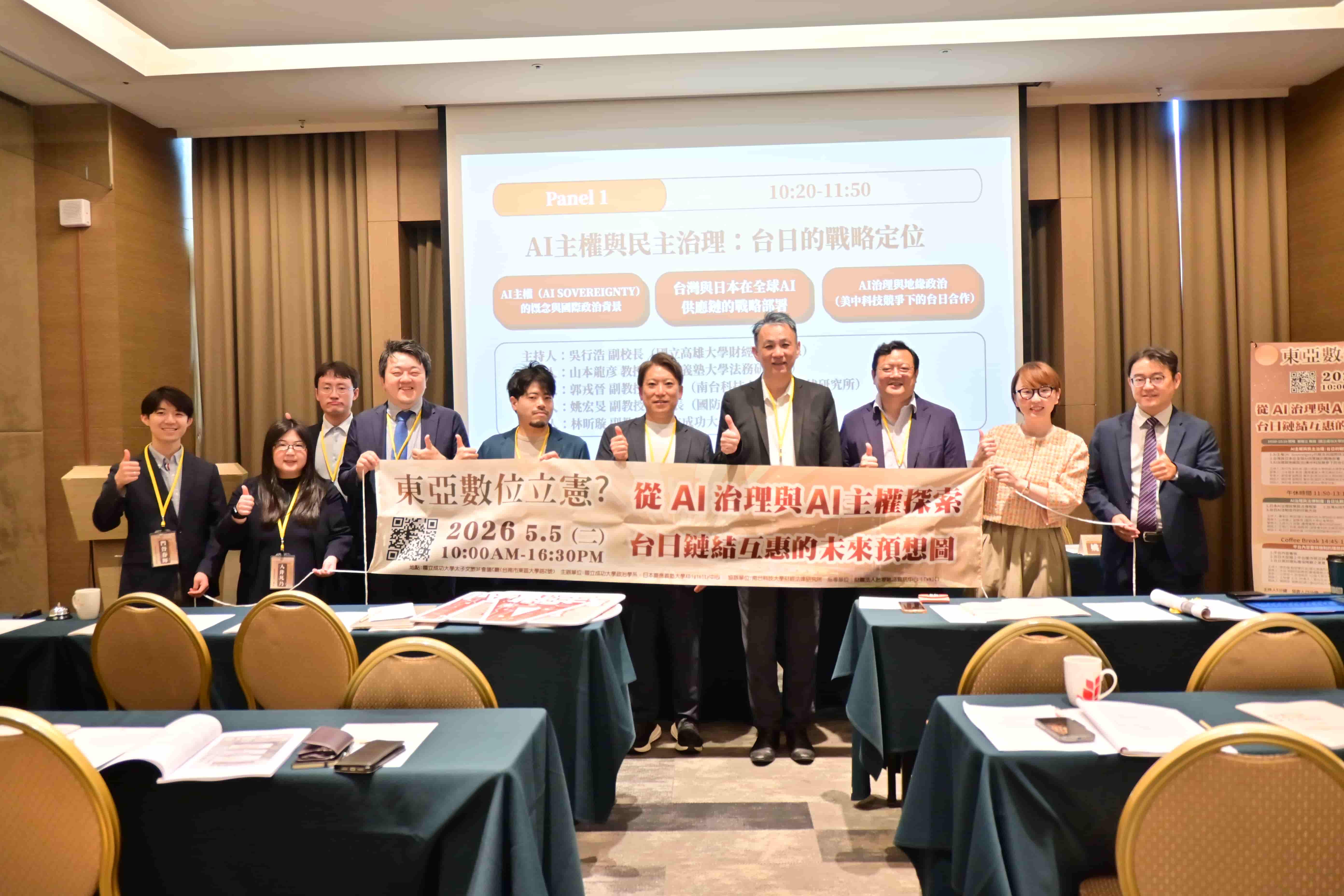
First session, from left to right: Doctoral student Chun-Hui Mengu; Research Fellow Bonno Irii of the KGRI Institute, Keio University; Assistant Professor Yuta Ishihara, Faculty of Law, Hakuoh University; Associate Professor Eijiro Mizutani, Graduate School of Media and Communications, Keio University; Associate Professor Kento Yamamoto, Faculty of Sociology, Kansai University; Professor Tatsuhiko Yamamoto, Graduate School of Law, Keio University; Professor Chyuan-Li Tsai, Dean of the College of Social Sciences, National Cheng Kung University; Professor Hsing-Hao Wu, Vice President of National University of Kaohsiung and Department of Financial and Economic Law; Associate Professor Hsin-Hsuan Lin, Department of Political Science, National Cheng Kung University; and Associate Professor and Director Jung-Jin Kuo, Graduate Institute of Financial and Economic Law, Southern Taiwan University of Science and Technology.
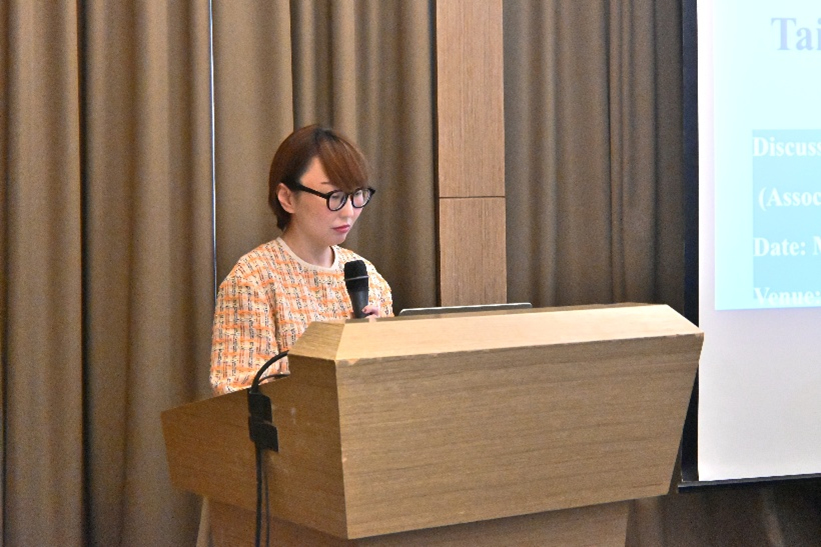
Associate Professor Hsin-Hsuan Lin of the Department of Political Science, National Cheng Kung University, the organizer of this conference.
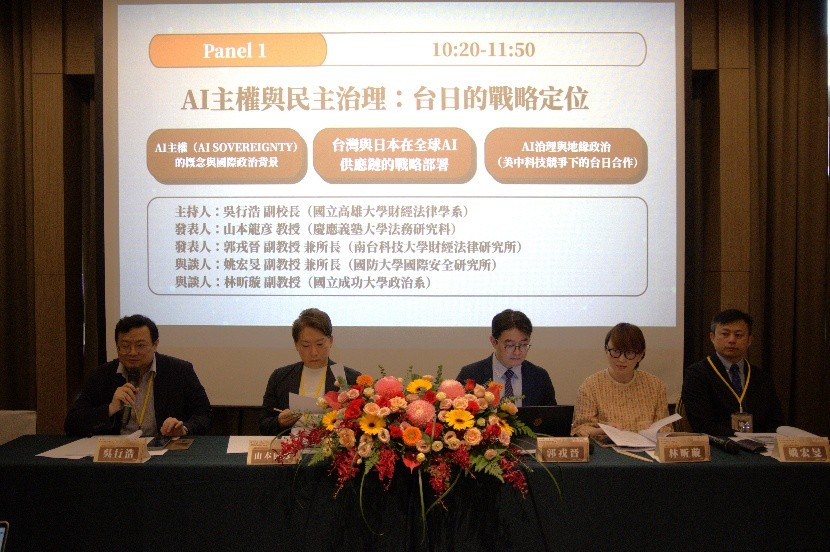
From left to right: Professor Hsing-Hao Wu, Vice President and Professor of the Department of Financial and Economic Law, National University of Kaohsiung; Professor Tatsuhiko Yamamoto, Graduate School of Law, Keio University; Associate Professor Chrong-Jin Kuo, Graduate Institute of Financial and Economic Law, Southern Taiwan University of Science and Technology; Associate Professor Hsin-Hsuan Lin, Department of Political Science, National Cheng Kung University; and Associate Professor Hung-Min Yao, Graduate Institute of International Security, National Defense University.
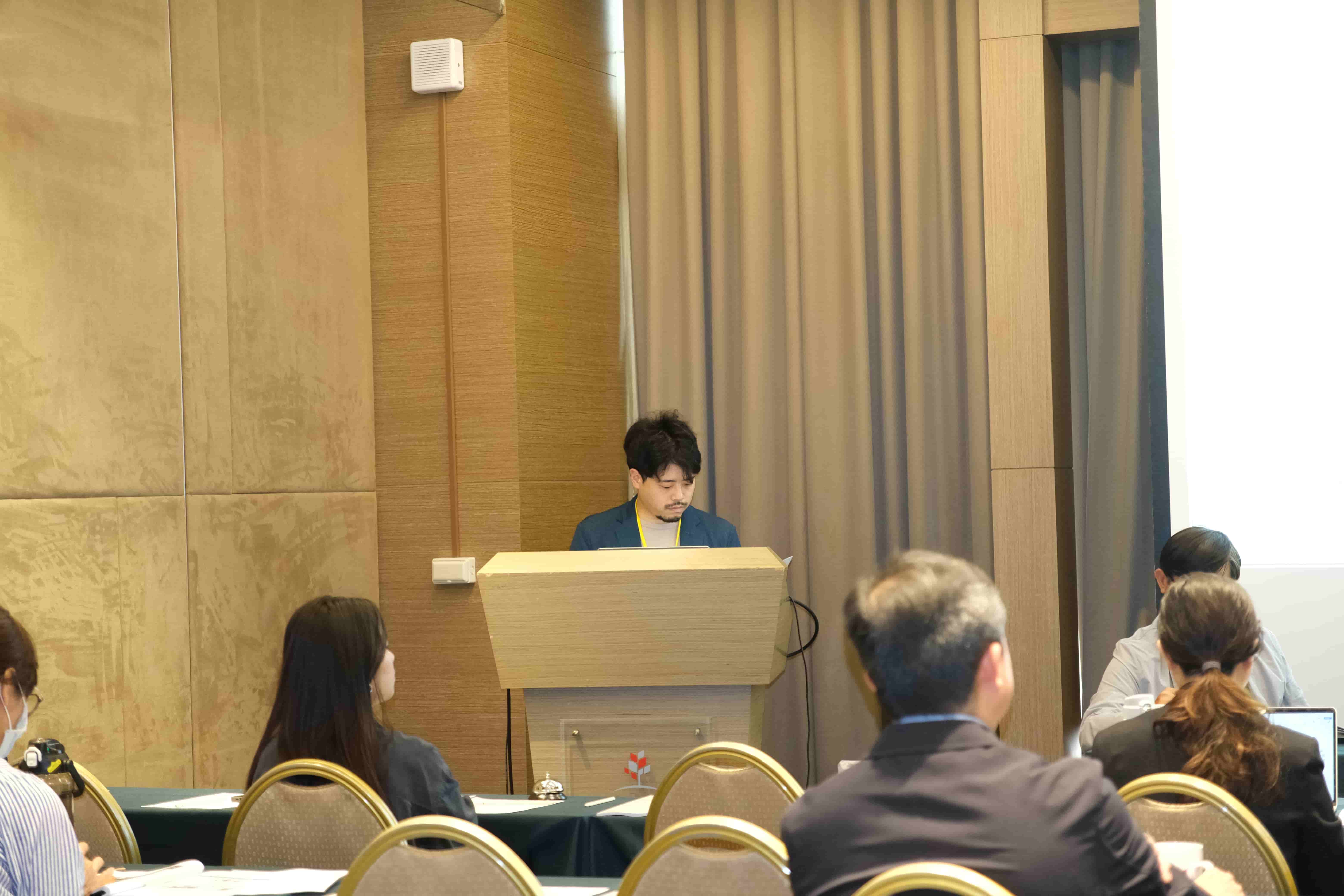
Presenter of Session 2: Associate Professor Kento Yamamoto, Faculty of Sociology, Kansai University.
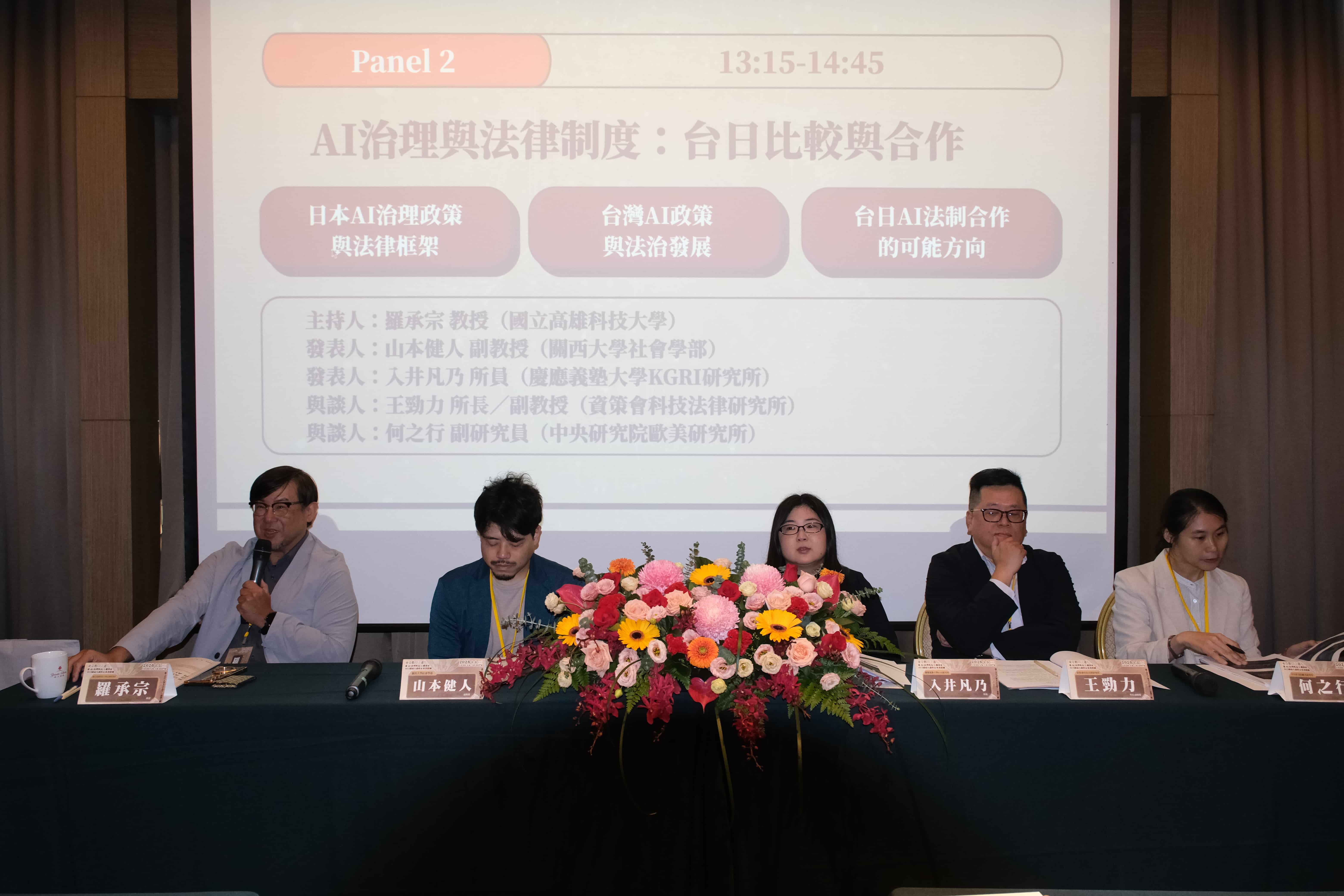
From left to right: Professor Cheng-Chung Lo of National Kaohsiung University of Science and Technology; Associate Professor Kento Yamamoto of the Faculty of Sociology, Kansai University; Research Fellow Bonno Irii of the KGRI Institute, Keio University; Director Jin-Li Wang of the Science and Technology Law Institute, Institute for Information Industry; and Associate Research Fellow Chih-Hsing Ho of the Institute of European and American Studies, Academia Sinica.
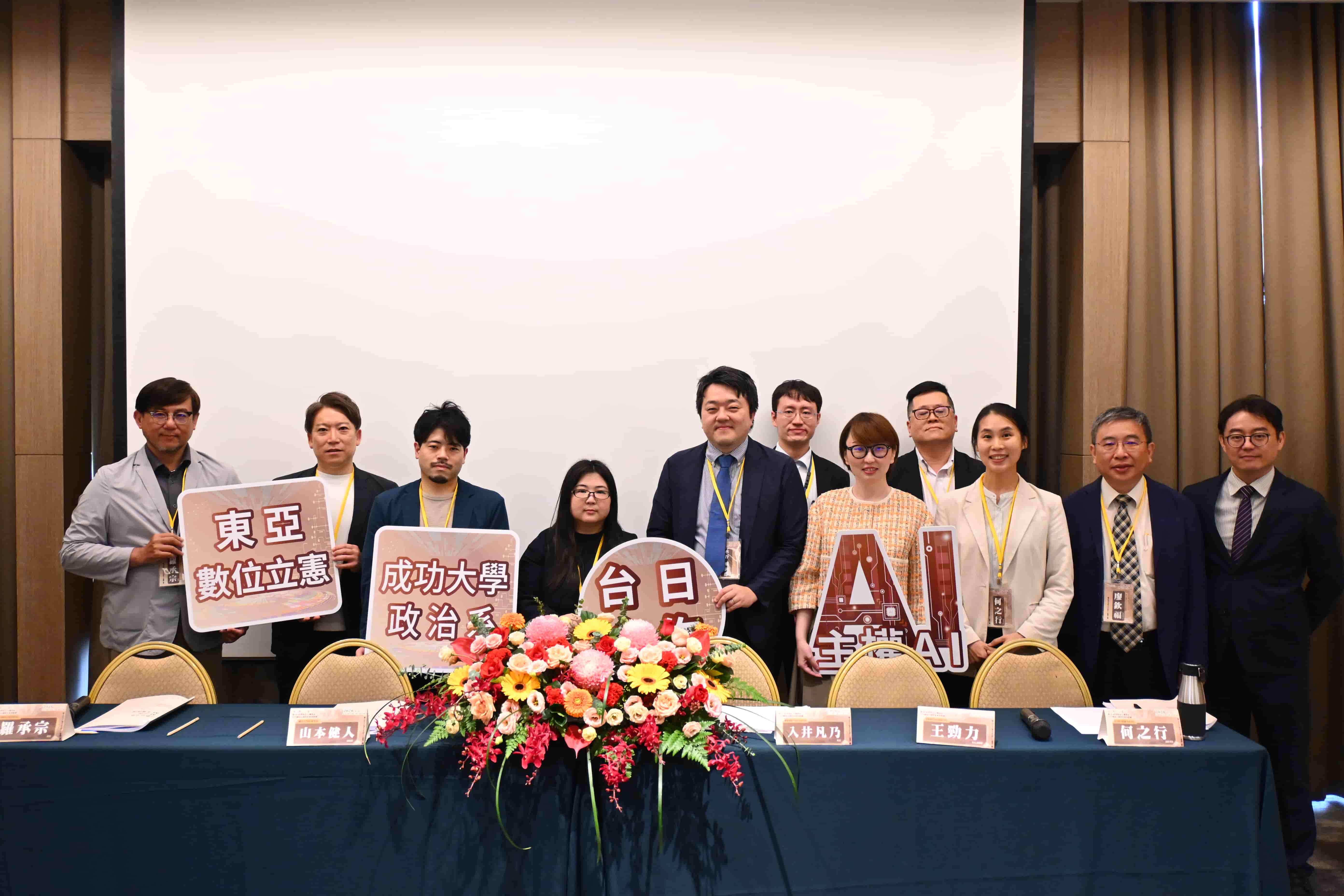
Group photo of the third session participants.